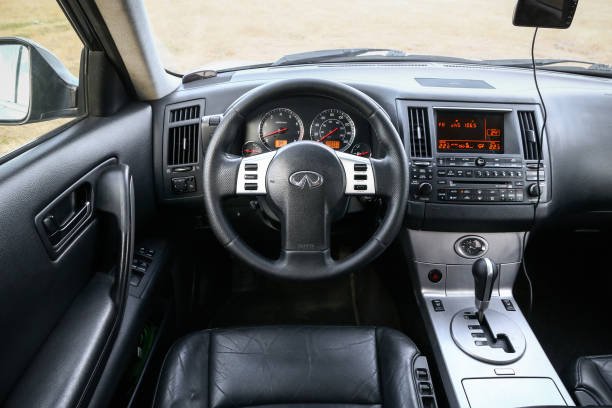
Infiniti power steering noise usually comes from low or aerated fluid, a leaking hose, a worn pump, a slipping drive belt, steering rack wear, or a fault in the electric steering system. The correct diagnosis depends on the Infiniti model and year, as some vehicles use hydraulic assistance, while newer models may use electric or Direct Adaptive Steering. A brief operating sound can be normal in certain systems, but persistent whining, grinding, heavy steering, fluid loss, or a warning light needs prompt inspection. In Dubai, heat and frequent low-speed parking make early diagnosis especially important.
Problem Overview
Hearing an unusual sound whenever you turn your Infiniti can make even a short drive uncomfortable. The noise may appear as a light hum, a high-pitched whine, a deep groan, a belt squeal, or a metallic grinding sound. Although some steering systems produce a brief operating sound, persistent Infiniti power steering noise usually means the vehicle needs inspection.
The first step is identifying which steering system your Infiniti uses. Older vehicles, such as certain QX50, FX, G, and M models, may have a conventional hydraulic system with a fluid reservoir, pump, hoses, and steering rack. Other Infiniti models use electric power steering, electro-hydraulic assistance or Direct Adaptive Steering.
This difference is important because an electric system does not have the same fluid, pump and hose arrangement as a conventional hydraulic system. Adding fluid without confirming the system type will not resolve an electrical steering fault and may lead to an incorrect repair recommendation.
Infiniti’s own manuals also explain that some electric systems may produce a sound when the steering wheel is operated quickly. However, warning lights, heavy steering, repeated noise or reduced assistance require professional attention.
Common Symptoms of Infiniti Power Steering Problems
Power steering faults do not always begin with complete loss of assistance. Most problems start with small changes that become more noticeable over time, especially whining, groaning, heavy steering, fluid loss, or a warning light.
Whining While Turning
A high-pitched whine that gets louder when you rotate the steering wheel often indicates low hydraulic fluid, trapped air, a restricted hose, or a worn power steering pump.
Groaning at Low Speed
You may hear a deep groan while entering a parking space, making a U-turn or turning the wheel while stationary. This often happens when the system is under its greatest load.
Squealing From the Engine Area
A loose, glazed, contaminated, or worn drive belt may squeal when the steering pump demands additional power from the engine. A weak belt tensioner can create a similar sound.
Grinding or Metallic Noise
Grinding is more serious than a light hum. It may indicate severe pump wear, internal steering-rack damage, a dry bearing, or a mechanical steering component rubbing under load.
Heavy or Inconsistent Steering
The steering may feel unusually heavy, particularly during parking. It may also alternate between light and heavy assistance or feel notchy instead of smooth.
Fluid Under the Vehicle
Hydraulic steering fluid may leak from the reservoir, pump, pressure hose, return line, or steering rack. The fluid can collect beneath the vehicle’s front end or spread across nearby components.
Foamy Fluid in the Reservoir
Foam or bubbles inside a hydraulic reservoir indicate air entering or remaining inside the system. This can make the pump noisy and reduce the smoothness of steering assistance.
Steering Warning Light
An illuminated steering warning light may indicate a problem with an electric steering motor, control module, sensor, power supply, or related system. Infiniti manuals warn that steering assistance may stop when the warning light appears, leaving the driver with much heavier steering.
Steering-Wheel Vibration
Vibration felt through the steering wheel may come from the pump, steering rack, belt system, tires, suspension joints, or wheel alignment issues. Proper diagnosis is necessary before replacing steering parts.
Main Causes of Infiniti Power Steering Noise
Main Causes of Infiniti Power Steering Noise are describe below
1. Low Power Steering Fluid
Low fluid is one of the most common causes in hydraulic systems. As the level drops, the pump may pull air into the circuit instead of receiving a steady supply of fluid. This creates whining, groaning, and inconsistent assistance.
Fluid does not normally disappear without a reason. If the reservoir is low, the technician should locate the leak rather than simply topping it up.
2. Air Trapped in the Hydraulic System
Air may enter through a loose hose connection, a damaged seal, a cracked return hose, or a previous repair that was not bled correctly. Aerated fluid cannot transmit pressure as smoothly as liquid, so the pump becomes noisy.
A proper bleeding procedure may resolve the noise, but the air source must also be repaired.
3. Incorrect, Old or Contaminated Fluid
Using the wrong fluid can affect lubrication, seals, and pump operation. Old fluid may also collect moisture, rubber particles and metal contamination.
The correct specification depends on the Infiniti model, year and steering design. For example, the older QX50 owner’s manual specifies the approved power steering fluid or equivalent and warns against overfilling. Always check the correct manual or service information rather than selecting a fluid by color alone.
4. Worn Power Steering Pump
A hydraulic pump contains bearings, seals, internal vanes and pressure-control components. Wear inside the pump can cause whining even when the fluid level is correct.
A failing pump may also produce reduced assistance, fluid leakage or metal contamination. Replacing the pump without checking the reservoir, hoses and fluid condition can allow the same problem to return.
5. Loose or Worn Drive Belt
On belt-driven hydraulic systems, the power steering pump depends on the engine’s accessory belt. A loose or damaged belt may slip when the driver turns the wheel, producing a sharp squeal.
The technician should inspect the belt, tensioner, pulleys, and alignment rather than replacing the belt alone.
6. Damaged Pressure or Return Hose
A hose may leak externally, collapse internally or allow air to enter through a weak connection. A restricted hose can starve the pump, while a leaking high-pressure line can quickly reduce the fluid level.
Dubai’s high under-bonnet temperatures can make existing weaknesses in aged rubber hoses and seals more noticeable.
7. Steering Rack or Gear Wear
Internal seals, bushings or gears inside the steering rack can wear over time. A damaged rack may cause fluid leakage, knocking, uneven assistance, or noise near the front wheels.
Rack problems are sometimes misdiagnosed as pump failure because both faults can create similar symptoms.
8. Electric Power Steering Fault
Newer Infiniti vehicles may use an electric motor, an electronic control unit, a torque sensor, a steering-angle sensor, or an electrically powered hydraulic pump.
Noise may result from motor wear, overheating, low system voltage, a damaged steering column component or control-system fault. A diagnostic scan is essential when a warning light or stored fault code is present.
9. Suspension or Steering-Joint Problems
Not every turning noise comes from power steering. Worn tie-rod ends, ball joints, strut mounts, control-arm bushings, wheel bearings and suspension joints can creak, click or knock when the wheel moves.
Replacing a power steering pump will not correct a noise caused by a dry ball joint or damaged strut bearing.
Diagnostic Process
A professional diagnosis should determine where the sound starts, when it appears, and whether steering performance has changed.
Step 1: Confirm the Complaint
The technician should ask whether the noise happens:
- When the engine is cold or fully warm
- During left turns, right turns or both
- Only while parking
- At full steering lock
- While stationary or moving
- After a previous steering repair
- With a warning light or heavy steering
These details help separate hydraulic, electrical, belt and suspension faults.
Step 2: Identify the Steering System
The vehicle identification number, model year and physical inspection are used to determine whether the Infiniti has hydraulic, electric, electro-hydraulic or Direct Adaptive Steering.
This prevents unnecessary fluid services or pump replacements on vehicles that use a different system.
Step 3: Scan the Vehicle
For electric and electronically controlled systems, the vehicle should be scanned for trouble codes. The technician may also check steering-angle data, torque-sensor readings, module communication and power-supply voltage.
Do not clear a warning light until you have investigated the stored code and confirmed the repair path.
Step 4: Inspect the Fluid and Reservoir
On hydraulic systems, the fluid level and condition should be inspected at the correct temperature. Dark, burnt, contaminated, or foamy fluid can provide valuable diagnostic clues.
Infiniti maintenance information recommends checking the fluid level and steering lines, including their condition, attachment, and any leaks or cracks.
Step 5: Look for Leaks
The reservoir, pump shaft, hose connections, pressure line, return line, and steering rack boots should be examined carefully.
Fluid in a rack boot may indicate an internal rack seal leak, even when no large puddle appears beneath the car.
Step 6: Inspect the Belt and Pulleys
On applicable models, the belt should be checked for cracking, glazing, contamination, looseness, and incorrect tracking. The tensioner and pulleys should rotate smoothly without excessive play.
Step 7: Check Steering and Suspension Components
A complete Infiniti inspection should not stop at the pump. Infiniti’s certified inspection checklist includes the steering fluid, steering gear and linkage, pump, hoses, tie rods, bushings, ball joints, and suspension components.
Step 8: Perform a Controlled Road Test
A road test helps the technician evaluate steering effort, return-to-center movement, vibration, warning lights, and noises under realistic conditions.
Repair Process
The repair will depend on what the inspection reveals.
Fluid Correction and System Bleeding
If the system contains air but has no major component damage, the repair may involve correcting the fluid level, using the approved fluid and bleeding the system.
The technician should continue checking for bubbles and noise until fluid circulation becomes stable.
Fluid Leak Repair
A leaking seal, clamp, O-ring, or hose should be replaced before filling and bleeding the system. Simply adding more fluid offers only temporary relief.
The surrounding area should be cleaned so any remaining leak can be identified during the final inspection.
Power Steering Pump Replacement
A worn or leaking pump may require replacement. The reservoir and hoses should be inspected simultaneously for contamination or restrictions.
Fresh approved fluid and correct bleeding are necessary after installation.
Belt or Tensioner Replacement
A noisy belt system may need a new belt, tensioner, pulley, or combination of parts. Pulley alignment and accessory movement should be checked before the vehicle is released.
Steering Rack Repair or Replacement
An internally damaged rack may require professional rebuilding or replacement. The repair may also involve new rack boots, seals, tie-rod components, fluid and wheel alignment.
Electric Steering Repair
Electric steering repairs may involve wiring, connectors, fuses, sensors, control modules, motors or software-related procedures.
Some repairs require steering-angle calibration or other electronic setup after the component is installed.
Final Testing
After completing the repair, the workshop should:
- Recheck for leaks
- Confirm the noise has stopped.
- Test steering at low and normal speeds
- Verify steering-wheel alignment
- Clear and recheck fault codes
- Confirm that no warning lights return.
Risks of Ignoring the Problem
Ignoring Infiniti power steering noise can turn a manageable repair into a more expensive failure.
Loss of Steering Assistance
If a hydraulic pump loses fluid or an electric steering system stops providing assistance, the vehicle may still be steerable, but considerably more force will be required. The difference is most noticeable during sharp turns and at low speeds.
Damage to the Pump
Running a hydraulic pump with insufficient or aerated fluid reduces lubrication. Continued use may damage its bearings and internal surfaces.
Steering-Rack Damage
Contaminated fluid, low pressure, or failing seals can increase wear inside the rack. An early hose repair may eventually become a full rack replacement if the problem is ignored.
Belt-System Failure
A seized pump or damaged pulley can place additional stress on the accessory belt. Depending on the engine layout, belt failure may affect other engine-driven accessories.
Sudden Change in Vehicle Control
Heavy, jerky, or inconsistent steering can make emergency maneuvers harder. The driver may struggle to respond smoothly in a roundabout, parking area or busy Dubai traffic.
Increasing Repair Costs
A small leak or weak hose generally costs less to address than a failed pump, a contaminated steering rack, or a damaged belt system.
Can You Continue Driving?
Whether you can continue driving depends on the severity of the symptoms.
You may be able to drive a short distance to a workshop when the noise is mild, the steering remains smooth, no warning light is present, and there is no visible fluid loss. Avoid unnecessary journeys and aggressive steering until the vehicle has been checked.
Stop driving and arrange recovery when:
- The steering suddenly becomes heavy.
- The steering warning light remains illuminated.
- Fluid is leaking rapidly.
- The reservoir is empty.
- You hear grinding or harsh mechanical noise.
- The wheel becomes jerky or difficult to control
- There is a burning smell or smoke.
- A belt appears loose or damaged.
- The steering does not respond normally.
Although Infiniti manuals explain that the driver may retain mechanical control after power assistance is lost, they also warn that much greater steering effort will be required, particularly at low speed. Driving under those conditions is not a sensible risk.
How Long Does the Repair Take?
Repair time depends on the model, the fault, and the availability of parts.
| Service | Typical Workshop Time |
| Initial steering inspection | 30–60 minutes |
| Diagnostic scan and road test | 30–90 minutes |
| Fluid correction and bleeding | 1–2 hours |
| Minor hose or seal repair | 1–3 hours |
| Drive belt or tensioner replacement | 1–3 hours |
| Power steering pump replacement | 2–5 hours |
| Steering rack replacement | Half a day to one working day |
| Electric steering diagnosis or repair | Several hours to one working day |
| Calibration and wheel alignment | 1–2 additional hours |
These are planning estimates rather than guaranteed completion times. Corroded fasteners, restricted access, additional leaks, calibration requirements and parts availability may extend the repair.
Infiniti Power Steering Repair Cost Factors
There is no single fixed price for steering-noise repair because the sound itself is only a symptom.
Infiniti Model and Year
The price can differ between a Q50, Q60, QX50, QX60, QX80, FX35, G37 and other models. Engine layout and steering design affect labor and parts requirements.
Type of Steering System
A hydraulic fluid service is different from repairing an electric motor or Direct Adaptive Steering component. Electronic systems may require advanced scanning and calibration.
Cause of the Noise
Correcting a low fluid level is less involved than replacing a pump or steering rack. A belt squeal may require only a belt or tensioner, while grinding may indicate more serious mechanical damage.
Genuine, OEM or Aftermarket Parts
The chosen part type affects price, availability and warranty coverage. The decision should consider the vehicle’s age, condition and intended ownership period.
Extent of Fluid Contamination
A failed pump that releases metal particles may require system flushing, reservoir cleaning and additional component inspection.
Labor Access
Some components are easy to reach, while others require removing undertrays, engine accessories, subframe components, or steering linkages.
Additional Services
Wheel alignment, electronic calibration, replacement fluid and related hose repairs may be added to the final estimate.
A reliable garage should diagnose the cause before presenting a repair price. Replacing parts based only on the sound can waste money without correcting the fault.
Prevention Tips
Prevention Tips in details Are below.
Check the Correct Fluid Level
For hydraulic Infiniti models, check the reservoir according to the owner’s manual. Fluid temperature affects the correct level, so use the appropriate hot or cold markings.
Use the Approved Fluid
Do not mix fluids based only on appearance. Use the specification listed for your exact model and year.
Investigate Every Leak
A small damp area around a hose may become a major leak later. Early replacement can protect the pump and rack.
Avoid Holding the Wheel at Full Lock
Keeping the steering wheel forced against full lock can place high load on a hydraulic pump. Complete the maneuver and release the pressure rather than holding the wheel against its stop.
Limit Repeated Stationary Steering
Turn the wheel while the vehicle is moving slowly whenever it is safe to do so. Repeated steering while stationary can create unnecessary heat and load.
Infiniti notes that repeated or continuous steering during parking and very low-speed driving can temporarily reduce assistance to protect certain power steering systems from overheating.
Inspect Belts and Hoses
Include steering hoses, accessory belts, tensioners, and visible leaks in routine maintenance inspections.
Do Not Ignore New Sounds
A new sound is often the earliest warning. Diagnosing it before steering performance changes can reduce repair costs.
Dubai-Specific Advice
Dubai’s official city information describes the emirate as having a tropical desert climate with hot, humid summers. These conditions make regular inspection of vehicle fluids, hoses, electrical systems and rubber components particularly valuable.
Arrange Inspections Before Peak Summer
Have the steering system checked before long summer journeys, especially if your Infiniti already has a minor leak, an aging hose, or an occasional whine.
Pay Attention After Long Traffic Delays
Stop-and-go traffic, tight parking areas and repeated low-speed turns place frequent demand on the steering-assistance system. If the steering becomes heavy after repeated parking movements, allow the system to cool and arrange an inspection if the symptom returns.
Park in Shade Where Possible
Covered parking can reduce prolonged heat exposure throughout the vehicle. It does not replace maintenance, but it can limit unnecessary temperature buildup.
Check the Ground After Parking
Look beneath the front of the vehicle before driving away. However, remember that clear water from the air-conditioning system is normally expected. Steering fluid will usually feel oily and may collect around steering components.
Keep the Engine Bay Inspectable
Heavy dust and oily buildup can hide small leaks. Keep the area reasonably clean, but avoid directing high-pressure water at electrical connectors, control modules, or the steering motor.
Inspect Used or Recently Purchased Infiniti Vehicles
When buying a pre-owned Infiniti in Dubai, test the steering while cold, after it warms up, and during parking. Review repair records and check for fluid around the rack, pump, and hoses.
Why Choose Car Garage Expert?
Car Garage Expert provides a cause-based approach to Infiniti power steering noise in Dubai. Instead of recommending a pump or rack based solely on sound, the inspection considers the vehicle’s steering system type, fluid condition, hoses, belt drive, electronic fault codes, and mechanical steering components.
By choosing Car Garage Expert, you can receive:
- Inspection based on your Infiniti model and year
- Hydraulic and electric steering-system checks
- Leak, belt, hose, pump and steering-rack assessment
- Diagnostic scanning where required
- A clear explanation of the detected fault
- A repair recommendation based on the actual cause
- Final testing after the work is completed
- Preventive advice suited to Dubai driving conditions
The goal is to correct the source of the noise rather than temporarily hiding the symptom.
Frequently Asked Questions Infiniti Power Steering Noise
1. Is a slight Infiniti power steering sound normal?
A brief sound may be normal on some electric steering systems when the wheel is turned quickly. However, continuous whining, groaning, grinding, vibration, heavy steering, or a warning light is not something you should dismiss. Have the vehicle inspected if the sound is new, increasing, or affecting steering performance.
2. Can low fluid cause Infiniti power steering noise?
Yes. In hydraulic models, low fluid level may cause the pump to draw air into the system, producing a whining or groaning sound. Since the system is generally sealed, a low level may indicate leakage from a hose, connection, pump or steering rack. Find and repair the leak before repeatedly topping up the reservoir.
3. Which power steering fluid should I use in an Infiniti?
The correct fluid depends on the model, production year, and steering system design. Some Infiniti vehicles have no conventional hydraulic reservoir at all. Consult the correct owner’s manual or ask a qualified workshop to confirm the specification. Never add universal fluid or automatic transmission fluid unless it is specifically approved for your vehicle.
4. How much does Infiniti steering-noise repair cost in Dubai?
The cost depends on whether the vehicle needs fluid bleeding, a hose, a belt, a tensioner, a pump, a rack, a sensor, a motor, or a control module. Labor access, part quality, calibration, and wheel alignment can also affect the price. A physical inspection is required before an accurate quotation can be provided.
5. Will replacing the power steering pump stop the noise?
Only when the pump is the confirmed cause can similar sounds come from low fluid, air leaks, damaged hoses, a slipping belt, a weak tensioner, the steering rack, suspension joints, or electric steering components. Replacing the pump without testing the complete system may leave the original noise unchanged.
Conclusion Infiniti Power Steering Noise
Infiniti power steering noise should be treated as an early warning rather than an ordinary sound. A mild whine may begin with low fluid or trapped air, but it can progress to pump damage, rack failure, or loss of steering assistance if left unresolved.
Because Infiniti vehicles use several different steering designs, correct diagnosis is more important than guessing which component has failed. The workshop should first identify the system, reproduce the noise, inspect the fluid or electrical controls, check for leaks and examine the related steering and suspension components.
Dubai’s hot climate and frequent low-speed driving make preventive inspections particularly useful. Addressing the problem early can protect steering performance, reduce repair costs, and help keep your Infiniti safe and comfortable.
Book Your Infiniti Steering Inspection in Dubai
Do not wait for a small steering whine to become heavy, unpredictable steering. Contact Car Garage Expert today to arrange an Infiniti power steering inspection in Dubai.
Get the cause diagnosed, receive a clear repair recommendation, and restore smooth, quiet steering before the problem becomes more serious.
Visit us in our Al Quoz, Dubai branch or visit Car Garage Expert