What Are the Main Audi Oil Leak Signs?
The clearest Audi oil leak signs are dark spots under the car after it’s been parked, a burning smell once the engine’s warmed up, a dashboard oil pressure warning, and a dipstick reading lower than it should be between services. Audi’s are more prone to certain leaks than a lot of mainstream cars, mainly around the valve cover gasket and oil filter housing on TFSI engines. Some leaks stay minor for months. Others get worse fast, and a couple can genuinely damage the engine if they’re ignored long enough so knowing which sign you’re actually looking at matters.
Why Audis Leak Oil More Than Some Cars
Audi’s turbocharged engines, particularly the 2.0 TFSI found across so much of the lineup and run hotter and under more pressure than a naturally aspirated engine doing the same job. That extra heat cycling wears out gaskets and seals faster than you’d see on a simpler engine, and a few specific components (the valve cover gasket especially) have a bit of a reputation among Audi owners for needing attention sooner rather than later. None of this means something’s wrong with your car specifically. It just means knowing the early Audi oil leak signs matters more here than it would on some other brands
The 10 Audi Oil Leak Signs to Watch For
Here’s what actually shows up, roughly in the order people tend to notice them.
- Dark spots or puddles under the car after it’s been parked overnight
- A burning oil smell, usually once the engine’s fully warmed up
- Blue-ish smoke from the exhaust, which means oil’s reaching the exhaust system
- The oil pressure or oil level warning light on the dashboard
- A dipstick reading noticeably lower than expected between services
- Visible oily residue around the valve cover or engine bay
- A faint burning smell specifically near the turbocharger
- Oil stains building up on the underside of the engine, visible from below
- A slight drop in engine performance that’s hard to pin down otherwise
- Smoke or a smell that only shows up after highway driving, once things are properly hot
Not every one of these means the same thing severity-wise. A dipstick reading a bit low is worth watching. Blue smoke from the exhaust is worth acting on immediately.
Common Causes Behind Audi Oil Leak Signs
The valve cover gasket is genuinely the most common one, particularly on the 2.0 TFSI engine it hardens with age and heat cycling until it stops sealing properly. The oil filter housing gasket goes the same way for the same reasons, and it’s often mistaken for a valve cover leak since they sit close together. Beyond those two, the oil pan gasket, the crankshaft seal at either end of the engine, and the turbocharger oil supply lines are all fairly regular culprits. High mileage plays a role too , seals that were fine at 60,000 km aren’t always fine at 120,000, especially in Dubai’s heat.
Diagnostic Process for Confirming Audi Oil Leak Signs
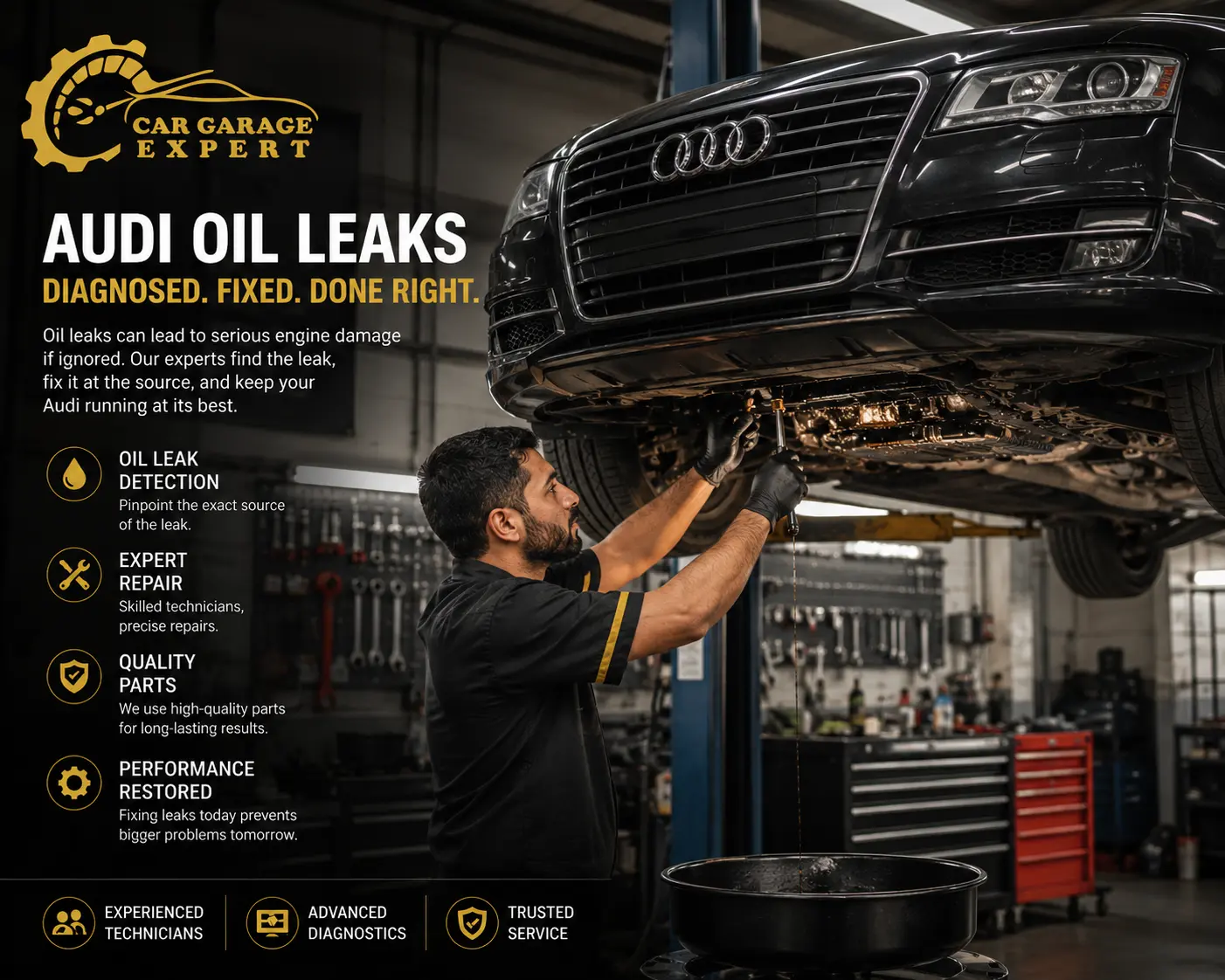
Guessing at the source from the smell or the size of the stain isn’t reliable — oil travels once it’s dripping, so a puddle under the front of the engine doesn’t always mean the leak started there. A proper diagnosis usually starts with cleaning the engine thoroughly, then using a UV dye or fluorescent tracer that shows exactly where fresh oil is emerging under UV light after a short drive. That’s really the only way to pin down the actual source instead of replacing gaskets on a hunch.
Repair Process Once the Source Is Found
Once the actual leak point is confirmed, the fix depends on which component it is. A valve cover gasket or oil filter housing gasket replacement is fairly routine, the part gets swapped, surfaces are cleaned properly, and it’s checked again after a short drive to confirm the seal’s holding. Oil pan gasket work takes a bit longer since there’s more to remove to get at it. Crankshaft seal replacement is the more involved end of things, sometimes requiring more disassembly depending on which end of the engine it’s on. Whatever the source, using a genuine gasket rather than a generic aftermarket one matters more here than people expect; a cheap gasket on a TFSI engine tends to fail again sooner.
Risks of Ignoring Audi Oil Leak Signs
A slow leak left alone doesn’t stay slow forever. Running low on oil starves the engine of lubrication, which accelerates wear on components that are expensive to replace. Oil reaching a hot exhaust or turbocharger is a fire risk, not just a smell issue. And oil dripping onto belts or electrical connectors near the engine can cause its own separate problems entirely, unrelated to the leak itself. What starts as a AED 400 gasket job can turn into a much bigger bill if it’s left to run for months.
Can You Continue Driving With It?
A very minor leak — a dipstick reading just slightly low, no smoke, no smell is usually fine to drive on for a little while as long as you’re keeping an eye on the oil level. Blue smoke, a strong burning smell, or a dashboard warning light are a different story. Those mean stop and get it looked at, since you could be looking at real engine damage if you keep driving on it.
Repair Time Once You’re Booked In
A valve cover or filter housing gasket is usually a same-day job once the source is confirmed. Oil pan gasket work typically takes a bit longer, sometimes the better part of a day given the extra components involved. Crankshaft seal replacement is the longest of the common repairs, occasionally stretching over a day or two depending on what else needs to come apart to reach it.
Cost Factors for Fixing Audi Oil Leak Signs
Cost tracks pretty closely with how much needs to come apart to reach the leak. Valve cover and filter housing gaskets sit at the more affordable end. Oil pan gasket work costs more given the extra labor involved. Crankshaft seals are the most expensive of the common repairs, both in parts and the time needed to access them properly. Genuine gaskets cost a bit more upfront than generic ones, but they tend to actually last, which matters more than the small savings on a part that fails again in a year.
Prevention Tips to Catch It Early
Checking your dipstick every few weeks, not just when a warning light comes on, catches a slow leak long before it becomes a visible puddle. A glance under the car after it’s been parked overnight is a genuinely useful habit too — it costs nothing and takes ten seconds. Sticking to your service intervals matters here more than usual, since a technician doing routine work will often spot early gasket wear before it’s actually leaking. And if you already know your specific model has a reputation for valve cover issues, it’s worth asking to have it checked proactively rather than waiting for a symptom to show up.
Dubai-Specific Advice for Audi Oil Leak Signs
Sustained heat here accelerates exactly the kind of gasket hardening that causes most Audi leaks in the first place, which is part of why these issues sometimes show up sooner in Dubai than the general mileage guidance from Audi would suggest. Heat cycling and cold parking garage to a hot engine bay and back, repeated daily is genuinely harder on rubber and gasket materials than steady moderate temperatures would be. If you’re noticing any of these signs during summer specifically, it’s worth treating that as a slightly stronger signal to get it checked soon rather than later.
Why Choose Car Garage Expert for Audi Oil Leaks?
We use UV dye tracing to confirm where a leak’s coming from, rather than replacing gaskets by guess and hoping it was the right one. Every repair uses genuine gaskets and seals, not generic aftermarket parts that tend to fail again within a year. You’ll get a written quote once the source is confirmed, not a rough number over the phone. We’re based in Al Quoz, and we’d rather explain exactly what’s leaking and why than tell you it needs “a service.”
Frequently Asked Questions
Q1: What’s the most common cause of Audi oil leaks?
The valve cover gasket, particularly on 2.0 TFSI engines — it hardens with age and heat, eventually losing its seal.
Q2: How much does it cost to fix an Audi oil leak?
Depends entirely on the source. A valve cover or filter housing gasket sits at the lower end, while an oil pan or crankshaft seal repair costs more given the extra labor involved.
Q3: Is it safe to keep driving with a minor oil leak?
A very slow leak with no smoke or warning light is usually fine short-term if you’re monitoring the oil level. Blue smoke, a strong smell, or a dashboard warning mean stop and get it checked.
Q4: How do mechanics find where an oil leak is actually coming from?
Usually a UV dye tracer — the engine’s cleaned, dye’s added to the oil, and after a short drive a UV light shows exactly where fresh oil is emerging.
Q5: Does Dubai’s heat make Audi oil leaks worse?
Yes. Sustained heat and daily heat cycling accelerate the gasket hardening that causes most of these leaks in the first place.
Related Services
An oil leak rarely stays completely isolated from the rest of the car, which is why these services tend to come up together in practice, not just on paper.
If the leak’s been running for a while, it’s worth having a broader Audi Repair Dubai check alongside the gasket fix — oil residue on nearby components can mask other early wear that’s easier to catch while the engine’s already open.
Leaks around the crankshaft seal or oil pan sometimes coincide with vibration or handling changes, since oil reaching mounts or nearby components can affect how the engine sits. If you’ve noticed anything like that alongside the leak, it’s worth a look at Audi Suspension Repair at the same visit rather than treating them as unrelated.
And if the leak’s advanced enough to affect performance, rough idle, reduced power, a check engine light alongside the oil signs that point toward needing full Audi Engine Repair Dubai rather than a gasket swap on its own. Catching that connection early is usually what separates a contained repair from one that spreads to other systems.
Final Call-to-Action
Have you noticed any of these Audi oil leak signs on your vehicle? Even a small oil leak can gradually become a major repair if it’s left untreated. What starts as a worn gasket or minor seal failure can eventually lead to reduced engine lubrication, overheating, or costly engine damage. The sooner the source of the leak is identified, the easier and often more affordable the repair will be.
At Car Garage Expert, our Audi specialists use advanced diagnostic equipment, including UV dye leak detection and manufacturer-level diagnostic tools, to accurately locate the source of the leak. We explain the problem clearly, recommend only the repairs your Audi actually needs, and use high-quality genuine or OEM-approved parts to ensure long-lasting results.
Contact Car Garage Expert and bring your Audi to our garage for a professional oil leak inspection and an honest diagnosis. Most oil leak diagnoses are completed the same day, helping you get back on the road with confidence.