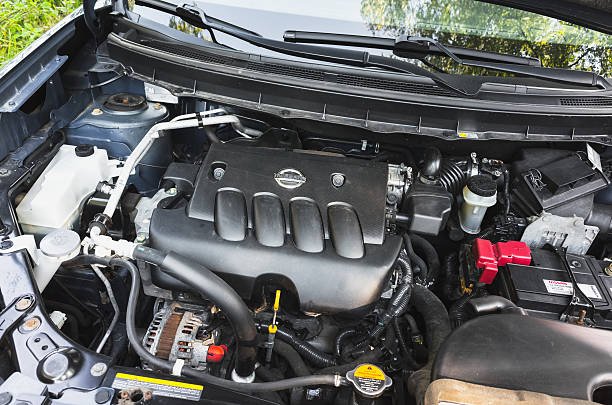
Nissan Patrol engine overheating usually occurs when the cooling system cannot control engine temperature. Common causes include low coolant, radiator leaks, blocked radiator passages, a faulty thermostat, weak cooling fans, a damaged water pump or an internal engine problem. Stop driving when the temperature gauge enters the hot zone, the warning light appears, steam becomes visible or engine power drops. Continuing may damage the cylinder heads, head gasket, pistons or complete engine. In Dubai’s extreme heat and slow-moving traffic, a professional cooling system inspection should be arranged immediately rather than repeatedly adding coolant or relying on temporary fixes.
Problem Overview
The Nissan Patrol is built to handle demanding roads, long journeys and high ambient temperatures. However, even a powerful SUV can overheat when a part of its cooling system fails.
The cooling system circulates coolant through the engine, absorbs heat, and releases it through the radiator. The thermostat controls coolant flow, the water pump keeps it circulating and the cooling fans pull air through the radiator when natural airflow is limited.
When coolant circulation, airflow or system pressure becomes inadequate, engine temperature rises. The problem may first appear during traffic, while idling with the air conditioner running, when towing or while driving across desert roads.
Nissan Patrol engine overheating should never be treated as a normal result of Dubai weather. Extreme heat can expose an existing weakness, but a correctly operating cooling system should still keep the engine within its intended temperature range.
Nissan warns that continuing to operate an overheating Patrol can cause serious engine damage or even pose a risk of vehicle fire. The manufacturer also warns against opening the radiator or coolant reservoir cap while the engine is hot, as pressurised coolant can cause severe burns.
Symptoms of Nissan Patrol Engine Overheating
Overheating does not always begin with heavy steam coming from under the bonnet. Your Patrol may show several early warning signs.
Temperature Gauge Moving Toward Hot
A temperature gauge that rises above its usual position is one of the clearest warnings. The needle may climb gradually in traffic or rise quickly when the vehicle is under load.
High Coolant Temperature Warning
Newer Patrol models may display a high-temperature warning or engine-related message. Do not clear the warning and continue the journey without identifying the cause.
Steam From the Engine Compartment
Steam usually indicates that coolant is boiling, leaking, or overflowing from the reservoir. Keep away from the bonnet until the steam has stopped.
Coolant Smell
Leaking coolant often produces a sweet or chemical smell. You may notice it inside the cabin, near the front grille or after parking.
Coolant Under the Vehicle
Green, blue, red, or pink fluid beneath the engine area may indicate a leak from the radiator, hose, water pump, reservoir, or connection. The exact coolant colour depends on the product previously used.
Weak Air-Conditioning Performance in Traffic
The air conditioner may become less effective when the cooling fan system is weak or engine temperature rises. This symptom can be especially noticeable while idling at traffic signals.
Loss of Engine Power
The engine-management system may reduce performance to protect the engine. Hesitation, poor acceleration or unusually rough operation can accompany overheating.
Repeated Coolant Loss
A Patrol that needs regular coolant top-ups has a leak or internal problem that requires diagnosis. Nissan recommends having the cooling system inspected when it frequently requires additional coolant.
White Exhaust Smoke
Persistent white smoke, particularly after the engine has warmed up, may point to coolant entering the combustion chambers. This can be associated with a damaged head gasket or cylinder head.
Common Causes of Nissan Patrol Overheating
Finding the actual cause is more important than simply replacing the most obvious part. Several faults can produce almost identical symptoms.
Low Coolant Level
Low coolant leaves the system unable to absorb and transfer enough heat. Coolant may escape through a cracked hose, a loose clamp, a radiator leak, a reservoir fault, a damaged cap, or a water-pump seal.
Adding coolant may temporarily lower the temperature, but it does not repair the leak. Nissan identifies low coolant as a common cause of overheating and advises investigating any rapid or repeated coolant loss.
Radiator Leak or Internal Blockage
A leaking radiator reduces coolant volume and pressure. Internal deposits can also restrict flow, while sand, dust and debris may reduce external airflow through the radiator fins.
A damaged or clogged radiator may fail to release heat effectively. Nissan also lists low coolant, thermostat faults, and cooling fan problems as possible causes when the radiator is not responsible.
Faulty Thermostat
The thermostat remains closed while the engine warms, then opens to allow coolant to flow through the radiator. If it sticks closed or opens incompletely, coolant cannot circulate properly.
Removing the thermostat is not a suitable long-term repair. The engine is designed to operate with controlled coolant flow and temperature regulation.
Cooling-Fan Failure
The fans become especially important at low road speeds. A failed fan motor, relay, fuse, module, temperature sensor, wiring connection or fan-control signal can cause overheating while idling.
A Patrol that stays cool on the highway but overheats in traffic should have its fan system and radiator airflow checked carefully.
Fan Clutch Problems
Depending on the model and engine configuration, the Patrol may use a mechanical fan-clutch arrangement. A weak clutch may allow the fan to spin without producing enough airflow at higher temperatures.
Water-Pump Failure
A damaged water-pump bearing, a leaking seal, or a worn impeller can reduce coolant circulation. Some pumps leak visibly, while others fail internally without leaving a large puddle.
Damaged Radiator or Reservoir Cap
The cap maintains cooling-system pressure. A weak seal can allow coolant to boil at a lower temperature, escape into the reservoir or leak from the system.
Collapsed or Leaking Hoses
Age, heat and pressure can weaken coolant hoses. A hose may develop a small leak, split suddenly or collapse internally under suction, restricting circulation.
Air Trapped in the Cooling System
Air pockets may remain after coolant replacement or cooling-system repairs. Improper bleeding can interrupt circulation and create localised hot spots.
Incorrect or Contaminated Coolant
Mixing incompatible coolant types, using an incorrect concentration or filling the system with unsuitable water may contribute to corrosion, deposits and restricted coolant flow.
Nissan advises using coolant that meets the correct specification and mixture requirements. The Patrol manual also cautions that unsuitable coolant solutions or cooling-system additives can damage or clog the system.
Head-Gasket or Cylinder-Head Damage
Combustion gases may enter the cooling system through a failed head gasket or damaged cylinder head. This can create excessive pressure, push coolant out of the reservoir and cause repeated overheating.
Internal engine damage should be considered when external leaks are not found, hoses become unusually hard, bubbles appear in the reservoir or coolant disappears without visible leakage.
Nissan Patrol Overheating Diagnostic Process
A proper diagnosis prevents unnecessary part replacement and reduces the chance of the problem returning.
Initial Inspection
The technician confirms the reported symptoms and checks the engine only after it has cooled sufficiently. The coolant level, coolant condition, oil condition, hoses, belts, radiator, reservoir and visible connections are inspected.
Cooling-System Pressure Test
The system is pressurised with specialised equipment to reveal small leaks that may not appear when the engine is cold. The radiator cap or reservoir cap may also be tested separately.
Electronic Fault-Code Scan
A diagnostic scanner checks the engine control module for coolant temperature sensor faults, fan control problems, thermostat-related codes, and other stored data.
Live information can show the coolant temperature reported by the sensor and help determine when the fans are being commanded on.
Cooling-Fan Test
The technician checks whether the fans operate at the correct speed and direction. Relays, fuses, motors, modules, wiring, and command signals are tested rather than the complete assembly being replaced without confirmation.
Thermostat and Coolant-Circulation Check
Temperature readings are compared at different points in the cooling system. Uneven temperature patterns may indicate a stuck thermostat, restricted radiator or poor circulation.
Radiator Airflow and Flow Inspection
The radiator and condenser surfaces are checked for dust, bent fins, contamination and blockage. An internal flow test may be recommended when circulation appears restricted.
Water-Pump Inspection
The pump is examined for leakage, bearing noise, looseness and circulation problems. Access requirements vary by Patrol engine and model year.
Combustion-Gas Test
When internal engine damage is suspected, a chemical block test can detect combustion gases in the cooling system. Compression or cylinder-leakage testing may then be performed.
Controlled Road Test
After repairs, the Patrol should be tested under suitable operating conditions. Coolant temperature, fan response, air-conditioning operation and system pressure are monitored before the vehicle is released.
Repair Process
The repair depends entirely on the confirmed cause.
A minor external leak may require a new hose, clamp or cap. Fan-related problems may involve a fuse, relay, motor, module, wiring repair or fan-clutch replacement. A faulty thermostat typically requires replacement, followed by proper coolant filling and bleeding.
Radiator faults may be addressed through professional cleaning when appropriate, although replacement is usually safer when the core is badly blocked, corroded or leaking. A damaged water pump must be replaced, and surrounding seals or drive components should be inspected during the job.
After completing the mechanical repair, the cooling system is normally refilled with compatible coolant, bled to remove trapped air and pressure-tested. The technician should confirm a stable temperature during idle, road driving, and air-conditioning operation.
In cases of severe overheating, additional checks may be needed before declaring the repair complete. These can include engine oil inspection, compression testing, combustion gas testing, and checking the cylinder heads for distortion.
Temporary radiator sealers should not be treated as a proper repair. They may restrict narrow passages and complicate later cooling-system work.
Risks of Ignoring the Problem
A small coolant leak can become a major engine failure when the vehicle is repeatedly driven hot.
Possible consequences include:
- Blown head gasket
- Warped or cracked cylinder heads
- Damaged pistons and cylinder walls
- Contaminated engine oil
- Failed bearings
- Damaged catalytic converters
- Split hoses or radiator failure
- Complete engine seizure
- Sudden roadside breakdown
- Increased repair costs
Overheating can also put passengers at risk if the vehicle breaks down on a busy motorway or a remote desert route.
Repeatedly topping up coolant without repairing the source can create false confidence. Coolant may escape faster on the next journey, leaving little time to react.
Can You Continue Driving an Overheating Nissan Patrol?
No. Do not continue your journey when the gauge enters the hot zone, a high-temperature warning appears, steam is visible or the engine loses power.
Move to a safe location away from traffic, switch on the hazard lights and select Park. Turn off the air conditioner. Follow the emergency procedure stated in the owner’s manual for your exact Patrol model and year.
The Patrol manual instructs drivers not to continue driving and not to remove the radiator or reservoir cap while the engine is hot. It also advises standing clear when steam or coolant is escaping and stopping the engine if the cooling fan is not operating or coolant is leaking.
Never pour cold water over a hot engine. Sudden temperature changes can damage hot metal components.
Once the vehicle is safe, arrange professional recovery if the cause is unknown, coolant has escaped, the warning light returns, or the engine has overheated severely.
Nissan Patrol Overheating Repair Time
Repair time depends on accessibility, diagnosis, and the extent of the damage.
A basic diagnostic inspection may take approximately one hour. Replacing a hose, cap, sensor or relay can sometimes be completed within the same visit.
A thermostat, fan assembly or radiator repair may require several hours. Water-pump replacement can take longer because surrounding components may need to be removed.
Cooling-system flushing also requires enough time to drain, clean, refill and bleed the system correctly. Rushing the bleeding stage can leave trapped air, causing the Patrol to overheat again.
Head gasket or cylinder head repairs may take several days because the engine must be dismantled, inspected, and measured. Parts availability and machine-shop work can extend the completion time.
Any time estimate should be confirmed after diagnosis rather than based only on the dashboard symptom.
Nissan Patrol Overheating Repair Cost Factors
There is no single fixed price for every overheating repair. The final cost is influenced by:
Cause of the Overheating
A loose clamp costs far less to repair than a water pump, radiator or damaged head gasket.
Patrol Model and Engine
The generation, model year, engine size and component layout affect labour time and part prices.
Genuine, OEM or Aftermarket Parts
Part quality, supplier, warranty and availability can influence the quotation. The correct specification matters more than choosing the cheapest available component.
Diagnostic Requirements
Intermittent overheating may require extended testing, live data monitoring, or a road test before the fault can be confirmed.
Coolant and Consumables
The quotation may include coolant, seals, clamps, cleaning products, and bleeding of the system.
Additional Damage
If the vehicle has been driven while overheating, the original cooling fault may be accompanied by damage to the head gasket, cylinder head, or lubrication system.
Previous Repairs
Incorrect wiring, mixed coolant, missing thermostats, unsuitable sealants, or poorly installed aftermarket fans can complicate diagnosis and repair.
Car Garage Expert should inspect the vehicle before providing a final quotation. Replacing parts based only on assumptions can cost more than completing a proper diagnosis first.
Prevention Tips
- Check the coolant level when the engine is completely cold. Never use the level in a hot reservoir as your only guide.
- Inspect the ground beneath the vehicle for fresh fluid and pay attention to coolant smells after parking.
- Watch the temperature gauge during traffic, towing, desert driving and long summer journeys. Learn its normal position so that small changes are easier to notice.
- Use coolant that meets Nissan’s required specification. Avoid mixing unknown products or relying on ordinary tap water as a permanent coolant solution.
- Have old hoses, clamps, caps and belts inspected before summer. Rubber components become harder and weaker after repeated exposure to engine heat.
- Keep the radiator and air-conditioning condenser clean. Dust, insects and debris can reduce airflow, but cleaning must be performed carefully to avoid bending the fins.
- Investigate weak air-conditioning performance in traffic, especially when it appears alongside a rising temperature gauge.
- Do not install an auxiliary fan without confirming correct airflow direction, wiring protection, relay capacity and control strategy.
- Arrange cooling-system maintenance before a long UAE road trip rather than waiting for the temperature warning to appear.
Dubai-Specific Advice
Dubai places heavy demands on cooling systems. High ambient temperatures, long periods of idling, slow-moving traffic, air-conditioner use and desert dust can expose a component that works acceptably during cooler months.
Dubai’s Roads and Transport Authority has advised motorists to check the coolant, engine oil, and general vehicle condition during summer, as vehicles are more vulnerable to overheating and breakdowns in extreme heat.
Schedule an inspection before peak summer if your Nissan Patrol has a history of coolant loss, fluctuating temperature or weak cooling at idle.
After desert driving, inspect the radiator and condenser area for accumulated sand and debris. Avoid spraying high-pressure water directly into delicate fins or electrical connectors.
Carry drinking water for passengers, but do not assume bottled water is the correct permanent fluid for the cooling system.
Avoid pushing an overheating Patrol to the nearest workshop. Dubai traffic can turn a short drive into an extended period of idling, causing a manageable leak to become serious engine damage.
The UAE authorities also advise drivers to stop safely and switch off the vehicle when the engine temperature exceeds normal levels.
Why Choose Car Garage Expert?
At Car Garage Expert, the focus is on identifying the reason your Patrol is overheating rather than recommending parts without proper testing.
The diagnostic process can cover coolant leaks, radiator condition, thermostat operation, fan performance, electrical controls, water pump circulation, and possible internal engine damage.
You receive a repair recommendation based on the condition of your vehicle, its model and the results of the inspection. This diagnosis-first approach helps reduce unnecessary replacements and lowers the risk of the same warning returning after the repair.
Car Garage Expert can also check for related concerns such as coolant contamination, the quality of previous repairs, air trapped in the system, and airflow restrictions caused by Dubai’s dusty driving conditions.
Frequently Asked Questions
Why does my Nissan Patrol overheat only in traffic?
Overheating in traffic often points to inadequate radiator airflow. The cooling fan, fan clutch, relay, control module, wiring or blocked radiator fins may be responsible. At highway speed, natural airflow can temporarily hide the problem.
Why does the temperature return to normal when I start driving?
Vehicle movement forces more air through the radiator. If the temperature falls at speed but rises while stationary, the fan system and radiator airflow should be inspected.
Can a faulty thermostat cause a Nissan Patrol to overheat?
Yes. A thermostat that remains closed or opens only partially can restrict coolant flow through the radiator. It should be tested and replaced when faulty rather than permanently removed.
Can low engine oil cause overheating?
Very low or badly degraded oil can increase friction and engine temperature. However, most overheating complaints are related to the cooling system. Both oil level and coolant condition should be checked.
Why is my Patrol losing coolant without a visible leak?
Coolant may escape only when the system is hot and pressurized. It can also leak from the water pump, heater system or an internal engine fault. A pressure test and a combustion gas test can help locate the cause.
Can I add water to my Nissan Patrol when it overheats?
Do not open the radiator or pressurized reservoir while the engine is hot. In a genuine emergency, suitable water may be used only after the system has cooled and when the owner’s manual permits it. The system should later be checked and refilled with the correct coolant mixture.
Will turning off the air conditioner help?
Turning off the air conditioner reduces some engine load and is part of Nissan’s overheating procedure. It does not fix the underlying fault, so the vehicle still requires inspection.
Can a faulty air conditioner make the Patrol overheat?
The air conditioner itself may increase engine load, but overheating commonly occurs when the shared airflow system is weak. A faulty cooling fan can contribute to both poor air-conditioning performance and rising coolant temperature.
Is it safe to open the bonnet when steam is coming out?
No. Nissan specifically warns against opening the bonnet while steam is escaping. Move away from the engine compartment and wait until the steam has stopped.
Should I replace the radiator if my Patrol overheats?
Not automatically. The radiator should be tested for leakage, restriction and airflow problems. The actual cause may be a fan, thermostat, cap, water pump, hose, sensor or internal engine fault.
How often should I check the coolant in Dubai?
Check it regularly when the engine is completely cold and before long journeys. Older vehicles or Patrols with a history of cooling-system problems should be inspected more frequently.
Can overheating damage a Nissan Patrol engine after one incident?
Yes. The level of damage depends on how high the temperature became and how long the engine continued running. Severe overheating can damage the head gasket or cylinder heads during a single incident.
Conclusion
Nissan Patrol engine overheating is a warning that requires immediate attention, particularly in Dubai’s demanding summer conditions. Low coolant, leaking hoses, radiator obstructions, thermostat faults, fan failures, and water pump problems are among the most common causes, but accurate testing is essential before replacing anything.
Do not keep driving, repeatedly add coolant or depend on a temporary sealant. Early diagnosis may limit the repair to a cooling-system component, while delayed action can lead to expensive internal engine damage.
Book Your Nissan Patrol Cooling-System Inspection
Is your temperature gauge rising, coolant level dropping or air conditioner becoming weak in traffic?
Contact Car Garage Expert in Dubai to arrange a complete Nissan Patrol overheating diagnosis. Have the cooling system inspected before a minor leak, weak fan or restricted radiator turns into major engine damage.
Visit us in our Al Quoz, Dubai branch or visit Car Garage Expert