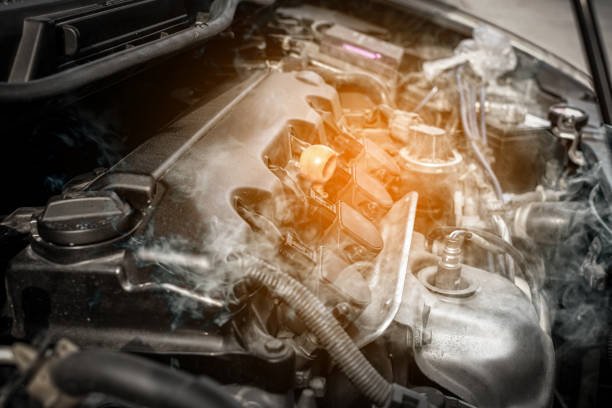
Engine overheating is one of the most serious problems a driver can experience, especially in Dubai’s extreme heat. Your vehicle’s cooling system must work harder when outside temperatures rise, traffic moves slowly, and the air conditioning operates continuously.
If the temperature gauge suddenly climbs, steam appears from under the bonnet, or a coolant warning light comes on, your vehicle may have a cooling-system fault that requires immediate attention. Continuing to drive an overheating car can damage the cylinder head, head gasket, pistons, engine block, and other expensive components.
At Car Garage Expert, professional technicians inspect overheating problems, identify the underlying cause, Why Does My Engine Overheat in Dubai and perform the necessary repairs to restore safe engine operating temperatures.
Why Does My Engine Overheat in Dubai?
Your engine may overheat in Dubai because of low coolant, a coolant leak, a faulty radiator fan, a blocked radiator, a damaged thermostat, a failing water pump, or engine oil problems. Dubai’s high temperatures, heavy traffic, sand, and frequent air-conditioning use place additional pressure on the cooling system. If the temperature gauge enters the red zone, switch off the air conditioning, pull over safely, turn off the engine, and allow it to cool. Never open the radiator cap while the engine is hot. Arrange an inspection with Car Garage Expert before driving again.
Problem Overview
An engine produces a significant amount of heat while running. The cooling system controls that heat by circulating coolant through the engine and radiator. The radiator releases heat into the surrounding air, while the thermostat, water pump, cooling fans, hoses, and pressure cap help maintain the correct operating temperature.
When any part of this system fails, heat may build up faster than it can be removed. The temperature gauge then rises above its normal position, and the engine may begin to overheat.
Dubai driving conditions can make this problem worse. High ambient temperatures reduce the cooling system’s margin for error. A component that performs adequately during cooler weather may struggle during summer traffic, long highway journeys, or extended periods of idling with the air conditioning switched on.
Overheating is not a problem that should be solved simply by adding water and continuing to drive. Low coolant is usually a symptom of another issue, such as a leak, damaged hose, defective cap, or internal engine fault. A proper diagnosis is necessary to prevent repeated overheating and major engine damage.
Symptoms of an Overheating Engine
Recognizing the warning signs early can help protect your engine. Common symptoms include:
Temperature Gauge Rising
The engine temperature gauge may move above its normal position or enter the red zone. A sudden increase usually indicates a serious cooling-system problem.
Coolant Warning Light
Some vehicles display a coolant temperature warning light or a message such as “Engine Temperature High.” Stop the vehicle as soon as it is safe.
Steam from Under the Bonnet
Steam may appear when coolant leaks onto hot engine components or begins boiling inside the cooling system. Do not open the bonnet immediately if large amounts of steam are escaping.
Sweet or Chemical Smell
Engine coolant often has a sweet chemical smell. You may notice the odor inside or outside the vehicle when coolant is leaking.
Coolant Under the Vehicle
A green, red, pink, orange, blue, or clear-looking liquid under the car may indicate a coolant leak. Coolant color varies by vehicle manufacturer and coolant type.
Weak Air-Conditioning Performance
A cooling-system or radiator-fan problem may also affect air-conditioning performance, particularly when the vehicle is stationary or moving slowly.
Heater Blowing Cold Air
If the engine is hot but the cabin heater blows cold air, coolant may not be circulating correctly. This can happen because of low coolant, trapped air, a blockage, or a failing water pump.
Reduced Engine Performance
Modern vehicles may activate a protection mode when excessive temperatures are detected. Acceleration may become weak, warning lights may appear, and the engine may run roughly.
Unusual Engine Noise
A failing water pump, damaged belt, or severely overheated engine may produce grinding, rattling, knocking, or squealing noises.
Main Causes of Engine Overheating in Dubai
Several mechanical and environmental factors can make an engine overheat. The most common causes include the following.
1. Low Coolant Level
Coolant absorbs heat from the engine and transfers it to the radiator. If the coolant level is too low, the system cannot control engine temperature effectively.
Coolant should not disappear under normal operating conditions. If it requires frequent topping up, there may be an external or internal leak.
2. Coolant Leak
Leaks can develop in:
- Radiator hoses
- Hose connections
- Radiator seams
- Coolant reservoir
- Thermostat housing
- Water pump
- Heater core
- Expansion tank cap
- Engine gaskets
Some leaks are visible only when the system is hot and pressurized. A pressure test may be required to locate them.
3. Faulty Radiator Fan
The radiator fan pulls air through the radiator when the vehicle is stationary or moving slowly. If the fan motor, relay, fuse, wiring, control module, or temperature sensor fails, the engine may overheat in traffic but remain cooler at highway speed.
This pattern is common in Dubai because vehicles frequently idle in congestion while the air conditioning is running.
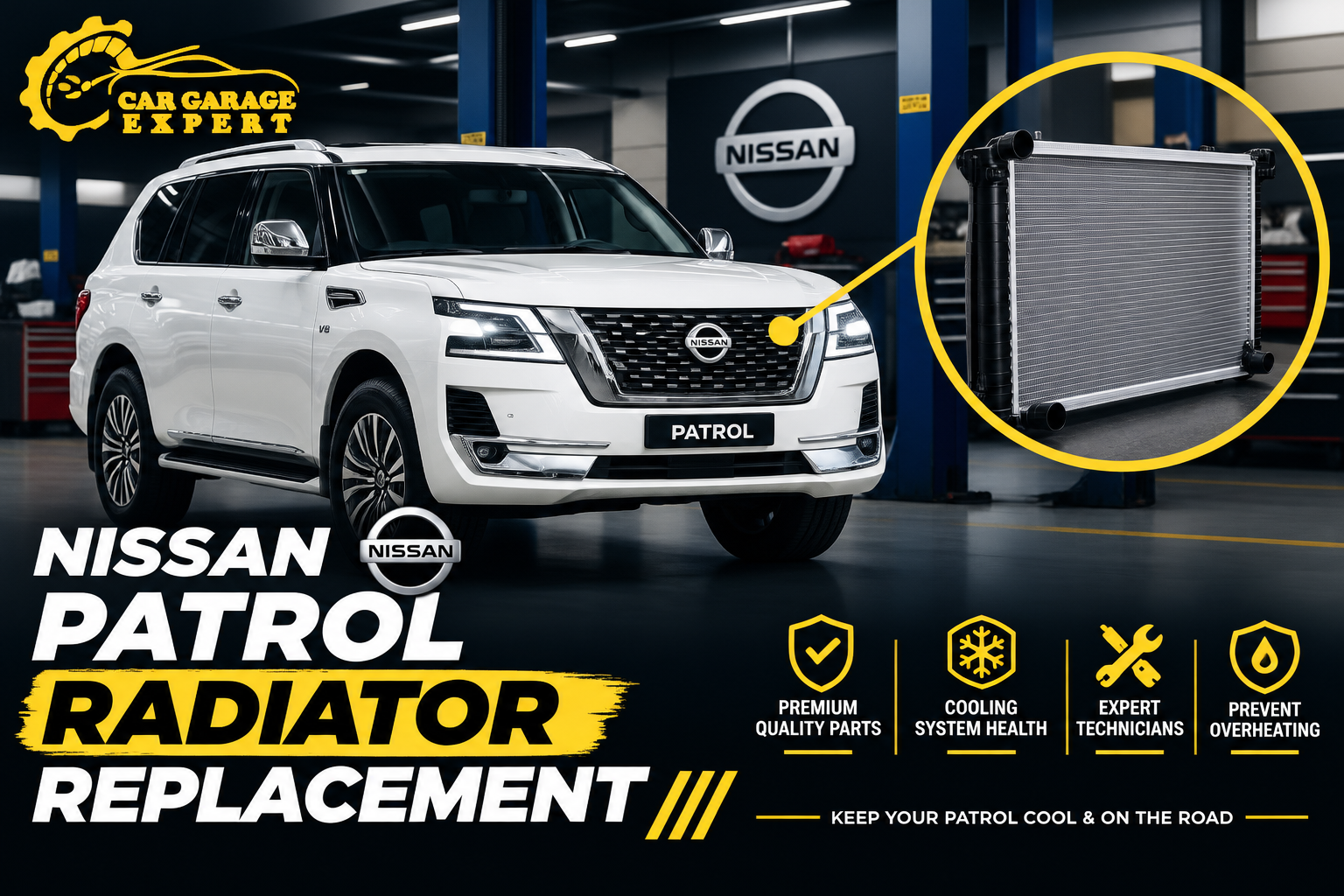
4. Blocked or Dirty Radiator
Sand, dust, insects, dirt, and road debris can restrict airflow through the radiator and air-conditioning condenser. Internal corrosion, incorrect coolant, or mineral deposits can also restrict coolant flow inside the radiator.
A blocked radiator may not release enough heat, even when the rest of the cooling system appears to operate normally.
5. Faulty Thermostat
The thermostat controls coolant flow between the engine and radiator. If it becomes stuck in the closed position, hot coolant cannot reach the radiator efficiently.
A thermostat can also open only partially, causing the vehicle to operate normally during light driving but overheat under heavier loads or in hot weather.
6. Failing Water Pump
The water pump circulates coolant throughout the engine. A worn impeller, damaged bearing, slipping drive belt, electrical fault, or internal failure can reduce circulation.
Possible signs include coolant leakage near the pump, bearing noise, temperature fluctuations, or overheating at different driving speeds.
7. Damaged Radiator or Expansion Tank Cap
The cooling system relies on pressure to raise the coolant’s boiling point. A damaged or incorrect pressure cap may allow coolant to boil, escape, or return incorrectly between the radiator and reservoir.
Although the cap is a relatively small component, it can cause significant overheating problems.
8. Air Trapped in the Cooling System
Air pockets can prevent coolant from circulating correctly. Trapped air may enter after a leak, coolant replacement, hose repair, radiator replacement, or improper bleeding procedure.
Some vehicles require a manufacturer-specific bleeding process to remove air completely.
9. Broken Serpentine Belt or Drive Belt
On vehicles with a belt-driven water pump, a damaged or loose belt can stop or reduce coolant circulation. The same belt may also operate the alternator, power-steering pump, or other accessories.
A belt problem requires immediate attention.
10. Engine Oil Problems
Engine oil lubricates moving components and helps control heat. Low oil, contaminated oil, incorrect viscosity, or poor oil circulation can increase friction and operating temperature.
Oil-related overheating may be accompanied by an oil-pressure warning, engine noise, or reduced performance.
11. Blown Head Gasket
A damaged head gasket can allow combustion gases to enter the cooling system or coolant to enter the cylinders and engine oil.
Possible signs include:
- Repeated overheating
- Coolant loss without an obvious external leak
- White exhaust smoke
- Bubbles in the expansion tank
- Milky engine oil
- Hard cooling-system hoses
- Rough starting or misfiring
Head-gasket failure requires urgent professional diagnosis.
12. Heavy Engine Load
Towing, carrying excessive weight, driving aggressively, climbing steep roads, or operating the vehicle for extended periods can produce additional heat.
A healthy cooling system should manage normal loads. However, an aging or partially blocked system may overheat when placed under stress.
Diagnostic Process
A professional diagnosis is essential because multiple faults can create similar symptoms. At Car Garage Expert, an overheating inspection may include the following steps.
Initial Visual Inspection
The technician checks the coolant level, engine oil level, hoses, belts, radiator, reservoir, water pump area, cooling fans, and visible connections.
Signs of dried coolant residue can help locate small or intermittent leaks.
Cooling-System Pressure Test
The cooling system is pressurized with specialist equipment while the engine is cool. A pressure drop may reveal leaks from hoses, the radiator, water pump, expansion tank, thermostat housing, or other components.
Radiator Cap Test
The radiator or expansion tank cap can be tested to determine whether it holds the correct pressure.
Cooling-Fan Test
The technician checks whether the fan operates at the correct temperature and when the air conditioning is switched on. Fuses, relays, wiring, sensors, fan motors, and control signals may also be tested.
Thermostat Inspection
Coolant-temperature data and hose temperatures can indicate whether the thermostat is opening correctly. In some cases, removal and direct inspection may be necessary.
Coolant Circulation Test
The technician checks whether coolant circulates properly through the engine and radiator. Poor circulation can point to a faulty water pump, blockage, trapped air, or thermostat problem.
Electronic Diagnostic Scan
A diagnostic scanner can retrieve fault codes and live data from the engine control system. This helps evaluate coolant-temperature sensors, fan commands, engine performance, and related electrical faults.
Combustion-Gas Test
If internal engine damage is suspected, a chemical test may be used to detect combustion gases in the cooling system.
Cylinder and Gasket Testing
Compression testing, leak-down testing, spark plug inspection, or internal camera inspection may be recommended when symptoms suggest head-gasket or cylinder-head damage.
Engine Overheating Repair Process
The correct repair depends on the diagnostic findings. A typical repair process includes:
- Allowing the engine to cool completely
- Inspecting the cooling system and identifying the fault
- Providing a repair recommendation
- Replacing or repairing damaged components
- Refilling the system with compatible coolant
- Bleeding trapped air according to manufacturer procedures
- Pressure-testing the system
- Running the engine to operating temperature
- Confirming radiator-fan operation
- Road-testing the vehicle and rechecking for leaks
Repairs may involve replacing a hose, thermostat, radiator cap, cooling fan, radiator, water pump, expansion tank, temperature sensor, gasket, or related electrical component.
Simply topping up the coolant does not repair the underlying problem.
Risks of Ignoring an Overheating Engine
Driving an overheating vehicle can turn a manageable cooling-system repair into a complete engine rebuild or replacement.
Potential consequences include:
Blown Head Gasket
Excessive heat can damage the seal between the engine block and cylinder head, causing coolant loss, compression problems, and oil contamination.
Warped Cylinder Head
Aluminium cylinder heads can distort when exposed to extreme temperatures. Repair may require machining or replacement.
Cracked Engine Components
Severe overheating can crack the cylinder head or engine block.
Piston and Cylinder Damage
Extreme heat reduces lubrication and can cause pistons to expand, score cylinder walls, or seize inside the engine.
Catalytic Converter Damage
Coolant entering the combustion chambers can damage oxygen sensors and the catalytic converter.
Sudden Breakdown
The engine may shut down without warning, leaving the vehicle stranded in traffic or on the roadside.
Increased Repair Costs
A leaking hose or faulty thermostat is generally much less complicated than repairing internal engine damage caused by continued driving.
Can You Continue Driving an Overheating Car?
You should not continue driving when the temperature gauge enters the red zone, a high-temperature warning appears, or steam comes from the engine compartment.
Take the following steps:
- Switch off the air conditioning.
- Pull over in a safe location as soon as possible.
- Turn off the engine.
- Activate the hazard lights if necessary.
- Keep away from escaping steam or coolant.
- Allow the engine to cool completely.
- Do not open the radiator or expansion tank cap while hot.
- Arrange recovery or professional assistance.
Turning the cabin heater to maximum may temporarily remove a small amount of heat from the engine while you are moving to a nearby safe stopping point. It is not a repair and should not be used to continue a journey.
Do not pour cold water into a severely overheated engine. Sudden temperature changes may damage hot metal components.
Repair Time
Engine overheating repair time depends on the cause and the extent of the damage.
A basic inspection, pressure test, or small hose replacement may be completed relatively quickly. Replacing a thermostat, fan assembly, radiator, or water pump can require more time because access differs between vehicle models.
Internal engine repairs, such as head-gasket replacement or cylinder-head work, take considerably longer. The workshop may need to dismantle part of the engine, test components, machine surfaces, replace seals, and verify that no further damage occurred.
Vehicle make, model, engine design, parts availability, and previous overheating damage all influence the final repair time.
Car Garage Expert provides an assessment after diagnosis so the customer understands the expected repair process.
Cost Factors
The cost of repairing an overheating vehicle in Dubai depends on several factors:
- Cause of the overheating
- Vehicle make and model
- Price and availability of replacement parts
- Genuine, original-equipment, or aftermarket part selection
- Labour required to access the failed component
- Type and quantity of coolant
- Need for electrical diagnosis
- Extent of internal engine damage
- Additional components damaged by excessive heat
- Requirement for towing or recovery
A small leak or faulty cap may require a relatively straightforward repair. A damaged radiator, electric fan module, water pump, or head gasket can involve more extensive work.
The most reliable way to estimate the cost is to inspect and test the vehicle rather than replacing parts based only on symptoms.
Prevention Tips
Regular maintenance can significantly reduce the risk of engine overheating.
Check the Coolant Level
Check the coolant reservoir when the engine is completely cold. Do not rely solely on dashboard warnings.
Use the Correct Coolant
Use coolant that meets the vehicle manufacturer’s specifications. Mixing incompatible coolants can create deposits, reduce corrosion protection, and damage seals.
Inspect Hoses and Connections
Replace hoses that are swollen, cracked, hardened, soft, leaking, or contaminated with oil.
Clean the Radiator and Condenser
External cleaning helps remove sand, dust, and debris that restrict airflow. Cleaning must be performed carefully to avoid bending delicate fins or damaging electrical components.
Service the Cooling System
Replace coolant according to the manufacturer’s maintenance schedule. Old coolant may lose its corrosion protection and heat-transfer performance.
Monitor the Temperature Gauge
Learn the gauge’s normal position. Investigate unusual fluctuations before the vehicle overheats severely.
Repair Small Leaks Promptly
A minor leak can quickly become a major coolant loss during high-temperature driving.
Maintain the Engine Oil
Use the correct oil grade and follow appropriate service intervals. Low or degraded oil increases engine stress.
Test the Battery and Electrical System
Cooling fans rely on electrical power. Weak voltage, damaged wiring, faulty relays, or control-system problems can prevent proper fan operation.
Inspect Before Summer
A pre-summer cooling-system inspection can identify weak hoses, low coolant, fan problems, and radiator restrictions before peak temperatures arrive.
Dubai-Specific Advice
Dubai’s climate and driving environment create unique challenges for vehicle cooling systems.
Extreme Summer Temperatures
High ambient temperatures make it more difficult for the radiator to release engine heat. Cooling-system components must operate efficiently with little room for reduced performance.
Heavy Traffic and Idling
Slow-moving traffic limits natural airflow through the radiator. The electric cooling fan becomes especially important when the vehicle is stationary.
If your car overheats mainly in traffic but cools down while driving faster, the fan system, radiator airflow, or coolant circulation should be inspected.
Frequent Air-Conditioning Use
The air-conditioning condenser is usually positioned in front of the radiator. Heat from the condenser increases the cooling load, especially during long periods of idling.
A weak fan may cause both poor air-conditioning performance and elevated engine temperature.
Sand and Dust
Dust and sand can accumulate between the condenser and radiator or block the external fins. This restriction may not be visible without proper inspection.
Long Highway Journeys
Sustained high-speed driving produces continuous engine heat. Low coolant, partial radiator blockage, a weak water pump, or an unstable thermostat may become more noticeable during longer journeys.
Avoid Using Tap Water as a Long-Term Solution
Plain tap water may contain minerals that contribute to scale and corrosion. Emergency water can help only in specific situations after the engine has cooled, but the system should later be checked and filled with the correct coolant mixture.
Do Not Delay Warning-Sign Inspections
A vehicle that runs slightly hotter than usual during Dubai’s cooler months may overheat severely once summer temperatures increase. Early diagnosis can prevent roadside breakdowns and expensive engine damage.
Why Choose Car Garage Expert?
Car Garage Expert provides professional vehicle cooling-system inspection and engine overheating repair services in Dubai.
Customers choose Car Garage Expert for:
Skilled Technicians
Experienced technicians inspect mechanical and electrical cooling-system components rather than relying on guesswork.
Advanced Diagnostic Equipment
Pressure-testing equipment, electronic scanners, temperature measurements, electrical testing tools, and leak-detection methods help identify the actual cause.
Complete Cooling-System Services
Services can include coolant leak repair, radiator service, thermostat replacement, water pump replacement, fan diagnosis, hose replacement, coolant flushing, temperature-sensor testing, and internal engine assessment.
Clear Repair Recommendations
Customers receive an explanation of the detected fault and the repairs required to restore safe operation.
Quality Replacement Parts
Suitable replacement options can be recommended based on the vehicle, budget, performance requirements, and parts availability.
Dubai-Focused Experience
Technicians understand the effects of high temperatures, heavy traffic, sand exposure, and continuous air-conditioning use on vehicle cooling systems.
Convenient Support
From initial diagnosis to final testing, Car Garage Expert aims to make the repair process clear, efficient, and dependable.
Frequently Asked Questions
Why does my engine overheat only when the air conditioning is on?
The additional heat produced by the air-conditioning condenser may expose a weak radiator fan, restricted radiator, low coolant level, or cooling-system circulation problem. The fan and airflow system should be tested.
Why does my car overheat in traffic but not on the highway?
At highway speed, natural airflow cools the radiator. In traffic, the vehicle depends heavily on electric or mechanical cooling fans. A faulty fan, relay, sensor, wiring circuit, or blocked radiator may cause overheating while stationary.
Why does my car overheat at high speed?
Possible causes include low coolant, a partially blocked radiator, weak water pump, faulty thermostat, collapsing hose, damaged head gasket, or restricted coolant circulation.
Can low engine oil cause overheating?
Yes. Low or degraded oil increases friction and reduces heat control inside the engine. However, the complete cooling system should also be inspected because more than one problem may be present.
Can I add water when my engine overheats?
Never remove the radiator or expansion tank cap while the engine is hot. Pressurized coolant can cause severe burns. Once the engine has cooled completely, emergency water may be used only when appropriate, but it is not a permanent substitute for the correct coolant.
How long should I wait before opening the coolant cap?
There is no universal waiting period because cooling time depends on the vehicle, outside temperature, and severity of overheating. The system must be completely cool before the cap is opened. When uncertain, leave it closed and seek professional assistance.
Why is my coolant disappearing without a visible leak?
The leak may occur only under pressure, evaporate on hot components, enter the cabin through the heater core, or escape internally through a damaged gasket. A pressure test and internal leak inspection may be required.
Can a faulty thermostat cause repeated overheating?
Yes. A thermostat that remains closed or opens only partially can restrict coolant flow and cause repeated temperature increases.
Is it safe to drive after adding coolant?
Not necessarily. Adding coolant may temporarily restore the level, but the cause of the coolant loss still needs to be identified. If the engine overheated significantly, arrange an inspection before continuing to drive.
Can overheating damage the air-conditioning system?
Engine overheating does not always damage the air conditioner directly, but the systems share airflow components. A failed cooling fan can cause both high engine temperature and weak air-conditioning performance.
Why does the temperature gauge rise and then return to normal?
Temperature fluctuations may indicate low coolant, trapped air, an intermittent fan, a sticking thermostat, a sensor fault, or inconsistent coolant circulation. The vehicle should be diagnosed before the problem becomes worse.
Does coolant need to be changed in Dubai more frequently?
Service requirements depend on the manufacturer, coolant type, vehicle condition, and operating environment. Vehicles exposed to heavy heat and demanding use should be inspected regularly, and coolant should be replaced according to the correct maintenance schedule.
What should I do if steam comes from under the bonnet?
Pull over safely, turn off the engine, keep away from the steam, and allow the vehicle to cool. Do not remove the coolant cap. Arrange professional inspection or vehicle recovery.
Can Car Garage Expert diagnose all types of overheating problems?
Car Garage Expert can inspect common mechanical, cooling-system, and electrical causes of engine overheating. The exact diagnostic and Engine repair requirements depend on the vehicle and the condition of the engine.
Conclusion
An overheating engine is an urgent warning that your vehicle’s cooling system is no longer controlling temperature correctly. Low coolant, leaks, radiator restrictions, fan problems, thermostat failure, water pump damage, and internal engine faults are among the most common causes.
Dubai’s extreme temperatures, traffic conditions, sand, and continuous air-conditioning use can make even a small cooling-system weakness much more serious. Ignoring the warning or continuing to drive may result in head-gasket failure, cylinder-head damage, engine seizure, or complete engine replacement.
The safest response is to stop the vehicle, allow the engine to cool, and arrange a professional diagnosis.
Why Does My Engine Overheat in Dubai? Contact Car Garage Expert Today
Do not wait for a rising temperature gauge to become a major engine failure. Bring your vehicle to Car Garage Expert for a complete cooling-system inspection and accurate overheating diagnosis.
Our technicians can inspect coolant leaks, radiators, cooling fans, thermostats, water pumps, hoses, sensors, pressure caps, and related engine components.
Contact Car Garage Expert today to schedule your engine overheating inspection in Dubai and protect your vehicle from costly damage.
Visit us in our Al Quoz, Dubai branch or visit Car Garage Expert