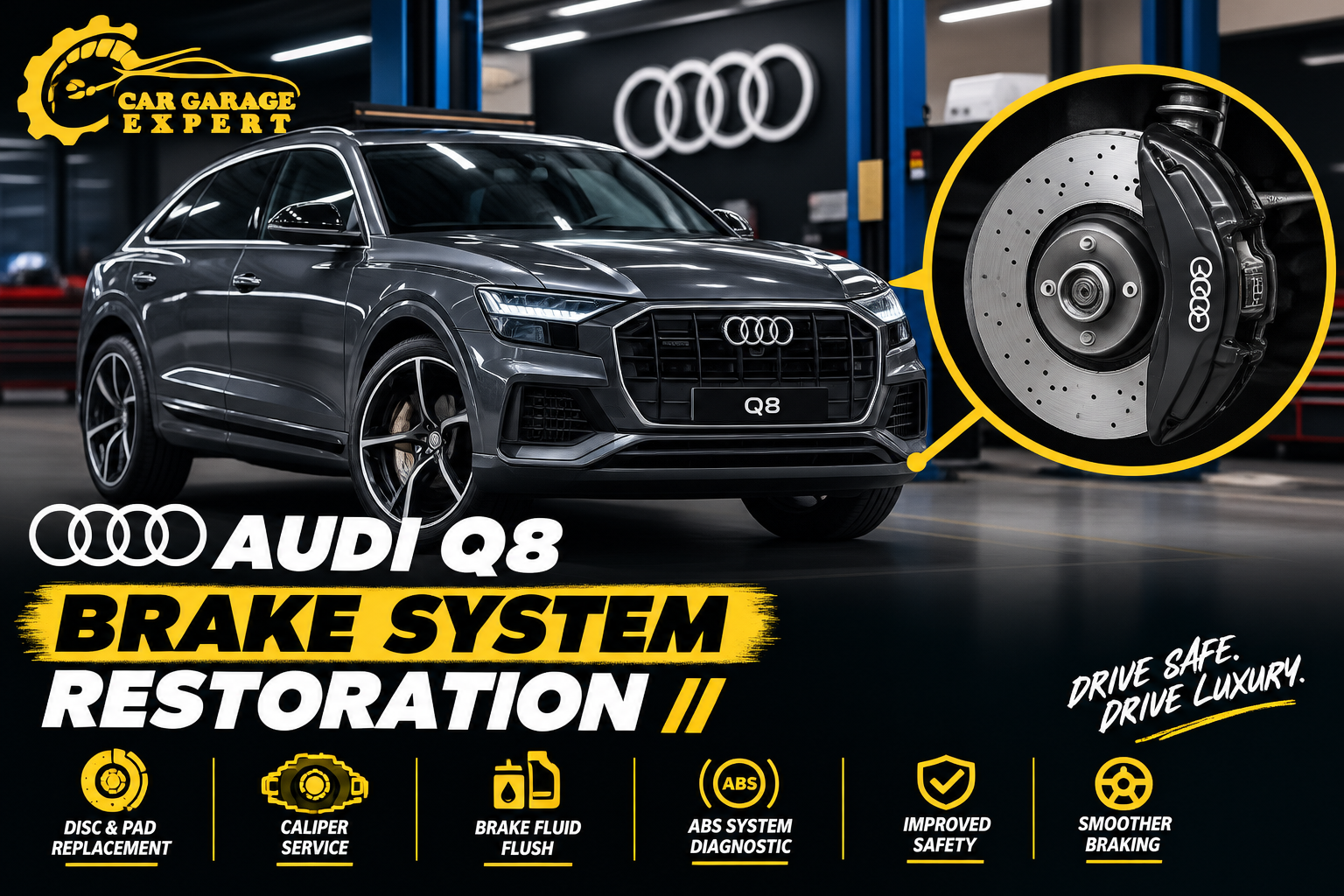

A timely BMW car brake oil change is essential for maintaining reliable braking performance, especially when driving in Dubai’s demanding climate and busy traffic conditions. Although many drivers call it “brake oil,” the technically correct term is brake fluid. This hydraulic fluid transfers pressure from the brake pedal to the braking components at each wheel, allowing the vehicle to slow down or stop safely.
Brake fluid does not remain effective forever. It gradually absorbs moisture, becomes contaminated, and loses some of its ability to withstand the high temperatures produced during braking. As its condition deteriorates, the brake pedal may feel softer, braking performance may become inconsistent, and internal brake components may face a greater risk of corrosion.
BMW includes brake-fluid replacement as part of its scheduled maintenance system. Depending on the model, year, driving conditions, and service history, the requirement may appear through the vehicle’s Condition-Based Service system, iDrive display, instrument cluster, or My BMW App. BMW advises owners to follow the vehicle’s displayed service requirements and use fluid that meets the manufacturer’s specifications.
What Is a BMW Car Brake Oil Change?
A BMW car brake oil change involves removing the old brake fluid from the hydraulic braking system and replacing it with fresh, manufacturer-approved fluid. The technician also bleeds the braking system to remove trapped air and ensure that clean fluid reaches the brake calipers at every wheel.
This service is different from simply adding fluid to the reservoir. Topping up may correct a temporarily low level, but it does not remove moisture, contamination, or degraded fluid already circulating through the system. If the brake fluid is due for replacement, the complete system should be flushed and bled correctly.
Brake fluid operates inside a sealed hydraulic network consisting of:
- The brake master cylinder
- Brake lines and flexible hoses
- ABS and stability-control components
- Brake calipers
- Wheel cylinders on applicable models
- The brake-fluid reservoir
When you press the brake pedal, the master cylinder applies pressure to the fluid. That pressure travels through the brake lines and activates the calipers, which press the brake pads against the discs.
Because brake fluid is nearly incompressible when it is in good condition, it transfers pressure quickly and consistently. Air bubbles, excessive moisture, incorrect fluid, or contamination can interfere with this process and produce an unsafe or unpredictable brake-pedal response.
Why BMW Brake Fluid Needs Regular Replacement
Most glycol-based automotive brake fluids are hygroscopic, meaning they absorb moisture over time. As water content increases, the fluid’s boiling point falls. Under severe braking, moisture-contaminated fluid can become hot enough to form vapour bubbles. Unlike liquid, vapour can be compressed, potentially resulting in excessive pedal travel or reduced braking response.
Regular replacement helps protect the entire hydraulic system rather than only improving the feel of the brake pedal.
Maintaining a Consistent Brake Pedal
Fresh brake fluid supports a firm, predictable pedal response. Old fluid, trapped air, or contamination may make the pedal feel soft, spongy, or unusually low.
A change in pedal feel should never be ignored. It may indicate deteriorated fluid, air in the hydraulic system, a leak, worn brake pads, a master-cylinder problem, or another fault that requires immediate inspection.
Reducing the Risk of Brake Fade
Brake fade describes a reduction in braking effectiveness caused by excessive heat. It can become noticeable during repeated hard stops, heavy traffic, towing, spirited driving, or long downhill journeys.
Moisture-contaminated fluid has a lower boiling point than fresh fluid. If vapour develops inside the hydraulic lines, the pedal may become soft and stopping performance can decline.
Protecting ABS and Stability-Control Components
Modern BMW vehicles use advanced braking and stability systems, including Anti-lock Braking System technology, Dynamic Stability Control, traction-control functions, and electronic brake-force management.
These systems rely on accurately controlled hydraulic pressure. Clean fluid that meets the correct specification helps valves, pumps, seals, and hydraulic control units operate as intended.
Preventing Internal Corrosion
Moisture and contamination can contribute to corrosion inside brake lines, callipers, cylinders, and hydraulic control components. Damage to these parts can result in leaks, seized components, expensive repairs, and unreliable braking.
Changing the fluid at the correct interval is a relatively straightforward preventive service compared with repairing a damaged ABS hydraulic unit or replacing corroded brake components.
Why Brake Fluid Maintenance Matters in Dubai
Dubai places vehicles under demanding operating conditions. Extremely high summer temperatures, coastal humidity, dust, congestion, and frequent stop-and-go driving can increase the overall workload placed on braking and cooling systems.
Dubai regularly experiences summer temperatures around or above 40°C, while coastal areas can also experience substantial humidity. These conditions do not automatically make brake fluid fail overnight, but they make proper maintenance especially important.
High Ambient Temperatures
Braking creates heat at the discs, pads, and callipers. High ambient temperatures reduce the amount of cool air available around these components and may make it harder for heat to dissipate during demanding driving.
Fresh brake fluid with the correct boiling-point performance provides an important margin of protection.
Stop-and-Go Traffic
Daily driving through areas such as Sheikh Zayed Road, Business Bay, Deira, Dubai Marina, Al Barsha, or Downtown Dubai can involve repeated braking. Constant acceleration and braking may increase brake-system temperatures compared with steady motorway cruising.
Long Parking Periods
Some vehicles in Dubai remain parked for extended periods while their owners travel. Low annual mileage does not mean the brake fluid will remain fresh indefinitely because brake-fluid replacement is often time-based rather than mileage-based.
A BMW that has covered only a few thousand kilometres may still require brake-fluid service if the specified time interval has passed.
Dust and Workshop Cleanliness
Dubai’s dusty environment makes workshop cleanliness particularly important. Brake fluid must be protected from dust, oil, water, and other contaminants during servicing. Even small amounts of unsuitable material can affect the hydraulic system.
A professional garage should use clean equipment, sealed fluid containers, model-appropriate procedures, and careful handling throughout the service.
How Often Should BMW Brake Fluid Be Changed?
Many BMW maintenance schedules have historically used a brake-fluid replacement interval of approximately two years. However, the exact requirement can vary according to the model, production year, market specification, previous maintenance, and information displayed by the vehicle.
Modern BMW models use Condition-Based Service information to show when maintenance is due. BMW’s current service guidance tells owners to follow the vehicle’s service-status display, while model-specific digital manuals are available using the vehicle identification number.
For the most accurate schedule, check:
- The Service Requirements section in iDrive
- The instrument-cluster maintenance display
- The My BMW App
- The model-specific owner’s manual
- The vehicle’s digital service history
- Recommendations from a qualified BMW technician
Do not reset a brake-fluid warning without completing the required service. Resetting the reminder only changes the displayed maintenance record; it does not improve the condition of the fluid.
Warning Signs Your BMW May Need a Brake Fluid Change
Brake fluid can deteriorate without creating an obvious warning during normal driving. That is why scheduled replacement is important. Nevertheless, certain symptoms may indicate that service or immediate inspection is required.
Brake-Fluid Service Message
A yellow or amber maintenance message may indicate that the scheduled brake-fluid service date is approaching or has passed. This is generally a maintenance reminder rather than confirmation of an immediate hydraulic failure, but it should still be addressed promptly.
A red brake warning, especially when accompanied by poor braking, a low fluid level, or an unusual pedal, may indicate a more urgent problem. Stop driving when it is unsafe to continue and arrange professional assistance.
Soft or Spongy Brake Pedal
A pedal that feels soft, springy, or spongy may be caused by air in the system, moisture-contaminated fluid, a hydraulic leak, or a failing component. The brake system should be inspected before the vehicle is driven further than necessary.
Increased Pedal Travel
If the pedal travels farther than usual before the brakes respond, the cause may involve low fluid, trapped air, worn pads, hydraulic leakage, or master-cylinder wear.
Reduced Braking Performance
A BMW that requires more distance to stop, feels inconsistent during braking, or responds differently after repeated braking should be inspected immediately. Brake fluid may be one factor, but tyres, pads, discs, callipers, suspension components, and electronic systems must also be checked.
Dark or Contaminated Fluid
Fresh brake fluid is normally clear to pale amber, although appearance varies by product. Very dark or visibly contaminated fluid may indicate age or contamination.
Colour alone should not be used as the only test. A professional assessment may include service-history checks, moisture testing, boiling-point testing, leak inspection, and evaluation of pedal behaviour.
Brake-Fluid Leak
A falling reservoir level may indicate worn brake pads or a leak. Adding fluid without identifying the cause can hide a serious safety problem.
Leaks may occur at the master cylinder, brake hoses, metal lines, callipers, bleed screws, ABS unit, or connecting points. Any suspected leak requires immediate professional attention.
BMW Car Brake Oil Change Process
A proper BMW brake-fluid service should follow a controlled workshop procedure.
1. Vehicle and Service-History Inspection
The technician confirms the BMW model, chassis, year, mileage, displayed maintenance requirements, and previous service records. The correct fluid specification is then identified.
2. Brake-System Examination
The reservoir, master cylinder, brake lines, hoses, callipers, fittings, pads, and discs are inspected for leaks, damage, excessive wear, or corrosion.
Replacing the fluid will not repair a leaking hose, damaged caliper, or worn master cylinder. Any mechanical problem should be reported and corrected separately.
3. Removal of Old Fluid
Old fluid is extracted from the reservoir using clean equipment. The reservoir area must be handled carefully to prevent dirt or moisture from entering the system.
4. Filling With Approved Brake Fluid
Fresh fluid that meets the applicable BMW specification is added. BMW recommends genuine BMW brake fluid when service is performed through its authorised network. Regardless of the workshop chosen, the fluid must meet the exact specification required for the vehicle.
5. Bleeding Each Brake Circuit
The technician bleeds the braking system in the appropriate sequence. Pressure-bleeding equipment may be used to move fresh fluid through the system while preventing air from entering.
Certain repairs or air-entry situations may require diagnostic equipment to operate the ABS hydraulic pump and valves during bleeding.
6. Final Checks
After replacement, the technician checks:
- Fluid level
- Pedal firmness
- Hydraulic leaks
- Bleed screws and fittings.
- Dashboard warnings
- Brake operation
- Service indicator status
The service record should only be reset after the work is completed correctly.
Which Brake Fluid Is Correct for a BMW?
There is no single fluid recommendation that should be applied blindly to every BMW. The correct product depends on the model, production date, braking system, and BMW specification.
Many BMW vehicles use a DOT 4-type fluid, including low-viscosity variants designed for modern ABS and stability-control systems. However, owners should not purchase fluid based only on the DOT number.
The safest approach is to confirm the requirement using:
- The VIN-specific BMW manual
- The cap or reservoir information where applicable
- BMW technical service data
- A reliable parts catalogue
- A qualified BMW technician
Never use engine oil, transmission fluid, power-steering fluid, mineral oil, or silicone fluid unless the vehicle manufacturer explicitly requires it. Adding an incompatible fluid can damage seals and create a serious braking hazard.
Fluid from an old or previously opened container should also be avoided because brake fluid begins absorbing moisture after exposure to air.
Brake Fluid Change Versus Brake Pad Replacement
Brake fluid, brake pads, and brake discs perform different jobs and have different replacement schedules.
Brake pads create friction against the discs, while brake fluid transfers hydraulic pressure. Changing the pads does not automatically replace old fluid, and changing the fluid does not correct worn pads or damaged discs.
A complete brake inspection may identify the need for:
- Brake-fluid replacement
- Front or rear brake pads
- Brake discs
- Brake-pad wear sensors
- Caliper servicing
- Flexible brake hoses
- Parking-brake repairs
- ABS or DSC diagnostics
BMW’s maintenance system may display brake-fluid service and brake-pad service separately. Each warning should be diagnosed rather than assuming one service covers the entire system.
Can You Change BMW Brake Fluid at Home?
Brake-fluid replacement is technically possible with the correct tools and experience, but mistakes can affect a safety-critical system.
Common risks include:
- Introducing air into the brake lines
- Allowing the reservoir to run dry
- Using the wrong fluid
- Contaminating fresh fluid
- Damaging bleed screws
- Failing to identify a leak
- Incorrect bleeding sequence
- Failing to activate ABS components when required
- Spilling fluid on painted surfaces
- Resetting the maintenance indicator incorrectly
For most owners, professional service is the safer choice. BMW braking systems can include electronically controlled hydraulic components that require model-specific information and diagnostic equipment.
Benefits of Professional BMW Brake Fluid Service
Choosing an experienced BMW garage in Dubai provides several practical benefits:
- Correct fluid selection
- Professional pressure-bleeding equipment
- Inspection for leaks and damaged hoses
- Evaluation of pads and discs
- Proper handling of ABS and DSC systems
- Accurate maintenance-light reset
- Safe disposal of old fluid
- Clear service documentation
A professional inspection can also identify related issues before they become more expensive or affect vehicle safety.
Frequently Asked Questions BMW car brake oil change
Is brake oil the same as brake fluid?
“Brake oil” is a common phrase used by drivers and workshops, but “brake fluid” is the correct technical term. It is a specially formulated hydraulic fluid rather than ordinary lubricating oil.
How often does a BMW need a brake fluid change?
Many BMW models use a time-based interval of around two years, but the exact schedule depends on the model and production year. Follow the service date shown in iDrive, the My BMW App, or the VIN-specific owner’s manual.
Does low mileage extend the brake-fluid interval?
Not necessarily. Brake fluid ages with time and can absorb moisture even when the vehicle is not driven regularly. A low-mileage BMW may still need scheduled brake-fluid replacement.
Can I top up the fluid instead of changing it?
Topping up does not replace contaminated fluid throughout the brake lines, calipers, and ABS unit. If the service is due, a complete fluid replacement and bleeding procedure is required. A low level should also be investigated for leaks or brake-pad wear.
Why is my BMW brake-fluid warning light on?
The message may be a scheduled maintenance reminder or an urgent brake-system warning. Check the colour and wording carefully. A red warning, low fluid, unusual pedal feel, or poor braking requires immediate professional attention.
Does a BMW electric vehicle need brake-fluid service?
Yes. Electric BMW models still use hydraulic friction brakes, even though regenerative braking may reduce pad use. BMW’s service information includes brake-fluid service for electric models.
Can old brake fluid damage the ABS system?
Contaminated fluid may contribute to corrosion or deposits inside hydraulic components. Regular replacement helps protect the ABS pump, valves, callipers, master cylinder, lines, and seals.
What happens if brake fluid is not changed?
The fluid’s boiling point can decline as it absorbs moisture. The system may become more vulnerable to brake fade, vapor formation, corrosion, inconsistent pedal response, and expensive hydraulic repairs.
How long does a BMW brake-fluid change take?
The service is usually completed during a single workshop visit. The exact time depends on the model, condition of the bleed screws, diagnostic requirements, and whether leaks or other brake problems are discovered.
Should the brake system be inspected at the same time?
Yes. A proper service should include checks of the fluid reservoir, hoses, lines, calipers, pads, discs, fittings, warning lights, and pedal response.
Conclusion BMW car brake oil change
A scheduled BMW car brake oil change in Dubai is an important preventive service that protects braking performance, hydraulic components, and driver safety. Brake fluid gradually absorbs moisture and can lose its resistance to high operating temperatures, even when the car has covered relatively few kilometers.
Dubai’s high temperatures, humidity, dust, and congested roads make dependable brake maintenance especially valuable. Owners should follow the service information displayed by their BMW, use only fluid that meets the correct manufacturer specification, and arrange an inspection whenever the pedal feels soft, the fluid level drops, or a brake warning appears.
Visit us in our Al Quoz, Dubai branch or visit Car Garage Expert
For professional BMW brake-fluid inspection and replacement in Dubai, contact Car Garage Expert. A complete service should include removal of the old fluid, system bleeding, leak inspection, correct fluid selection, brake-condition checks, and an accurate service-indicator reset.