Introduction
A Range Rover Oil and Water Mix issue is one of the most serious warning signs a vehicle owner can encounter. While many drivers immediately assume the engine has a blown head gasket, the reality is that several components can cause engine oil and coolant to mix. Proper diagnosis is critical because replacing the wrong parts can lead to unnecessary expenses and leave the original problem unresolved.
At Car Garage Expert we believe in fixing the main issue instead of speculating. Our process involves a thorough evaluation of every car that comes into the garage to ensure we get an accurate diagnosis of the problem before we start any repairs.
In this real life case study we see how a routine maintenance visit turned into a major diagnostic that avoided severe engine damage. During scheduled maintenance , our professionals observed an early indicator of pollution in the coolant reservoir.”With a thorough inspection and fast customer approval, we were able to find a leaking engine oil cooler and a failed thermostat before catastrophic failures.
If you search online for a garage near me, or you need an expert auto mechanic, or you are looking for reliable roadside assistance in an emergency, this case study shows the necessity of professional vehicle inspections and prompt repairs.
Customer Complaint
The owner of this Range Rover visited our workshop for what was expected to be a straightforward minor service.
The vehicle had no major dashboard warning lights illuminated and the customer had not noticed any serious performance difficulties. The whole idea was to go forward with the maintenance as planned and keep the vehicle in the best possible condition.
As we do for all vehicles we service, our technicians did a full visual inspection before starting maintenance.
Routine servicing is not limited to replacing engine oil and filters. It also provides an opportunity to inspect vital vehicle systems and identify hidden problems before they become expensive repairs. During this inspection, our technicians noticed something unusual.
The First Warning Sign
While checking the cooling system, we observed a slight mixture of engine oil in the coolant reservoir.
Although the contamination appeared minor, it was enough to raise concern.
Oil should never be present inside the cooling system. Likewise, coolant should never mix with engine oil.
Even a small amount of contamination indicates that one of the engine’s cooling or lubrication components has failed internally.
Instead of ignoring the issue or simply completing the scheduled service, our technicians immediately informed the customer about what we had discovered.
We explained:
- why oil contamination is dangerous,
- what components could potentially be responsible,
- and why further inspection was necessary.
After understanding the potential risks, the customer approved a complete diagnostic inspection.
This decision ultimately prevented much more expensive engine repairs.
Why Is Oil Mixing with Coolant So Dangerous?
Many vehicle owners underestimate the seriousness of oil contamination inside the cooling system.
In reality, both fluids serve completely different purposes.
- Engine oil lubricates internal engine components by reducing friction between moving parts.
- Coolant regulates engine temperature by absorbing and transferring heat away from the engine.
- When these two fluids begin mixing, neither system can perform its intended function properly.
- Oil inside the cooling system coats internal passages, reducing the radiator’s ability to transfer heat efficiently.
At the same time, coolant contamination affects engine lubrication, increasing wear on critical components.
If left untreated, the consequences may include:
- Engine overheating
- Reduced lubrication
- Damaged seals
- Blocked radiator passages
- Heater core contamination
- Water pump damage
- Reduced cooling efficiency
- Premature engine wear
- Complete engine failure in severe cases
Because the contamination was discovered early during a routine service, the vehicle avoided these much more serious problems.
Common Reasons Behind a Range Rover Oil and Water Mix Issue
Whenever our technicians find oil inside the coolant system, we never assume the cause. Instead, we perform a structured diagnosis because several different failures can produce similar symptoms.
Possible causes include:
Failed Engine Oil Cooler
The engine oil cooler contains separate passages for engine oil and coolant.
If an internal crack develops, both fluids can mix together. This is one of the most common causes of a Range Rover oil-and-water mix issue.
Damaged Head Gasket
A blown head gasket can allow engine oil and coolant to mix internally. However, replacing a head gasket is a major repair, so confirming the actual cause before dismantling the engine is essential.
Cracked Cylinder Head
Extreme overheating can crack the cylinder head, allowing internal fluid contamination.
Cracked Engine Block
Although uncommon, severe overheating or freezing conditions may crack the engine block.
Faulty Cooling Components
Sometimes additional cooling system failures, such as a stuck thermostat, increase engine temperatures and contribute to premature component failure.
Rather than replacing parts based on assumptions, our technicians conducted a thorough inspection to identify the exact source of contamination.
Our Professional Diagnostic Inspection
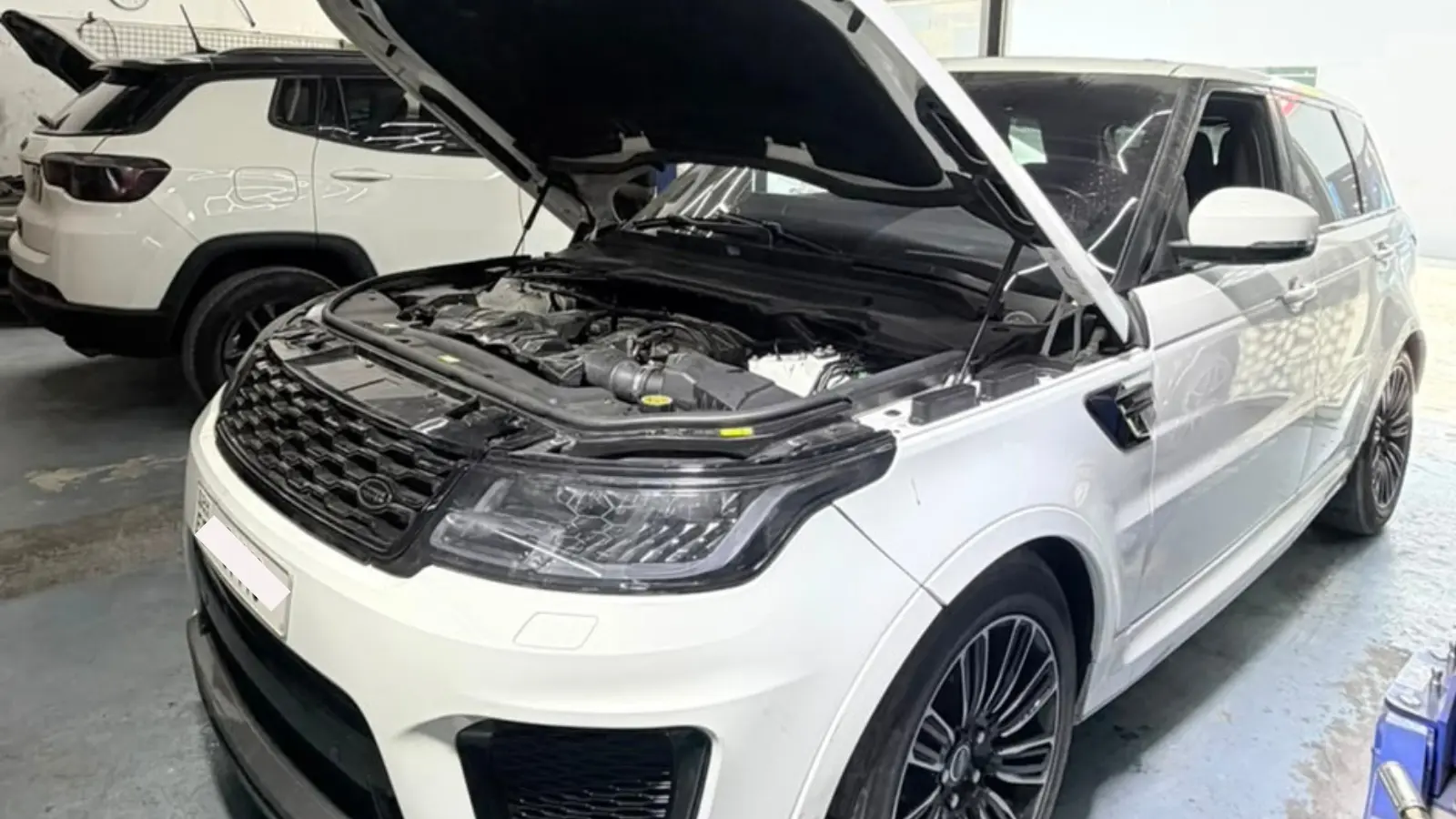
After receiving customer approval, the vehicle was moved into our diagnostic bay.
Our experienced team of car mechanics followed a step-by-step inspection process.
- The cooling system was visually examined.
- The coolant reservoir was inspected for contamination.
- The engine oil condition was checked.
- The oil cooler assembly was inspected for leakage.
- Cooling hoses were examined.
- The thermostat’s operation was evaluated using advanced diagnostic equipment.
We also performed a computer-controlled active test to monitor thermostat operation under different engine conditions.
This thorough inspection ensured no potential issue would be overlooked.
Accurate Diagnosis Saves Money
One of the biggest mistakes in vehicle repairs is replacing parts without first confirming the root cause.
At our workshop, we believe every repair should begin with evidence rather than assumptions.Here, several shops may have promptly recommended expensive engine repairs only because oil was found in the coolant reservoir. Instead, our professionals kept investigating until they found the real source of the problem.
By taking this meticulous approach we not only saved the customer excessive repair costs, but also ensured that the vehicle received the correct solution the first time around. When it comes to expensive automobiles like the Range Rover, a professional diagnosis is always better than speculation.
The Importance of Routine Minor Services
This case study is a perfect example of why routine servicing should never be skipped.
The customer arrived only for scheduled maintenance not because the vehicle had broken down.
Had the minor service been delayed, the oil contamination could have worsened, leading to overheating, damage to the cooling system, and potentially extensive engine repairs.
Regular inspections allow experienced technicians to identify hidden problems before they become major failures, helping owners avoid costly repairs and unexpected breakdowns.
How Our Detailed Inspection Process Begin
After receiving the customer’s approval, our technicians began a comprehensive inspection to determine exactly why engine oil had begun mixing with the coolant.
When we come across a Range Rover Oil and Water Mix problem, we don’t jump to conclusions. There are many components that might cause the same symptoms and if you change the wrong part, you are wasting repair expenditures and not fixing the original problem.
We did physical inspections and computerised testing to verify that each part of the cooling and lubricating system was functioning appropriately.
The inspection included:
- Visual inspection of the coolant reservoir
- Inspection of the engine oil condition
- Examination of the engine oil cooler
- Cooling system pressure checks
- Inspection of coolant hoses
- Computer active testing
- Thermostat operation testing
- Cooling system component evaluation
This systematic approach allows us to accurately identify the source of the problem instead of relying on guesswork.
Inspection Finding #1 – Engine Oil Cooler Leak
The first major fault we discovered was an internal leak in the engine oil cooler.
This component plays a crucial role in maintaining engine performance by regulating engine oil temperature. Engine oil circulates through the oil cooler while coolant flows through separate internal passages to remove excess heat.
Although oil and coolant pass through the same assembly, they should never come into contact.
Unfortunately, over time, internal wear, corrosion, or material fatigue can create microscopic cracks inside the oil cooler.When this happens, engine oil is forced into the cooling system under pressure.
This was exactly what occurred in this Range Rover.
The leaking oil cooler allowed engine oil to enter the coolant reservoir, creating the contamination our technicians observed during the routine service.
Fortunately, the issue was detected at an early stage before major engine damage occurred.
Inspection Finding #2 – Faulty Thermostat
The next important discovery came during our computerized diagnostic testing.
Using an advanced computer active test, we monitored the thermostat’s operation. The results showed that the thermostat was stuck. This meant it was no longer opening and closing correctly to regulate coolant flow.
A properly functioning thermostat controls engine temperature by allowing coolant to circulate once the engine reaches operating temperature.
When it becomes stuck, coolant flow is restricted.
This can cause:
- Poor engine cooling
- Variations in temperature
- Increased engine stress
- Elevated operating temperatures
- Decreased cooling efficiency
The customer had not yet noticed any excessive overheating but the bad thermostat was imposing an undue stress on the cooling system.
Replacing it at this stage prevented future problems.
Understanding How the Thermostat Works
Many people think the thermostat simply controls the heater inside the vehicle.
In reality, it is one of the most important components in the engine cooling system.When the engine is cold, the thermostat remains closed.
This allows the engine to warm up quickly, improving fuel efficiency and reducing engine wear.
Once the normal operating temperature is reached, the thermostat opens, allowing coolant to circulate through the radiator.This keeps engine temperature stable under all driving conditions.
If the thermostat sticks closed:
- Coolant cannot circulate properly.
- Engine temperature rises rapidly.
- Cooling efficiency decreases.
If it sticks open:
- The engine may never reach proper operating temperature.
- Fuel economy decreases.
- Engine performance suffers.
In this Range Rover, the thermostat had become stuck, affecting coolant circulation and increasing the risk of overheating.
Why We Performed a Computer Active Test
Modern Range Rover models contain sophisticated electronic systems that monitor engine cooling performance
Rather than relying solely on visual inspection, our technicians used professional diagnostic equipment to perform an active test.
This process allows us to:
- Monitor thermostat response
- Verify cooling system operation.
- Detect hidden faults
- Confirm sensor readings
- Identify electronic cooling issues.
Computer diagnostics eliminate guesswork and ensure every repair recommendation is based on accurate data.
Why We Didn’t Stop After Finding the Oil Cooler Leak
Less experienced workshops sometimes stop diagnosing once they find the first fault.
But that’s not our philosophy.
If we had only fixed the leaking oil cooler and not the jammed thermostat, the client would have been back shortly after the repair with cooling system problems.
That is why we always check connected parts.
Comprehensive diagnosis means that all contributing problems are remedied in the same repair, saving consumers time and money.
Signs of an Oil and Water Mix Issue
This case highlights why drivers should pay close attention to early warning signs.
Some of the most common symptoms include:
- Brown sludge inside the coolant reservoir
- Oily residue floating on coolant
- Engine overheating
- Coolant level dropping unexpectedly
- Milky engine oil
- White exhaust smoke
- Poor heater performance
- Rising engine temperature
- Coolant contamination
- Oil contamination
Sometimes these symptoms appear gradually.Other times, they develop suddenly.
Routine servicing often detects the problem before drivers notice any changes.
Why Immediate Repairs Matter
Driving with contaminated coolant can affect nearly every component in the cooling system.
Oil contamination reduces the radiator’s ability to dissipate heat
It can also damage:
- Radiator passages
- Heater core
- Expansion tank
- Rubber coolant hoses
- Water pump seals
- Cooling sensors
Contaminated coolant crystallises over time and covers the interior cooling tubes. This limits coolant flow and results in the engine operating at greater temperatures.
Letting the situation go for weeks or months can transform a simple fix into a total cooling system rebuild.
Professional Diagnosis vs. Guesswork
One of the biggest advantages of visiting an experienced car mechanic is accurate diagnosis. A professional technician does not replace pricey parts one by one. First he finds the actual root of the problem and then starts the repairs.
There are various advantages to this approach:
- Reduced repair costs
- Faster turnaround time
- Fixes for the first time
- Again lower risk of failure
- Extended component life span
- Increased client confidence
“Something like a Range Rover, maybe, which is a luxury car, might require a more meticulous, methodical diagnostic process. A good examination, invested in now, will stave off needless repairs and provide long term reliability.
Preparing the Vehicle for Repairs
We validated the leaking engine oil cooler and broken thermostat, and produced a thorough repair plan for the customer. We described each failed part, why it had to be replaced and how the repair would return both the cooling and lubricating systems to their original condition.
With the customer’s permission, our specialists bought genuine replacement parts and readied the workshop for the next step of the repair.But the fix would be more than just replacing the broken components. It would also mean completely cleaning the cooling system to remove all traces of oil pollution before refilling it with fresh coolant.
This final step is essential because simply replacing parts without flushing the contaminated cooling system can leave residual oil, which can degrade cooling performance and shorten the lifespan of the new components.
Conclusion
A Range Rover Oil and Water Mix issue should never be ignored, even if the contamination appears minor. As this real garage case study demonstrates, what initially seemed like a routine minor service revealed a hidden engine oil cooler leak and a faulty thermostat that could have led to severe engine overheating and costly repairs if left untreated. Thanks to our thorough inspection, accurate diagnosis, and professional repair process, we successfully resolved the issue by replacing the engine oil cooler, thermostat, thermostat hoses, performing a complete machine radiator flush, and completing a genuine engine oil and filter service. The vehicle was then thoroughly tested, washed, and delivered back to the customer’s office in excellent condition.
If you notice oil in your coolant reservoir, unexplained coolant contamination, or signs of overheating, it’s important to have your vehicle inspected by an experienced car mechanic as soon as possible. Whether you’re searching for a trusted garage near me for routine maintenance or require expert diagnostics and roadside assistance during an unexpected breakdown, Car Garage Expert is here to help. Our certified technicians specialize in diagnosing and repairing Range Rover vehicles using advanced diagnostic equipment, genuine parts, and manufacturer-approved repair procedures.Visit Car garage Expert to book your inspection or service appointment and experience reliable, professional automotive care that keeps your Range Rover performing at its best.