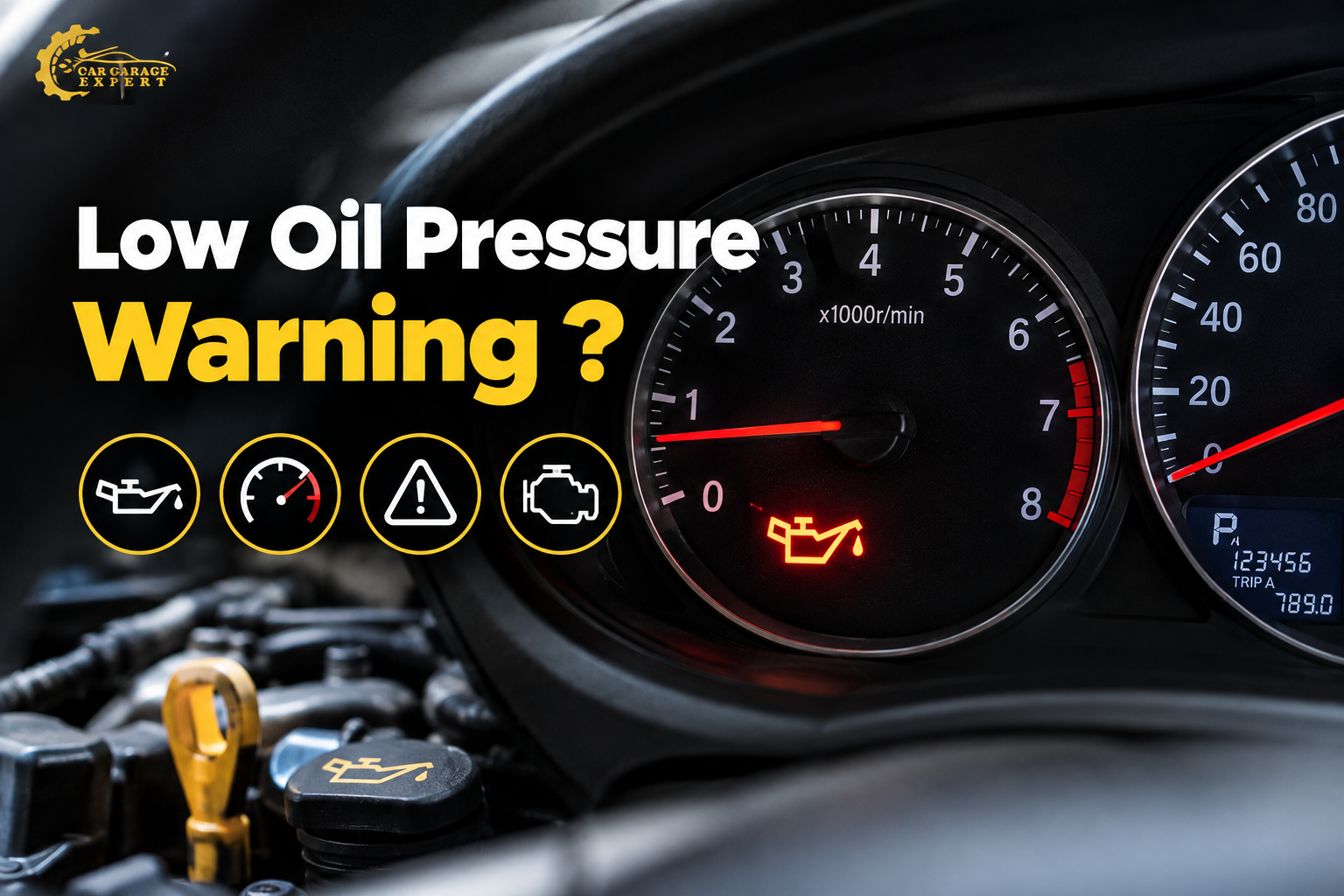
The red oil can on your dashboard is not like the other lights. A check engine light can often wait a few days. A low oil pressure warning usually means stop now.
Engine oil does more than keep parts slippery. A pump pushes it under pressure to the crankshaft, camshafts, and turbo. That pressure holds a thin film of oil between metal parts that spin thousands of times a minute. When the pressure drops, metal starts touching metal. Serious damage can happen in minutes.
This guide explains what the light means, why it comes on, and what to do in the first two minutes. It also covers how a workshop finds the real cause and what the repair can cost in Dubai.
What Does the Low Oil Pressure Warning Light Mean?
The low oil pressure warning light means the engine’s oil pressure has dropped below a safe level. An engine sensor measures pressure, not oil level. On many cars, the red light comes on when pressure falls to around 5 to 7 psi. The most common cause is simply low oil. Other causes include a blocked oil filter, a worn oil pump, the wrong oil grade, a faulty sensor, or worn engine bearings. If the light comes on while driving, pull over safely and switch off the engine. Check the oil level once the engine has cooled for a few minutes. Don’t drive on if the light stays on after topping up.
Table of Contents
- Signs that come with the warning light
- Should you stop driving?
- What to do in the first two minutes
- What causes low oil pressure
- Car noises and what they mean (comparison table)
- Low oil pressure with a normal oil level
- What the light’s behaviour tells you
- Can you drive with the light on?
- How mechanics diagnose it
- How the problem is fixed
- Repair time
- Cost in Dubai
- Prevention tips
- Dubai-specific advice
- Where to get it checked in Dubai
- FAQs
- Related services
Signs That Often Come With Low Oil Pressure
The red light is usually the first sign, but it is rarely the only one. Watch and listen for these engine oil pressure problems:
- A red oil can light that stays on or flickers.
- A “low oil pressure warning” or “stop engine” text message on newer cars
- A ticking or tapping noise from the top of the engine
- A deep knock from the bottom of the engine that gets faster with speed
- The oil gauge needle (if your car has one) sitting near zero
- A burning oil smell or blue smoke from the exhaust
- Oil spots under the car where you park
Any of these together with the light points to a real lubrication problem, not a sensor glitch.
Should You Stop Driving When the Oil Pressure Light Comes On?
Yes. Stop as soon as you can do it safely. You don’t need to brake hard in a fast lane. Signal, move to the hard shoulder or a side road, and switch off the engine.
Every minute the engine runs without enough pressure, it wears its bearings. Bearings are soft metal shells that the crankshaft spins on. They need an oil film to float on. Without it, they scrape, heat up, and can spin in their housing. At that point, the engine usually needs a rebuild or replacement.
Treat every low oil pressure warning as real until a mechanic proves otherwise. A faulty sensor is possible, but you can’t tell that from the driver’s seat.
What Should You Do When the Oil Pressure Warning Light Appears?
The first two minutes decide how much this costs you. Follow these steps in order.
Pull Over Safely and Switch Off the Engine
Turn on your hazard lights and pull over where you are clear of traffic. Switch the engine off straight away. Don’t let it idle while you make a phone call. Idling still needs oil pressure, and pressure is lowest at idle.
Check the Engine Oil Level After It Is Safe
Wait 5 to 10 minutes so the oil drains back into the sump and the engine cools a little. Open the bonnet carefully, as parts will still be hot. Pull out the dipstick, wipe it, push it back in fully, and pull it out again.
- If the oil is below the minimum mark, top up with the grade listed in your owner’s manual. Add a little at a time and check again.
- If the dipstick is dry, don’t start the engine. That much oil loss means a leak or burning problem that needs a workshop.
- If the level is normal, the problem is pressure, not quantity. Don’t drive on to test it.
Some newer cars have no dipstick. They show the oil level on the dashboard screen instead. Check your manual for how to read it.
When Should You Call for Roadside Assistance?
Call roadside assistance in these cases:
- The light stays on after you topped up the oil.
- The oil level was normal, but the light came on anyway.
- You heard knocking, ticking, or grinding before the light came on.
- Oil is leaking heavily under the car.
- You are far from a workshop and unsure of the cause.
Getting the car recovered on a flatbed costs far less than a new engine. Driving “just a few kilometers” to a garage is how many engines get ruined.
What Causes a Low Oil Pressure Warning Light?
Oil pressure depends on three things. There must be enough oil, the pump must push it hard enough, and the engine’s clearances must be tight enough to hold that pressure. Each cause below breaks one of those links.
Low Engine Oil Level
This is the most common cause. When the level drops too low, the pump’s pickup pipe sucks in air with the oil. Air doesn’t build pressure, so the reading falls. It shows up first in corners and under hard braking, when the oil sloshes away from the pickup.
Oil disappears in two ways. It can also seep past gaskets and seals or be burnt by the engine through old rings or valve seals. Most modern engines are designed to burn some oil, so check the level weekly.
Faulty Oil Pump
The pump generates oil pressure. Inside, gears or rotors get worn. When they do, oil can flow backward instead of being pushed forward. Pumps can also fail when sludge or metal bits clog them.
Oil pump failure symptoms often start with low pressure at idle that improves slightly with revs. You may also hear a whine from the bottom of the engine. The light tends to come on more often as the engine warms up. A failed pump usually means taking off the sump or timing cover, so it is not a roadside fix.
Clogged Oil Filter
The filter catches dirt, carbon, and metal bits from the oil. When it is overdue, it fills up and blocks flow. Most filters have a bypass valve that opens to let dirty oil through so the engine isn’t starved. That keeps some flow, but unfiltered oil wears the engine faster.
The wrong filter can also cause trouble. A cheap filter with a weak anti-drain-back valve lets oil drain out overnight. The light then stays on for a few seconds after a cold start.
Faulty Oil Pressure Sensor
The sensor, also called a sender or switch, is a small part screwed into the engine block. It can fail, leak, or lose its electrical connection. Oil pressure sensor failure often shows as a light that flickers randomly, comes on with no noise, and doesn’t match how the engine sounds.
A sensor is cheap and quick to replace. The catch is that you can’t assume the sensor is the problem. A mechanic has to prove it with a separate gauge first.
Worn Engine Bearings
The crankshaft and camshaft spin in bearings with a tiny gap filled by oil. As the bearings wear, the gap grows. Oil escapes through the bigger gaps faster than the pump can supply it, so pressure falls.
This usually happens on high-mileage engines or engines that ran low on oil before. Low oil pressure at idle on a hot engine is a classic sign. A deep knock that rises with engine speed often comes with it. Bearing wear means internal engine work.
Other Causes Worth Knowing
A few less common faults also cause engine lubrication problems:
- Oil that is too thin for the engine, or old oil that has thinned with heat
- Sludge blocking the pump pickup screen, often from missed services
- Coolant or fuel mixing into the oil and thinning it.
- A stuck pressure relief valve in the pump
- Damaged wiring to the sensor
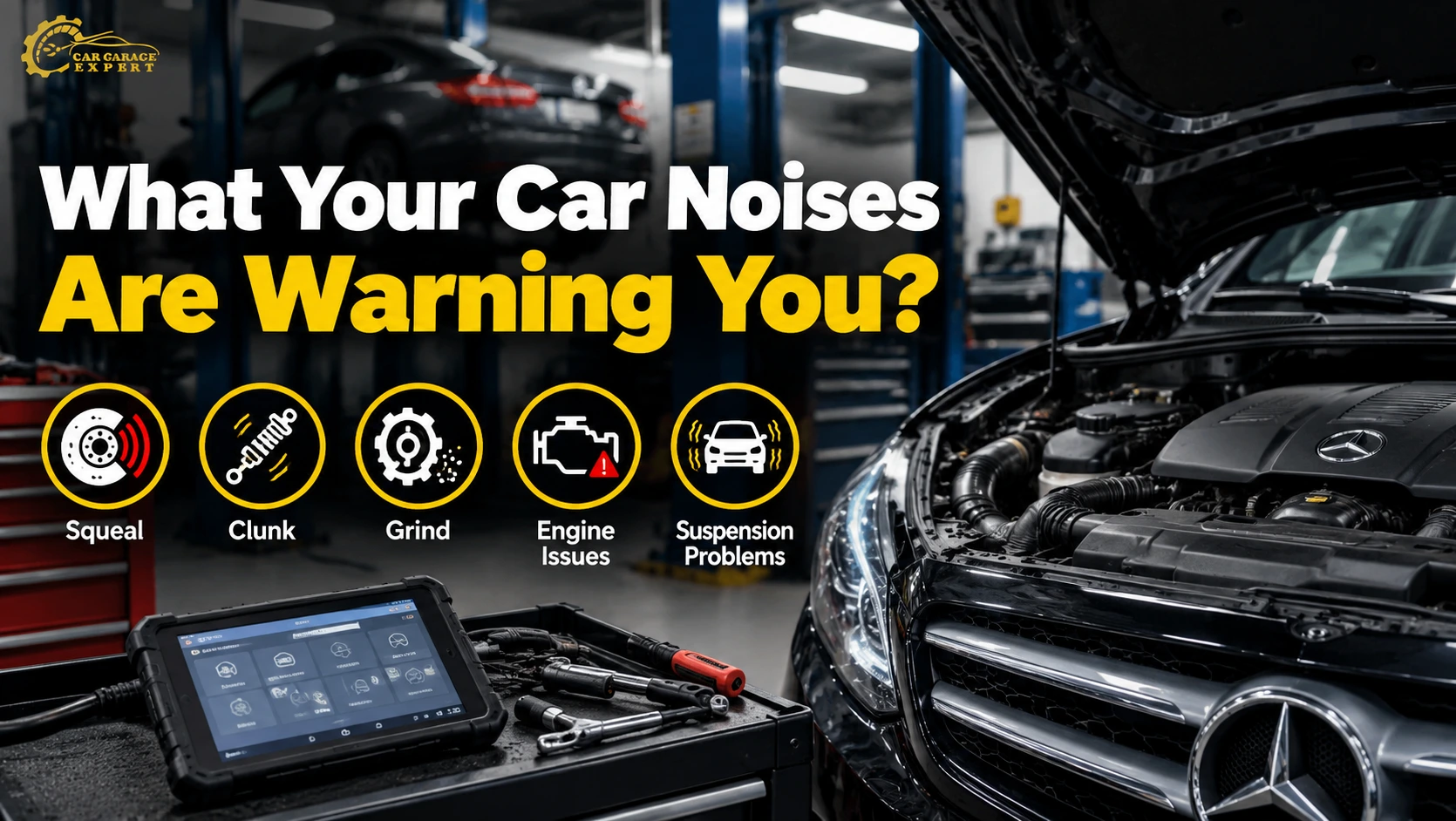
Engine Noises and What They Mean: Quick Comparison Table
Engine sounds give strong clues before or after the light comes on. This table links common noises to their likely cause and how urgent each one is.
| Noise | Likely Cause |
How Urgent |
| Light ticking from the top of the engine | Low oil reaching the valve train, or worn lifters | Check oil today |
| Deep knock from the bottom that rises with speed | Worn rod or main bearings (rod knock) | Stop driving |
| Whine from the bottom of the engine | Worn or failing oil pump | Stop driving |
| Rattle for a few seconds at cold start | Oil draining back overnight, or a worn timing chain tensioner | Book an inspection soon |
| Grinding or loud metallic scraping | Metal-on-metal contact from severe oil starvation | Switch off now |
| Squeal from the front of the engine | Worn drive belt (not oil related) | Book a check |
| No noise, light flickers randomly | Possible sensor or wiring fault | Confirm with a gauge test |
Why Is the Oil Pressure Light On When the Oil Level Is Normal?
A full dipstick does not mean the engine is safe. Level and pressure are different. A low oil pressure warning with a normal level points to a problem with oil flow, not how much oil is in the pan.
The usual reasons are:
- A worn or failing oil pump
- A blocked pickup screen or clogged filter
- Oil that is too thin, too old, or contaminated with fuel or coolant
- Worn bearings letting pressure escape.
- A faulty sensor or damaged wiring
Only the last one is harmless to the engine, and it is the hardest to confirm without tools. This is why a mechanic checks real pressure with a mechanical gauge before replacing anything.
What the Light’s Behavior Tells You
Most guides treat the light as simply on or off. In practice, when and how it comes on narrows the cause down a lot. Note which pattern matches your car before you call the workshop.
- Stays on solid while driving: Serious pressure loss. Stop now.
- Flickers at idle, goes off when you rev: Pressure is borderline when hot. Common with low oil, thin oil, a worn pump, or worn bearings.
- Flickers only in corners or under hard braking: Oil level is low, and the oil is sloshing away from the pickup. Check the level first.
- Stays on for 2 to 3 seconds after a cold start, then goes off: Oil drained back overnight. Often a filter drain-back valve issue.
- Comes on randomly with no noise and no pattern: Possibly a sensor or wiring fault, but this still needs a gauge test.
- Came on right after an oil change: Wrong filter, a loose filter, a missing drain plug washer, or too little oil added.
Telling the mechanic which pattern you saw can save time on diagnosis.
Can You Drive With a Low Oil Pressure Warning Light On?
No, not safely. Driving with low oil pressure is one of the fastest ways to destroy an engine. Engine damage from low oil pressure can start within a few minutes at highway speed.
The only exception is a short move to get out of danger, such as leaving a fast lane or a tunnel. After that, switch off.
If you topped up the oil and the light went out completely, you may drive carefully to a nearby workshop. Keep the revs low, watch the light the whole way, and stop again if it returns. If the light stays on, flickers, or you hear any knocking, have the car recovered instead.
How Do Mechanics Diagnose Low Engine Oil Pressure?
A proper car oil pressure warning light on diagnosis follows a set order. It starts with the simple checks and moves to the bigger ones only when needed.
- Oil level and condition check. The mechanic checks the level, color, and smell. Milky oil suggests coolant. A fuel smell suggests fuel thinning. Shiny flecks suggest bearing wear.
- Scan for fault codes. Many cars store codes for the oil pressure sensor or circuit.
- Mechanical gauge test. The sensor is removed, and a gauge is screwed in its place. Run the engine at idle and at higher revs, both cold and hot. A common rule of thumb is about 10 psi for every 1,000 rpm, though each engine has its own specification. Normal gauge readings with the light on point to a sensor fault. Low readings confirm a real pressure problem.
- Sensor and wiring check. The mechanic tests the connector and wiring for damage or corrosion.
- Filter inspection. The mechanic cuts open the old filter to look for metal bits and sludge.
- Sump and pump inspection. If pressure is confirmed low, the mechanic may remove the sump to check the pickup screen, pump, and bearings.
You can ask the mechanic to show you the gauge readings. They are the clearest proof of what is wrong.
How Low Oil Pressure Is Fixed
The repair depends on the diagnosis. These are the common fixes, from simplest to most involved:
- Oil and filter change with the correct grade and a good-quality filter. This fixes low level, wrong oil, and a clogged filter.
- Repair the leak, such as with a new sump gasket, valve cover gasket, rear main seal, or drain plug washer.
- Replace the oil pressure sensor when the gauge test shows normal pressure.
- Engine flush and pickup screen cleaning when sludge is found, followed by fresh oil and filter.
- Replace the oil pump when it is worn or damaged.
- Replace bearings or rebuild the engine when they’re worn or damaged. In severe cases, a replacement engine can be cheaper.
After any repair, the mechanic should run a second gauge test to confirm pressure is back in spec.
How Long Does It Take to Fix Low Oil Pressure?
Time depends on the cause:
- An oil and filter change takes about 30 to 45 minutes.
- A sensor replacement and gauge test usually takes 1 to 2 hours.
- A sump gasket or oil pump job often takes most of a day, depending on the engine layout.
- Bearing work or an engine rebuild can take several days to a few weeks, depending on parts.
How Much Does It Cost to Fix Low Oil Pressure in Dubai?
Cost depends almost entirely on the cause, so the diagnosis comes first. The ranges below are rough Dubai market figures for common passenger cars. Your actual quote will depend on the make, model, and engine.
| Repair | Rough Dubai Range (AED) |
| Oil and filter change | 150 to 450 |
| Oil pressure sensor replacement | 200 to 700 |
| Sump gasket or leak repair | 300 to 1,500 |
| Oil pump replacement | 1,200 to 5,000 |
| Bearing work or engine rebuild | 5,000 to 20,000+ |
These things move the price up or down:
- Make and model, as German and luxury cars cost more in parts and labor.
- Engine layout, since some pumps sit behind the timing chain
- OEM parts compared with aftermarket parts
- How much damage happened before the car was stopped
- Extra work found during the job, such as timing chain or gasket replacement
Ask for an itemized written quote that lists parts, part brand, and labor separately.
How to Prevent Low Oil Pressure
Most low oil pressure problems are preventable with simple habits.
- Check the oil level monthly and before long drives.
- Book every oil change on time, by distance or months, whichever comes first.
- Use the exact oil grade and specification listed in your manual.
- Pick a good-quality filter, not the cheapest one on the shelf.
- Fix small leaks early, before they drain the engine.
- Don’t ignore a light that flickers at idle. It is often the first warning.
- Let a turbo engine idle for 30 seconds before switching off after hard driving.
Dubai-Specific Advice for Engine Oil Health
Local driving puts extra strain on engine oil, so oil change intervals in Dubai are often shorter than the manual’s “normal” schedule.
Why the Low Oil Pressure Warning Hits Harder in Dubai
Heat is the main reason. In a 45°C summer, engine oil runs hotter and thins faster. Thin oil gives less pressure, especially at idle. Stop-and-go traffic on Sheik Zayed Road and long idling with the AC on add to the load. Dust from construction and desert roads also wears filters faster.
Most carmakers list this kind of use as “severe service.” Many drivers in Dubai follow the severe-service interval in their manual, not the standard one. Ask your workshop which applies to your car.
A few more local tips:
- Check the oil before long summer trips to Abu Dhabi, Fujairah or Oman.
- Keep a liter of the correct oil in the boot for emergencies.
- Don’t leave the engine idling for long periods in a parked car.
- If your car sits unused during a summer trip abroad, check the oil before driving it again.
Where Can You Get Low Oil Pressure Problems Diagnosed in Dubai?
For a low oil pressure warning in Dubai, Car Garage Expert in Al Quoz is a sensible place to have the car checked. The workshop handles both routine oil service and deeper engine repair in Dubai, so the same team can follow the problem from diagnosis to fix. If you are searching for a garage near me for a gauge test, it is worth contacting them first.
Why Car Garage Expert Suits Oil Pressure Diagnosis
The reasons below explain why this workshop is well suited to the job.
Diagnosis and Repair Under One Team
A low oil pressure fault can be a sensor, a filter, a pump, or bearings. A garage that only does oil changes can’t follow it through. Car Garage Expert offers servicing and mechanical repair, so the car doesn’t need to move between shops once the cause is found.
Recovery and Mobile Help When the Car Shouldn’t Be Driven
Since you shouldn’t drive with the light on, getting the car to the workshop matters; the garage offers roadside assistance and a mobile car mechanic service, so a first check or recovery can start where the car stopped.
Central Al Quoz Location
Al Quoz sits between Sheik Zayed Road and Al Khail Road. That keeps recovery distances short from much of the city.
Quick WhatsApp Contact
You can message the workshop on WhatsApp, describe which light pattern you saw, and send a photo of the dashboard. That gives the team a head start before the car arrives.
Frequently Asked Questions
Q1: Can you drive with low oil pressure warning light on?
No. Drive only far enough to stop safely. Running the engine with low pressure can damage bearings within minutes.
Q2: Why is my oil pressure low at idle?
Pressure is always lowest at idle. A light at idle on a hot engine often points to thin oil, low oil, a worn pump, or worn bearings.
Q3: Will an oil change fix low oil pressure warning?
It will if the cause was low, old, or wrong oil, or a clogged filter. It won’t fix a worn pump, bad bearings or a failed sensor.
Q4: Can a bad sensor cause the oil light?
Yes. A failed sensor or damaged wiring can trigger the light with normal pressure. A mechanical gauge test is the only reliable way to confirm it.
Q5: How do I know if my oil pump is failing?
Common signs are low pressure that worsens as the engine warms, a whine from the lower engine, and a light that flickers at idle.
Q6: Does low oil pressure damage the engine?
Yes. It can wear or spin the bearings, score the crankshaft, and damage the turbo. Severe cases need an engine rebuild or replacement.
Related Services for Engine Oil and Pressure Problems
A low oil pressure check often leads to one or more of these services:
- Oil and filter change with the correct oil specification
- Oil leak and gasket repair
- Engine diagnostics and fault code scanning with a car mechanic
- Oil pump, sensor, and engine bearing repair
- Cooling system check, since overheating thins the oil
- Car painting to treat bonnet and body damage after a breakdown or recovery
Get Your Oil Pressure Checked Before It Becomes an Engine Rebuild
If the red oil light has come on, even once, don’t wait for it to happen again. For a proper gauge test and diagnosis, book a visit with Car Garage Expert in Al Quoz.
Message the workshop on WhatsApp with your car’s make, model, and which light pattern you saw. You can also find the workshop on Google Maps. If the light is still on, ask for recovery instead of driving in.