
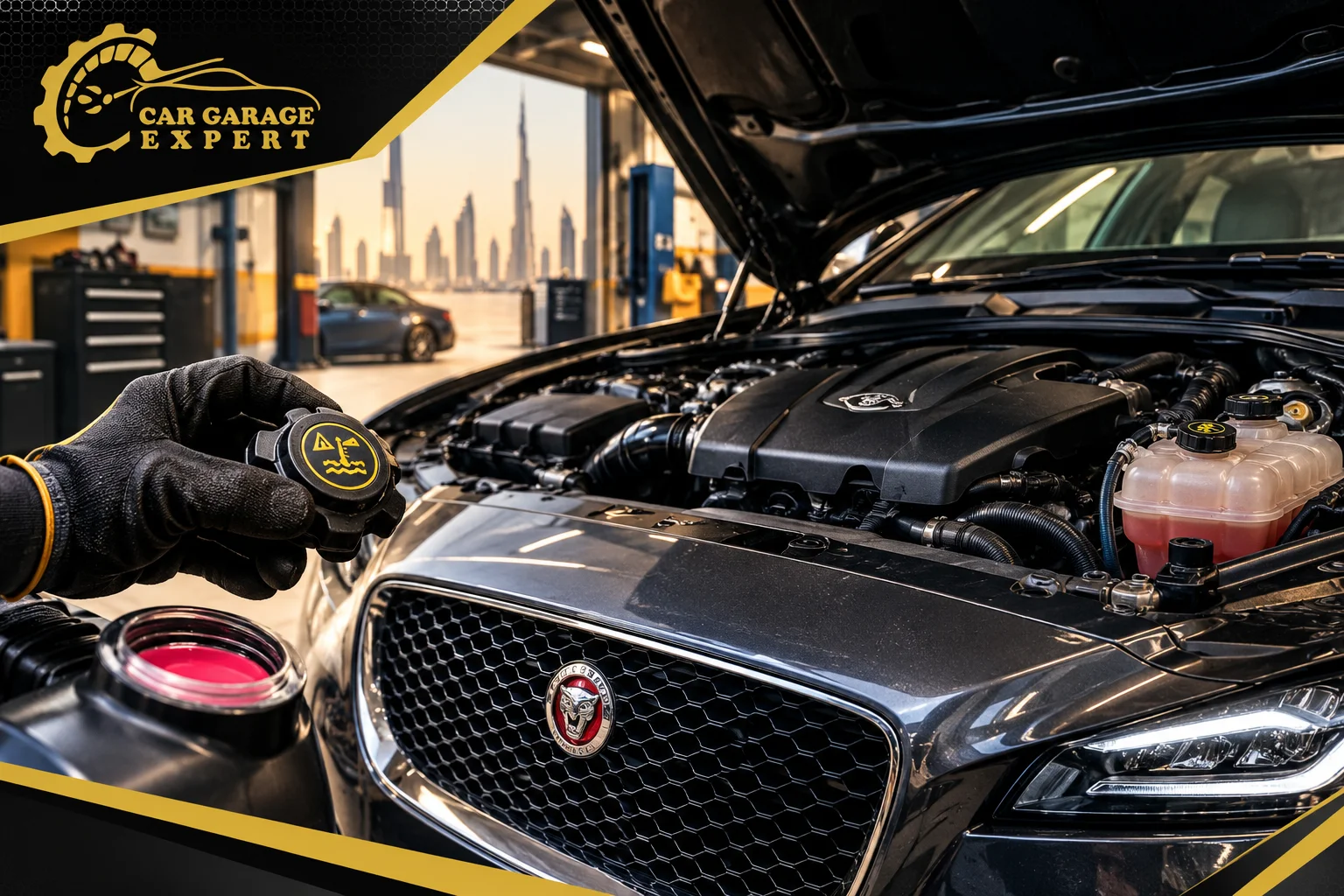
A Jaguar XF coolant leak can happen because of a damaged radiator, worn hoses, a faulty water pump, a failing thermostat housing or a weak coolant reservoir. Components can wear out over time, particularly at high engine temperatures. You may notice a sweet smell, low coolant levels, a warning light or a puddle under your car. Dubai’s hot weather can also put extra stress on the cooling system. Finding the leak early can help prevent engine overheating and costly repairs. If your Jaguar XF coolant leak often, schedule a professional inspection before the problem worsens.
Table of Contents
- Problem Overview: Why Is Your Jaguar XF Losing Coolant?
- Symptoms: Warning Signs of a Coolant Leak
- Common Causes: Parts That May Be Leaking
- Diagnostic Process: How Mechanics Find the Leak
- Repair Process: How to Fix the Problem
- Risks of Ignoring a Coolant Leak
- Can You Continue Driving?
- Repair Time: How Long Does It Take?
- Cost Factors: What Affects the Repair Price?
- Prevention Tips for Jaguar XF Owners
- Dubai-Specific Advice for Cooling System Care
- Why Choose Car Garage Expert for Roadside Assistance?
- Frequently Asked Questions
- Related Services
- Final Call-to-Action
Problem Overview: Why Is Your Jaguar XF Coolant Leak?
Your Jaguar XF uses coolant to control engine temperature. It carries heat away from the engine and helps prevent overheating. When coolant escapes the system, the engine may overheat.
A Jaguar XF coolant leak can start as a small problem. You may only notice a slight drop in the coolant level between checks. However, a small leak can become serious if you ignore it.
The leak may come from a hose, radiator, water pump, coolant reservoir or another cooling system component. Some leaks appear under the car, while others only show up when the engine gets hot.
For Dubai drivers, early checks are especially important. Heavy traffic and high outdoor temperatures can make an existing cooling problem harder on the engine.
Symptoms: Warning Signs of Jaguar XF Coolant Leak
Your Jaguar may show several signs when coolant starts escaping. Watch for these common warning signs.
1. Low Coolant Levels
If you need to top up coolant often, you may leak. A healthy cooling system should not lose coolant regularly without a clear reason.
2. Puddles Under the Car
Look for green orange, pink or other coloured liquid beneath your parked vehicle. Coolant color depends on the product used, so color alone cannot confirm a leak.
3. Engine Temperature Rising
A rising temperature gauge may mean the engine is not getting enough cooling. Stop safely if the engine starts overheating.
4. Sweet Smell Around the Engine
Coolant often has a sweet smell. If you notice this smell after driving, inspect the cooling system for signs of a leak.
5. Coolant Warning on the Dashboard
A warning light may appear when the coolant level becomes too low or the system detects a temperature problem. Do not ignore this alert.
6. Steam From Under the Bonnet
Steam may appear if coolant leaks onto hot engine parts. Pull over carefully and turn off the engine if this occurs.
Common Causes: What Causes a Jaguar XF Coolant Leak?
Several cooling system parts can cause coolant loss. The exact cause depends on your Jaguar XF’s model year, engine type, mileage and service history.
1. Damaged Radiator
The radiator releases heat from the coolant. Over time, its seals, connections or core can become damaged.
Small leaks may develop around the radiator edges or hose connections. Corrosion and general wear can also weaken the radiator.
A damaged radiator may cause coolant levels to drop and engine temperatures to rise. A mechanic should check the radiator before deciding whether to repair or replace it.
2. Worn or Cracked Coolant Hoses
Coolant hoses carry fluid between the engine, radiator and other cooling system parts. Heat and age can make the rubber hard, weak or brittle.
A cracked hose may leak more when the engine is running. Loose clamps can also allow coolant to escape.
Look for damp areas, dried coolant marks or swelling around hose connections. Replace damaged hoses before they fail.
3. Faulty Water Pump
The water pump moves coolant through the engine. If its seal wears out, coolant can escape from the pump area.
A failing pump may also cause poor coolant circulation. This can lead to overheating, even if the leak seems small.
Some water pump problems come with unusual noises. A mechanic can inspect the pump for leaks, wear and signs of poor operation.
4. Cracked Thermostat Housing
The thermostat helps control coolant flow based on engine temperature. Its housing may crack or leak around its seals.
Plastic cooling system parts can become weaker after repeated heating and cooling. A leaking thermostat housing may leave dried coolant residue near the engine.
Replacing the faulty housing or seal can restore a proper seal. The mechanic should also check nearby parts for damage.
5. Damaged Coolant Reservoir or Cap
The coolant reservoir stores extra fluid as the cooling system heats up and cools down. A crack in the reservoir can allow coolant to escape.
A weak reservoir cap may also fail to maintain the correct pressure. This can cause coolant loss or other cooling system problems.
Check the reservoir for visible cracks and dried fluid marks. A mechanic can test the cap and replace it if needed.
6. Leaking Radiator Connections or Seals
Connections and seals help keep coolant inside the system. Over time, these parts may loosen, wear or become damaged.
The leak may be difficult to spot because coolant can run along other engine parts before dripping to the ground.
A pressure test can help determine the source. Early replacement of a worn seal may avoid additional coolant loss.
7. Heater Core Problems
The heater core transfers heat into the cabin. If it leaks, you may notice a sweet smell inside the car or damp carpets.
Your windows may also fog up more than usual. These signs can point to a heater core problem, although other faults can cause similar symptoms.
A mechanic should inspect the cabin heating system and confirm the source before replacing parts.
8. Head Gasket Damage
A faulty head gasket might allow coolant to enter the engine cylinders and mix with the engine oil. This is a more serious fault than a simple external leak.
Possible signs include persistent white exhaust smoke, engine overheating, rough running or unusual oil changes. However, these symptoms do not always mean the head gasket has failed.
A mechanic may perform a combustion gas test, compression test or other checks to confirm the problem.
Diagnostic Process: How Do Mechanics Find the Leak?
Finding the exact source is important. Adding more coolant without fixing the cause only provides temporary relief.
A professional inspection usually includes these steps.
Step 1: Check the coolant level.
The mechanic checks the coolant level when the engine is cold. They also look for visible leaks around the reservoir and engine bay.
Step 2: Inspect hoses and connections.
The mechanic checks the radiator, hoses, clamps, water pump area and thermostat housing for cracks, loose fittings and dried coolant.
Step 3: Perform a cooling system pressure test.
A pressure tester helps reveal leaks that may not be visible during a normal inspection. Test the system within the correct pressure limits.
Step 4: Check the cooling system cap.
A faulty cap may cause pressure problems. Testing it helps rule out a simple but important cause.
Step 5: Check for internal leaks.
If no external leak appears, the mechanic may test for combustion gases or inspect the engine oil and exhaust for signs of internal coolant loss.
This process helps identify the cause of a Jaguar XF coolant leak and prevents unnecessary part replacement.
Repair Process: How to Fix a Coolant Leak
The repair depends on the failed part. Once the mechanic confirms the leak, they can recommend the right solution.
- Radiator leak: Repair or replace the radiator, depending on the damage and manufacturer guidance.
- Hose leak: Replace the cracked hose or damaged connection and secure the fittings.
- Water pump leak: Replace the faulty pump and inspect related components.
- Thermostat housing leak: Replace the damaged housing or seal.
- Reservoir leak: Fit a suitable replacement reservoir or cap.
- Heater core leak: Repair or replace the faulty heater core after confirming the source.
- Head gasket problem: Carry out further engine testing and repair the damaged gasket if confirmed.
After the repair, refill the cooling system with the correct coolant for your Jaguar XF. The mechanic should remove trapped air where required and check for leaks again.
A final temperature check helps confirm that the system is working correctly.
Risks of Ignoring a Jaguar XF Coolant Leak
Ignoring a Jaguar XF coolant leak can turn a minor repair into a major engine problem.
Engine Overheating
Low coolant levels reduce the system’s ability to remove heat. The engine may overheat, especially during long drives or slow traffic.
Damage to Engine Parts
Excessive heat can damage seals, cylinder heads and other engine components. Severe overheating may lead to expensive engine repairs.
Sudden Breakdown
A hose or cooling system part may fail while you are driving. This can leave you stranded in an unsafe location.
Higher Repair Bills
A small leak may only need a hose or seal. If the engine overheats, the repair may become much more expensive.
Reduced Reliability
Repeated coolant loss can make your Jaguar less dependable. Fixing the source early helps protect your vehicle and gives you greater peace of mind.
Can You Continue Driving With a Coolant Leak?
It depends on the leak’s severity, but driving with a suspected Jaguar XF coolant leak is risky.
If the temperature gauge rises, a warning appears or steam comes from under the bonnet, pull over safely and switch off the engine. Do not continue driving an overheating vehicle.
Never open coolant reservoir cap when the engine is hot. The system may be under pressure and hot coolant can cause serious burns.
If the coolant level is dropping quickly, arrange recovery rather than trying to reach a garage. Roadside assistance can help move your Jaguar to a safe location.
If the leak appears small and the temperature remains normal, you should still arrange an inspection as soon as possible. A normal temperature reading does not guarantee that the cooling system is safe.
Repair Time: How Long Does a Jaguar XF Coolant Leak Repair Take?
Repair time depends on the leaking part and how easy it is to reach.
A simple hose or cap replacement may take around 30 minutes to two hours. A radiator, water pump or thermostat housing repair may take several hours.
A heater core or head gasket repair can take much longer. These jobs may require extensive dismantling and additional testing.
These are general estimates, not guaranteed times. Your Jaguar’s model year, engine type, parts availability and the condition of nearby components can affect the final repair time.
Cost Factors: What Affects the Price of a Coolant Leak Repair?
The cost of repairing a coolant leak varies by cause. A damaged hose usually costs less to fix than a failed water pump or internal engine leak.
Several factors affect the final bill.
- Faulty part: Hoses, caps and seals usually involve less work than major cooling system components.
- Parts quality: Genuine Jaguar parts and suitable high-quality alternatives may have different prices.
- Labor time: Hard-to-access parts can increase labor costs.
- Additional damage: Overheating may damage other engine components and increase the total repair bill.
- Diagnostic work: Pressure tests and internal leak checks may add to the initial inspection cost.
- Coolant replacement: The repair may require fresh coolant and proper system bleeding.
For an accurate quote, ask the garage to identify the leak first. Request a breakdown of parts, labor, coolant and any extra work before approving the repair.
Prevention Tips to Keep Your Jaguar XF Cooling System Healthy
Regular maintenance can help you spot cooling system problems before they become serious.
Check Coolant Levels Regularly
Check the reservoir when the engine is completely cold. Follow the correct filling instructions in your owner’s manual.
If the level keeps dropping, arrange an inspection instead of topping it up repeatedly.
Use the Correct Coolant
Always use coolant that meets the specification for your particular Jaguar XF. Don’t choose a product based on color alone.
Mixing incompatible coolant types can cause problems. If you are unsure which coolant your vehicle needs, ask a qualified mechanic.
Inspect Hoses and Connections
During routine servicing, ask the mechanic to check hoses, clamps, seals and the reservoir for signs of wear.
Replacing a weak hose early can help prevent a sudden breakdown.
Follow Your Service Schedule
Regular servicing helps identify leaks, worn parts and cooling system faults. Follow the maintenance schedule for your model and engine.
Watch the Temperature Gauge
Watch for changes in engine temperature. Never ignore a sudden rise.
Avoid Delaying Repairs
Even a small coolant leak deserves attention. Early repairs can help protect the engine and reduce the risk of roadside trouble.
Dubai-Specific Advice: Protect Your Jaguar XF From Extreme Heat
Dubai’s hot climate can put extra pressure on your Jaguar XF’s cooling system. Long periods in traffic, high outdoor temperatures and frequent air conditioning use can increase the vehicle’s demands.
Here are some useful steps for local drivers.
- Check coolant before long journeys: Make sure the level is correct when the engine is cold.
- Pay attention to traffic conditions: Watch the temperature gauge during slow-moving traffic and long waits.
- Inspect the system before summer: Have a mechanic check the hoses, radiator, reservoir and water pump.
- Park in shaded areas when possible: This can reduce heat exposure to the vehicle’s exterior, although it does not replace proper cooling system maintenance.
- Do not ignore warning lights: If the engine overheats, stop safely and arrange professional help.
- Choose a suitable garage: A workshop familiar with Jaguar vehicles can help identify cooling system faults and use the correct parts and coolant.
If you notice coolant under your car after parking in Dubai, do not assume the leak will disappear on its own. Have a mechanic check the source before your next long drive.
Why Choose Car Garage Expert for Roadside Assistance?
Jaguar XF coolant leak can leave you stranded when you least expect it. If your Jaguar XF starts overheating on a Dubai road, getting to a safe location should be your priority.
Car Garage Expert can be your point of contact for garage that repair with guidance and help arranging suitable assistance when your vehicle develops a problem. The right support can help you avoid driving a car that may suffer further engine damage.
Here is why choosing a suitable automotive service provider matters.
- Proper fault checks: Finding the actual leak helps prevent unnecessary repairs.
- Cooling system inspection: A mechanic can check the radiator, hoses, water pump and related parts.
- Repair recommendations: Clear advice helps you understand what needs attention first.
- Preventive maintenance: Regular checks can help reduce the risk of future cooling system problems.
- Roadside support: If your vehicle cannot be driven safely, ask about recovery options and availability.
Car Garage Expert recommends dealing with coolant loss early rather than waiting for an overheating warning. For Jaguar owners, prompt diagnosis can help protect the engine and reduce the chance of an unexpected breakdown.
Contact your chosen service provider to confirm the available services, repair options and recovery arrangements for your location.
Frequently Asked Questions
1. What Is the Most Common Cause of a Jaguar XF Coolant Leak?
Common causes include worn coolant hoses, a leaking radiator, a faulty water pump, a cracked thermostat housing or a damaged coolant reservoir. A pressure test can help identify the exact source.
2. Can I Drive My Jaguar XF With a Coolant Leak?
It is not recommended. A leak can cause engine to overheat and suffer serious damage. If the temperature rises, steam appears or a warning light comes on, stop safely, switch off the engine and arrange recovery.
3. Why Does My Jaguar XF Lose Coolant but Leave No Puddle?
Some leaks appear only when engine is hot or the cooling system is under pressure. Coolant may also evaporate from hot surfaces. An internal leak is another possibility. A professional pressure test can help identify the cause.
4. Can Dubai’s Heat Cause a Jaguar XF Coolant Leak?
High temperatures can add stress to cooling system parts that are already worn or damaged. Hoses, seals and plastic components may deteriorate over time. Regular inspections help detect problems early.
5. How Much Does It Cost to Fix a Jaguar XF Coolant Leak?
The cost depends on the faulty part, labor time, parts quality and any extra engine damage. A hose repair is usually simpler than a water pump or head gasket repair. Ask a garage to diagnose the leak and provide a detailed quote.
Related Services
If your Jaguar XF coolant leak, these services may also help:
- Jaguar cooling system inspection
- Radiator repair and replacement
- Coolant hose and pipe replacement
- Water pump inspection and replacement
- Thermostat repair and replacement
- Engine overheating diagnosis
- Engine repair and inspection
- Vehicle recovery and roadside assistance
Choose the service that matches your vehicle’s symptoms. Get a proper diagnosis before replacing parts.
Final Call-to-Action: Get Your Jaguar XF Coolant Leak Checked
Jaguar XF coolant leak may start small, but delaying repairs can put your engine at risk. If you notice low coolant levels, a sweet smell, wet patches under your vehicle or a rising temperature gauge, arrange an inspection as soon as possible.
For Dubai drivers, early action matters most in hot weather and heavy traffic. Avoid driving if your Jaguar is overheating and never open the coolant reservoir while the engine is hot.
Contact Car Garage Expert, recommends checking the cooling system early to help prevent expensive engine damage. Get the Jaguar XF coolant leak diagnosed, repair the faulty part and make sure your Jaguar XF is road-ready.
Find Car Garage Expert on Google Maps: