If you’ve spent any time driving in Dubai between June and September, you already know why car window tint UAE searches are so common. Cabin temperatures inside an untinted car parked outdoors can exceed 80°C. The sun angle in the UAE hits driver and passenger windows directly for large parts of the day, and even with the AC running at maximum, an untinted car takes significantly longer to cool down. Window tinting isn’t a cosmetic luxury here — it’s a practical necessity that affects comfort, fuel efficiency, and how hard your AC system has to work on every single drive.
But not all tinting is the same, and not all tinting is legal. Car window tint UAE regulations exist for safety reasons, and driving with the wrong tint level — or having it applied incorrectly — creates problems with annual vehicle inspection and attracts fines. Understanding what’s available, what’s legal, and what actually works best for Dubai’s specific driving conditions saves time, money, and the hassle of having tint removed and reapplied later.
Car Window Tint UAE: Understanding the Legal Limits
Before choosing a style or shade, every Dubai driver needs to understand the tint regulations that apply here. Car window tint UAE rules are set by the Roads and Transport Authority and the Ministry of Interior, and they apply to all vehicles registered and driven in the UAE.
The current regulations allow a maximum of 50% Visible Light Transmission (VLT) on front side windows — meaning at least 50% of light must pass through. Rear side windows and the rear windshield allow darker tinting. The front windshield allows only a strip of tint along the top.
Going darker than permitted on front windows is the most common mistake. Many drivers assume because they see darker tints on other vehicles that anything goes — but enforcement is active, and vehicles presenting for Mulkiya (registration renewal) with illegal tint get failed. Getting a proper car window tint UAE application within legal limits from the start avoids this entirely.
A customer came to Car Garage Expert after failing his Mulkiya inspection due to front windows tinted to 35% VLT — well below the legal minimum. The previous tint shop had applied the same shade to all windows without checking regulations. We removed the front tint, applied a compliant 50% VLT ceramic film to the front windows and a darker shade to the rear, and the car passed inspection without issue. Knowing the legal limits before application saves the cost of removal and reapplication.
Car Window Tint UAE: Types of Tint Film Available
Understanding what’s on the market helps make a smarter choice. Not every film type performs the same way in UAE conditions, and price differences between types reflect real differences in heat rejection performance.
Dyed Film The most basic and least expensive option. Dyed film reduces glare and provides some privacy but offers limited heat rejection. In Dubai’s climate, dyed film alone doesn’t make a significant difference to cabin temperature or AC load. It also fades faster under intense UV exposure — typically showing colour change within two to three years in UAE conditions.
Metalized Film Better heat rejection than dyed film through the addition of metallic particles that reflect solar energy. The downside for UAE drivers is signal interference — metallic films can affect GPS accuracy, mobile signal, and in some cases keyless entry systems. Still a viable car window tint UAE option for rear windows where heat rejection matters but electronics interference is less of a concern.
Carbon Film Carbon-based films offer solid heat rejection without the signal interference issues of metallic films. They maintain their colour well over time and don’t fade as quickly as dyed film under UAE sun exposure. A good middle ground for car window tint UAE applications where budget is a consideration but performance matters.
Ceramic Film The best performing option for UAE conditions. Ceramic films reject the most solar heat, block the highest percentage of UV rays, cause zero signal interference, and maintain their appearance longest under intense sun. The cost is higher than the alternatives, but in Dubai’s climate the difference in cabin comfort and AC load reduction is immediately noticeable. For drivers who want the best car window tint UAE solution for long-term performance, ceramic is the right choice.
Heat Rejection vs. VLT: Understanding the Difference
This is the part that surprises a lot of drivers. A tint film’s darkness — its VLT percentage — doesn’t directly tell you how much heat it rejects. A high-quality ceramic film at 50% VLT can reject significantly more solar heat than a cheap dyed film at 20% VLT, because heat rejection depends on the film’s infrared rejection capability, not just how dark it looks.
This is relevant for car window tint UAE compliance because it means you can stay within legal VLT limits on front windows while still achieving excellent heat rejection — if you choose the right film type. A 50% ceramic film on front windows rejects far more heat than a 35% dyed film while remaining fully legal. Our car service team explains this clearly to every customer before any tinting work starts, so the decision is based on actual performance data rather than just how dark the film looks.
Best Tint Combinations for Dubai Drivers
Based on UAE regulations and Dubai’s specific climate conditions, here’s what a proper car window tint UAE setup typically looks like for different driver priorities:
Maximum Comfort Within Legal Limits Front side windows: 50% VLT ceramic film for maximum legal heat rejection. Rear side windows: 20–30% VLT ceramic film for enhanced privacy and heat rejection. Rear windshield: 20% VLT ceramic for heat reduction and glare control. This combination gives the best overall performance within regulations and is what most drivers who research the topic properly end up with.
Budget-Conscious Setup Front windows: 50% carbon film — good heat rejection at a more accessible price point. Rear windows: 30–35% carbon film for privacy and heat reduction. Not ceramic performance, but significantly better than dyed film in UAE heat.
Privacy-Focused Setup For drivers who prioritise rear passenger privacy — common in families and for those carrying valuables — maximum legal darkness on rear windows with a legal compliant front tint is the right combination. Ceramic film keeps heat rejection high even at darker shades.
Why Professional Application Matters
A proper car window tint UAE application is about more than just the film itself. Preparation, technique, and curing process all affect how well the tint performs and how long it lasts.
Poor preparation — dust particles trapped under the film, improper edge sealing, or uneven tension during application — creates bubbles, peeling edges, and visible contamination that get worse over time and require removal and reapplication. In Dubai’s heat, these defects accelerate significantly.
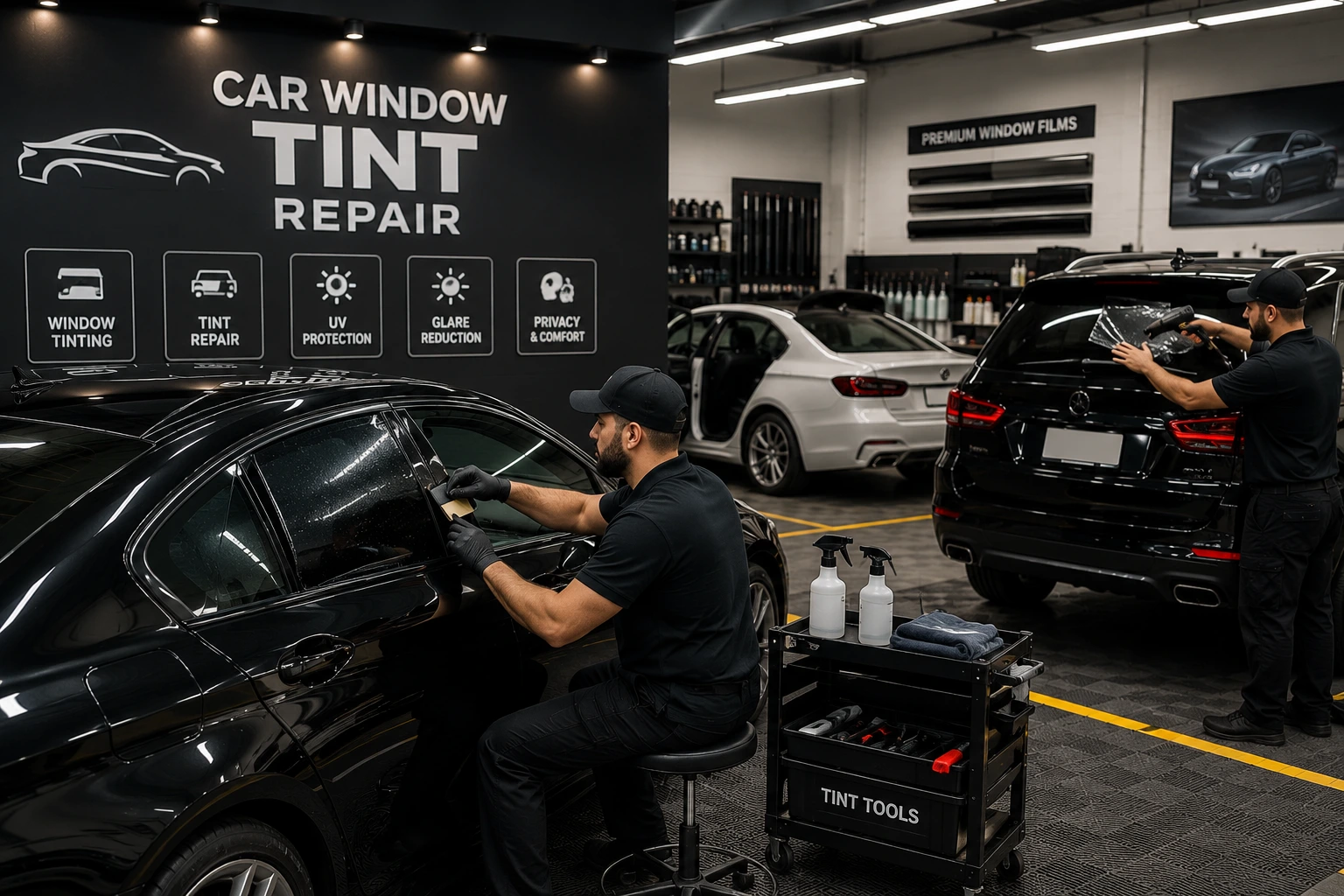
Professional application involves thorough glass cleaning with appropriate solutions, precise cutting matched to the vehicle’s window pattern, and correct squeegee technique to ensure complete adhesion without contamination. Our car mechanic and detailing team handles car window tint UAE applications with proper preparation and curing time before the car goes back to the customer — not rushed out the same hour.
For vehicles that have had previous tint removed, the adhesive residue from the old film needs to be fully cleaned before new film is applied — incomplete removal causes adhesion problems that show up within weeks.
Additional Services That Complement Window Tinting
Beyond tinting, Dubai drivers maintaining their vehicles often combine tint appointments with other maintenance services. Our car painting service handles paint protection and touch-up work that protects the exterior from the same UV exposure that affects untinted glass.
For drivers bringing their car in for tinting alongside a general service visit, our garage near me location in Al Quoz handles both in the same appointment for most makes and models.
If you need a mobile assessment or can’t drive the car in, our mobile car mechanic service can discuss tint requirements at your location and arrange a proper workshop appointment.
If your car breaks down anywhere in Dubai, our roadside assistance team covers Al Quoz and surrounding areas with fast response and recovery support.
In Conclusion
Car window tint UAE done correctly protects your comfort, keeps your cabin cooler, reduces AC load, blocks harmful UV exposure, and keeps your vehicle compliant for Mulkiya inspection. Done incorrectly — wrong shade on front windows, cheap film that fades in a year, poor application that bubbles within months — it’s money spent twice.
Book your appointment with Car Garage Expert for professional car window tint UAE application using legal-compliant, quality film matched to Dubai’s climate demands. We serve Al Quoz and nearby Dubai areas with honest advice on film type and shade before any work starts. Find us on Google Maps — walk-ins welcome, booking ahead guarantees your slot.