Your check engine light is on, but the car feels fine. Before you panic, know this: it’s often just a sensor. Here’s what breaks them in Dubai and how to fix it.
The Main Causes of Car Sensor Failure
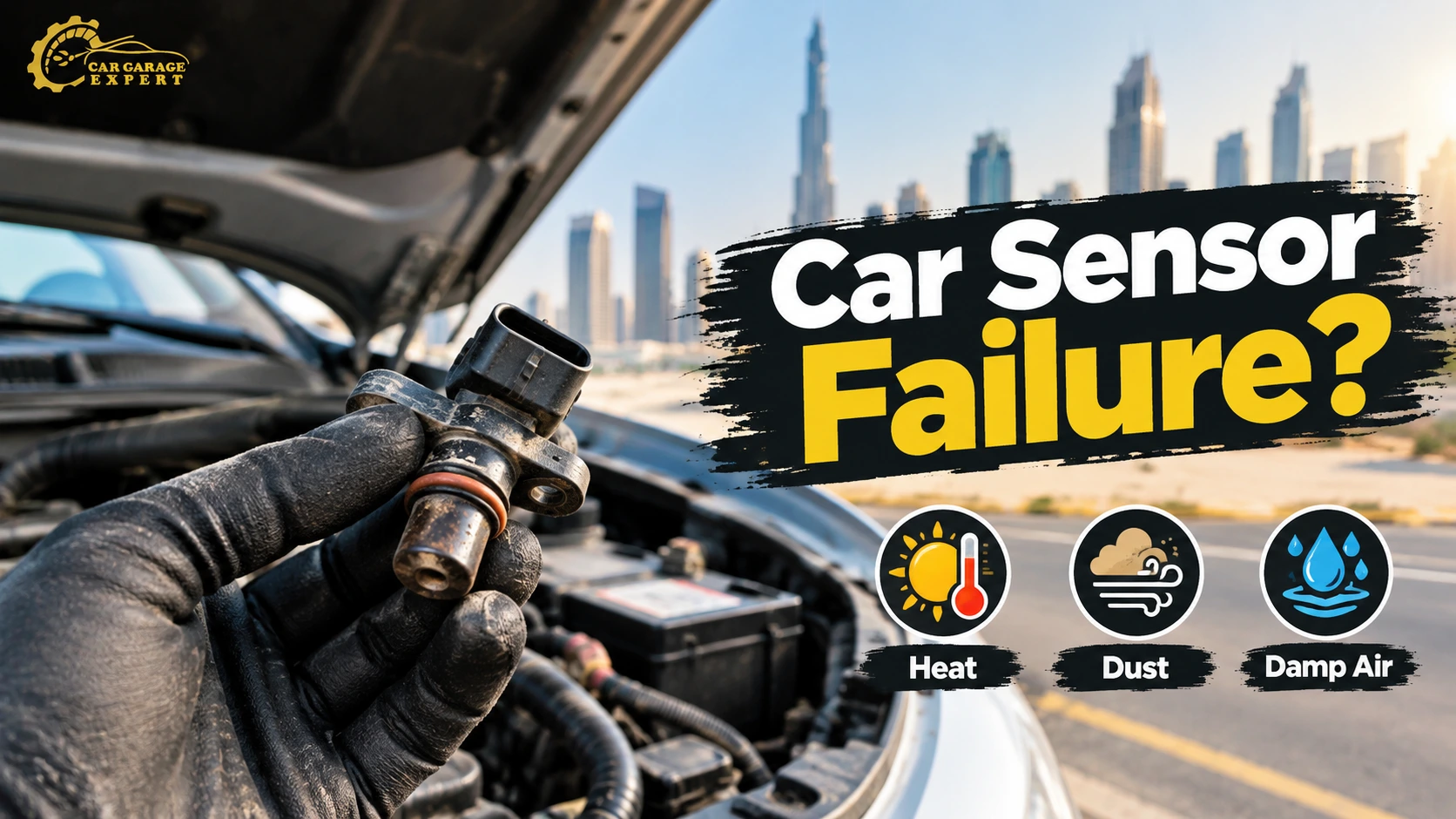
In Dubai, four of the most common reasons why car sensors stop working are heat, dust, water, and low battery power. Car sensors tell your car’s computer what’s going on. If one fails, the machine gets bad information and acts badly. You might see a warning light, rough running, or worse gas mileage. Accidents, oil leaks, and bad wiring can also damage sensors. Before changing any parts, a good garage will look at the error codes, test the sensor, and check the wiring. If you catch it early, it’s easy to fix. Don’t worry; the engine can pay.
Why Small Sensors Cause Big Problems in Your Car
Your car has dozens of sensors. They monitor the engine, brakes, tires, and more. All of them report to the car’s computer, the ECU.
Car sensor failure rarely looks like a broken part. It looks like odd behavior. The car hesitates, a light pops up, or a feature quits.
What Car Sensors Do
Sensors measure airflow, temperature, speed, and pressure. The ECU takes those numbers and decides how much fuel to add and when to fire the spark. It also decides when to step in with the brakes. Good data gives you a smooth drive. Bad data means the computer is guessing.
Why One Faulty Sensor Can Upset the Whole System
The ECU trusts its sensors completely. If one sends a wrong number, the computer acts on it anyway. It might add extra fuel, cut power, or switch off a safety system. So a sensor malfunction can look much worse than it really is. ECU sensor problems are also hard to spot with the naked eye. Only testing tells you the truth.
Sensor Types, Failure Reasons and Fixes Compared
This table shows the main sensors, why they fail, and what usually fixes them.
| Sensor | What It Does | Main Reason It Fails in Dubai | Symptom You Notice | Usual Fix |
| Oxygen sensor | Measures oxygen in the exhaust | Heat, oil or fuel contamination, age | Check engine light, poor fuel economy | Replace the sensor |
| Mass airflow (MAF) sensor | Measures air entering the engine | Dust and oil film from a dirty air filter | Rough idle, hesitation | Clean or replace |
| Coolant temperature sensor | Reports engine temperature | Heat-aged plastic, corrosion, wiring faults | Wrong gauge reading, fan always on | Replace the sensor |
| Crankshaft or camshaft sensor | Times the spark and fuel | Heat, oil on the connector, vibration | Stalling, hard start, no start | Replace and repair the connector |
| Throttle or pedal sensor | Reads how hard you press the pedal | Dirt, wear, heat | Weak acceleration, limp mode | Clean, relearn or replace |
| Wheel speed (ABS) sensor | Reads the speed of each wheel | Brake dust, damaged wire, hard impacts | ABS or traction light on | Clean or replace |
| Tire pressure (TPMS) sensor | Reads tire pressure | Inside battery dies, hot roads | Tire pressure light stays on | Replace the sensor |
| Parking sensor | Detects objects near the bumper | Dust, water, bumper knocks, bad paint | Constant beeping or none | Clean, realign or replace |
| Radar or camera sensor (driver assist) | Reads the road ahead | Accident knocks, dirty glass, bad alignment | Driver assist warning | Clean, calibrate or replace |
One symptom can point to more than one sensor. That’s why you should test before replacing parts.
Warning Signs That a Sensor Is Going Bad
Car sensor failure usually gives you a few clues first. Here’s what to watch for.
Dashboard Warnings
The check engine light is the big one. ABS, traction control, and tire pressure lights can also mean a sensor issue. Some cars show a driver assist message instead.
Changes in How the Car Drives
Rough idle, stalling, and hesitation are common. Hard starts and worse fuel economy are common, too. Some cars go into limp mode and cut power to protect the engine.
Odd Behavior From Features
Parking sensors might beep at nothing. Auto lights or wipers can act strange. A tire pressure light can stay on even when your tires are fine. All of these can point to vehicle sensor problems.
A lot of these signs overlap with other faults. A proper check tells you which one you’ve got.
What Causes Sensors to Fail: Common Causes in Dubai
Automotive sensor failure has plenty of causes. Dubai’s conditions speed most of them up.
Extreme Heat Ages Plastic and Electronics
The engine bay gets far hotter than the air outside. Sensors sit in that heat every single day. Plastic housings crack. Internal parts drift. Slowly, the readings go wrong.
Dust and Sand Coat the Sensing Parts
Fine sand gets past a tired air filter and coats the airflow and oxygen sensors. Parking sensors and wheel speed sensors collect grime too. A dirty sensor can’t read properly.
Moisture and Car Washes Reach the Connectors
Dubai summers are humid, and the air near the coast is salty. That breaks wires and plugs. A high-pressure engine wash can also squeeze water into wires and plugs. The warning breaks when corrosion starts.
Weak Battery and Low Voltage
Batteries die faster in the heat. Low voltage means a weak battery, and sensors need constant power. If the sensor is good, low voltage can cause it to throw fault codes.
Oil Leaks, Vibration and Speed Bumps
Oil and coolant leaks soak connectors and wiring. Rough roads and fast speed bumps shake parts loose. Over time, wires can rub through.
Accident Knocks and Poor Repairs
Even a small bump can knock a parking or radar sensor out of position. A loose bumper or bad paint can cause trouble too. Cheap aftermarket sensors often fail early.
Age and High Mileage
Every sensor wears out eventually. Many last for years, but Dubai heat shortens that.
How a Mechanic Finds the Faulty Sensor Step by Step
A good garage tests first, then replaces parts. Proper car sensor failure diagnosis never relies on a fault code alone. Any skilled car mechanic should follow steps like these.
- Ask questions. When does it happen? Hot or cold? After a wash or a bump?
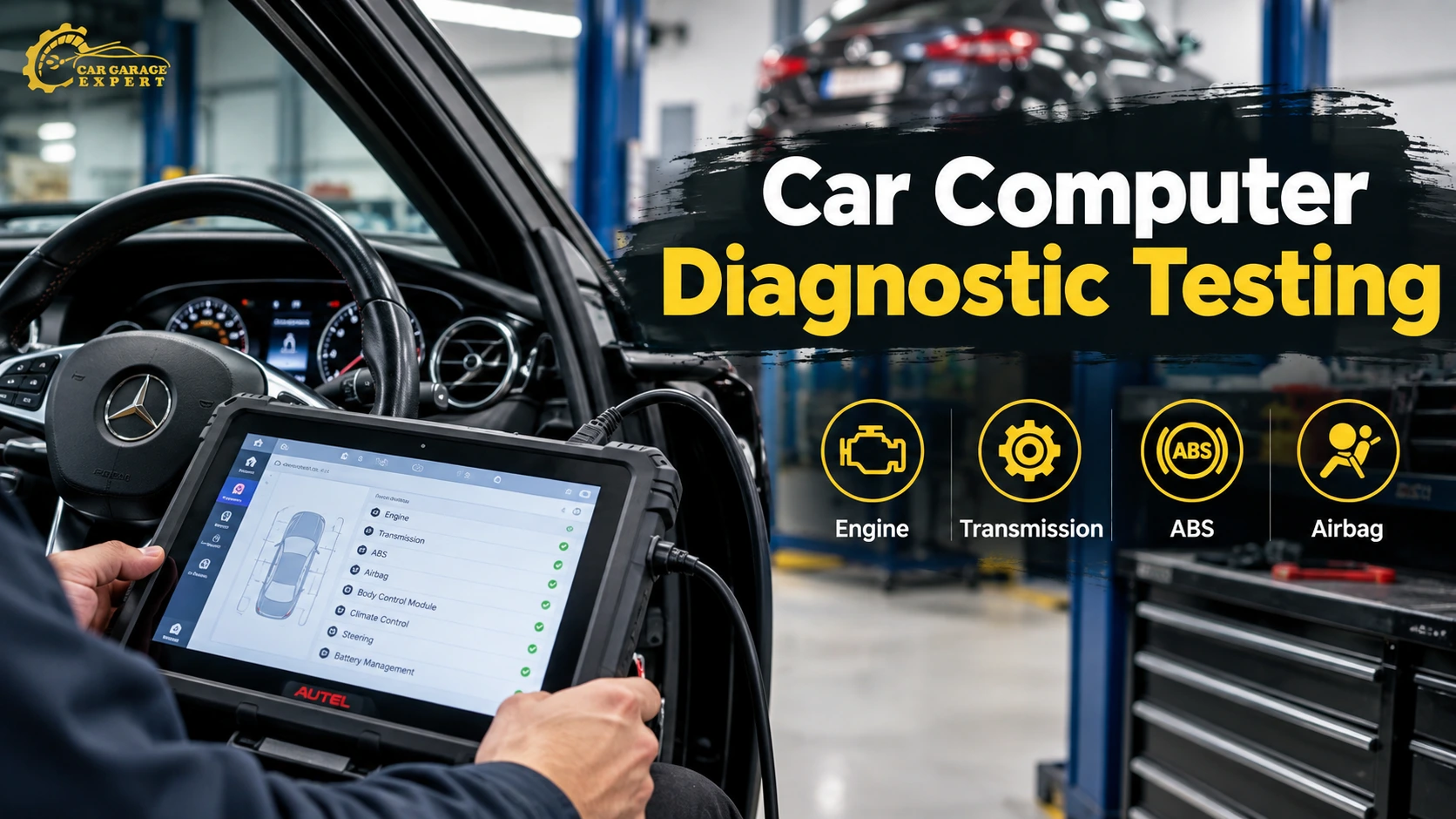
- Read the fault codes. Car sensor diagnostics start with the stored codes.
- Check live data. Electronic car diagnostics show what each sensor reports in real time.
- Test the sensor. Use a meter or scope to check the signal, voltage, and resistance.
- Inspect wiring and plugs. Broken wires, corrosion, and loose plugs are common culprits.
- Test the battery and charging system. Low voltage can copy sensor faults.
- Find the root cause. A vacuum leak or oil leak can fool a sensor.
- Explain the findings. Make sure you have a clear list before replacing any parts.
How Sensor Repair and Replacement Are Done
The fix depends on the cause. The steps below cover a typical job, and sensor replacement is only one part.
Step 1: Fix the Root Cause First
Fix the wire, plug, or leak that caused the problem. If needed, replace a weak battery. If the problem persists, a new monitor will fail again.
Step 2: Clean or Replace the Sensor
Some sensors, like airflow sensors, can be cleaned with the right product. Others need sensor replacement. A good workshop uses quality parts that suit your car.
Step 3: Clear the Codes and Relearn the System
Next, the technician erases the saved codes. After that, some sensors need retraining or calibration. Throttle, tire pressure, and driver-aid sensors often need retraining.
Step 4: Road Test and Rescan
A road test shows whether the car runs smoothly. A final scan confirms no new codes appear.
Services That Fix the Problem and Stop It Coming Back
These services work best together:
- Full-system diagnostic scan with live data
- Sensor cleaning or replacement
- Wiring and connector repair
- Battery and charging system test
- Air filter and fluid service
- Oil and coolant leak repair
- Tire pressure sensor service
- Calibration for parking and driver assist sensors.
What Happens If You Ignore a Failing Sensor
A small sensor fault rarely stays small. Faulty car sensors don’t fix themselves. Here’s what can happen when you wait.
- Fuel use goes up. The ECU adds fuel to compensate for incorrect readings.
- The engine can suffer. Bad readings can cause misfires and overheating.
- The catalytic converter can fail. That’s a costly part.
- Power drops. The car may drop into limp mode.
- Safety systems can switch off. ABS and driver assist need working sensors.
- You may fail your annual vehicle test. Emission faults are a common reason.
- You can break down. In summer heat, that’s dangerous.
Car sensor failure is easy to fix early. It’s far harder once the damage spreads.
Can You Keep Driving With a Faulty Sensor?
That depends on the caution. A constant check engine light and normal driving usually permit a short, cautious drive to the garage. Forget hard acceleration and long drives.
If the light is flashing, stop immediately. If the automobile stalls, overheats or loses power, do the same. Also, if the brake or ABS warning light illuminates and the brakes feel feeble, stop the vehicle. Pull over safely and call road assistance. A tow is a lot cheaper than an engine repair.
How Long Sensor Repairs Usually Take
The diagnostic scan will take roughly 15 to 30 minutes. “Most of the time it’s just a sensor replacement and it takes 30 to 60 minutes. Hard-to-reach sensors or multiple issues may take 2 to 4 hours. Wiring issues can take more time, and calibration adds time. Most jobs are completed on the same day.
What Affects the Cost of Sensor Repair
Several things change the price:
- Type of sensor. An oxygen sensor costs more than a parking sensor.
- Car brand. Luxury and European parts cost more.
- Part quality. Original parts cost more than aftermarket ones.
- Labor time. Some sensors sit deep in the engine bay.
- Wiring repair. A broken wire adds work.
- Calibration. Driver assist sensors need special tools.
- Extra damage. A long-ignored fault may have harmed other parts.
Ask for a written quote before work starts. Fixing car sensor failure early costs far less than replacing a catalytic converter or a damaged engine part.
Simple Habits That Protect Your Car Sensors
A few habits keep sensors healthy:
- Replace the air filter on time.
- Test the battery before summer.
- Fix oil and coolant leaks early.
- Ask for a gentle engine bay wash, not a high-pressure spray.
- Wipe parking sensors with a soft cloth.
- Slow down for speed bumps.
- Book a proper car service package in Dubai each year.
- Don’t ignore small warning lights.
Dubai-Specific Advice: Heat, Dust and Humid Air
Electric cars struggle in Dubai. The engine bay gets very hot in the summer. Sensors get covered in dust and sand. Salty sea air wears down plugs and lines. Everything has to work hard because of the stop-and-go traffic.
Driving in the desert and on rough roads is stressful. Around shops and villas, speed bumps can loosen wiring over time.
Keep these tips in mind:
- Get a sensor and battery check before summer starts.
- After a desert drive, ask for a quick inspection.
- After any accident, have the sensors checked and calibrated.
- Save the roadside assistance number in your phone.
- Choose a garage near me with the right scan tools for your car.
- If the car isn’t safe to drive, a mobile car mechanic can often bring a portable scanner to you.
Why Choose Car Garage Expert for Car Sensor Failure in Dubai
Car Garage Expert in Al Quoz, Dubai, is a smart choice for car sensor failure. The team reads the codes, tests the sensor, and checks the wiring before it recommends a single part. You won’t pay for guesswork or come back for a repeat fix.
If you’re looking for a garage near me, here’s what to look for:
- Scan tools that access all modules in your vehicle
- Hand testing after the scan, not guesswork
- A clear list of faults in plain language
- Quality parts and proper calibration
- A rescan after repair to confirm the fix
Choose the garage that maintain these standards.
Frequently Asked Questions
Q1: What causes a car sensor to fail?
The main causes are age, heat, dust, water, weak voltage, and more. Accidental knocks, oil leaks, and broken wires can also cause this.
Q2: How do I know a sensor is bad?
You might see a warning light, rough running, or poor fuel economy. Only a scan and a test can confirm which sensor it is.
Q3: Can I drive with a bad sensor?
Sometimes, for a short trip. Stop right away if the light flashes or the car loses power. Call for roadside help if you need it.
Q4: How long do car sensors last?
Many last for years. Heat and dust can shorten that. There’s no set replacement age.
Q5: How much does sensor replacement cost?
It depends on the sensor, your car, and the labor time. Ask for a written quote after the diagnosis.
Q6: Will clearing the codes fix the problem?
No. Clearing codes only turns off the light. If the fault remains, the light comes back.
Q7: Can a weak battery cause sensor faults?
Yes. Low voltage can trigger false fault codes. Test the battery first.
Related Services That Work With Sensor Repair
These services often go together with sensor repair:
- Engine repair and diagnostics. Finds hidden faults and checks for damage.
- Battery and electrical repair. Fixes weak power, wires, and plugs.
- ABS and brake service. Clears wheel speed sensor faults.
- AC repair. Some AC faults come from temperature and pressure sensors.
- Oil and filter service. Keeps air and oil sensors clean.
Bumper work needs care too. If your bumper needs car painting, ask the workshop to remove and refit the parking sensors properly. Bad paint or a loose sensor can cause false beeps.
Book Your Sensor Check Today
Don’t wait for a small warning light to turn into a breakdown. A sensor check now costs far less than an engine repair later.
For car sensor failure you can trust, visit Car Garage Expert in Al Quoz, Dubai. Message the team on WhatsApp or find the workshop on Google Maps.