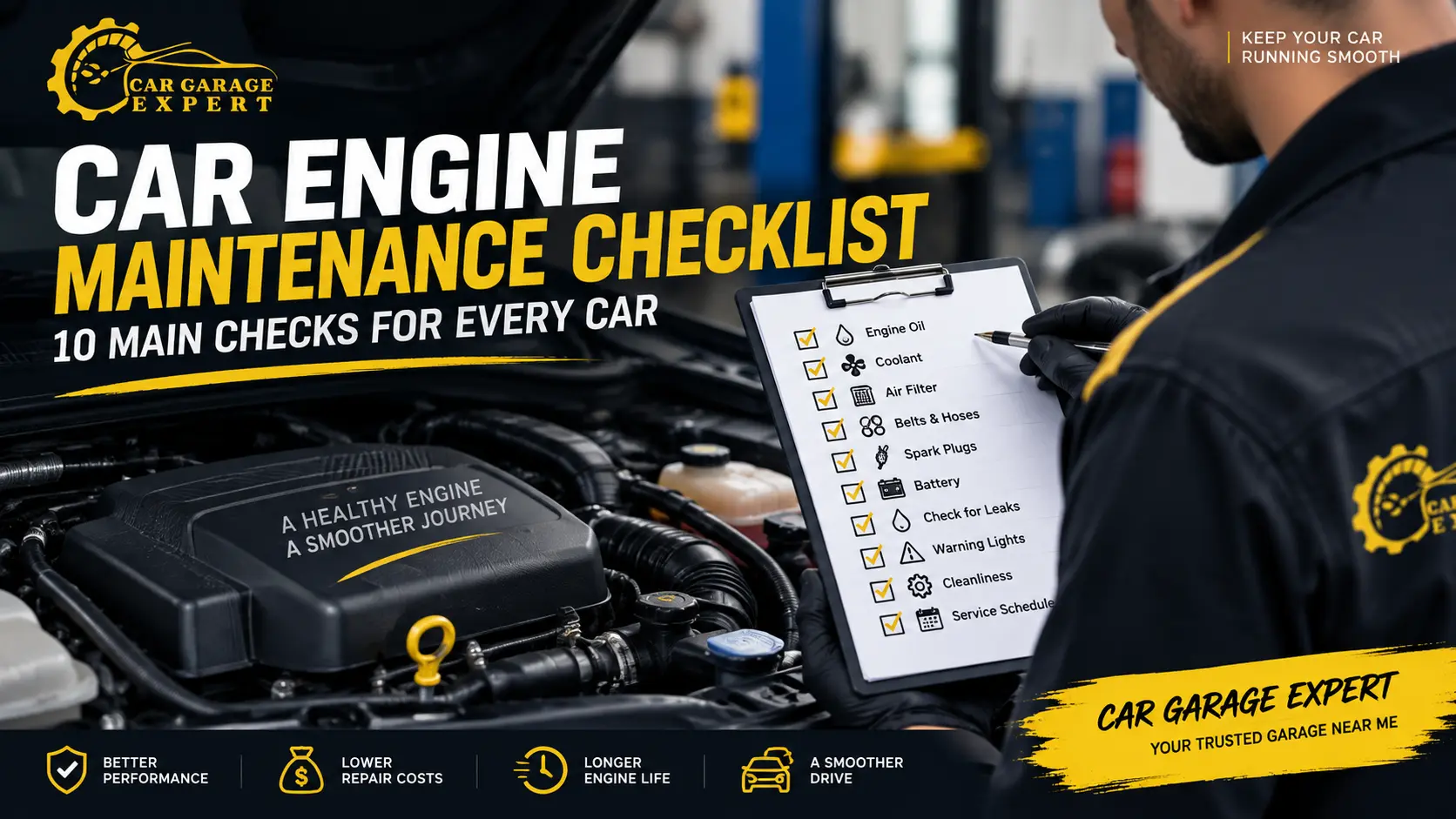
A genuine Car Engine Maintenance Checklist really comes down to covering the basics that keep an engine lubricated, cooled, breathing clean air, and running the way it should. Start with oil and coolant, then work through the air filter, belts, hoses, spark plugs, battery, any fluid leaks, and whatever warning lights are on. It’s also worth paying attention to how the car’s actually behaving — rough idling, a new noise, overheating, sluggish acceleration, or fuel economy that’s quietly gotten worse. None of this means replacing everything at every visit. The real point is catching wear early and servicing each part according to what your manufacturer actually recommends, not a guess.
Table of Contents
- Why Regular Engine Checks Matter
- 10 Essential Engine Maintenance Checks
- Warning Signs Your Engine Needs Attention
- How a Professional Engine Inspection Works
- What Happens During Engine Maintenance?
- Risks of Ignoring Engine Maintenance
- Can You Continue Driving?
- How Long Does Engine Maintenance Take?
- What Affects Engine Maintenance Cost?
- How to Prevent Expensive Engine Problems
- Dubai-Specific Engine Maintenance Advice
- Why Choose Car Garage Expert?
- Frequently Asked Questions
- Related Services
- Final Call-to-Action
Why Regular Engine Checks Matter
Engines don’t usually just quit without any warning. More often than not, a small problem sits there quietly getting worse for weeks or months before it turns into something expensive.
That’s really the whole point of keeping a Car Engine Maintenance Checklist — it gives you a simple way to stay on top of the things that need regular attention instead of waiting until the car forces the issue.
Maintenance isn’t just about oil changes, either. Coolant condition, the filters, belts, hoses, spark plugs, how well the battery’s holding up, any fluid leaks, and dashboard warning lights all say something about how the engine’s actually doing.
If you’re putting a lot of miles on the car around Dubai, a handful of preventative checks now and then can genuinely make a difference down the line.
10 Essential Checks Every Car Owner Should Know
A decent Car Engine Maintenance Checklist really comes down to these ten areas.
1. Check the Engine Oil Level and Condition
Oil’s usually the first thing worth checking.
It’s what lubricates the moving parts inside the engine and keeps friction and heat under control. Once it gets contaminated or starts breaking down, it stops protecting the engine the way it should.
Check the level the way your manufacturer recommends. If it keeps dropping between services, don’t just keep topping it off and moving on — that’s usually a sign of a leak or higher oil consumption that’s worth looking into.
The right oil spec matters too. Using something that doesn’t match what your manufacturer calls for can quietly hurt both performance and protection.
2. Inspect Coolant and the Cooling System
The cooling system’s job is keeping engine temperature in a safe range.
Check the coolant reservoir once the engine’s cold, and make sure the level looks right. While you’re there, glance around the hoses, radiator, and reservoir for anything that looks like a leak.
If the temperature gauge starts creeping up past where it normally sits, don’t brush it off. Driving an overheating car for too long can do real damage.
And never crack open a hot cooling system — pressurized coolant can burn you badly.
3. Examine the Engine Air Filter
Your engine needs a steady flow of clean air to run properly.
A filter that’s badly clogged can choke off airflow, and you’ll usually notice it as sluggish acceleration, worse efficiency, or the engine just not feeling quite right.
How often it needs swapping out really depends on the car and where you’re driving it. Cars spending a lot of time in dusty conditions tend to need more frequent checks than ones driven somewhere cleaner.
A quick look during routine maintenance is usually all it takes to catch this one before it becomes a bigger deal.
4. Inspect Belts for Cracks and Damage
Belts quietly do a lot of work under the hood.
Depending on the car, a belt might be driving the alternator, the AC compressor, the water pump, or other accessories. Some engines still run a timing belt instead of a chain, too.
Look for cracking, fraying, odd wear patterns, a glazed look, or any strange noise coming from that area.
If your car uses a timing belt, stick to the manufacturer’s replacement interval closely — on some engines, a timing belt failure can cause serious internal damage.
5. Check Hoses and Connections
Rubber hoses deal with a lot — heat, pressure, vibration, and just plain age.
Check coolant hoses and anything else accessible for swelling, cracking, soft spots, or signs they’re starting to break down. Loose or damaged connections are worth a look too.
A small hose issue can seem trivial, but a coolant hose that fails suddenly can lead to overheating faster than you’d expect.
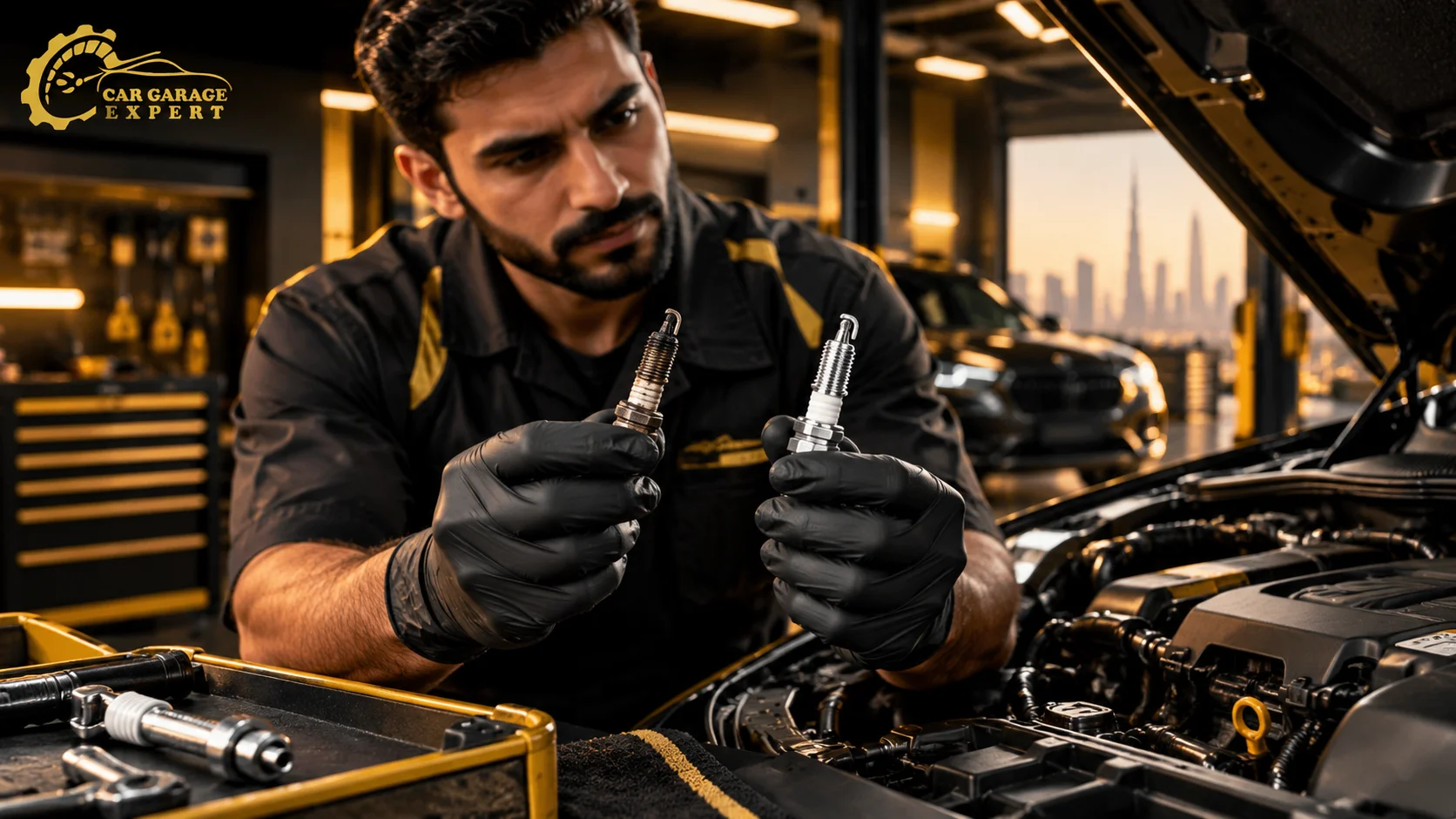
6. Check Spark Plugs and Ignition Components
Spark plugs matter a lot on petrol engines specifically.
Worn or fouled plugs can show up as a rough idle, misfires, harder starts, weaker acceleration, or fuel economy that’s quietly gotten worse.
Replacement intervals vary depending on the car and plug type, so there’s no need to swap them out just because the odometer hit some round number if your manufacturer’s schedule says otherwise.
While they’re checking plugs, a technician can also pick up on signs of a deeper ignition or combustion issue.
7. Inspect the Battery and Charging System
A weak battery causes more trouble than just a slow start.
Modern cars lean heavily on their electrical systems, so a charging problem can trigger warning lights or cause electrical quirks that seem unrelated at first.
Check for corrosion on the terminals, any physical damage, loose connections, and general signs the charging system isn’t keeping up.
If the battery keeps going weak on you, it’s worth testing the alternator and charging system too — replacing just the battery doesn’t always solve the actual problem.
8. Look for Oil or Coolant Leaks
Don’t ignore a spot on the ground where your car’s been parked.
Oil can leak from around the engine, the filter, the sump, or various seals. Coolant tends to show up around hoses, the radiator, the water pump, the thermostat housing, or the reservoir.
Color and location can give you a clue, but pinning down the actual source usually needs a proper look underneath.
If you spot a leak that’s new or getting worse, get it checked before the fluid level drops too low.
9. Pay Attention to Engine Warning Signs
Your car’s usually pretty good at telling you when something’s off.
A check engine light, overheating warning, oil-pressure warning, unusual smoke, a persistent misfire, or a sudden loss of power shouldn’t be waved off as just the car getting older.
A few other things worth noticing:
- Rough idle
- Unusual ticking or knocking
- Difficult starting
- Excessive vibration
- Poor acceleration
- Increased fuel consumption
- Burning smells
- Unusual exhaust smoke
None of these automatically mean the engine itself is failing — sensors, ignition parts, the fuel system, or the cooling system can all produce very similar symptoms.
10. Review the Vehicle’s Service Schedule
Last on the list: actually check your manufacturer’s maintenance schedule.
Oil changes, filters, spark plugs, coolant service, timing-belt replacement — they’re all on different intervals, and it’s easy to lose track without checking.
Your driving conditions matter too. Frequent short trips, heavy traffic, dusty roads, high heat, and long highway stretches can all shift how often things actually need attention.
A good Car Engine Maintenance Checklist works best alongside your manufacturer’s recommended schedule, not instead of it.
Warning Signs That Mean Your Engine Needs Attention
Staying ahead of maintenance matters, but it’s just as important to recognize when the car’s asking for attention right now.
If the engine suddenly starts behaving differently than usual, don’t ignore the change.
Say a car that always started instantly is now cranking for a few seconds longer than normal — that could be the battery, fuel delivery, ignition, or a sensor. Same goes for a new noise; it might be low oil, a belt, a tensioner, an accessory, or something happening internally.
Overheating deserves real attention here. If the temperature climbs noticeably or a warning comes on, stop driving.
And an oil-pressure warning is never something to shrug off just because the car still seems to be running fine.
How a Professional Engine Inspection Works
A proper inspection goes a lot further than just popping the hood and having a look.
At Car Garage Expert, a technician usually starts by talking through the symptoms, any recent repairs, mileage, and maintenance history. From there, the engine bay gets a visual once-over for leaks, damaged hoses, worn belts, fluid levels, and anything else that stands out.
If there’s a warning light on, diagnostic equipment gets used to pull the relevant fault codes and supporting data.
Depending on what’s showing up, the inspection might also involve battery and charging tests, a look at the cooling system, checking oil condition, ignition testing, or other mechanical checks.
The whole point is finding the actual cause rather than swapping parts based on a guess.
What Happens During Engine Maintenance?
What maintenance actually involves varies quite a bit from car to car.
A routine service usually means an oil and filter change, checking fluids, looking over belts and hoses, and a general once-over of the engine bay.
More extensive work might mean replacing spark plugs, air filters, fuel filters, coolant, drive belts, or other items that are due.
If something turns up during inspection a leak, a mechanical fault that gets handled as its own repair rather than lumped in as routine maintenance.
That’s really why a Car Engine Maintenance Checklist should be thought of as a guide for what to inspect, not a list of parts that automatically need swapping out.
Risks of Ignoring Engine Maintenance
Skipping routine maintenance can turn cheap fixes into expensive ones.
Old oil accelerates wear. A coolant issue left alone can lead to overheating. A worn belt can fail without much warning. A blocked filter can throw off how the engine runs. A weak battery or charging system can leave you stuck somewhere inconvenient.
The longer any of this sits unresolved, the more likely it is to start affecting other parts of the car too.
Preventative maintenance really isn’t about spending money for no reason — it’s about catching things while they’re still small and manageable.
Can You Continue Driving?
Sometimes, yes — but it really depends on what you’re dealing with.
A routine service reminder doesn’t mean the car needs to stop right now. But serious warning signs — overheating, low oil pressure, heavy smoke, a bad misfire, a major fluid leak, or loud noises coming from inside the engine — deserve a different response.
If the car’s genuinely unsafe to drive or has already stopped running, searching for a garage near me probably isn’t the right first move. In that situation, roadside assistance is the safer way to get the car somewhere it can actually be inspected.
How Long Does Engine Maintenance Take?
A basic service can often be wrapped up in a few hours, depending on the car and how busy the workshop is.
More extensive maintenance takes longer when there’s more to check or replace. A diagnostic scan can add time too, especially if there’s a warning light or an intermittent issue that’s tricky to pin down.
If parts need to be ordered in, that stretches things out further.
A workshop worth its salt will walk you through what they’ve found and what’s actually needed before jumping into anything major.
What Affects Engine Maintenance Cost?
There’s no single number for what engine maintenance costs.
It usually comes down to:
- Vehicle make and model.
- Engine type and size
- Required oil specification
- Filter type
- Spark-plug type
- Coolant specification
- Labour requirements
- Replacement parts
- Existing leaks or mechanical faults
- Additional diagnostic testing
Routine maintenance is generally easier to budget for than an unexpected repair, which is one more reason to stick to the manufacturer’s schedule.
How to Prevent Expensive Engine Problems
A handful of simple habits go a long way toward keeping the engine in good shape.
Check fluid levels regularly, rather than waiting for a warning light to tell you.
Stick to the service schedule — those intervals exist for a reason.
Pay attention to new symptoms. A strange sound, smell, bit of smoke, or shift in how the car performs is worth looking into.
Use the right fluids and parts. Oil and coolant specs aren’t interchangeable, no matter how similar they look.
Don’t brush off small leaks. A minor one now can turn into a real problem later.
Keep the cooling system in good shape. Overheating causes damage that’s genuinely expensive to undo.
Replace filters on schedule. Clean air and oil filtration are doing more work than people realize.
Keeping a consistent Car Engine Maintenance Checklist makes all of this a lot easier to remember and follow through on.
Dubai-Specific Engine Maintenance Advice
Dubai’s climate really does deserve its own mention here.
High temperatures put extra strain on the cooling system, the battery, the AC, and the engine’s fluids generally. Heavy traffic adds long stretches of idling and repeated heat exposure on top of that.
The dust doesn’t help filters or anything in the engine bay, and frequent short trips can mean the engine rarely reaches its ideal operating temperature for long.
If you’re driving regularly around Dubai, don’t wait for summer to find out the cooling system or an aging battery has been struggling. A pre-summer check can catch that kind of thing before it becomes an inconvenience.
If you’re searching online for a garage near me, look for a workshop that’ll actually inspect the car properly rather than just rushing through an oil change.
Why Choose Car Garage Expert for Engine Maintenance?
A good maintenance visit should be about more than just topping up fluids.
Car Garage Expert can catch developing issues during a routine inspection — leaks, worn belts and hoses, battery trouble, cooling-system concerns, and other engine-related problems.
The goal is giving you a clear picture of what actually needs attention now, what can reasonably wait, and what’s worth keeping an eye on going forward.
If you’re building your own regular Car Engine Maintenance Checklist for the car, a professional inspection is a good complement to whatever you’re already checking at home.
Frequently Asked Questions
Q1: How often should I perform an engine maintenance check?
Stick to your manufacturer’s schedule as the baseline. Basic visual and fluid checks are worth doing more often too, especially before a longer trip.
Q2: What is the most important engine maintenance task?
Oil is right up there in importance, but engine reliability really comes down to several systems working together — coolant, filters, belts, hoses, ignition components, and the charging system all play a part.
Q3: Can a dirty air filter damage an engine?
A badly restricted or neglected filter can hurt airflow and performance. How often it needs replacing depends on your car and how you’re driving it.
Q4: How do I know if my engine coolant is low?
Check the reservoir once the engine’s fully cooled and compare it against the markings. If the level keeps dropping, that’s worth having checked for a leak.
Q5: Should I check my engine before a long road trip?
Yes — oil, coolant, tire pressure, battery condition, belts, hoses, lights, and the other basics are all worth a look before heading out on a longer drive.
Q6: When should I call roadside assistance?
If the car overheats, develops a serious mechanical fault, stopped running, or just isn’t safe to drive, roadside assistance is usually the better call.
Related Services
If your inspection reveals a problem, these Car Garage Expert services may be relevant:
- Engine Repair
- Car Oil Change
- Car Filter Change
- Car Battery Replacement
- Car Diagnostics
- Car Maintenance
- Vehicle Inspection
- Car AC Repair
- Car Electrical Repair
- Roadside Assistance
Conclusion
Don’t wait for a major engine problem before you start paying attention to routine maintenance. Use this Car Engine Maintenance Checklist as a practical starting point, follow your manufacturer’s service intervals, and don’t sit on unusual symptoms for too long.
If you need a professional inspection or engine service in Dubai, contact Car Garage Expert, we can help identify what actually needs attention before it turns into something more expensive.
If your car’s already broken down or developed a serious issue on the road, arrange roadside assistance rather than continuing to drive something that isn’t safe.