Few parts of your car take as much punishment as your brakes. Every time you press that pedal, you’re relying on a network of hydraulics and friction materials to bring well over a tonne of metal to a controlled stop. Over time, the discs that absorb all that heat and friction start to wear unevenly — and that’s where brake disc skimming comes in.
A vibrating pedal or a shaking steering wheel doesn’t automatically mean your discs are finished. In many cases, brake disc skimming can restore them to like-new condition for a fraction of the cost of a full replacement. This guide walks through what the process actually involves, how to spot the signs you need it, and how to know whether your discs are even good candidates for it.
Everything You Need to Know About Brake Disc Skimming
Brake disc skimming is a precision process that restores a flat, even friction surface to a worn brake disc, also known as a rotor. A specialized lathe shaves off a microscopic layer of metal from the disc’s face, correcting surface irregularities that build up over months of heavy use.
Dubai’s climate and driving conditions are particularly hard on brake discs. Constant stop-start traffic, extreme summer heat, and long stretches of highway driving all put discs through repeated cycles of intense heating and cooling. That thermal stress is exactly what causes the scoring, rust, and uneven wear that brake disc skimming is designed to fix. At Car Garage Expert, this is one of the most common brake repairs we see coming through the workshop.
Signs You Need Brake Disc Skimming
Most drivers notice something feels off under braking long before a mechanic points it out during a routine check. Here’s what to watch for if you’re wondering whether your brake discs need skimming.
Pedal Judder
A pulsing or vibrating brake pedal usually points to Disc Thickness Variation, where even a fraction of a millimeter of unevenness across the disc causes the pads to bounce and send pulsations back through the pedal.
Steering Wheel Shake
If the steering wheel shakes noticeably when you brake at higher speeds, the front discs are likely affected by run-out or thickness variation, and it’s worth having them checked.
Squealing or Grinding Sounds
While worn pads are the more common cause of noise, surface glazing on the disc itself can also create a persistent squeal that skimming resolves by providing a fresh, even finish.
Visible Rust or Scoring
If you can see deep circular grooves or heavy corrosion through your alloy wheels, that’s a clear sign your discs need attention, and skimming is often enough to bring them back to a usable state.
How Brake Disc Skimming Is Done
Understanding how this process works helps explain why it’s such an effective repair rather than a stopgap.
Bench Lathes vs On-Car Machines
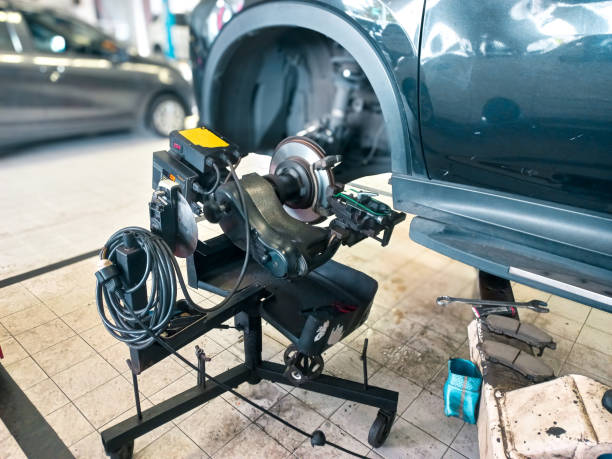
Traditionally, a mechanic would remove the disc entirely and machine it on a standalone bench lathe. Most modern garages now use an on-car skimming machine instead, which attaches directly to the wheel hub and machines the disc in place.
Why On-Car Skimming Works Better
Attaching the lathe directly to the hub automatically accounts for any existing run-out in the hub. The lathe cuts both faces of the disc at once, keeping them perfectly parallel and perpendicular to the axle which effectively matches the disc to that exact vehicle rather than just flattening it in isolation.
Turning vs Grinding
Turning is the standard method for passenger cars, where a carbide cutting tip removes a continuous, microscopic ribbon of metal as the disc spins. Grinding uses an abrasive wheel and is more common in heavy-duty commercial applications. For everyday cars, turning via an on-car lathe remains the most practical and cost-effective option.
Skimming or Replacing: How to Decide
Not every worn disc is a candidate for skimming, and knowing the difference matters for your safety.
Every disc has a manufacturer-specified minimum thickness it must retain to function safely, since the disc acts as a heat sink during braking. A technician will measure your disc’s current thickness with a precision micrometer before even considering the lathe. If the thickness remaining after skimming falls below that minimum, replacement is the only safe option; skimming simply isn’t on the table at that point.
If there’s enough material left, though, skimming makes strong financial sense. Brake disc skimming in Dubai typically costs a fraction of what you’d pay for a pair of new OEM discs, especially on premium or performance vehicles where replacement parts carry a steep price tag. Since discs are usually replaced in axle pairs to keep braking balanced, skimming a disc that still has life left in it can save a meaningful amount without compromising safety.
What Does This Service Cost in Dubai?
Pricing varies by vehicle and garage, but this service generally ranges from AED 150 to AED 350 per axle, depending on your car’s make and the extent of wear. Compare that to the cost of a full set of new OEM discs, which can run into the thousands of dirhams for premium or performance vehicles, and the value of skimming becomes clear.
A few things that affect pricing:
- Your vehicle’s make and model
- Whether both axles need attention or just one
- Whether new pads are being fitted alongside the skimmed discs
Benefits of Skimming Over Replacement
Beyond fixing a wobbly pedal, this service offers a few advantages worth knowing about.
Better pad contact from day one. Fitting new pads to old, uneven discs means the pads initially touch only the highest points of the surface, reducing your stopping power until they wear down to match the surface. Skimming gives new pads a flat surface to bed into immediately.
Improved stopping performance. Full surface contact between pad and disc from the start means better friction and shorter stopping distances when it matters most.
Less waste. Manufacturing new discs is a resource-heavy process. Extending the life of discs that still have enough material left reduces how often you need replacements altogether.
Finding the Right Garage for the Job
Not every garage near me has the equipment or experience to do this job properly, so it’s worth being selective. Car Garage Expert uses on-car skimming machines rather than relying solely on an older bench lathe, since on-car equipment tends to give more accurate, hub-matched results.
A good car mechanic will also measure your disc thickness against the manufacturer’s safe limit before recommending skimming over replacement — if a garage skips that step, that’s worth questioning. If your car also needs cosmetic attention at the same visit, most full-service garages that handle car painting can take care of both jobs together.
If you’re dealing with brake trouble away from home, roadside assistance can get your car safely to a garage rather than risking a drive on discs that are already vibrating or grinding. A mobile car mechanic can also come to you if getting to a workshop isn’t practical. It’s always safer to have it looked at properly than to keep driving and hope the problem doesn’t get worse.
Tips to Get the Most Out of Skimmed Discs
A few habits help your discs last longer, whether they’ve just been skimmed or you’re trying to delay the next service:
- Avoid harsh braking for the first 100 to 200 kilometers after new pads are fitted to freshly skimmed discs, so the pad material can bed in evenly.
- Use engine braking on long downhill stretches instead of riding the brake pedal, since overheating is the leading cause of warping and thickness variation.
- Wash brake dust off your wheels regularly, since trapped moisture against the disc accelerates rust.
- Get any squealing or grinding checked immediately — catching worn pads early prevents deeper, un-skimmable damage to the disc surface.
Frequently Asked Questions About Disc Skimming
Q1: What is brake disc skimming?
It’s a machining process that removes a thin, even layer of metal from a worn brake disc to restore a flat, smooth surface and correct issues such as pedal judder, vibration, and surface rust.
Q2: How do I know if I need this instead of new discs?
A technician measures your disc’s current thickness against the manufacturer’s minimum safe limit. If enough material remains after skimming, it’s a safe and cost-effective option; if not, replacement is required.
Q3:How much does brake disc skimming cost in Dubai?
It typically costs between AED 150 and AED 350 per axle, significantly less than buying a full set of new OEM discs.
Q4: Can it fix a vibrating steering wheel?
In most cases, yes. Steering wheel shake under braking is usually caused by disc thickness variation, which skimming corrects by restoring an even surface.
Q5: Is it safe to have discs skimmed?
Yes, as long as the disc has enough material remaining after machining to meet the manufacturer’s minimum thickness. A qualified mechanic will always check this before proceeding.
Q6: How long does brake disc skimming take?
Most on-car skimming jobs take under an hour per axle, making it a same-day service at most garages.
Final Thoughts on Skimming Your Brake Discs
Brake disc skimming is one of those services that quietly saves drivers a significant amount of money when it’s done at the right time. Catching the early signs pedal judder, steering wheel shake, visible rust or scoring usually means a straightforward, affordable fix instead of a full disc replacement.
At Car Garage Expert, we check disc thickness against manufacturer limits before recommending skimming, so you only get the service if it’s genuinely the safer and more cost-effective option. You can reach Car Garage Expert on WhatsApp to book a slot, or find your nearest garage near me in Dubai if you’d rather drop by. Car Garage Expert also handles everything from car mechanic work to full car service packages, so your brakes aren’t the only thing that gets looked after. You can also find Car Garage Expert on Google Maps if you’d prefer to visit in person.