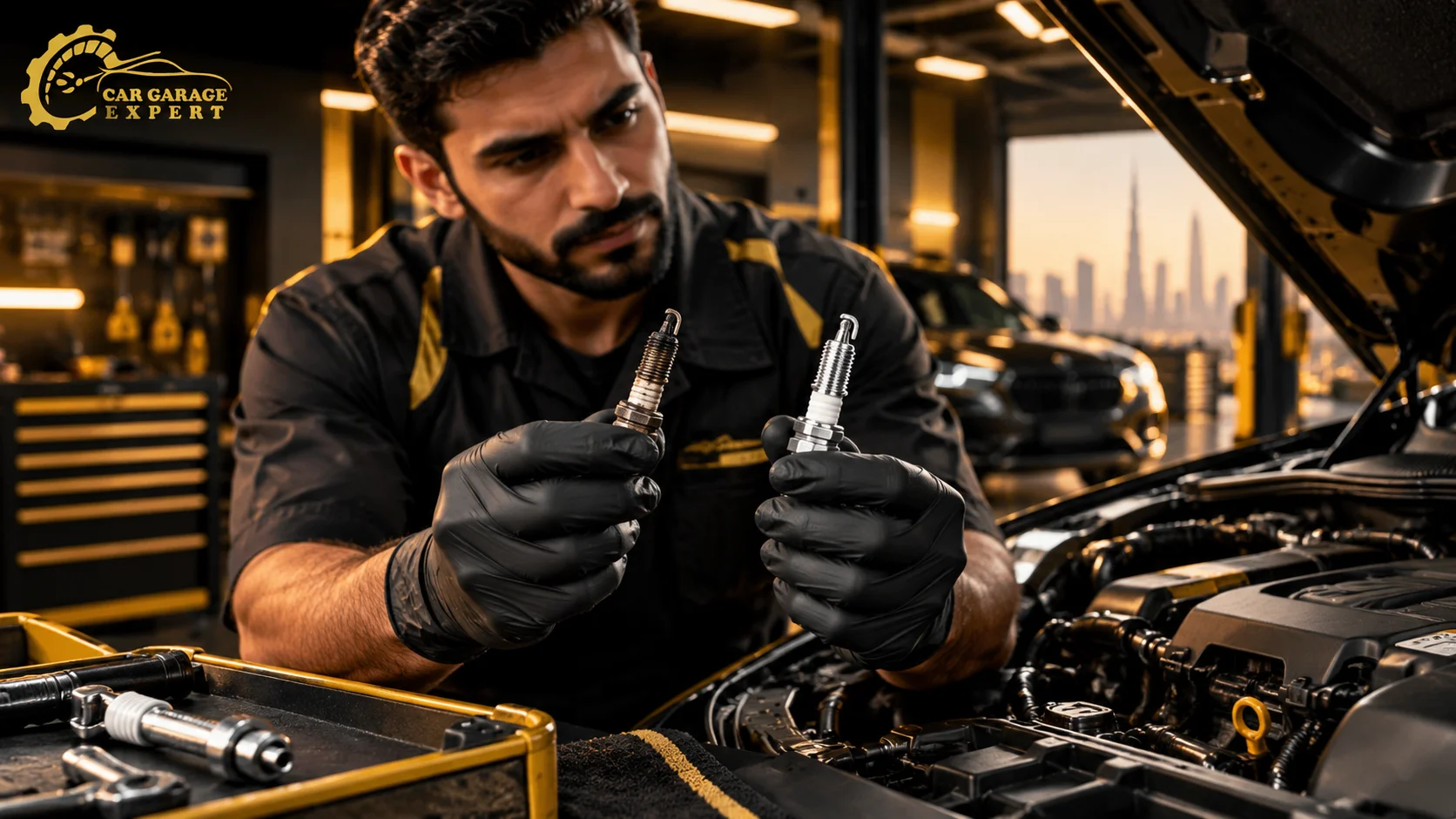
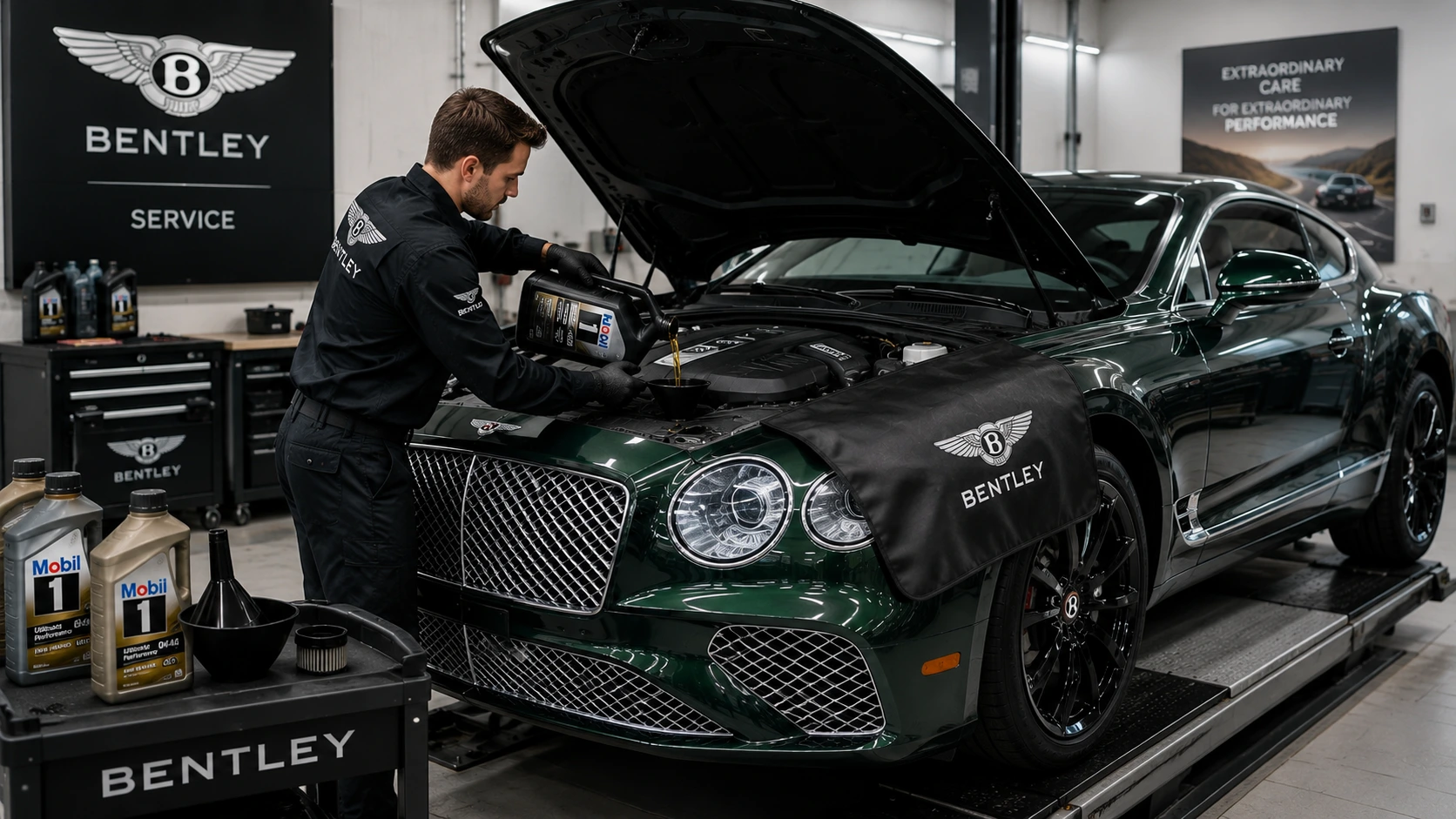
A Bentley oil change is not a routine task in the way a Toyota or a Volkswagen oil change is. The W12 engine in the Continental GT and Flying Spur, the V8 in the Bentayga and Continental GT V8, and the V8 in the Bentayga S all carry specific oil requirements, specific service procedures, and specific consequences for getting those requirements wrong.
In Dubai’s market, where Bentley ownership has a meaningful presence — the Continental GT, Flying Spur, and Bentayga are all common on UAE roads — the question of where and when to service the oil system on these vehicles matters more than most owners initially appreciate.
A Bentley oil change done correctly uses the exact approved specification, changes at the correct interval for Dubai’s conditions, and includes the full system assessment that any service on a vehicle at this level should involve.
Bentley Oil Change Dubai — Why Specification Matters More Than Brand
Bentley’s W12 and V8 engines are among the most sophisticated production powertrains available. The 6.0-litre twin-turbocharged W12 — used in the Continental GT W12 and Flying Spur W12 — uses a complex lubrication architecture with specific oil flow requirements through the timing chain tensioners, the turbocharger bearings, and the variable valve timing system that operates across twelve cylinders.
The V8 engine in the Continental GT V8 and Bentayga — the EA825 unit shared with Audi and Lamborghini in different states of tune — requires a specific VW Group oil approval that’s distinct from what a generic premium full synthetic provides.
Using the correct oil specification for a Bentley oil change isn’t a luxury preference. It’s an engineering requirement. The wrong additive package in the oil affects the VVT actuator response, the timing chain tensioner performance, and the turbocharger bearing oil film thickness in ways that accumulate quietly over multiple service intervals before producing a visible fault.
A Bentley Continental GT W12 came to Car Garage Expert after a previous workshop had performed two consecutive oil changes using a premium 5W-40 full synthetic without the correct VW Long Life approval. By the second service, the vehicle was showing a slight VVT timing rattle on cold start — early evidence of timing chain tensioner sluggishness from an oil that didn’t maintain the correct hydraulic pressure in the tensioner feed circuit at cold viscosity. Correct oil specification from the next service, combined with a tensioner inspection, resolved the issue before it progressed.
Bentley Oil Change — Engine-Specific Requirements
A proper Bentley oil change starts with understanding which engine is in the vehicle and what that engine specifically requires.
W12 Engine — Continental GT and Flying Spur
The W12 is Bentley’s signature powerplant — two V6 blocks sharing a common crankshaft, configured as a 15-degree angle between the cylinder banks. It’s a physically compact engine given its twelve cylinders, which means the lubrication system works within tighter packaging constraints than a conventional V12.
Oil Specification for the W12
The W12 requires oil meeting VW Group 502.00 specification for non-DPF applications, or 504.00 specification for models with particulate filter systems. These aren’t interchangeable despite both being VW Group approvals — the additive packages differ in ways that matter for the W12’s specific internal architecture.
Viscosity grade: 0W-40 for most W12 applications. The 0W cold viscosity is critical for cold-start oil pressure delivery to the timing chain tensioners — a thicker cold viscosity delays oil pressure reach to these components in the seconds after cold start, increasing wear during the most vulnerable period of engine operation.
W12 Oil Capacity
The W12 carries approximately 8.5 litres of oil — significantly more than most four and six-cylinder engines, but appropriate for the twelve-cylinder architecture and the turbocharger lubrication circuit. A Bentley oil change on the W12 requires precise fill to the correct level — overfilling creates foaming under high-speed operation, underfilling reduces the oil volume available for sustained lubrication at maximum load.
Oil Filter Location and Access
The W12’s oil filter is accessible from above on most Continental GT and Flying Spur configurations — but the packaging is tight enough that an inexperienced technician without specific W12 knowledge can disturb ancillary components during filter access. A workshop that performs Bentley oil changes regularly develops the correct approach; one that encounters a W12 infrequently sometimes takes a less careful path to access.
V8 Engine — Continental GT V8, Bentayga, and Bentayga S
The V8 in Bentley’s range is the EA825 unit — a 4.0-litre twin-turbocharged V8 that in Bentley specification produces between 542 and 542+ horsepower depending on the model variant. It shares its fundamental architecture with the Audi RS6 and RS7 units but with Bentley-specific calibration and cooling system integration.
Oil Specification for the V8
The EA825 V8 requires VW Group 508.00 specification oil — a low-SAPS formulation that’s compatible with the gasoline particulate filter system fitted to newer V8 applications in this engine family.
Using 502.00 or 504.00 approved oil in a 508.00-specified engine causes progressive particulate filter contamination from incorrect additive chemistry — a consequence that doesn’t appear immediately but reduces GPF service life and eventually triggers fault codes related to particulate filter efficiency.
Cylinder Deactivation and Oil Requirements
The EA825 V8 uses cylinder deactivation — switching between four and eight-cylinder operation under light load. This system uses hydraulic valve train components that are oil-pressure dependent. The correct 508.00 specification oil maintains the hydraulic pressure characteristics these components require across the full operating temperature range.
In Dubai’s heat, an oil that’s within the correct cold viscosity specification but has insufficient high-temperature viscosity retention causes the cylinder deactivation actuators to operate at the margin of their hydraulic pressure requirement under sustained high ambient temperature.
Bentayga — SUV-Specific Considerations
The Bentayga is the most practically used Bentley in Dubai’s market — it sees daily family driving, longer highway journeys, and occasionally genuine use in more demanding conditions.
Thermal Load on the V8 in a Heavier Vehicle
The Bentayga weighs significantly more than the Continental GT coupe or Flying Spur saloon. The V8 engine works harder under the same ambient conditions — particularly in Dubai’s stop-start traffic where the heavier vehicle’s kinetic energy management places greater sustained load on the engine and drivetrain.
A proper Bentley oil change interval for a Bentayga in Dubai should be shorter than the manufacturer’s flexible service indicator suggests — every 10,000 km or 12 months maximum, rather than the extended intervals the OBC calculates for European driving patterns.
Turbocharger Oil Feed Condition
The Bentayga’s V8 carries twin turbochargers with oil feed lines routed through the engine bay. Dubai’s ambient temperatures combined with the thermal mass of a large SUV create significant heat soak at the turbocharger oil feeds after the engine is switched off.
Carbon accumulation in turbocharger oil feed passages is a longer-term consequence of repeated heat soak events without correct cool-down procedure. A proper Bentley oil change service includes a turbocharger oil feed inspection — visually assessing feed line condition and, where accessible, checking for carbon restriction in the feed banjo bolt screens.
When to Get a Bentley Oil Change in Dubai
The manufacturer’s service interval for Bentley vehicles — stated as 10,000 miles or one year — was calibrated for European driving conditions. Dubai’s conditions require adjustment.
The Dubai Adjustment
Every 10,000 km or 12 months maximum — whichever arrives first. This is shorter than the European mileage interval by approximately 40% given the 10,000 mile specification.
The reasoning is straightforward: Dubai’s sustained ambient temperatures above 40°C from May through September accelerate oil oxidation and additive package depletion faster than moderate European temperatures. An oil that’s within acceptable parameters at 16,000 km in London has degraded beyond its protective capability at 10,000 km in Dubai.
Short-Trip Driving and Oil Quality
Bentley owners in Dubai who use their vehicles primarily for short urban journeys — distances under 10 km per trip — face additional oil degradation from cold-start enrichment cycles that never fully burn off before the engine is switched off.
Fuel dilution of the oil from repeated short-trip cold-start enrichment accumulates over time, reducing the oil’s viscosity and reducing its ability to maintain the correct lubricating film at the bearing surfaces. A Bentley oil change interval should be shortened further for vehicles used primarily in short-trip urban conditions — 8,000 km maximum.
Low-Mileage Annual Service
Bentleys in Dubai that accumulate low mileage — under 5,000 km annually — still need an annual oil change regardless of mileage. Oil degrades through oxidation and moisture contamination regardless of how far the car is driven. A Bentley that sits in a climate-controlled garage but accumulates condensation moisture in the oil from occasional short runs needs an annual change on time basis rather than mileage basis.
What a Proper Bentley Oil Change Service Includes
A Bentley oil change at the correct standard isn’t oil-and-filter alone. It’s the oil system assessment that makes a meaningful difference to long-term engine health.
Oil Filter Replacement
The W12’s primary and secondary oil filters should both be replaced at every Bentley oil change — not alternated between services. The secondary filter on the W12 captures fine metallic particles that bypass the primary filter; leaving it in service for two intervals allows contamination accumulation that gradually restricts flow.
Oil System Flush Assessment
On a vehicle with a history of correct oil specification and regular intervals, a dedicated oil system flush is not required at every service. However, a Bentley oil change on a vehicle with unknown service history, a history of extended intervals, or evidence of sludge formation in accessible areas — visible as thickened oil around the filler cap — benefits from a professional flush before fresh oil is added.
Post-Change Warm-Up and Leak Inspection
After a Bentley oil change, correct procedure involves running the engine to operating temperature and inspecting the filter housing, drain plug, and any disturbed connections for leaks before the vehicle is returned to the owner. A leak from an improperly torqued drain plug on a W12 can deposit oil on hot exhaust components — a hazard that a post-service warm-up check prevents.
OBC Service Indicator Reset
The Bentley on-board computer tracks service intervals and displays a service due indicator. After every Bentley oil change, the OBC must be reset to clear the service indicator and restart the interval calculation. This requires specific diagnostic access — the reset procedure on Bentley vehicles isn’t a simple dashboard reset sequence.
Full System Assessment Alongside the Oil Change
A Bentley oil change is the minimum service item — but the visit to the workshop is the correct time for a broader assessment.
ADAS and Driving System Scan
A full diagnostic scan across all control units at every Bentley oil change visit catches developing faults in the W12 VVT system, the cylinder deactivation control, the DCT transmission management, and the driving dynamics systems before they produce symptoms.
Brake System Assessment
Brake fluid condition testing with a calibrated tester. Pad thickness measurement at all four corners. Bentley’s carbon ceramic brake option — available across the Continental GT and Bentayga range — requires specific pad compounds. Standard pads on carbon ceramic discs cause irreversible disc damage that no subsequent service can correct.
Coolant Concentration Check
Refractometer test at every service. Correct concentration for Dubai: 40–50% antifreeze. The W12’s cooling architecture — with twin cooling circuits for the two cylinder banks — makes correct concentration more important than on a conventional engine, because uneven cooling between banks from inadequate coolant performance is possible.
For Bentley owners who need qualified support between service visits, a car mechanic with experience on W12 and V8 Bentley platforms handles between-service concerns correctly. A mobile car mechanic handles battery emergencies and basic fault assessment on-site when the car can’t reach the workshop.
When the vehicle needs recovery, proper roadside assistance means flatbed transport only — no drag recovery, no wheel-lift on a vehicle with an active air suspension system that lowers to the bump stops with ignition off.
For paint damage — stone chips on the Continental GT’s bonnet from highway use, parking contact on the Bentayga’s bumper corners — professional car painting with Bentley colour codes handles Glacier White, Verdant, Sequin Blue, and other specialist finishes with the correct multi-layer approach.
A complete car service visit that combines the Bentley oil change with the broader system assessment covers all the items above in one workshop visit. For owners in Al Quoz and surrounding areas looking for a garage near me that performs Bentley oil changes to the correct specification — correct oil approval, correct interval for Dubai’s conditions, OBC reset, and full system assessment included — the difference from a generic luxury car service is significant.
FAQ
How often should a Bentley have an oil change in Dubai?
Every 10,000 km or 12 months maximum — shorter for primarily short-trip use. Bentley's European service interval runs too long for Dubai's sustained heat.
What oil specification does a Bentley W12 need?
VW Group 502.00 or 504.00 approved 0W-40 full synthetic — the specific approval code, not just the viscosity grade.
Can an independent workshop perform a Bentley oil change correctly?
Yes — provided they have the correct oil specification knowledge, Bentley-compatible diagnostic access for OBC reset, and genuine experience with the W12 and V8 platform.
What happens if the wrong oil is used in a Bentley W12?
Over multiple service intervals, incorrect additive packages contribute to VVT timing rattle from tensioner sluggishness, turbocharger bearing wear, and oil sludge formation in narrow oil galleries.
Does a low-mileage Bentley still need an annual oil change?
Yes — oil degrades through oxidation and moisture contamination regardless of mileage. Annual replacement is required even if the car accumulates under 5,000 km.
Conclusion
A proper Bentley oil change in Dubai uses the correct VW Group-approved oil specification for the specific engine, changes at an interval adjusted for Dubai’s conditions rather than European assumptions, and includes the full system assessment these vehicles warrant at every service visit.
Car Garage Expert in Al Quoz handles Bentley oil changes and full servicing for Continental GT, Flying Spur, and Bentayga models — with correct specification knowledge and the platform experience these vehicles require. Book your appointment on WhatsApp or find the workshop on Google Maps.