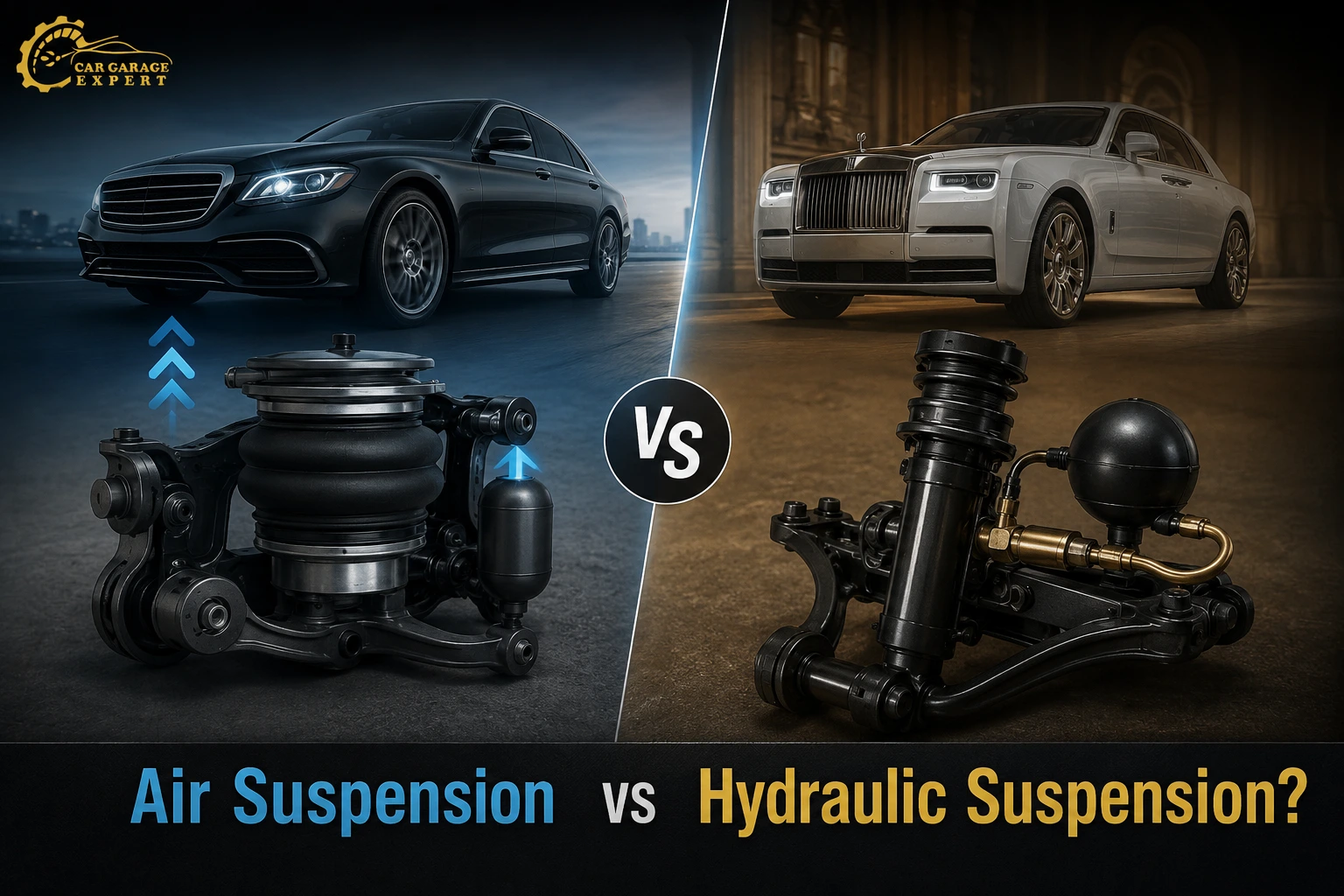
Air suspension vs hydraulic suspension comes down to comfort, cost, and how you use the car. Air suspension is a favorite in luxury SUVs and sedans because it uses air bags to adjust ride height and smooth out bumps. Hydraulic suspension employs pressurized fluid instead . It reacts swiftly and suits performance-focused driving. Air systems tend to be softer, while hydraulic systems tend to react more quickly to changing road conditions. Both wear out over time, especially in Dubai’s heat, and both need thorough suspension repair when seals or components fail. Both have pros and cons, and it comes down to what you want most in a premium car.
Table of Contents
- Problem Overview
- Symptoms of a Failing System
- Common Causes of Suspension Failure
- Diagnostic Process
- Repair and Service Process
- Risks of Ignoring It
- Can You Continue Driving?
- Repair and Service Time
- Cost Factors
- Prevention Tips
- Dubai-Specific Advice
- Why Choose Car Garage Expert
- FAQs
- Related Services
- Final Thoughts
Understanding Air Suspension vs Hydraulic Suspension
Luxury cars often skip the basic steel spring setup for something smarter. That usually means one of two systems: air suspension or hydraulic suspension.
An air suspension system uses air bags at each wheel to adjust ride height and cushion bumps, controlled by a compressor and sensors. A hydraulic suspension system uses fluid pressure flowing through struts to adjust ride feel and response.
Both aim to improve comfort and handling in a premium car suspension system. But they also have more parts than a regular suspension, which means more to wear down over time, especially in a hot, dusty city like Dubai.
Symptoms of a Failing Suspension System
Watch for these signs, whichever side of the air suspension vs hydraulic suspension debate your car falls on:
- The car sits lower on one side or all around.
- A bouncy, unsettled, or overly stiff ride
- A suspension warning light on the dashboard
- Hissing sounds (air systems) or fluid leaks (hydraulic systems)
- Uneven tire wear
- The car takes longer to level out at startup.
- Clunking or knocking noises over bumps
If you notice two or more of these, it’s worth getting the suspension checked before it fully fails.
Common Causes of Suspension Failure
Worn air bags. Rubber air bags crack and lose their seal over time, which is one of the most common issues in an air suspension system.
Compressor failure. The compressor that fills the air bags can wear out, leaving the car unable to adjust ride height.
Hydraulic fluid leaks. In a hydraulic suspension system, worn seals let fluid escape, dropping pressure and softening the ride.
Failing height sensors. Both systems rely on sensors to judge ride height. A faulty sensor throws off the whole setup.
Heat damage. Extreme heat speeds up wear on rubber seals, hoses, and air bags alike.
Age and mileage. Even with careful driving, these components wear down over years of regular use.
How Mechanics Diagnose the Problem
A proper diagnosis starts with a scan for suspension-related fault codes. Whether the debate is air suspension vs hydraulic suspension for your specific car, the diagnostic steps are similar. From there, a technician usually:
- Inspects air bags or hydraulic struts for visible damage or leaks
- Checks compressor function (air systems) or pump pressure (hydraulic systems)
- Tests height sensors for accurate readings
- Listens for unusual noises during a road test
- Confirms whether the issue is mechanical or electrical
A mobile car mechanic can do an initial check at your location if the car isn’t safe to drive far.
Repair and Service Process
Once the cause is confirmed, the fix depends on the system and the part:
- Worn air bags: replace the affected bag or full strut assembly
- Compressor failure: repair or replace the compressor unit
- Hydraulic leaks: replace seals or the full hydraulic strut
- Faulty sensors: replace and recalibrate
- Electrical faults: repair wiring or replace the control module
Good suspension repair on either system needs proper calibration afterward. Skipping this step often leaves the ride feeling off even after parts are replaced.
Risks of Ignoring It
Ignoring early warning signs rarely ends well on a luxury vehicle suspension. A slow air leak can drain the whole system, leaving the car riding rough and uneven. A low-pressure hydraulic leak can damage nearby suspension arms and bushings.
Left too long, a manageable repair can turn into a full strut or compressor replacement, which costs far more than catching it early.
Can You Continue Driving With This Problem?
Mild symptoms, like a slightly uneven ride, are often safe for short trips. But a hard drop on one side, loud noises, or a flashing warning light mean you should stop soon. This holds no matter which side of the air suspension vs hydraulic suspension question your car falls on.
Driving on a badly failed suspension system affects handling and braking balance. If the car feels unsafe, calling roadside assistance is the smarter move over pushing through.
How Long Does Suspension Repair Take?
Diagnosis usually takes one to two hours. A simple sensor replacement or fluid top-up can often be done the same day.
Air bag or hydraulic strut replacement takes longer, usually one to two days, since the system needs proper depressurizing, repair, and recalibration afterward.
Cost Factors for Suspension Repair
Cost depends on your car’s system, which parts are affected, and whether you use OEM or quality aftermarket parts. The cost gap between air and hydraulic suspension usually comes down to part availability more than labor time.
| Repair Type | Applies To | Typical Cost Factors |
| Height sensor replacement | Both systems | Sensor cost + calibration |
| Air bag replacement | Air suspension | Bag cost + labor |
| Compressor repair | Air suspension | Compressor cost + diagnostic time |
| Hydraulic strut seal repair | Hydraulic suspension | Seal cost + labor |
| Full strut replacement | Both systems | Strut cost + fitting + calibration |
| Control module repair | Both systems | Module cost + diagnostic time |
Get a clear quote after diagnosis, since prices shift a lot based on which corner of the car needs work.
Prevention Tips for Luxury Car Owners
- Check for fluid or air leaks every few weeks.
- Don’t ignore a suspension warning light, even if the ride feels fine.
- Have the system inspected during routine car service packages in Dubai.
- Avoid rough parking ramps and deep potholes when possible.
- Replace worn seals or bags early instead of waiting for a full failure.
- Use a workshop experienced with luxury vehicle suspension, not a generic shop.
Dubai-Specific Advice for Suspension Care
Dubai’s heat is hard on rubber seals, air bags, and hydraulic hoses alike. Long hours parked in direct sun push under-hood and underbody temperatures higher, speeding up wear on both sides of the air suspension vs hydraulic suspension comparison.
Frequent speed bumps and uneven parking structures add stress to struts and sensors. Sandy, dusty roads can also work grit into seals over time.
If you drive a luxury car with either system in Dubai, more frequent suspension checks aren’t optional. They’re part of keeping the ride smooth and avoiding a surprise breakdown in summer heat.
Why Choose Car Garage Expert for Suspension Repair
Car Garage Expert has hands-on experience with both air suspension and hydraulic suspension systems, so the team knows where each one usually fails first. That matters, since generic suspension shops often replace parts without properly calibrating the system afterward.
The workshop uses proper diagnostic tools built for luxury vehicles, which means fewer guesses and a more accurate first fix. If you’re comparing air suspension vs hydraulic suspension problems on your own car, getting an expert opinion first can save money down the line.
If you’re searching for a garage near me that actually understands both suspension types, Car Garage Expert is a strong choice for suspension repair in Dubai.
FAQs
Q1: Which is better, air suspension or hydraulic suspension?
It depends on your priorities. Air suspension usually rides softer and adjusts height easily, while hydraulic suspension responds faster to changing road conditions.
Q2: Is air suspension more expensive to maintain than hydraulic?
Both can be costly to repair, but air suspension parts, like air bags and compressors, tend to need replacement more often over time.
Q3: Can air suspension be converted to a regular coil setup?
Yes, some owners choose to convert, but it changes the ride quality and may affect resale value on a luxury car.
Q4: How long do air suspension systems usually last?
With good care, air suspension components can last many years, though rubber air bags typically wear out before other parts.
Q5: What are the signs of hydraulic suspension failure?
Look for fluid leaks, a rough ride, a warning light, or noises over bumps. These often indicate a hydraulic suspension fault.
Related Services
Beyond suspension work, Car Garage Expert also offers general car mechanic services and car painting for drivers who need bodywork alongside their suspension repair.
Final Thoughts
Air suspension vs hydraulic suspension isn’t really about one being better overall. It’s about which ride quality and maintenance style best fit your luxury car and driving habits.
If your suspension is showing warning signs, don’t wait. Contact Car Garage Expert in Al Quoz, Dubai for an honest diagnosis and reliable suspension repair, no matter which system your car uses. Visit cargarageexpert.com or message the team on WhatsApp to book your inspection today.