Quick Answer: Why Is My AC Compressor Clutch Not Engaging?
When your AC Compressor Clutch Not Engaging problem occurs, your car’s air conditioning may stop blowing cold air. The compressor clutch connects the compressor to engine, allowing air conditioning system to cool the cabin. If it does not engage, the compressor cannot work properly. Common causes of AC compressor clutch not engaging include low refrigerant, a blown fuse, a faulty relay, damaged wiring, a bad pressure switch or a worn clutch. Dubai’s extreme heat can make this problem especially uncomfortable. If your AC compressor clutch not engaging our professional inspection can identify the actual cause and help prevent further damage.
Table of Contents
- Common Reasons Your AC Compressor Clutch Not Engaging
- Warning Signs of an AC Compressor Clutch Not Engaging
- What Causes the AC Compressor Clutch Not Engaging?
- How Do We Diagnose the AC Clutch Problem?
- How Is an AC Compressor Clutch Problem Repaired?
- Risks of Ignoring an AC Compressor Clutch Problem
- Can You Drive With a Compressor Clutch That Will Not Engage?
- How Long Does AC Compressor Clutch Repair Take?
- What Affects the Cost of AC Compressor Clutch Repair?
- How to Prevent AC Compressor Clutch Problems in Dubai
- Dubai-Specific Advice for Car AC Problems
- Why Choose Car Garage Expert for Car AC Repair?
- Frequently Asked Questions
Common Reasons Your Car AC Compressor Clutch Not Engaging
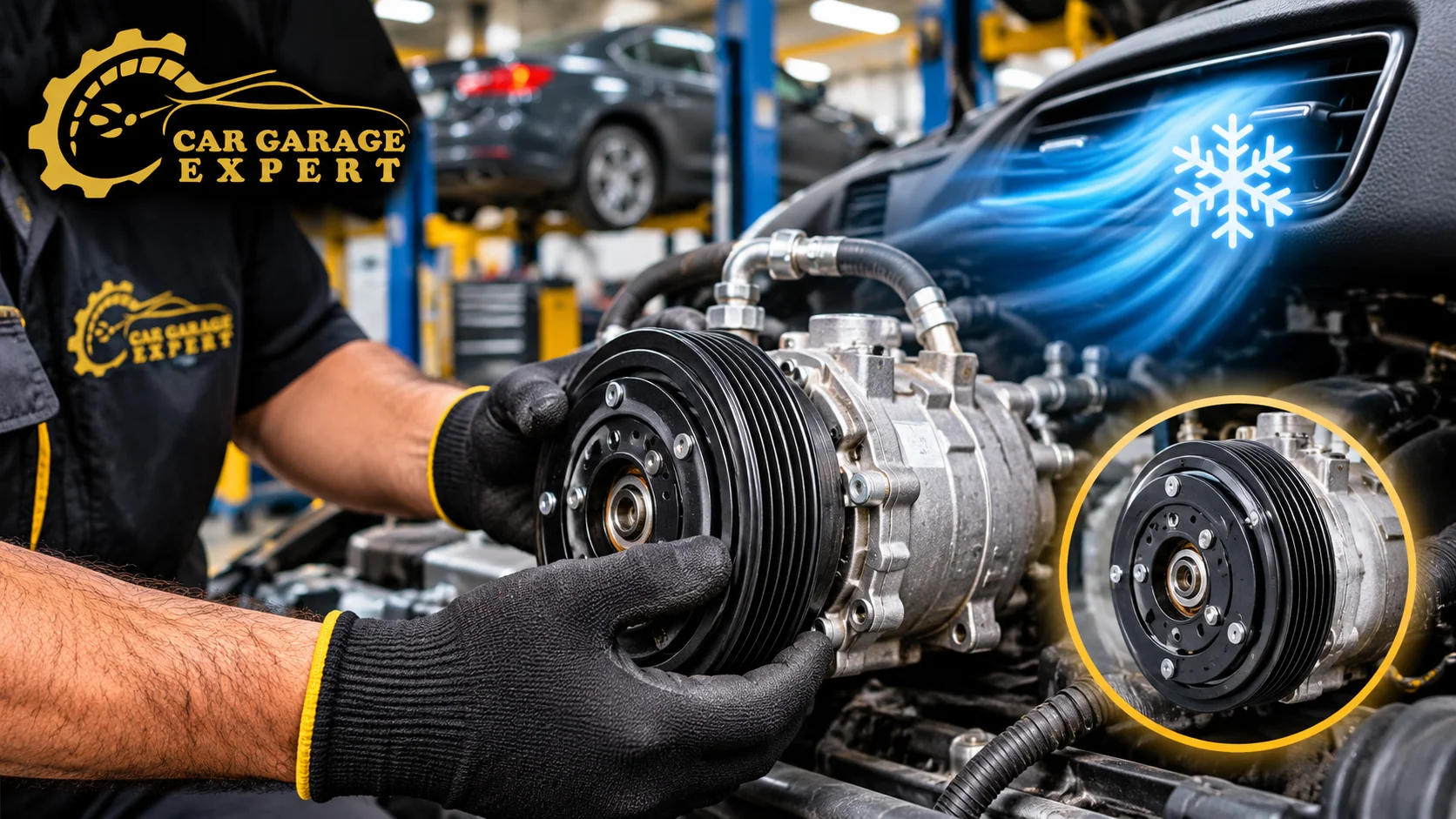
Your car’s AC compressor needs a working clutch to start cooling the cabin. The clutch receives an electrical signal when you switch on the AC. It then connects the compressor to the engine through a rotating belt.
If the AC compressor clutch not engaging, the compressor cannot circulate refrigerant as it should.
Several problems can cause this issue. Some are simple electrical faults, while others require professional repair.
Common reasons include:
- Low refrigerant levels.
- A blown AC fuse.
- A faulty compressor relay.
- Damaged electrical wiring.
- A faulty AC pressure switch.
- A worn or damaged clutch.
- A failing AC compressor.
- A loose or damaged drive belt.
Finding the correct cause is important. Replacing the compressor without proper testing can waste your money.
Warning Signs of an AC Compressor Clutch Not Engaging
Your car may show several signs when the compressor clutch stops working. These symptoms can help you identify the problem early.
1. AC Blows Warm Air
This is one of the most common warning signs. You switch on the AC, but the vents blow warm or slightly cool air.
The compressor may not be running because the clutch cannot engage.
2. Compressor Clutch Does Not Spin
The outer pulley may rotate with the engine, but the center clutch plate stays still.
This usually means the compressor is not engaging.
3. Clicking Sound Is Missing
You may normally hear a small click when the AC switches on. This sound comes from the clutch engaging.
If you cannot hear it, the clutch may not receive power or may have failed.
4. AC Works Sometimes
Your AC may cool properly at first but stop working after some time.
This can happen because of an electrical fault, overheating or a problem with the pressure sensor.
5. AC Cooling Becomes Weak
Sometimes the clutch engages but doesn’t stay engaged. This can cause uneven cooling.
In Dubai, you may notice this problem more during hot afternoons.
What Causes the AC Compressor Clutch Not Engaging?
Several mechanical and electrical faults can stop the compressor clutch from working.
Understanding these causes allows you to select the appropriate repair.
1. Low Refrigerant Levels
Your AC system needs the correct refrigerant level to operate safely.
When refrigerant becomes too low, the pressure switch may stop the compressor from running. This protects the system from damage.
A refrigerant leak may be responsible for the low level.
2. Blown AC Fuse
The AC compressor needs electrical power to engage.
A blown fuse can interrupt the power supply. As a result, the clutch may not receive the electricity it needs.
A technician should also check why the fuse blew before replacing it.
3. Faulty AC Compressor Relay
The relay controls electrical power to the compressor clutch.
If the relay stops working, the clutch may not receive the correct signal.
Replacing a faulty relay can sometimes solve the problem.
4. Damaged Electrical Wiring
Loose connections, damaged wires and corrosion can interrupt the electrical supply.
Heat and vibration can also affect wiring over time.
A technician should inspect the connections and test the power supply.
5. Faulty AC Pressure Switch
The pressure switch monitors refrigerant pressure.
If it sends the wrong signal, the compressor may not engage. A faulty sensor can also prevent the AC system from operating.
6. Worn Compressor Clutch Coil
The clutch coil creates the magnetic force needed to connect the clutch plate to the pulley.
If the coil burns out or becomes weak, the clutch may stop engaging.
This problem usually requires electrical testing.
7. Damaged Compressor Clutch Plate
The clutch plate can wear out after years of use.
It may also develop excessive gaps or physical damage. This can prevent it from connecting properly.
8. Failing AC Compressor
Sometimes the problem comes from the compressor itself.
Internal damage can affect its operation. A technician must check the compressor before recommending replacement.
How Do We Diagnose the AC Clutch Problem?
Finding the exact cause requires proper inspection and testing.
At Car Garage Expert, a professional diagnostic process can help identify why the AC Compressor Clutch Not Engaging issue is affecting your vehicle.
1. Check the AC System
The technician switches on the AC and checks whether the compressor clutch responds.
This helps confirm whether the compressor is receiving an engagement command.
2. Inspect the Fuses and Relay
The technician checks the AC fuse and relay for damage.
The technician may test the relay to confirm that it sends power correctly.
3. Test the Clutch Coil
A multimeter can help check the clutch coil’s electrical condition.
This test can identify an open circuit or an electrical fault.
4. Check Refrigerant Pressure
AC pressure gauges help measure refrigerant pressure.
The technician checks whether the pressure is within the required range.
If the pressure is too low, the system may need leak detection and repair.
5. Inspect Wiring and Connectors
The technician checks the wiring, plugs and electrical connections.
Damaged insulation, loose connectors and corrosion can prevent the clutch from working.
6. Scan the Vehicle for Fault Codes
Modern vehicles use electronic systems to control AC operation.
A diagnostic scanner can identify stored fault codes related to pressure sensors, electrical circuits or AC controls.
How Is an AC Compressor Clutch Problem Repaired?
The repair depends on the cause of the problem.
Once the technician identifies the fault, they can recommend the correct solution.
1. Replace the Blown Fuse or Faulty Relay
If the fuse or relay has failed, the technician can replace it with the correct part.
They should also check for electrical problems that may have caused the failure.
2. Repair Damaged Wiring
Loose connections can be secured. Damaged wires may need repair or replacement.
This helps restore the electrical supply to the compressor.
3. Fix Refrigerant Leaks
If the system has low refrigerant, the technician should find and repair the leak first.
After that, they can recharge the system with the correct refrigerant type and amount.
4. Replace the Pressure Switch
A faulty pressure switch may need replacement.
The technician should test the new switch and confirm that the compressor receives the correct signal.
5. Replace the Compressor Clutch
If the clutch coil or clutch plate has failed, the technician may replace the damaged component.
Some compressor designs allow separate clutch replacement. Others may require replacing the entire compressor assembly.
6. Replace the AC Compressor
If the compressor has internal damage, replacement may be necessary.
The technician should inspect the system for contamination and follow the correct cleaning and installation process.
After repair, the AC system should be tested to confirm proper cooling.
Risks of Ignoring an AC Compressor Clutch Problem
Ignoring this issue can create more trouble, especially during Dubai’s hot summer months.
Here are some possible risks:
- Poor cabin cooling: Your car may become uncomfortable during long journeys.
- Electrical damage: An unresolved wiring problem can affect other AC components.
- Further compressor damage: Running a faulty system can increase the risk of additional damage.
- Higher repair costs: A small fault may develop into a more expensive repair.
- Uncomfortable driving: High cabin temperatures can make driving tiring.
- Unexpected breakdowns: A damaged belt or related component may create further problems.
Early inspection can help you avoid unnecessary repairs.
Can You Drive With a Compressor Clutch That Will Not Engage?
In many cases, you can drive your car if the compressor clutch does not engage. However, your AC will not provide proper cooling.
Before continuing your journey, check for other warning signs.
Stop safely and seek assistance if you notice:
- A burning smell from the engine area.
- Smoke near the drive belt.
- Loud grinding or unusual noises.
- A damaged or loose serpentine belt.
- Engine overheating.
A compressor pulley bearing can sometimes cause problems even when the clutch is not engaged.
If the problem affects the belt or other engine components, continuing to drive may be unsafe.
If your car breaks down or becomes unsafe to drive, contact a professional roadside assistance service.
How Long Does AC Compressor Clutch Repair Take?
Repair time depends on the fault and your vehicle model.
A simple electrical repair usually takes less time than replacing a compressor.
Here are some general repair estimates:
- Fuse or relay replacement: 15–30 minutes.
- Basic wiring repair: 30–60 minutes.
- Pressure switch replacement: 30–90 minutes.
- Clutch coil replacement: 1–3 hours.
- Compressor clutch replacement: 2–4 hours.
- Complete compressor replacement: 3–5 hours.
These are general estimates. Some luxury vehicles may take longer because of their design.
What Affects the Cost of AC Compressor Clutch Repair?
The final repair cost depends on the type of fault and the parts required.
Here are the main factors that affect the price:
- Vehicle model: Luxury cars may need specialized parts.
- Type of damage: Electrical repairs usually cost less than compressor replacement.
- Parts quality: Genuine and approved parts can affect the total price.
- Labor time: Difficult repairs may require additional workshop time.
- Refrigerant requirements: Leak repairs and recharging can increase the cost.
- Additional damage: A damaged pulley, belt or wiring may require extra work.
Always request a proper inspection before approving major repairs.
How to Prevent AC Compressor Clutch Problems in Dubai
Dubai’s hot climate puts extra pressure on your car’s AC system.
Regular maintenance can help lessen the likelihood of compressor and clutch issues.
Follow these simple tips:
1. Service Your AC System Regularly
Have your AC system inspected during routine vehicle maintenance.
Early checks can help identify leaks, weak cooling and electrical faults.
2. Keep refrigerant at the Correct Level
Low refrigerant can stop the compressor from engaging.
Ask a technician to check for leaks instead of simply adding more refrigerant.
3. Check the Drive Belt
A worn or loose belt can affect compressor operation.
Replace damaged belts before they cause further problems.
4. Inspect Electrical Connections
Ask your technician to check the AC fuse, relay, wiring and connectors.
Good electrical connections help the clutch receive the correct signal.
5. Do Not Ignore Weak Cooling
If your AC starts blowing warm air, arrange an inspection.
Early repairs can prevent small faults from becoming major problems.
6. Use Professional AC Services
Choose a reliable workshop for AC inspections and repairs.
Car Garage Expert can help Dubai drivers identify AC faults and maintain reliable cabin cooling.
Dubai-Specific Advice for Car AC Problems
Dubai’s extreme temperatures make a working AC system essential.
During summer, your vehicle’s cabin can become extremely hot when parked outside. The AC system must work properly to keep the interior cool.
Here are some useful tips for Dubai drivers:
- Park in shaded areas whenever possible.
- Use a sunshade to reduce cabin heat.
- Check your AC before the summer season.
- Avoid running the AC if you notice an obvious mechanical fault.
- Get refrigerant leaks repaired quickly.
- Keep your vehicle’s cooling system in good condition.
If your AC suddenly stops working while traveling, avoid long journeys in extreme heat until the problem is checked.
If you experience a breakdown, professional mechanic can help arrange support.
Why Choose Car Garage Expert for Car AC Repair?
A faulty AC compressor can make everyday driving difficult in Dubai.
You need a workshop that can identify the real problem instead of replacing parts without proper testing.
Car Garage Expert provides professional vehicle inspection and repair support to help keep your car in good condition.
Here is why you should consider Car Garage Expert:
- Professional diagnosis: Identify electrical and mechanical AC faults.
- AC system inspection: Check compressor operation, refrigerant pressure and connections.
- Reliable repairs: Find suitable solutions based on your vehicle’s condition.
- Experienced technicians: Get support for different vehicle makes and models.
- Complete vehicle care: Address related problems before they become more serious.
If your AC compressor clutch not engaging issue is affecting your car, arrange an inspection with Car Garage Expert.
Whether you need AC repair, general maintenance find garage near me for professional support can help you get back on the road.
Frequently Asked Questions
1. Why Is My AC Compressor Clutch Not Engaging?
Common causes include low refrigerant, a blown fuse, a faulty relay, damaged wiring or a worn clutch coil.
2. Can Low Refrigerant Stop AC Clutch Engagement?
Yes. Low refrigerant pressure can activate the safety switch and prevent the compressor clutch from engaging.
3. How Do I Know If My AC Clutch Is Bad?
Look for warm air, missing clicking sounds or a clutch plate that does not engage when you switch on the AC.
4. Can a Blown Fuse Stop My AC Compressor?
Yes. A blown fuse can interrupt the electrical supply and prevent the compressor clutch from receiving power.
5. Is It Safe to Drive Without AC?
Usually, yes, if the belt and other engine components are working properly. Stop if you notice unusual noises, burning smells or overheating.
Final Call-to-Action: Get Your Car AC Working Again
A faulty compressor clutch can make driving uncomfortable, especially during Dubai’s hot weather. Do not ignore warm air, unusual noises or an AC system that stops working.
Finding the actual cause of AC compressor clutch not engaging early can help you avoid unnecessary expenses and protect other AC components.
If you notice an AC compressor clutch not engaging, contact Car Garage Expert for professional inspection and repair support.
Keep your car cool, comfortable and ready for Dubai roads.
For further assistance?
Visit us at our Al Quoz, Dubai branch.