Quick Answer: What Causes Loud Exhaust Noise?
Loud Exhaust Noise usually indicates a problem with your vehicle’s exhaust system. Common causes of Loud Exhaust Noise include a damaged muffler, leaking exhaust pipe, loose connections, broken exhaust hangers or a faulty exhaust manifold. You may hear a deep rumbling sound, loud roaring or unusual hissing while driving. Loud Exhaust Noise problems can affect engine performance and allow harmful gases to escape. Dubai’s heat, road conditions and daily traffic can also contribute to exhaust wear. An expert inspection for Loud Exhaust Noise can identify the source and prevent further damage. If your car suddenly becomes louder, arrange an exhaust system inspection as soon as possible.
Table of Contents
- Problem Overview: Why Is Your Car Exhaust Suddenly So Loud?
- Symptoms: Warning Signs of Loud Exhaust Noise Problems
- Common Causes: What Makes Your Exhaust Louder?
- Diagnostic Process: How Mechanics Find Loud Exhaust Noise Problems
- Repair Process: How to Fix a Loud Exhaust Noise System
- Risks of Ignoring Loud Exhaust Noise Problems
- Can You Continue Driving With a Loud Exhaust Noise?
- Repair Time: How Long Does Exhaust Repair Take?
- Cost Factors: What Affects Exhaust Repair Costs in Dubai?
- Prevention Tips: How to Keep Your Exhaust System Quiet
- Dubai-Specific Advice: Protecting Your Exhaust System
- Why Choose Car Garage Expert for Exhaust Repair?
- Frequently Asked Questions About Exhaust Problems
- Final Call-to-Action: Get Your Exhaust System Checked
Problem Overview: Why Is Your Car Exhaust Suddenly So Loud?
Your exhaust system controls engine noise and directs harmful gases away from the vehicle. It also helps maintain proper engine performance.
When an exhaust component becomes damaged, your car may produce more noise than usual. You might notice a deep rumble when starting the engine or a loud roaring sound when accelerating.
Loud Exhaust Noise can develop slowly or appear without warning. A small leak may start with a light hissing sound. However, a damaged muffler or broken exhaust pipe can make the vehicle much louder.
Dubai’s busy roads, high temperatures and frequent driving can put extra stress on exhaust components.
A professional inspection helps identify the problem of Loud Exhaust Noise before it becomes more expensive to repair.
Symptoms: Warning Signs of Exhaust System Problems
Exhaust problems often produce clear warning signs. Recognizing them early can help you avoid expensive repairs.
Look out for these common symptoms:
- Deep rumbling sound: Your vehicle produces a louder sound while the engine runs.
- Hissing noise: Exhaust gases may escape through a small leak.
- Roaring during acceleration: A damaged muffler or exhaust pipe may increase engine noise.
- Metallic rattling: Loose heat shields or exhaust hangers may vibrate.
- Exhaust smell inside the cabin: Harmful gases may enter the passenger area.
- Reduced engine performance: Exhaust leaks can affect engine operation.
- Check engine light: Certain exhaust or oxygen sensor problems can trigger a warning.
If you notice exhaust fumes inside the cabin, stop driving, leave the vehicle and arrange professional assistance. Carbon monoxide can be dangerous.
Common Causes: What Makes Your Exhaust Louder?
Several exhaust components can cause unusual noise when they become damaged or worn.
Here are the most common causes.
Damaged or Rusted Muffler
The muffler reduces the sound produced by your engine. A damaged muffler cannot control noise properly.
You may hear a deep roaring sound from the rear of your vehicle.
Cracked Exhaust Pipe
Exhaust pipes carry gases away from the engine. Cracks or holes allow gases to escape before reaching the muffler.
This can create a loud, rough sound during acceleration.
Leaking Exhaust Manifold
The exhaust manifold collects gases from engine cylinders. A damaged gasket or cracked manifold can cause exhaust leaks.
You may notice a ticking sound when starting a cold engine.
Loose Exhaust Connections
Exhaust pipes connect through joints, clamps and gaskets. Loose connections can create gaps that allow gases to escape.
These gaps may produce hissing or roaring sounds.
Broken Exhaust Hangers
Exhaust hangers hold the exhaust system in position. When they break, pipes can move and hit the underside of your car.
This often creates a metallic rattling or knocking sound.
Damaged Catalytic Converter
The catalytic converter reduces harmful emissions. Internal damage can create rattling sounds and affect engine performance.
A blocked converter may also cause reduced power.
Comparison of Common Exhaust Problems
|
Exhaust Problem |
Common Noise |
Possible Fix |
|---|---|---|
|
Damaged muffler |
Deep roaring |
Muffler repair or replacement |
|
Cracked exhaust pipe |
Loud hissing |
Pipe repair or replacement |
|
Exhaust manifold leak |
Ticking sound |
Gasket or manifold replacement |
|
Loose connections |
Hissing or vibration |
Tighten or replace connections |
|
Broken hangers |
Metallic rattling |
Replace exhaust hangers |
|
Damaged catalytic converter |
Rattling or roaring |
Converter inspection and repair |
Diagnostic Process: How Mechanics Find Exhaust Problems
Finding the exact source of exhaust noise is important. Replacing the wrong component can waste money and leave the problem unresolved.
A professional mechanic usually follows these steps.
Initial Noise Inspection
The mechanic listens to the engine while it runs. They check whether the noise changes during acceleration or at idle.
Visual Exhaust Inspection
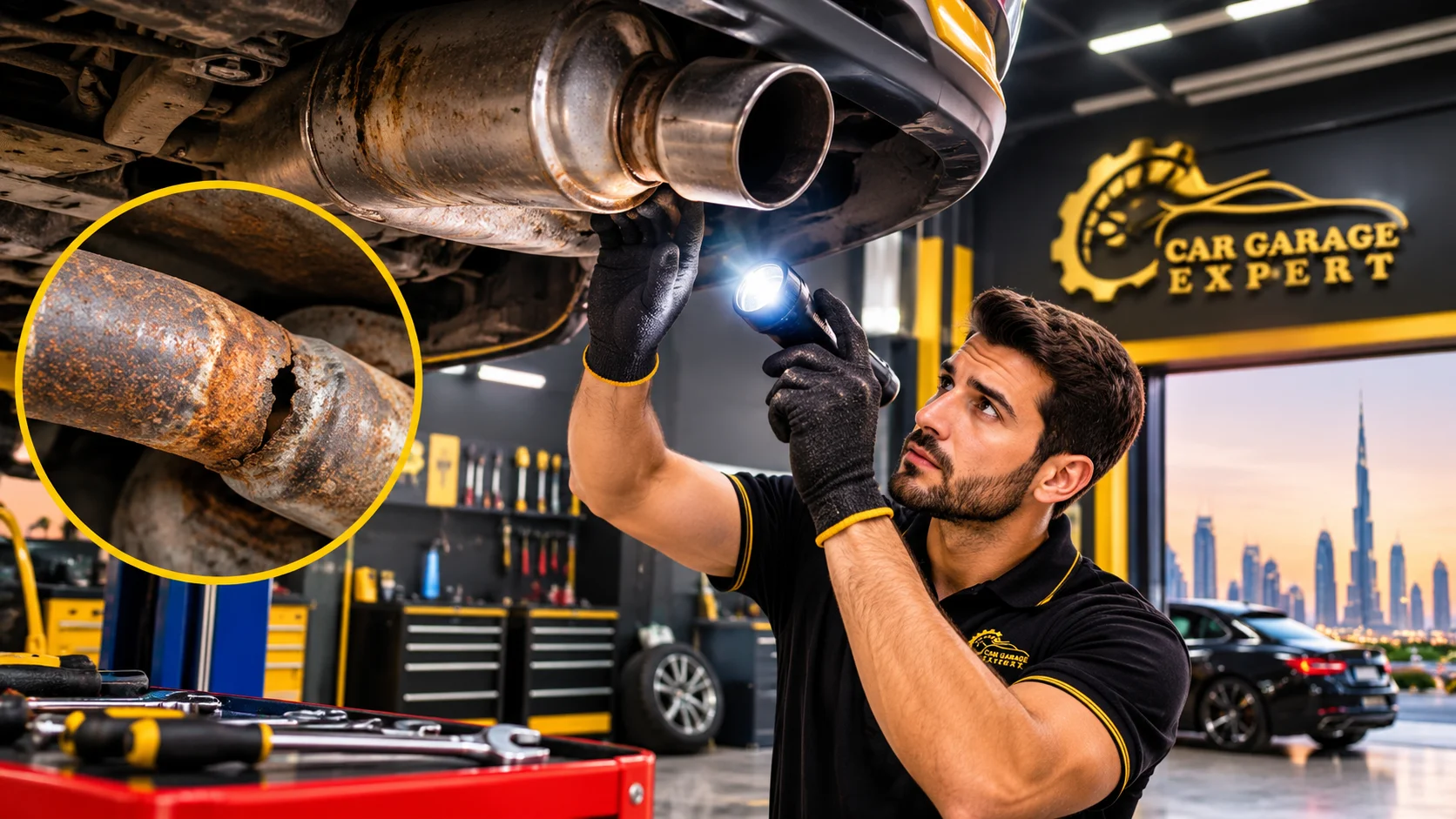
The mechanic checks the exhaust pipes, muffler, manifold and connecting joints.
They look for cracks, rust, loose parts and visible damage.
Exhaust Leak Testing
A suitable leak test helps identify escaping gases around pipes, gaskets and joints.
Engine Diagnostic Scan
If the check engine light appears, the mechanic scans the vehicle’s computer for stored fault codes.
Final System Assessment
The mechanic checks the condition of the exhaust system and recommends the correct repair.
This process helps identify the real cause of Loud Exhaust Noise instead of relying on guesswork.
Repair Process: How to Fix a Noisy Exhaust System
The correct repair depends on the damaged component and the condition of the exhaust system.
Common repair solutions include:
Muffler Repair or Replacement
A damaged muffler may need replacement if it has major holes, corrosion or internal damage.
Exhaust Pipe Repair
Small damaged sections may be repairable. However, badly cracked or corroded pipes usually need replacement.
Exhaust Manifold Gasket Replacement
A worn gasket can allow gases to escape. Replacing it helps restore a proper seal.
Exhaust Hanger Replacement
Broken hangers should be replaced to keep the exhaust system secure and prevent vibration.
Catalytic Converter Repair
The mechanic checks whether the converter has internal damage or blockage. Replacement may be necessary if the unit has failed.
After completing the repair, the mechanic starts the engine and checks for leaks, unusual sounds and loose connections.
Risks of Ignoring Exhaust Problems
Ignoring Loud Exhaust Noise can lead to more serious vehicle problems.
Here are some risks you should understand:
- Carbon monoxide exposure: Exhaust leaks can allow dangerous gases into the cabin.
- Reduced engine performance: Exhaust leaks or blockages can affect engine operation.
- Higher repair costs: Small leaks can become larger problems.
- Failed vehicle inspection: Serious exhaust damage may affect emissions and roadworthiness checks.
- Increased cabin noise: A damaged muffler can make long journeys uncomfortable.
- Damage to nearby components: Escaping hot gases can damage surrounding parts.
Do not ignore exhaust fumes or sudden changes in engine noise. Arrange an inspection as soon as possible.
Can You Continue Driving With a Loud Exhaust?
It depends on the cause and severity of the problem.
A loose heat shield may create noise without causing an immediate major mechanical issue. However, a leaking exhaust manifold or damaged exhaust pipe can create safety risks.
You should stop driving if:
- Exhaust fumes enter the cabin.
- You notice a strong smell of exhaust gases.
- The exhaust pipe hangs close to the road.
- The engine suddenly loses power.
- You hear a severe knocking or scraping sound.
- You notice smoke or excessive heat near the exhaust system.
If the vehicle is unsafe, contact roadside assistance instead of driving it to a workshop.
A professional inspection can confirm whether the car is safe to drive.
Repair Time: How Long Does Exhaust Repair Take?
Repair time depends on the damaged component, vehicle model and availability of replacement parts.
The following table provides general estimates.
|
Repair Type |
Estimated Repair Time |
|---|---|
|
Exhaust system inspection |
30–60 minutes |
|
Exhaust leak repair |
1–2 hours |
|
Exhaust hanger replacement |
30–60 minutes |
|
Muffler replacement |
1–2 hours |
|
Exhaust pipe replacement |
1–3 hours |
|
Exhaust manifold gasket replacement |
2–4 hours |
|
Catalytic converter replacement |
2–4 hours |
These are general estimates. Some luxury vehicles require additional labor because their exhaust systems are more complex.
Cost Factors: What Affects Exhaust Repair Costs in Dubai?
The cost of repairing Loud Exhaust Noise depends on the type of damage and the vehicle.
Several factors affect the final repair price.
|
Cost Factor |
How it Affects the Price |
|---|---|
|
Vehicle model |
Luxury cars may require specialised parts. |
|
Damaged component |
Mufflers, pipes and converters have different prices. |
|
Parts quality |
Genuine and aftermarket parts have different costs. |
|
Labour charges |
Complex repairs require more working hours. |
|
Damage severity |
Major damage increases repair expenses. |
|
Parts availability |
Imported components may cost more. |
|
Additional repairs |
Related engine or sensor problems can increase the bill. |
Always request a proper inspection and repair estimate before approving the work.
Prevention Tips: How to Keep Your Exhaust System Quiet
Regular maintenance can help prevent exhaust damage and reduce unexpected repair costs.
Follow these simple tips:
- Schedule regular inspections: Ask your mechanic to check exhaust pipes, joints and mufflers.
- Fix small leaks early: Don’t wait until the noise gets louder.
- Check loose components: Listen for rattling sounds underneath your vehicle.
- Avoid driving over obstacles: Speed bumps and road debris can damage exhaust pipes.
- Maintain your engine: Proper engine maintenance helps prevent related exhaust problems.
- Watch for warning lights: Investigate engine and emissions warnings promptly.
- Use quality replacement parts: Choose suitable parts for your vehicle model.
If you notice Loud Exhaust Noise after hitting a road obstacle, arrange an inspection to check for damaged pipes or loose exhaust mounts.
Dubai-Specific Advice: Protecting Your Exhaust System
Dubai’s driving conditions can affect different parts of your vehicle, including the exhaust system.
High temperatures, heavy traffic and frequent short journeys can increase stress on vehicle components.
Keep these local conditions in mind:
High Temperatures
Extreme heat increases underbody temperatures. Regular inspections help identify damaged components and worn connections.
Busy Traffic
Frequent stopping and starting can expose your vehicle to repeated heat cycles.
Road Debris
Small stones and road debris can damage exhaust pipes and protective shields.
Long Highway Drives
Long journeys can reveal exhaust problems through increased vibration, noise or changes in engine performance.
If you regularly drive around Al Quoz, Sheikh Zayed Road or other busy Dubai areas, include exhaust checks in your vehicle maintenance routine.
Why Choose Car Garage Expert for Exhaust Repair?
Finding the correct cause of exhaust noise requires proper inspection and repair experience.
Car Garage Expert can help identify exhaust system problems and recommend suitable repair solutions for your vehicle.
Here is what you should expect from a professional garage:
- Proper diagnosis: Identify the source of unusual exhaust sounds.
- Experienced technicians: Inspect different exhaust components.
- Quality replacement parts: Use suitable components for your vehicle.
- Clear repair estimates: Understand the required work before repairs begin.
- Complete inspection: Check the exhaust system after repairs are complete.
If you are searching for a reliable garage near me in Dubai, Car Garage Expert is worth considering for vehicle inspection and repair services.
Do not let a small exhaust leak become a major problem. Get your vehicle checked before the damage increases.
Frequently Asked Questions
What Causes Sudden Loud Exhaust Noise?
A damaged muffler, cracked exhaust pipe or loose connection can suddenly make your exhaust louder.
Can An Exhaust Leak Damage My Engine?
Yes. Some exhaust leaks can affect engine performance and sensor readings. A mechanic should inspect the problem.
Is A Loud Exhaust Dangerous?
It can be dangerous if exhaust gases enter the cabin. Carbon monoxide exposure can cause serious harm.
How Much Does Exhaust Repair Cost?
The cost depends on your vehicle, damaged component, replacement parts and labor charges.
Will A New Muffler Reduce Exhaust Noise?
Yes. Replacing a damaged muffler can reduce noise and restore normal exhaust sound.
Can I Drive With A Broken Exhaust Pipe?
It is not recommended. A broken pipe can release hot gases and harmful fumes. Arrange professional assistance.
Final Call-to-Action: Get Your Exhaust System Checked
Loud Exhaust Noise is not something you should ignore. It may indicate a damaged muffler, a leaking exhaust pipe, a faulty manifold or a loose connection.
Early repairs can help protect your engine, improve driving comfort and prevent expensive damage.
If your vehicle has become louder than usual, arrange a professional inspection. Car Garage Expert can help identify the problem and recommend the right repair.
If your car breaks down or becomes unsafe to drive, contact roadside assistance instead of risking further damage.