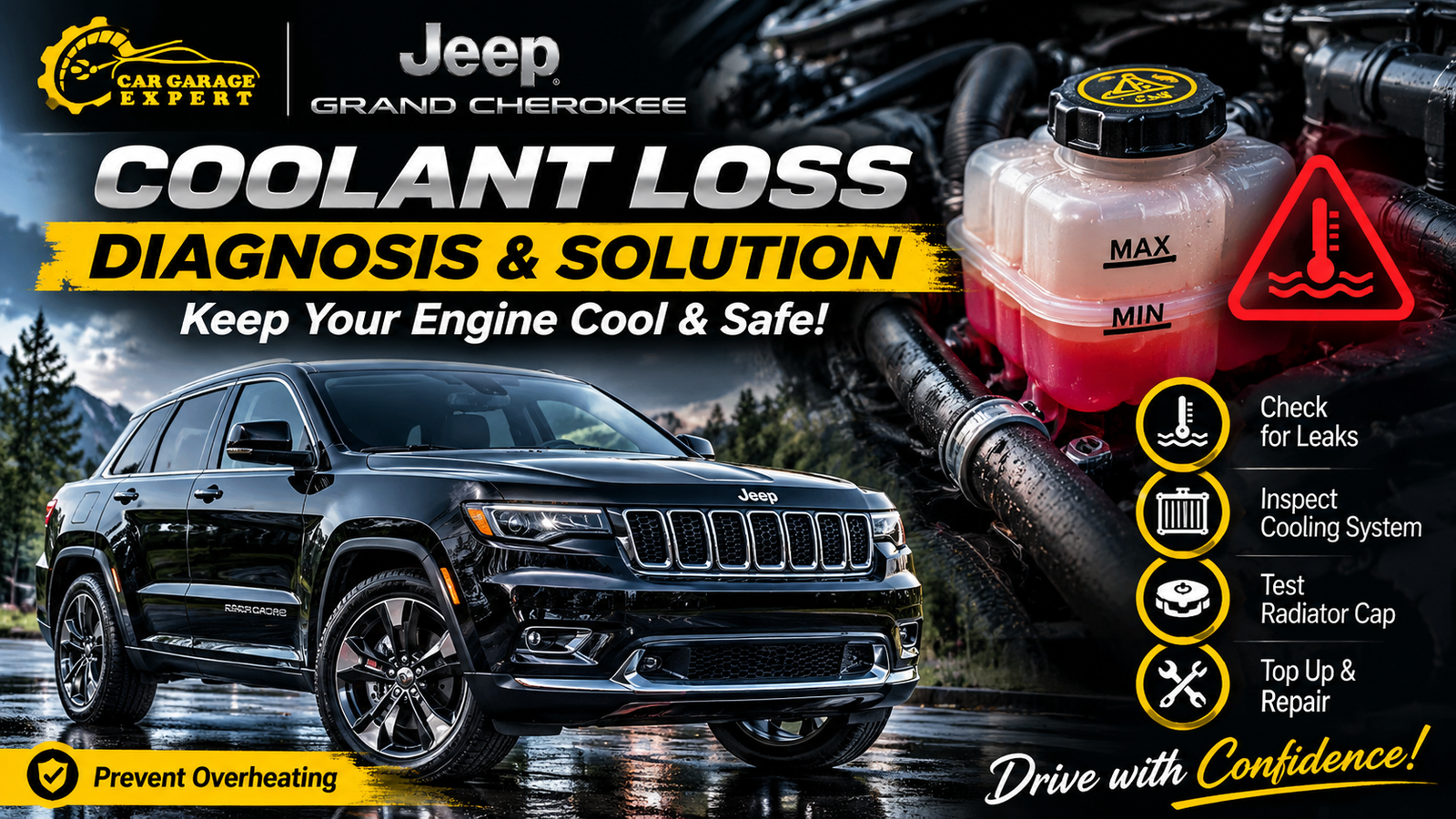
The Jeep Grand Cherokee is designed to deliver strong performance, reliable handling, and comfortable driving in different road conditions. However, like other SUVs, it depends on a properly functioning engine cooling system to maintain safe operating temperatures. If you notice Jeep Grand Cherokee coolant loss, it is important to identify the cause before the problem leads to engine overheating or expensive mechanical damage.
Coolant plays an essential role in controlling engine temperature, protecting internal components against corrosion, and maintaining consistent performance. When the coolant level repeatedly drops, it usually indicates a leak, a faulty cooling system component, or an internal engine problem. Ignoring these warning signs can become particularly risky in Dubai, where high outdoor temperatures, heavy traffic, and frequent air conditioning use put additional demands on vehicle cooling systems.
At Car Garage Expert, understanding the symptoms and possible causes of coolant loss can help Jeep owners make informed maintenance decisions. This guide explains why your Grand Cherokee might be losing coolant, how to recognize the problem, which components require inspection, and when professional repair is necessary.
Why Is Your Jeep Grand Cherokee Losing Coolant?
Your Jeep Grand Cherokee uses a pressurized cooling system that circulates coolant through the engine and radiator to control operating temperature. The system includes several connected components, such as coolant hoses, a radiator, a water pump, a thermostat, and an expansion reservoir.
Under normal conditions, coolant circulates through this closed system and should not require frequent topping up. If the reservoir level continues falling, something may be allowing coolant to escape or enter another part of the engine.
There are two main types of coolant loss:
- External coolant loss: Coolant escapes through damaged hoses, radiator connections, seals, the water pump, or other cooling system components.
- Internal coolant loss: Coolant enters the engine combustion chamber, mixes with engine oil, or escapes through an internal component failure.
In some cases, a leak may only appear when the engine reaches operating temperature and the cooling system becomes pressurized. This makes the problem difficult to identify through a simple visual inspection.
For Jeep owners in Dubai, early diagnosis is particularly important because an existing cooling system weakness can become more noticeable during extended journeys in hot weather.
7 Common Causes of Jeep Grand Cherokee Coolant Loss
Identifying the source of coolant loss is the first step toward preventing further damage. The following are common components and mechanical problems that technicians should investigate.
1. Damaged or Worn Coolant Hoses
Coolant hoses transport heated coolant between the engine, radiator, and other cooling system components. Over time, rubber hoses can deteriorate because of continuous temperature changes, vibration, pressure, and aging.
A damaged hose may develop small cracks, loose connections, or weak areas that allow coolant to escape.
Common warning signs include:
- Wet marks around hose connections.
- Dried coolant residue on rubber surfaces.
- Visible cracks or swollen hose sections.
- A sweet smell around the engine compartment.
- A coolant puddle beneath the front of the vehicle.
In Dubai, prolonged exposure to high temperatures can accelerate rubber deterioration. Therefore, inspecting coolant hoses and clamps during routine Jeep maintenance is important.
Recommended solution: A technician should inspect the hoses, clamps, and connection points. Damaged hoses should be replaced with suitable components rather than temporarily covered or sealed.
2. Radiator Leaks or Damage
The radiator is responsible for transferring heat away from the engine coolant. It uses a network of internal passages and cooling fins to reduce coolant temperature before circulation continues.
A radiator leak can develop because of damaged connections, corrosion, physical impact, weakened seals, or cracks in its tanks.
You may notice the following symptoms:
- Coolant collecting beneath the front of the vehicle.
- Visible moisture around radiator connections.
- Dried coolant deposits on radiator surfaces.
- Rising engine temperature.
- Repeated coolant level reduction.
Dust, sand, and debris can also restrict airflow through the radiator and air conditioning condenser. Although restricted airflow does not necessarily cause coolant loss directly, it can contribute to overheating and make an existing cooling system problem worse.
Recommended solution: A professional radiator inspection and cooling system pressure test can help locate leaks. Depending on the damage, the radiator may require repair or replacement.
3. Faulty Water Pump
The water pump is an important part of the Jeep Grand Cherokee cooling system. It circulates coolant through the engine and radiator to maintain an appropriate operating temperature.
A worn water pump seal, damaged gasket, or failing pump assembly can allow coolant to escape.
Typical symptoms include:
- Coolant leakage near the water pump.
- Unusual whining or grinding noises.
- Coolant residue around the pump housing.
- Engine overheating.
- A coolant level that continues dropping.
Some water pump leaks are difficult to identify because coolant may escape through a drainage opening or collect around nearby engine components.
Recommended solution: A technician should inspect the pump, seals, and surrounding areas. If the pump is leaking or mechanically damaged, replacement may be necessary. Related components should also be inspected during the repair.
4. Faulty Radiator Cap or Coolant Reservoir
The radiator cap or pressure cap helps maintain the correct pressure inside the cooling system. It also supports proper coolant movement between the radiator and expansion reservoir in systems designed with a recovery arrangement.
If the cap seal becomes damaged or its pressure-control mechanism fails, coolant may escape through the overflow system.
Similarly, a cracked expansion tank or damaged reservoir connection can cause coolant loss.
Look for these warning signs:
- Coolant residue around the reservoir cap.
- Wetness near the expansion tank.
- Visible cracks in the plastic reservoir.
- Coolant escaping from an overflow connection.
- Repeated drops in coolant level.
These problems can sometimes cause coolant loss without leaving an obvious puddle beneath the vehicle.
Recommended solution: Have the cap, sealing surfaces, reservoir, and connecting hoses inspected. Replace any component that cannot maintain the correct pressure or seal.
5. Damaged Thermostat Housing or Gasket
The thermostat regulates coolant circulation according to engine temperature. It helps the engine reach and maintain its intended operating temperature.
In some Jeep Grand Cherokee models, leakage can develop around the thermostat housing, its gasket, or associated coolant connections.
A damaged seal may allow coolant to escape slowly, particularly when the engine is hot and the cooling system is pressurized.
Possible symptoms include:
- Coolant residue around the thermostat housing.
- Small leaks after driving.
- Unexplained coolant level reduction.
- Temperature fluctuations.
- Engine overheating in more severe cases.
A thermostat that sticks closed can also restrict coolant circulation and cause overheating, although it does not automatically mean that coolant is leaking.
Recommended solution: A mechanic should inspect the thermostat, housing, seals, and coolant passages. Replace damaged components and confirm that coolant circulates correctly after the repair.
6. Blown Head Gasket or Internal Engine Leak
An internal coolant leak is one of the more serious reasons behind Jeep Grand Cherokee coolant loss.
The head gasket seals the connection between the engine block and cylinder head. If it fails, coolant may enter a combustion chamber or mix with engine oil, depending on the location of the damage.
Common warning signs include:
- Continuous coolant loss without visible external leakage.
- Persistent white exhaust smoke after the engine is fully warm.
- Milky or contaminated engine oil.
- Unusual engine misfires.
- Bubbles or abnormal pressure in the coolant reservoir.
- Engine overheating.
However, these symptoms do not individually confirm a blown head gasket. For example, white exhaust vapor during a cold start can be normal, and contaminated-looking oil can have other explanations.
Recommended solution: Professional diagnostic testing is essential. A technician may perform a combustion-gas test, cooling system pressure test, compression test, or cylinder leak-down test to identify the actual problem.
Driving with a confirmed internal coolant leak can lead to severe engine damage. The vehicle should not continue operating if overheating or serious engine symptoms are present.
7. Heater Core or Other Hidden Cooling System Leaks
The heater core is a small heat exchanger that uses engine coolant to provide cabin heating. Although it is not always the first component suspected in Dubai, it remains part of the cooling system on vehicles equipped with this arrangement.
A leaking heater core can allow coolant to enter the passenger compartment.
Possible symptoms include:
- A sweet coolant smell inside the cabin.
- Unusual fogging on the windows.
- Damp carpeting near the front footwell.
- Gradual coolant loss without visible external leakage.
Other hidden leaks may occur around coolant pipes, engine connections, oil coolers, or model-specific cooling system components.
Recommended solution: A professional inspection should include accessible coolant connections and the heater circuit. Pressure testing can help identify leaks that are difficult to see.
Common Symptoms of Jeep Grand Cherokee Coolant Loss
Recognizing early warning signs can help prevent a minor cooling system problem from becoming an expensive repair.
Pay attention to these symptoms:
| Symptom | Possible problem |
| Coolant level keeps dropping | External or internal leak |
| Puddle beneath the vehicle | Radiator, hose, pump, or connection leak |
| Sweet smell around the engine | Escaping coolant |
| Temperature gauge rising | Low coolant or cooling system malfunction |
| White exhaust smoke after warm-up | Possible internal coolant leakage |
| Coolant warning message | Low coolant or related system issue |
| Steam from under the hood | Possible coolant leak or overheating |
| Wet passenger-side carpet | Possible heater core leak |
Not every symptom indicates the same mechanical fault. Proper diagnosis is necessary before replacing parts.
How Dubai’s Climate Can Affect Jeep Grand Cherokee Cooling Performance
Dubai presents challenging operating conditions for vehicles, particularly during the summer months. High ambient temperatures, congested roads, prolonged idling, and frequent air conditioning use can increase the demands placed on the engine cooling system.
Here is how local driving conditions can make coolant problems more noticeable.
High Outdoor Temperatures
When the outside temperature rises, the cooling system has to manage heat generated by the engine while releasing that heat into already hot surrounding air.
If the radiator, cooling fan, thermostat, or coolant circulation system is not functioning correctly, the engine may struggle to maintain its normal operating temperature.
Heavy Traffic and Frequent Idling
Driving through congested areas such as Sheikh Zayed Road, Deira, Business Bay, and Downtown Dubai often involves repeated stopping and starting.
At lower vehicle speeds, airflow through the radiator is reduced compared with highway driving. The cooling fan therefore plays an important role in maintaining airflow.
A weak fan or existing radiator restriction may contribute to overheating, especially when combined with a low coolant level.
Frequent Air Conditioning Use
Air conditioning is essential for comfortable driving in Dubai. However, the air conditioning condenser releases heat near the radiator, increasing the importance of proper airflow through the front cooling system.
A blocked condenser, restricted radiator airflow, or malfunctioning cooling fan can affect overall cooling performance.
Accelerated Wear of Rubber and Plastic Components
Repeated exposure to high temperatures can contribute to the aging of rubber hoses, plastic reservoirs, seals, and other cooling system components.
This makes regular inspections particularly valuable for older Grand Cherokee models.
Dubai’s Roads and Transport Authority also advises motorists to monitor coolant levels, inspect for leaks, and maintain vehicle cooling systems during hot weather.
How Mechanics Diagnose Jeep Grand Cherokee Coolant Loss
Adding more coolant without identifying the source is not a permanent solution. A proper diagnostic process helps determine which component is responsible.
At Car Garage Expert, the following diagnostic procedures are relevant when investigating a Jeep cooling system complaint.
Step 1: Inspect the Coolant Reservoir
The technician checks the coolant level when the engine is completely cold and compares it with the manufacturer’s recommended markings.
The reservoir, cap, connecting hoses, and surrounding areas are inspected for cracks, residue, or leakage.
Step 2: Perform a Cooling System Pressure Test
A cooling system pressure test helps identify leaks by applying controlled pressure using appropriate testing equipment.
The technician monitors whether the system maintains pressure and checks the radiator, hoses, water pump, seals, and other accessible connections.
Small leaks that are difficult to notice during ordinary driving may become easier to identify during testing.
Step 3: Inspect the Radiator Cap
The pressure cap is checked for damaged seals, contamination, and incorrect pressure-control operation.
A faulty cap can contribute to coolant escaping through the recovery or overflow system.
Step 4: Check for Internal Engine Leakage
If the technician cannot find an external leak, further testing may be necessary.
Depending on the symptoms, this can include combustion-gas testing, compression testing, or a cylinder leak-down test.
These procedures help investigate possible head gasket or internal engine problems.
Step 5: Repair and Retest the Cooling System
After identifying the fault, the damaged component is repaired or replaced using parts suitable for the vehicle’s specific model and engine.
The cooling system must then be filled and bled according to the manufacturer’s procedure. A final inspection and operating-temperature check help confirm that the repair has resolved the original problem.
How to Prevent Jeep Grand Cherokee Coolant Loss in Dubai
Preventive maintenance is one of the best ways to reduce the risk of unexpected cooling system problems.
Follow these practical recommendations:
- Check coolant levels regularly: Inspect the expansion reservoir when the engine is completely cold and parked on level ground.
- Inspect coolant hoses: Look for cracks, swelling, loose connections, and dried coolant deposits.
- Keep the radiator and condenser clean: Remove accumulated debris carefully to support proper airflow.
- Monitor engine temperature: Pay attention to unusual temperature changes and dashboard warnings.
- Use the correct coolant: Always follow the specification for your particular Grand Cherokee model and engine.
- Inspect the water pump: Look for leakage, unusual noises, or signs of seal deterioration.
- Follow scheduled maintenance: Have the cooling system inspected according to the manufacturer’s recommended service schedule.
A further important point is coolant compatibility. Different Grand Cherokee model years and engines may require different coolant specifications. Some newer models specify OAT coolant meeting FCA Material Standard MS.90032, while other versions may have different requirements.
Never choose coolant based only on its colour. Check the owner’s manual or vehicle-specific specifications before adding or replacing coolant. Avoid mixing incompatible coolant types or using plain water as a permanent replacement.
When Should You Stop Driving Your Jeep Grand Cherokee?
Not every coolant leak requires an immediate engine shutdown, but certain symptoms indicate that continuing to drive could be dangerous.
Stop in a safe location and switch off the engine if:
- The engine temperature warning light appears.
- The temperature gauge reaches an unsafe level.
- Steam is coming from under the hood.
- Coolant is escaping rapidly.
- The engine begins misfiring alongside coolant loss.
- The coolant reservoir becomes empty or the vehicle shows signs of serious overheating.
Never remove the radiator or coolant reservoir pressure cap while the engine is hot. Pressurized coolant and steam can cause severe burns.
Allow the vehicle to cool completely before any visual inspection. If the engine has overheated or coolant is leaking significantly, arrange professional assistance or recovery rather than risking further engine damage.
Why Choose Car Garage Expert for Jeep Grand Cherokee Cooling System Inspection?
Finding the correct cause of coolant loss is more important than simply adding coolant or replacing parts without proper testing.
A reliable automotive workshop should understand Jeep cooling system configurations and use an appropriate diagnostic process before recommending repairs.
When arranging a Jeep Grand Cherokee coolant inspection in Dubai, look for a workshop that can provide:
- Cooling system pressure testing.
- Radiator and coolant hose inspection.
- Water pump and thermostat diagnosis.
- Coolant reservoir and pressure cap testing.
- Internal engine leak investigation.
- Correct manufacturer-specified coolant.
- Post-repair cooling system testing.
At Car Garage Expert, Jeep owners can seek professional guidance when experiencing repeated coolant loss, unexplained coolant level changes, or engine temperature concerns.
Whether the issue involves a small hose leak or a more complex internal engine fault, accurate diagnosis helps identify the appropriate repair and avoid unnecessary part replacement.
Do not wait for your Jeep to overheat before investigating coolant loss. Arrange a cooling system inspection with Car Garage Expert in Dubai to identify the problem and protect your engine’s long-term performance.
Frequently Asked Questions (FAQs)
1. Why does my Jeep Grand Cherokee keep losing coolant but have no visible leak?
Your Jeep may have a hidden external leak that only appears when the engine becomes hot and pressurized. Another possibility is an internal leak involving the head gasket, engine, or another coolant-related component. A professional cooling system pressure test and additional diagnostic checks can help identify the cause.
2. Is it safe to drive a Jeep Grand Cherokee with low coolant?
Driving with low coolant is risky because the engine may not receive adequate cooling. This can cause overheating, cylinder head damage, or serious engine failure. If the temperature warning appears or the engine overheats, stop safely, switch off the engine when necessary, and arrange professional assistance.
3. Can Dubai’s hot weather cause Jeep Grand Cherokee coolant loss?
High temperatures do not normally make coolant disappear from a properly sealed cooling system. However, Dubai’s hot climate can place additional demands on the cooling system and expose existing weaknesses in hoses, seals, radiators, and other components. Regular inspections can help identify problems early.
4. How can I find a coolant leak in my Jeep Grand Cherokee?
Start by checking the coolant reservoir when the engine is completely cold. Look for visible leakage, dried coolant residue, damaged hoses, and moisture around radiator connections. A professional workshop can perform a cooling system pressure test and additional internal leak checks if necessary.
5. Which coolant should I use in my Jeep Grand Cherokee in Dubai?
The correct coolant depends on the Grand Cherokee’s model year, engine, and cooling system specification. Some models require OAT coolant meeting FCA MS.90032, while older models may have different requirements. Always check the owner’s manual or vehicle-specific manufacturer specification before adding coolant. Avoid mixing incompatible products.
Conclusion
Jeep Grand Cherokee coolant loss should never be ignored, even when the vehicle appears to be driving normally. Damaged hoses, radiator leaks, faulty water pumps, defective pressure caps, thermostat housing problems, and internal engine faults can all contribute to falling coolant levels.
Dubai’s high temperatures, heavy traffic, and frequent air conditioning use make cooling system maintenance particularly important for Jeep owners. Identifying a leak early can help prevent overheating, reduce unnecessary repair expenses, and protect the engine from serious damage.
Visit us in our Al Quoz, Dubai branch or visit Car Garage Expert
If your Grand Cherokee repeatedly loses coolant, arrange a professional inspection rather than relying on frequent top-ups. Car Garage Expert can help Jeep owners in Dubai understand their cooling system problems and find the appropriate repair solutions.