Driving in Dubai can become uncomfortable when your car’s air conditioning system stops working properly. With high temperatures and humidity for much of the year, a reliable car AC system is essential for comfortable daily driving. Whether you are commuting to work, traveling around the city, or taking a long road trip, your vehicle’s cooling system needs to perform consistently.
One of the most important components of an automotive air conditioning system is the AC compressor. It helps circulate refrigerant throughout the system, allowing the air conditioner to remove heat from the vehicle’s cabin. When the compressor develops a fault, you may experience weak cooling, warm air from the vents, unusual noises, or complete AC failure.
Ignoring these warning signs can lead to additional problems within the air conditioning system. A compressor issue may also affect other connected components, particularly if internal damage introduces metal particles or contaminated oil into the refrigerant circuit. Early inspection can help identify the actual problem and prevent unnecessary repair expenses.
At Car Garage Expert, understanding the cause of an AC problem is key to choosing the right repair solution. This guide explains everything you need to know about car compressor repair in Dubai, including common symptoms, possible causes, diagnostic procedures, repair options, and practical maintenance tips.
What Is a Car AC Compressor and How Does It Work?
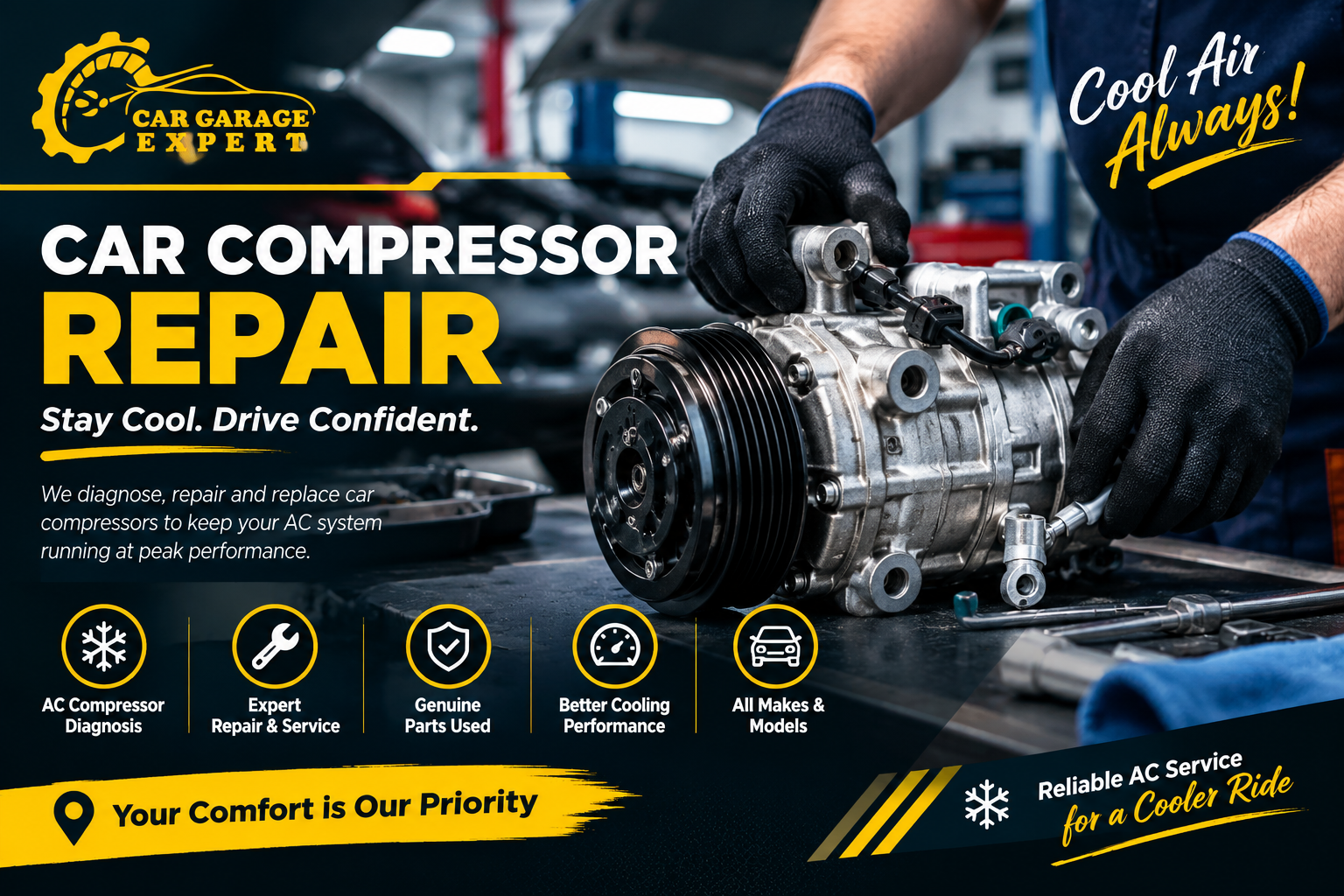
A car AC compressor is a mechanical component that compresses and circulates refrigerant through the vehicle’s air conditioning system. It is often described as the heart of the car’s AC system because the cooling process depends on proper refrigerant movement.
When you switch on your car’s air conditioner, the compressor operates according to the vehicle’s AC control system. It draws in low-pressure refrigerant vapor and compresses it into a higher-pressure, higher-temperature state. The refrigerant then moves to the condenser, where it releases heat.
After passing through the condenser, the refrigerant travels through additional components, including the receiver-drier or accumulator and expansion device, before reaching the evaporator. Inside the evaporator, it absorbs heat from the cabin air. The blower then circulates cooled air through the vehicle’s vents.
This process continues while the air conditioning system operates.
If the compressor cannot maintain the required refrigerant circulation, the entire cooling process may become ineffective. That is why proper compressor operation is important for maintaining comfortable cabin temperatures, especially in Dubai.
Common Signs Your Car Needs AC Compressor Repair
Recognizing compressor problems early can help you avoid more extensive air conditioning repairs. Although some symptoms may also be caused by other AC components, the following signs indicate that your vehicle needs a professional inspection.
1. AC Blowing Warm or Hot Air
One of the most noticeable symptoms of a faulty AC compressor is warm air coming from the dashboard vents.
When the compressor cannot circulate refrigerant properly, the air conditioning system may struggle to remove heat from the cabin. You might notice that the AC initially produces cool air but gradually becomes warmer.
However, warm air does not always mean the compressor has failed. Low refrigerant levels, refrigerant leaks, condenser problems, electrical faults, or a malfunctioning expansion valve can produce similar symptoms.
A proper diagnosis is necessary before replacing any component.
2. Unusual Noises When the AC Is Running
Strange sounds from the engine compartment when switching on the air conditioner can indicate a compressor-related issue.
Common noises include:
- Grinding sounds that may indicate internal mechanical damage.
- Rattling noises associated with loose or damaged components.
- Squealing sounds caused by belt or pulley problems.
- Clicking sounds that may indicate clutch or control-related issues.
Don’t ignore these noises, especially if they get louder when you turn on the AC.
3. AC Compressor Clutch Not Engaging
Many conventional automotive AC compressors use an electromagnetic clutch to connect the compressor shaft to the engine-driven pulley.
When the clutch does not engage, the compressor may not operate as required. Possible causes include a faulty clutch coil, damaged wiring, a blown fuse, a pressure sensor problem, or insufficient refrigerant pressure.
Some modern vehicles use variable-displacement or electronically controlled compressors, so they operate differently from traditional clutch-based systems.
A technician should inspect the electrical circuit and compressor control system to identify the actual fault.
4. Refrigerant Leaks Around the Compressor
Refrigerant leaks can develop around compressor seals, connection points, hoses, or the compressor housing.
You may notice oily residue around the compressor or its fittings. Since refrigerant oil circulates through the AC system, visible oil can sometimes help technicians locate a leak.
However, always confirm a leak with appropriate detection equipment.
Simply adding more refrigerant without repairing the leak will not provide a lasting solution.
5. AC Cooling Works Intermittently
If your car’s air conditioner sometimes produces cold air and sometimes blows warm air, the problem may involve the compressor or its control system.
Possible causes include:
- Intermittent compressor clutch operation.
- Faulty pressure sensors.
- Electrical connection problems.
- Incorrect refrigerant charge.
- Compressor control valve malfunction.
A professional inspection can determine whether the problem is mechanical, electrical, or related to refrigerant circulation.
Common Causes of Car AC Compressor Failure
Understanding why an AC compressor fails can help vehicle owners make better maintenance decisions.
Low Refrigerant Levels
Refrigerant is essential for the cooling process. In many automotive AC systems, refrigerant circulation also helps distribute compressor lubricant.
When refrigerant escapes through a leak, the system may not operate within its designed pressure range. Depending on the vehicle, protective controls may prevent the compressor from operating.
If low refrigerant levels are detected, identify and repair the leak before recharging the system.
Insufficient or Incorrect Compressor Oil
AC compressors require a specific type and quantity of lubricant to protect their internal moving components.
Insufficient oil can increase friction and contribute to premature wear. Using an incompatible lubricant or incorrect oil quantity can also damage the compressor.
The correct oil specification depends on the vehicle and compressor design. Technicians should always follow manufacturer recommendations.
Electrical Problems
Modern car air conditioning systems depend on electrical components, sensors, relays, wiring, and control modules.
A damaged connector, faulty relay, blown fuse, or malfunctioning pressure sensor can prevent the compressor from operating correctly.
In these situations, replacing the compressor without checking the electrical system may not solve the problem.
Excessive Heat and Poor Condenser Performance
High outdoor temperatures increase the demand on a vehicle’s cooling system.
If the condenser is dirty, airflow is restricted, or the cooling fan isn’t working properly, the system may experience excessive operating pressure.
This can place additional stress on the compressor and affect overall AC performance.
Regular inspection of the condenser and cooling fans is particularly useful for vehicles operating in Dubai.
Internal Mechanical Wear
Like other mechanical components, an AC compressor can experience wear over time.
Damaged bearings, worn internal components, contamination, and inadequate lubrication can affect its performance.
In severe cases, internal compressor failure may introduce metal particles into the refrigerant circuit, requiring additional cleaning and component replacement.
How Professional Car Compressor Repair Works
A proper repair begins with identifying the actual cause of the problem rather than immediately replacing the compressor.
At Car Garage Expert, vehicle owners should look for a diagnostic approach that considers the complete air conditioning system.
Step 1: Initial AC System Inspection
The technician first checks the customer’s complaint and examines the general condition of the vehicle’s air conditioning system.
This may include checking:
- AC cooling performance.
- Compressor and pulley condition.
- Drive belt condition.
- Electrical connections.
- Visible refrigerant or oil leaks.
- Condenser and cooling fan operation.
This initial inspection helps identify possible problem areas.
Step 2: Refrigerant Pressure Testing
Technicians use specialized AC service equipment to measure high-side and low-side pressures.
Pressure readings help technicians understand how refrigerant is circulating through the system.
Abnormal readings may indicate insufficient refrigerant, excessive refrigerant, airflow restrictions, compressor performance problems, or expansion device faults.
Always interpret pressure readings according to the vehicle manufacturer’s specifications and the surrounding operating conditions.
Step 3: Electrical and Compressor Testing
Inspect the compressor’s electrical controls to determine whether it receives the correct operating signals.
Depending on the vehicle, technicians may check the clutch, control valve, pressure sensors, wiring, fuses, relays, and relevant fault codes.
This step is important because an electrical issue can produce symptoms similar to mechanical compressor failure.
Step 4: Repair or Replacement
After completing the diagnosis, the technician determines whether the compressor can be repaired or needs replacement.
Depending on the design and condition, possible solutions include repairing electrical connections, replacing a clutch assembly where supported, addressing a control valve issue, or installing a replacement compressor.
If the compressor has suffered internal mechanical failure, replacement is often the more suitable option.
Step 5: System Cleaning and Refrigerant Recharging
When a compressor fails internally, metal particles and contaminated oil may remain inside the air conditioning circuit.
The technician should inspect the system and follow the vehicle and component manufacturer’s cleaning and replacement procedures. Depending on the contamination and system design, flushing or replacing affected components may be necessary.
The receiver-drier or accumulator, expansion device, and condenser may also require inspection.
After completing the necessary work, the system is evacuated to remove air and moisture and then charged with the correct refrigerant type and quantity.
Step 6: Final Performance Testing
The final step is checking whether the repaired air conditioning system operates correctly.
Technicians may check:
- Vent temperature.
- High-side and low-side pressure.
- Compressor operation.
- Cooling fan performance.
- Refrigerant leakage.
- Overall cooling consistency.
Test the vehicle under suitable operating conditions to confirm the original complaint has been addressed.
Car Compressor Repair vs Replacement Which Option Is Better?
Not every compressor problem requires complete replacement. The right decision depends on the fault type, the compressor’s condition, and the availability of suitable repair components.
Car Compressor Repair
Repair may be possible when the issue involves an external electrical connection, a supported clutch assembly, or another serviceable component.
This approach can help avoid unnecessary replacement expenses when the main compressor mechanism remains in good condition.
Car Compressor Replacement
Replacement may be necessary when the compressor has suffered internal damage, seized bearings, severe mechanical wear, or contamination-related failure.
Although replacing the compressor may cost more upfront, it can be a better long-term solution when the original unit cannot be repaired reliably.
Before approving either option, ask the technician to explain the diagnosis, required parts, and any additional work needed to protect the repaired system.
Why Car AC Compressor Maintenance Matters in Dubai
Dubai’s hot climate makes a properly functioning air conditioning system especially important.
Vehicles regularly operate in high outdoor temperatures, heavy traffic, and demanding driving conditions. These factors can increase the workload on the vehicle’s cooling system.
The Roads and Transport Authority (RTA) has also highlighted the importance of regular vehicle inspections and checking air conditioning systems as part of summer vehicle maintenance.
Here are some practical ways to maintain your car’s AC system:
Keep the Condenser Clean
The condenser is usually positioned near the front of the vehicle, where it can collect dust, dirt, and road debris.
Restricted airflow can affect heat transfer and reduce AC efficiency. Periodic inspection and appropriate cleaning can help maintain proper airflow.
Check for Refrigerant Leaks
If your air conditioner repeatedly loses cooling performance, arrange a leak inspection instead of continuously topping up refrigerant.
Identifying and repairing leaks helps maintain the correct refrigerant charge and protects the system from operating under unsuitable conditions.
Pay Attention to Unusual Noises
Never ignore grinding, squealing, or rattling noises when using your air conditioner.
Early inspection may help identify pulley, bearing, clutch, or compressor problems before further damage occurs.
Maintain the Cooling Fans
The condenser fan plays an important role in removing heat from the refrigerant.
A faulty fan or restricted airflow can affect cooling performance, particularly when the vehicle is stationary in traffic.
Schedule Regular AC Inspections
A professional AC inspection can identify developing problems before they become more serious.
It is particularly useful before the summer season or when you notice changes in cooling performance.
Why Choose Car Garage Expert for Car Compressor Repair in Dubai?
When your vehicle’s air conditioning system develops a problem, choosing the right automotive workshop matters.
Car compressor repair requires more than simply installing a replacement part or adding refrigerant. A proper solution involves identifying the cause of the failure, inspecting related components, and testing the system after completing the repair.
Car Garage Expert is a strong option for automotive repair guidance and car AC solutions in Dubai.
When selecting a workshop for compressor-related work, consider the following important factors:
- Accurate Diagnosis: The workshop should inspect the complete AC system before recommending compressor replacement.
- Qualified Technicians: Experienced automotive technicians should understand different compressor designs and vehicle AC systems.
- Suitable Replacement Parts: Replacement components should match the vehicle’s specifications and manufacturer requirements.
- Proper AC Equipment: Professional diagnostic gauges, leak-detection equipment, and refrigerant service machines are essential for reliable repairs.
- Transparent Pricing: Ask for a clear explanation of labor charges, replacement parts, and any additional repair needs.
- Final Performance Testing: The repaired system should be checked to confirm consistent cooling and correct operation.
A professional approach helps reduce the risk of repeated repairs and unnecessary component replacement.
When Should You Get Your Car AC Compressor Checked?
Arrange an inspection as soon as you notice a significant change in your vehicle’s cooling performance.
For example, if the AC suddenly starts blowing hot air, produces unusual mechanical noises, or repeatedly switches between cold and warm airflow, the system may have an underlying fault.
It is especially important to stop using the AC if you hear severe grinding noises or suspect that the compressor is seizing. Depending on the vehicle’s belt arrangement, a seized pulley or compressor can create additional mechanical problems.
Do not attempt to open refrigerant lines or release refrigerant yourself. Automotive AC systems operate under pressure and require appropriate equipment and trained handling.
Early professional attention can help identify the problem, determine the correct repair method, and reduce the possibility of further damage.
Frequently Asked Questions (FAQs)
1. How do I know if my car AC compressor is faulty?
Common warning signs include warm air from the vents, unusual grinding or squealing noises, inconsistent cooling, refrigerant leaks, and compressor engagement problems. However, these symptoms can also result from other AC faults. Professional pressure, electrical, and mechanical testing is necessary to confirm compressor failure.
2. Can a car AC compressor be repaired instead of replaced?
Yes, some compressor-related problems can be repaired without replacing the complete unit. Depending on the design, issues involving the clutch, electrical connections, or serviceable control components may be addressed separately. However, severe internal mechanical damage usually requires compressor replacement.
3. How long does car compressor repair take in Dubai?
Repair time depends on the vehicle model, the nature of the fault, and the availability of replacement parts. A straightforward electrical or external component repair may take less time, while complete compressor replacement and system cleaning can require additional workshop time.
4. Why is my car AC blowing warm air even after refrigerant refilling?
Warm air after refrigerant refilling may indicate an unresolved refrigerant leak, an incorrect refrigerant charge, a compressor malfunction, a condenser airflow problem, or an expansion valve issue. Simply adding refrigerant does not guarantee proper cooling. A complete system inspection is necessary to identify the underlying cause.
5. How can I prevent car AC compressor failure in Dubai?
Maintain the correct refrigerant charge, repair leaks promptly, use the manufacturer-recommended compressor oil, and keep the condenser and cooling fans in good condition. Regular AC inspections can also help identify developing problems and reduce the risk of premature compressor damage.
Conclusion
A properly functioning car air conditioning system is essential for comfortable driving in Dubai. Since the AC compressor plays a central role in refrigerant circulation, any problem with this component can affect the entire cooling system.
Recognizing early warning signs, including warm airflow, unusual noises, refrigerant leaks, and inconsistent cooling, can help you address problems before they become more expensive. However, accurate diagnosis is important because several other components can produce similar symptoms.
Whether your vehicle needs a minor compressor repair or a full replacement, the right solution should be based on a professional inspection and manufacturer specifications.
Visit us in our Al Quoz, Dubai branch or visit Car Garage Expert
Car Garage Expert aims to help vehicle owners understand their car AC problems and make informed repair decisions. Do not let a faulty compressor compromise your driving comfort. Arrange a professional car AC inspection and restore reliable cooling for your journeys across Dubai.