A rattling noise under the car when accelerating can point to a loose exhaust part, a damaged heat shield, worn engine mounts or a drivetrain issue. The sound may be light and metallic or it may become louder as you press the gas pedal. In some cases, the cause is minor. However, a loose part can become dangerous if you ignore it. Check when the noise starts and whether you feel shaking or notice a loss of power. If the sound is loud or worsens, have a trusted garage in Dubai inspect your car.
Table of Contents
- Problem Overview: Why Does Your Car Rattle During Acceleration?
- Symptoms: How to Recognize a Rattling Noise Under the Car
- Common Causes of Rattling During Acceleration
- Diagnostic Process: How a Mechanic Finds the Problem
- Repair Process: How to Fix the Noise
- Risks of Ignoring the Noise
- Can You Continue Driving?
- Repair Time
- Cost Factors
- Prevention Tips
- Dubai-Specific Advice
- Why Choose Car Garage Expert for Roadside Assistance?
- Frequently Asked Questions
- Related Services
- Final Call-to-Action
Problem Overview: Why Does Rattling Noise Under the Car?
A car should run smoothly when you press the gas pedal. If you hear a Rattling Noise Under the Car, something may be loose, worn or damaged.
The sound often becomes clearer when the engine works harder. You may hear Rattling Noise Under the Car when you pull away from a traffic light, climb a hill or drive at a higher speed.
A Rattling Noise Under the Car does not always mean you need a major repair. A loose exhaust heat shield may cause a simple metallic sound. However, worn engine mounts, damaged exhaust parts or drivetrain faults can also create noise.
Pay attention to when Rattling Noise Under the Car occurs. Does it happen only during acceleration? Does it continue when you release the gas pedal? These details can help a mechanic find the cause faster.
If you need help identifying the problem of Rattling Noise Under the Car, Car Garage Expert can be a useful starting point for arranging professional car inspection and repair in Dubai.
Symptoms: How to Recognize Rattling Noise Under the Car
The Rattling Noise Under the Car itself can offer useful clues. Listen carefully, but never crawl under a running car to inspect it.
Common warning signs include:
- Metallic buzzing: You may hear a thin metal sound when the engine runs or when you press the accelerator.
- Rattling during acceleration: The noise becomes louder when you speed up.
- Vibration beneath your feet: You may feel shaking through the floor or pedals.
- Noise at certain speeds: The rattle appears at a particular speed or engine RPM.
- Clunking when changing gears: You may hear a heavier sound when shifting from park to drive or changing gears.
- Noise over bumps: A loose exhaust part or underbody component may move when the road is uneven.
- Burning smells or reduced power: These signs may point to a more serious mechanical problem.
A Rattling Noise Under the Car that starts suddenly deserves attention, especially if you also notice unusual vibrations, warning lights or poor acceleration.
Common Causes of Rattling During Acceleration
Several parts beneath your car can create a rattling sound. Here are some common causes.
1. Loose Exhaust Heat Shield
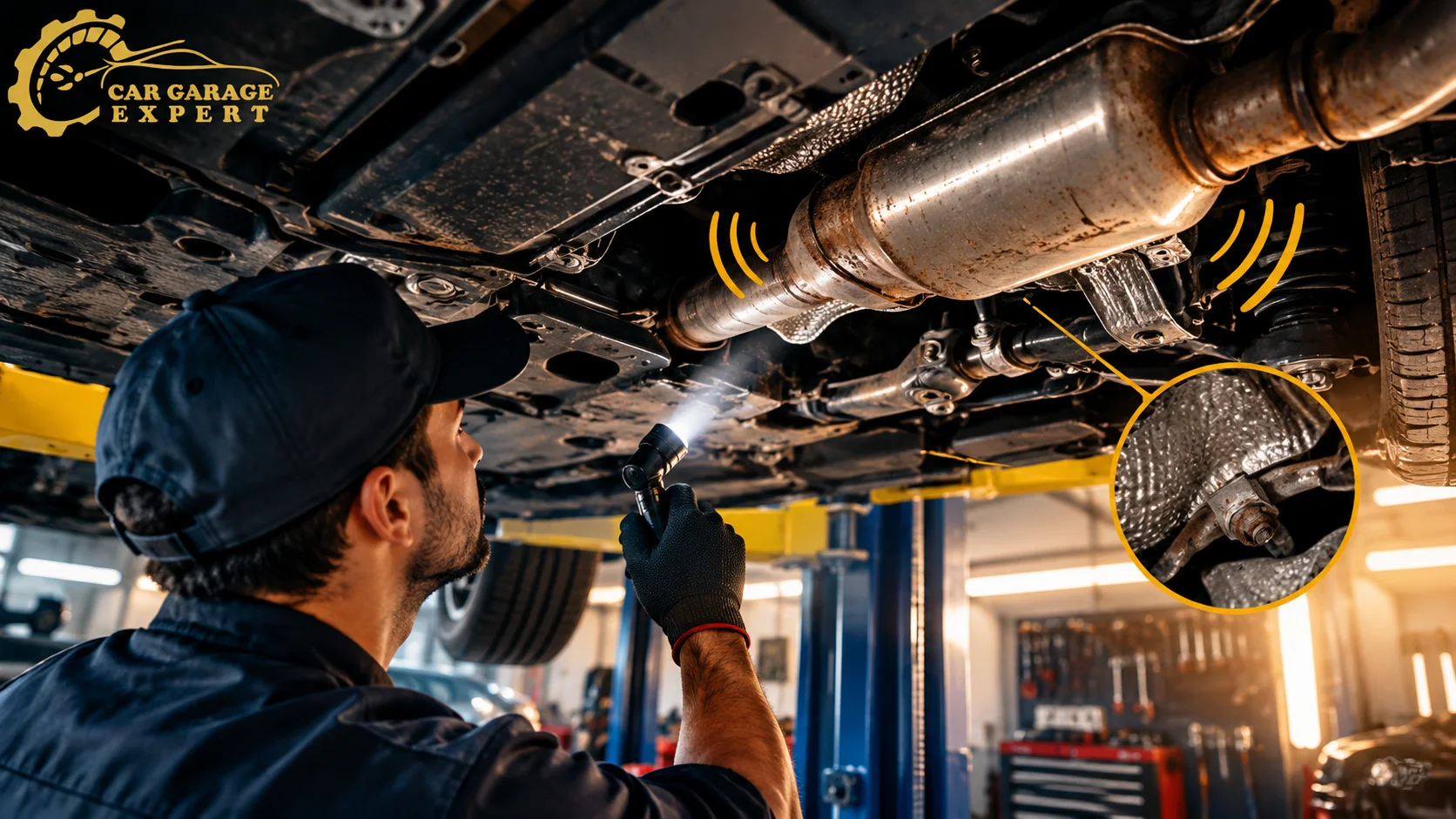
Heat shields protect nearby parts from hot exhaust components. Over time, their bolts can loosen or the metal can corrode.
A loose shield often creates a thin, metallic rattle. The noise may be strongest when the engine reaches a certain speed.
A mechanic can inspect the shield and secure or replace it if needed.
2. Damaged Exhaust System
Your exhaust system carries harmful gases away from the engine. Loose brackets, damaged pipes or worn rubber hangers can cause the exhaust to move.
You may hear the exhaust knock against the underside of the car when accelerating. A leak may also make the engine sound louder than normal.
Check for an exhaust leak promptly because exhaust gases can be dangerous.
3. Worn Engine or Transmission Mounts
Engine and transmission mounts hold major components in place. They also reduce vibration.
When a mount wears out, the engine may move more than it should. This can create a clunk or rattle when you press the accelerator.
You may also feel extra vibration when starting the car or changing gears.
4. Loose Underbody Panels
Plastic covers and metal panels protect your vehicle’s underside. Road debris, worn clips or poor installation can loosen them.
Airflow may cause a loose panel to vibrate at higher speeds. You might also hear it after driving over a rough road.
A mechanic can check the clips, fasteners and panels for damage.
5. Worn CV Joints or Driveshaft Parts
CV joints transfer power to the wheels in many front-wheel-drive and all-wheel-drive vehicles. Driveshaft components also transfer power in other drivetrains.
Worn joints can cause clicking, knocking or vibration. The sound may become more noticeable during acceleration or when turning.
These parts need proper inspection because a serious drivetrain fault can affect vehicle control.
6. Loose Suspension Components
Worn bushings, loose links or damaged suspension parts may rattle beneath the car.
The noise may be more obvious on rough roads, during braking or when accelerating over bumps.
If the car also pulls to one side or feels unstable, arrange an inspection as soon as possible.
7. Catalytic Converter Problems
The catalytic converter helps reduce harmful exhaust emissions. If its internal structure breaks apart, loose pieces can create a metallic rattle.
You may also notice reduced engine power or an illuminated check engine light.
A mechanic should test the exhaust system before replacing the converter. Other faults can produce similar symptoms.
Diagnostic Process: How a Mechanic Finds the Problem
Finding the source of a Rattling Noise Under the Car requires more than guessing from the sound.
A trained mechanic will usually follow these steps:
- Ask about the noise: The mechanic will ask when it started and whether it happens during acceleration, braking, turning or driving over bumps.
- Inspect the exhaust system: They will check heat shields, pipes, hangers and joints for loose or damaged parts.
- Check the engine mounts: The mechanic will look for worn rubber, cracks and excessive engine movement.
- Inspect the underbody: The mechanic will check panels, fasteners and nearby components for signs of contact or damage.
- Examine the drivetrain and suspension: The mechanic will inspect relevant joints, mounts, bushings and moving parts.
- Use diagnostic tools if needed: A scan tool can help identify engine faults when warning lights or performance problems are present.
- Confirm the cause: A controlled road test may help reproduce the sound when it is safe to drive the vehicle.
This process helps avoid unnecessary part replacements. It also helps identify problems that may become more serious if left untreated.
Repair Process: How to Fix the Noise
The correct repair depends on the part causing the sound. Once the mechanic confirms the fault, the repair may involve one or more of the following steps.
- Tightening loose parts: Secure loose heat shields, brackets and fasteners.
- Replacing damaged exhaust parts: A cracked pipe, worn hanger or badly corroded component may need replacement.
- Changing worn mounts: Replace damaged engine or transmission mounts with suitable parts.
- Securing underbody panels: Broken clips and loose covers may need new fasteners or replacement panels.
- Repairing drivetrain components: Worn CV joints, driveshaft parts or related components may need professional repair.
- Fixing suspension faults: Repair damaged bushings or loose suspension parts according to the vehicle’s specifications.
- Testing the vehicle: The mechanic should confirm the sound has stopped and the car operates normally.
Do not try to fix a rattling exhaust while it is hot. Support the vehicle with proper equipment before anyone works underneath it.
For a persistent Rattling Noise Under the Car, Car Garage Expert can help you explore professional inspection and repair options instead of replacing parts without knowing the cause.
Risks of Ignoring the Noise
A small rattle may seem harmless, but the problem can worsen over time.
Here are some risks to consider:
- More expensive repairs: A loose component may damage nearby parts if it keeps moving.
- Exhaust gas exposure: A damaged exhaust system can allow harmful gases to escape in unsafe places.
- Poor driving comfort: Worn mounts or suspension parts may increase vibration and noise.
- Drivetrain damage: Ignoring a worn joint or damaged driveshaft component can lead to further faults.
- Loose parts on the road: A badly secured underbody panel or exhaust component may detach while driving.
- Reduced vehicle performance: Some exhaust or engine faults can affect power and fuel use.
A Rattling Noise Under the Car that gets louder, occurs with strong vibration or appears with a warning light should not be ignored.
Can You Continue Driving?
It depends on the cause and the severity of the noise.
If the sound is light and the car drives normally, you may be able to drive a short distance to a garage. However, this doesn’t guarantee the car is safe.
Stop in a safe place and seek roadside assistance if you notice:
- Loud or rapidly worsening rattling.
- Strong vibration or sudden loss of power.
- Exhaust fumes entering the cabin.
- Smoke, a burning smell or signs of overheating.
- Loose parts dragging beneath the car.
- Difficulty steering or controlling the vehicle.
Do not keep driving just because the engine still runs. A serious mechanical fault may not cause an immediate breakdown.
If the car feels unsafe, arrange recovery rather than driving it to a workshop.
Repair Time: How Long Does It Take?
Repair time depends on the fault, the vehicle model and parts availability.
A loose heat shield or underbody panel may take less time to fix than a damaged driveshaft or catalytic converter.
A basic inspection may be completed relatively quickly. More complex faults can require additional testing, part ordering and follow-up checks.
Ask the garage for an estimated repair time after the mechanic identifies the problem. This gives you a more reliable answer than estimating from the sound alone.
Cost Factors: What Affects the Repair Price?
The cost of fixing a rattling sound varies by vehicle and garage in Dubai.
Several factors affect the final bill:
- Type of damage: Tightening a loose shield usually costs less than replacing a major drivetrain part.
- Vehicle make and model: Luxury cars and less common models may need more expensive parts.
- Part quality: Genuine original-equipment and aftermarket parts can vary in price.
- Labor time: Difficult access beneath the car may increase labor costs.
- Extra damage: A loose component may have damaged another part.
- Diagnostic work: Some faults require additional testing before the repair can begin.
Request a clear estimate before approving the work. Ask whether the quote includes parts, labor, diagnostic fees and any required follow-up checks.
Prevention Tips: How to Avoid Future Rattling
You cannot prevent every mechanical fault, but regular maintenance can reduce the chance of unexpected noise.
Follow these simple tips:
- Schedule routine vehicle inspections.
- Check the exhaust system during regular servicing.
- Ask a mechanic to inspect loose panels after a strong impact or underbody scrape.
- Avoid driving over deep potholes and road debris when possible.
- Address unusual vibration before it becomes worse.
- Follow the manufacturer’s maintenance schedule.
- Use suitable replacement parts for your vehicle.
- Do not ignore new sounds after a repair.
If you hear a new Rattling Noise Under the Car, arrange an inspection before the problem affects other components.
Dubai-Specific Advice: Why Does the Noise Need Attention?
Driving conditions in Dubai can put extra stress on your car. High summer temperatures, heavy traffic, speed bumps and uneven road surfaces can all affect vehicle components.
Hot conditions can place added demands on the cooling and exhaust systems. Frequent stopping and starting can also increase the workload on engine and transmission mounts.
Road debris and rough surfaces may damage underbody panels or loosen their fasteners.
To protect your car in Dubai:
- Check your vehicle regularly, especially before long journeys.
- Watch for new rattles after driving over a deep pothole.
- Keep up with scheduled servicing during hot weather.
- Avoid long drives if the noise becomes severe.
- Use roadside assistance if your vehicle develops a serious fault away from home.
A reliable “garage near me” search can help you find local support, but choose a workshop that can identify the actual cause instead of guessing which part needs replacing.
Why Choose Car Garage Expert for Roadside Assistance?
A rattling noise can start while you are traveling to work, driving through busy streets or heading out on a longer journey. Knowing where to go for support can save time and minimise stress.
Car Garage Expert is a useful option to consider when you need help with car inspection, repair or recovery arrangements in Dubai.
When dealing with a rattling sound, look for a garage that can:
- Inspect the exhaust, underbody, mounts and drivetrain.
- Explain the likely cause in simple language.
- Recommend repairs based on the inspection results.
- Provide a clear estimate before work begins.
- Advise whether the vehicle is safe to drive or needs recovery.
If the car develops a serious noise and cannot be driven safely, contact a roadside assistance provider to discuss recovery to a suitable workshop.
Don’t assume every rattle needs an expensive repair. A proper diagnosis can help you avoid unnecessary costs and deal with the real problem.
Frequently Asked Questions
1. Why does my car rattle under the car when accelerating?
Common causes include a loose exhaust heat shield, damaged exhaust parts, worn engine mounts, loose underbody panels or drivetrain faults. A mechanic can inspect the vehicle to identify the exact cause.
2. Is a rattling noise under the car dangerous?
It can be. A loose heat shield may be a minor issue, but a damaged exhaust, driveshaft or suspension part may affect safety. Get the noise checked, especially if it becomes louder.
3. Why does my car only rattle when I press the gas pedal?
Acceleration increases the load on the engine and drivetrain. This can make worn mounts, loose exhaust parts or damaged drivetrain components move or vibrate more than usual.
4. Can a loose exhaust cause a rattling sound?
Yes. Loose exhaust brackets, heat shields, pipes and hangers can vibrate or hit nearby parts. A mechanic should check the system for damage and exhaust leaks.
5. Should I call roadside assistance for a rattling noise?
Call roadside assistance if the noise is loud, the car loses power, strong vibration develops or a part is dragging beneath the vehicle. If you suspect a safety problem, don’t keep driving.
Related Services
If your car makes an unusual sound, these services may help:
- Car diagnostic services
- Exhaust system inspection and repair
- Engine mount replacement
- Transmission and drivetrain repair
- Suspension inspection and repair
- General car maintenance
- Car recovery and roadside assistance
Choose the service based on the inspection results, not the sound alone.
Final Call-to-Action
Do not ignore a new rattling sound when you accelerate. It may be a simple loose part, but it can also point to a fault that needs prompt attention.
If you notice a Rattling Noise Under the Car, arrange an inspection with a trusted garage. Finding the cause early can help prevent further damage and keep your vehicle safer on Dubai roads.
For car repair guidance and service options, contact Car Garage Expert and explain when the noise occurs. If the car is unsafe to drive, arrange roadside assistance or recovery.
Find Car Garage Expert on Google Maps: