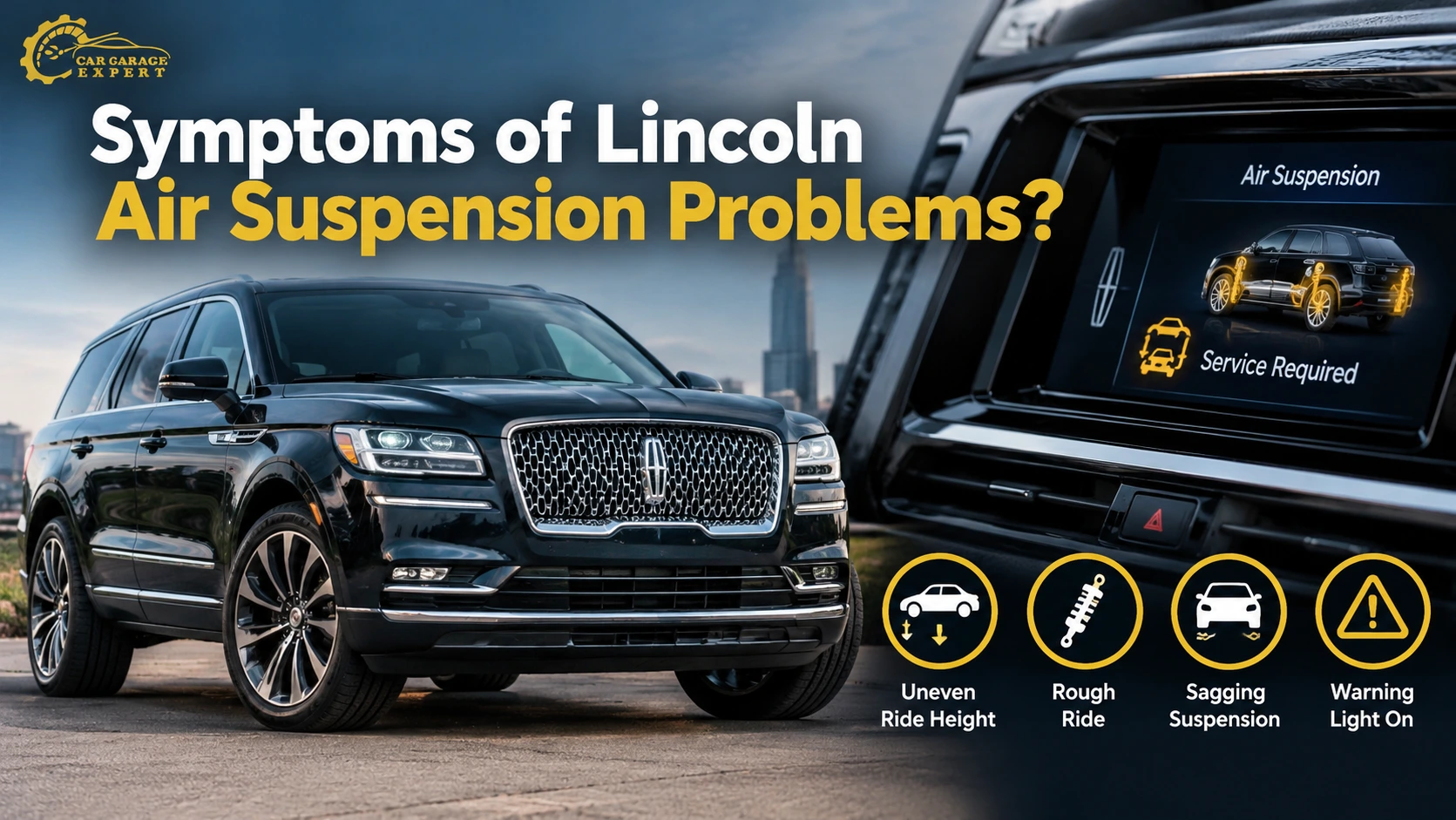
Many Lincoln models ride on air instead of steel coil springs. The Navigator, Aviator, and older Town Car use rubber air springs filled by a small electric compressor. Height sensors tell a control module how high each corner sits, and the module adds or releases air to keep the car level.
That’s what gives the Lincolns their quiet, cushy ride. It also stabilizes the car when it is fully loaded with people or goods. But rubber, seals, and sensors do wear out, and when they do, ride height and comfort are the first to suffer.
Early warning indications are easily missed. A corner is a little low in the morning. Or the compressor runs a little longer. Discovering Lincoln air suspension problems early is much cheaper than waiting for a total failure. A trusted car mechanic can confirm the cause with a scan and a leak test.
What Are the Most Common Symptoms of Lincoln Air Suspension Problems?
The most common Lincoln air suspension symptoms are a car that sags overnight, uneven ride height from side to side, and a “Check Air Suspension” warning message. You may also hear the compressor running for a long time or a hissing sound near a wheel. Other signs include a harsh, bumpy ride and a car that takes longer to rise after starting. Most Lincoln air suspension problems start with an air leak, which then wears out the compressor.
The Seven Main Signs Your Lincoln Air Suspension Is Failing
Lincoln suspension problems usually build slowly. These are the signs owners notice most, starting with the most common.
1. Why Is Your Lincoln Sitting Low on One Side?
A Lincoln sitting low on one side usually has one air spring losing air. The rubber bag cracks with age, and the air slowly escapes from that corner. You end up with uneven suspension height that you can see from the front or back of the car. Lincoln’s uneven ride height also makes the car pull or lean in corners.
A faulty height sensor can cause the same look. The module thinks the corner is high and lets air out on purpose. Sagging Lincoln air suspension needs testing to tell the two apart.
2. Why Does Your Lincoln Air Suspension Drop Overnight?
If you wake up to a Lincoln suspension drop, it’s usually an air suspension leak. The leak is concealed on the road as the compressor fills the system while you drive. When it is parked, the air escapes, and the body sinks.
The usual culprit is a leaking air spring. Air can also leak through cracked air lines, unsecured fittings, and damaged valve seals.
3. What Does the Lincoln Air Suspension Warning Light Mean?
A Lincoln suspension warning message means the module found a fault it cannot fix on its own. Older Navigator and Town Car models show a “Check Air Suspension” warning. Newer models may show “Suspension Fault, Service Required” on the screen.
The message does not say which part failed. A proper suspension fault diagnosis reads the stored codes and live data to find the cause.
4. Why Is Your Lincoln Air Suspension Compressor Making Noise?
Lincoln air compressor noise usually means the compressor is working too hard. A healthy compressor runs for short bursts. If you hear it humming for minutes at a time, or after the engine is off, it is trying to make up for a leak.
Running the compressor continuously is the fast road to air suspension compressor failure. The piston seal wears out, the motor overheats, and it stops filling the system. A stuck relay can also keep it running nonstop.
5. Why Does Your Lincoln Have a Rough or Bumpy Ride?
A rough ride in a Lincoln often comes from under-inflated springs or struts that have lost their damping. The car may bounce over speed bumps, crash through potholes, or float too much on the motorway. Poor suspension comfort is one of the first things owners notice when air suspension components start to fail.
6. Can You Hear Air Leaking From Your Lincoln’s Suspension?
A hissing noise from a Lincoln’s air suspension near a wheel is a clear sign of a leak. Listen right after parking, when the system is still under pressure. Air spring leak symptoms often get worse in cool morning air, when the rubber is stiffer.
The hiss can also come from an air line leak or a loose push-fit connector behind the wheel arch.
7. Why Does Your Lincoln Take Longer to Reach Normal Ride Height?
Slow suspension lift after starting means the compressor is weak or air is escaping as fast as it goes in. In some cars, one corner of the Lincoln air suspension not inflating at all is the first sign. A sticking solenoid valve or a failed sensor can also cause a suspension height adjustment failure.
Lincoln Air Suspension Problems vs Likely Causes
This table matches each sign with the most likely fault and the first test a workshop should run.
| What You Notice | Most Likely Cause |
First Test |
| One corner low after parking | Cracked air spring | Overnight drop test and leak spray |
| Whole car low in the morning | Leak in lines or valve block | System pressure test |
| Compressor runs for minutes | Leak, or a stuck relay | Relay check and fill-time test |
| Warning with no sagging | Height sensor or wiring fault | Live sensor readings on a scan tool |
| Car slow to rise | Worn compressor | Compressor output test |
| Bumpy, floaty ride | Worn air struts or low pressure | Strut inspection and pressure check |
A Simple Parking Test You Can Do at Home
You can gather useful proof before visiting a workshop. Park on flat ground in the evening. Measure from the ground to the top of each wheel arch and write the numbers down.
Measure the next morning again. A drop of more than 2 cm on one corner points to a leak there. If all four corners drop, the leak is more likely in a shared part such as the valve block or reservoir. Take photos of any dashboard message, too.
What Causes Lincoln Air Suspension Problems?
Most Lincoln air suspension failures come from age, heat, and leaks. One weak part can also strain the rest of the system.
Cracked Air Springs
The air spring is a rubber bag that flexes every time the car moves. After years of use, small cracks form in the folds. A Lincoln air spring leak usually starts on the rear springs of the Navigator and Town Car, since they carry most of the load.
Leaking Air Lines and Damaged Connectors
Thin plastic air lines run from the compressor to each spring. Heat, road grit, and rubbing on other parts can break them. Push-fit fittings might sometimes become loose or cracked after previous repairs.
A Weak Air Suspension Compressor
The Lincoln air suspension compressor wears out faster when it has to chase a leak. Its piston ring wears, its output drops, and it takes longer to lift the car. Moisture inside the system can also rust the compressor if the air dryer fails.
Faulty Ride Height Sensors
Each sensor connects to a suspension arm with a small link. If the link breaks or the sensor fails, the module gets false readings. This can cause the Lincoln suspension to sag on one corner or the car to sit too high.
Solenoid Valve Issues
Each air spring has a solenoid valve that holds or releases air. A worn seal lets air seep out while parked. A valve that sticks shut stops that corner from filling at all.
Electrical Faults
Weak batteries, blown fuses, faulty relays, and corroded wiring can affect the system. Even if the air parts are fine, a Lincoln suspension warning light can come on if the voltage is low. The wiring near the wheel arches is exposed to water and dust;, ,so it wears out faster.
How Do Mechanics Diagnose Lincoln Air Suspension Failure?
Finding the source of Lincoln air suspension problems takes a set order of tests. Good Lincoln suspension diagnostics check each part before replacing anything.
Reading Diagnostic Trouble Codes
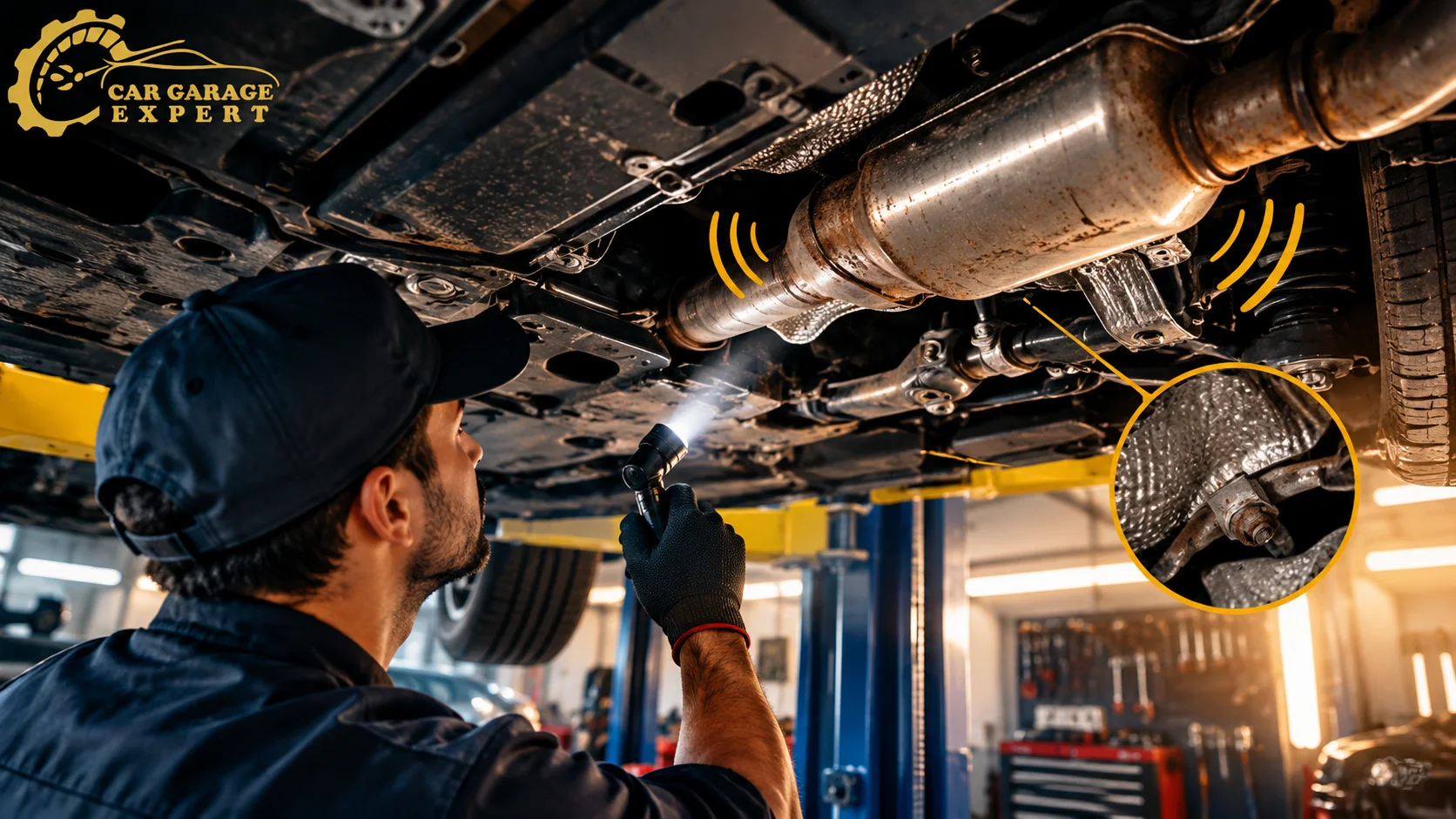
The technician connects a scan tool that can read Ford and Lincoln modules. The air suspension module stores codes that point to a corner, valve, sensor, or compressor circuit. Live data shows each sensor reading and how long the compressor runs.
Visual Leak Inspection
During the pressure test, spray soapy water on each air spring, line, and fitting. Bubbles show where air is escaping. An overnight drop test can confirm slow leaks that the spray doesn’t catch.
Compressor Testing
While it fills, time the expander. If the fill is slow, the output is low. At the same time, technicians check the switch, fuse, and air dryer.
Sensor and Ride-Height Checks
Measure each corner with a tape and compare it with the sensor reading. A big gap points to a faulty sensor or bent link. Technicians also test battery voltage and wiring to rule out electrical issues.
Can You Drive a Lincoln With Air Suspension Problems?
Most of the time, if the car is level and only shows a warning, you can drive a short distance. Be careful, drive slowly, and avoid heavy loads. Prepare a check soon, as the compressor is likely working extra hours.
When Driving Becomes Unsafe
Stop driving if the car is badly sagging, leaning hard to one side, or resting on the bump stops. A very low car can rub its tires, damage the body, and steer poorly. Braking and cornering also get worse, especially with passengers in the back.
In that case, call roadside assistance and have the car moved on a flatbed. On many older Navigator and Town Car models, you must turn off the air suspension switch before towing or jacking. Your owner’s manual shows where the switch sits on your model.
What Happens If You Ignore the Problem
A small leak costs more over time. Every day until it burns out, the compressor runs longer. A car that sits too low isn’t good for the tires or the CV joints. It can also crack the bumpers and wheel arch covers. Uneven ride height can also mess up wheel alignment.
Should You Repair or Replace Lincoln Air Suspension Components?
The right fix for Lincoln air suspension problems depends on which part failed and how old the car is. Some parts can be repaired. Others need full replacement.
Air Springs
You can’t safely patch a cracked air spring. It needs Lincoln air suspension replacement, ideally in pairs on the same axle so both sides sit evenly.
Compressor
A compressor with a strong motor can sometimes be rebuilt with a new piston ring kit. If the motor is weak or burnt, replacement is the better choice. Always fix every leak and replace the relay first, or the new compressor will wear out fast.
Sensors and Air Lines
Replace a failed sensor, then calibrate the system. Split air lines and broken connectors can usually be repaired with new sections and fittings.
Coil Spring Conversion
Some owners of older Lincolns choose a coil spring conversion kit instead of new air parts. It costs less upfront and removes the compressor from the system. The trade-off is a firmer ride and the loss of self-leveling when towing or carrying heavy loads. On newer models, a conversion can also set warning lights unless it includes the right electronics.
How Long Lincoln Air Suspension Repairs Take
Diagnosis takes an hour or two. It takes about one to two hours to swap out a height sensor and recharge it. It takes two to three hours to change a pair of rear air springs. It takes two to four hours to work on a compressor. Newer cars may need three to five hours to fix the front air springs.
How Much Does Lincoln Air Suspension Repair Cost in Dubai?
Prices for Lincoln suspension repair Dubai-wide vary a lot. Lincoln air suspension cost depends on the model, the failed part, and the parts you choose. These are rough Dubai market ranges. A final quote comes after diagnosis.
- Diagnostic scan and leak test: AED 200 to 450
- Compressor relay: AED 100 to 300
- Ride height sensor, fitted with calibration: AED 500 to 1,500
- Rear air spring, per side fitted: AED 800 to 2,500
- Front air strut on newer models, per side fitted: AED 2,500 to 6,000
- Air suspension compressor, fitted: AED 1,500 to 4,500
- Coil spring conversion kit, fitted: AED 2,500 to 6,000
Cost Factors to Know Before You Book
The model matters most. Older Navigator and Town Car rear springs are cheaper than front struts on a new Aviator or Navigator. OEM parts cost more than quality aftermarket or remanufactured ones.
Labor time changes with access. Some compressors sit behind wheel arch liners or under the body. Intermittent electrical faults also take longer to trace, which adds diagnostic hours.
Questions to Ask Before You Approve the Repair
- Which code and test confirmed the faulty part?
- Will the relay be replaced with the compressor?
- Are the parts OEM, aftermarket, or remanufactured?
- Are the air springs being replaced in pairs?
- Is calibration included?
- What warranty covers parts and labor?
How Dubai’s Heat Affects Lincoln Air Suspension
Dubai’s climate makes Lincoln air suspension problems show up sooner. Rubber air springs dry out faster in a 45°C summer, and cracks grow each time the car rises and settles. The compressor also runs hotter and wears out sooner.
Fine sand from desert drives and dusty roads can wear the compressor piston and grind against the rubber springs. Frequent speed bumps in residential areas add extra flexing to every spring.
Prevention Tips for Lincoln Owners in Dubai
A few habits help the system last longer. Pair a yearly suspension check with one of the car service packages in Dubai so you don’t miss it.
- Rinse dust and sand from around the air springs after desert or beach drives.
- Replace the battery every two to three years, since low voltage causes false faults.
- Turn off the air suspension switch, or use tow mode on newer models, before jacking or towing.
- Act on a low corner in the morning instead of waiting for the warning.
- Ask the mechanic to check the air dryer when servicing the compressor.
- Avoid overloading the cargo area for long trips.
Why Car Garage Expert Is a Strong Choice for Lincoln Suspension Repair in Dubai
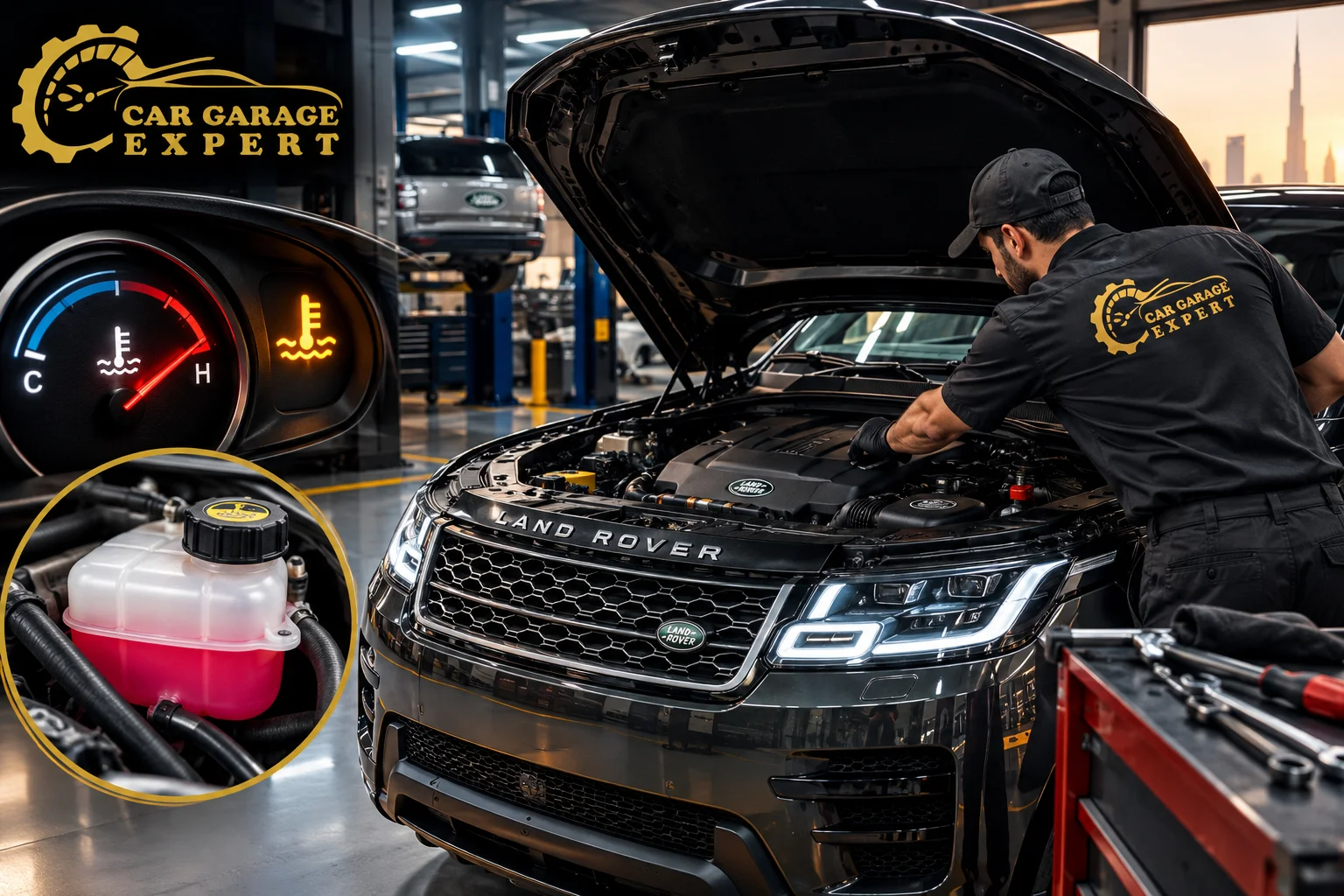
For Lincoln air suspension problems such as sagging, leaks, or a warning message, Car Garage Expert in Al Quoz is a good place to start. The reasons below focus on how the job gets done.
Diagnosis Comes Before Parts
If you’re the driver, many air suspension problems look the same. Shops that read the codes, check the live data, and test for leaks everywhere don’t change parts until the warning goes away. Ask to see the test results before you sign off on any work.
Honest Options on Repair, Replacement or Conversion
There are often more than one good way to fix an older Lincoln. An honest shop will tell you about the pros and cons of each option, such as new air springs, used parts, and coil conversions, so you can pick the one that best fits your needs and budget.
Central Location in Al Quoz
The workshop is in Al Quoz, close to Sheikh Zayed Road and Al Khail Road. It is easy to reach from Downtown, Al Barsha, Jumeirah, and Dubai Marina.
Frequently Asked Questions
Q1: How Long Does Lincoln Air Suspension Last?
Air springs often last 8 to 10 years in mild climates. In the UAE, heat and dust can shorten that to around 5 to 7 years. Compressors usually fail sooner if you leave leaks unfixed.
Q2: What Causes Lincoln Air Suspension to Fail?
The most common causes are cracked air springs, leaking air lines, a worn compressor, faulty height sensors, and electrical faults. Heat and age speed up all of them.
Q3: Can a Bad Air Spring Damage the Compressor?
Yes. A leaking spring makes the compressor run much longer than it should. That extra work overheats the motor and wears the piston until it fails.
Q4: Why Does My Lincoln Sit Lower After Parking?
Sitting lower after parking almost always means an air leak. The compressor tops up the air while you drive, so the leak shows up only once the car is parked.
Q5: Is Lincoln Air Suspension Expensive to Repair?
It can be, especially for front struts on newer models. Fixing a leak early is much cheaper than replacing springs and a burnt-out compressor at the same time.
Q6: Can a Lincoln Air Suspension Fault Reset Itself?
A warning may clear after a restart, especially if low voltage caused it. If the fault is still there, the warning will return. A scan shows whether the code is still stored.
Related Services
Suspension faults often come with other needs so these services may help.
- A mobile car mechanic can test the battery and read fault codes at your home or office.
- If a sagging car has scraped the bumper or side skirts, car painting covers scratch and panel repair.
- When you search for a garage near me, choose one that can scan Lincoln modules and calibrate ride height.
Where Can You Get Lincoln Air Suspension Repair in Dubai?
Book an inspection as soon as your Lincoln sits low after parking, leans to one side, or shows a suspension warning. A compressor that runs for minutes at a time is another sign not to ignore. The earlier you find the leak, the less likely it is to take the compressor with it.
For Lincoln suspension repair in Dubai, Car Garage Expert can scan the system, leak-test every corner, and confirm the cause before quoting a repair. Lincoln air suspension problems are cheapest to fix early. Send a photo of the warning or your morning ride height on WhatsApp, or get directions to the Al Quoz workshop.