
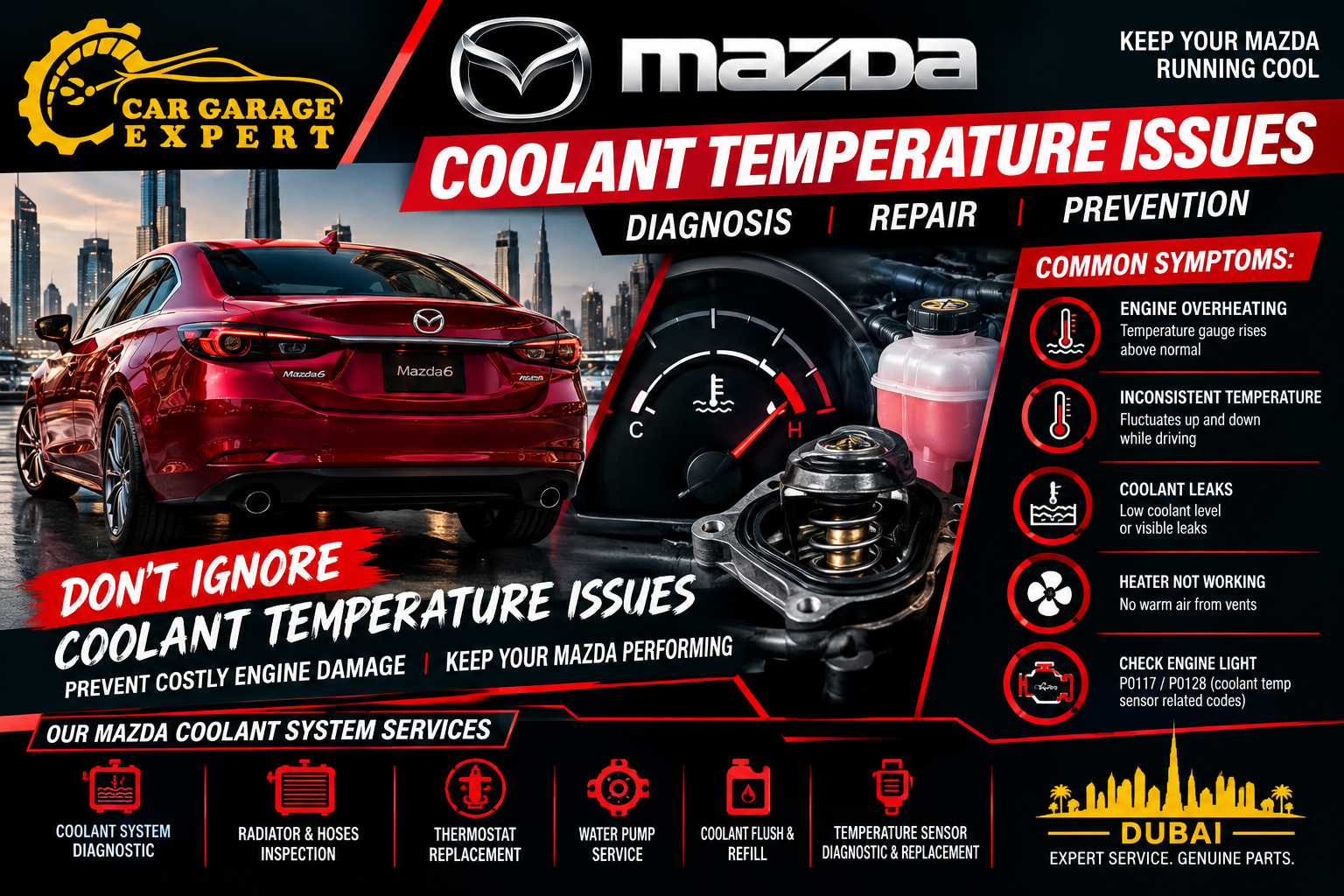
Mazda coolant temperature issues usually happen when the engine cooling system cannot maintain the correct operating temperature. Common causes include low coolant levels, radiator problems, faulty thermostats, damaged water pumps, cooling fan failures, or sensor issues. In Dubai’s extreme heat, these problems can worsen because engines work harder in high temperatures. If your Mazda shows overheating warnings, temperature fluctuations, coolant leaks, or poor air conditioning performance, we recommend a professional inspection. Car Garage Expert provides Mazda cooling system diagnosis and repair services in Dubai to identify the problem and prevent costly engine damage.
Table of Contents
- Mazda Coolant Temperature Issues Overview
- Common Symptoms of Cooling System Problems
- Main Causes of Mazda Temperature Problems
- How Technicians Diagnose the Issue
- Mazda Coolant Temperature Repair Process
- Risks of Ignoring Cooling Problems
- Can You Continue Driving Your Mazda?
- Mazda Coolant Repair Time
- Factors Affecting Repair Cost
- Prevention Tips for Dubai Drivers
- Dubai-Specific Cooling System Advice
- Why Choose Car Garage Expert?
- Frequently Asked Questions
- Conclusion
Mazda Coolant Temperature Issues Overview
Mazda vehicles use advanced cooling systems to keep the engine within a safe temperature range. The cooling system controls engine heat through several key components, including coolant, the radiator, the thermostat, the water pump, cooling fans, hoses, and temperature sensors.
When any part of this system fails, Mazda coolant temperature issues can appear. The engine may run hotter than normal, the temperature gauge may move unpredictably, or the dashboard may display an overheating warning.
For Mazda owners in Dubai, cooling system problems require extra attention. The UAE climate brings extremely high temperatures, especially during summer months. Your vehicle’s cooling system must work harder to remove engine heat, making small problems develop into serious failures faster.
Ignoring temperature issues can lead to expensive repairs, including engine overheating, damaged cylinder heads, or complete engine failure.
Common Symptoms of Mazda Coolant Temperature Issues
Recognizing early warning signs can help prevent major engine damage. Some common symptoms include:
Engine Overheating Warning
The most obvious sign is an overheating warning light or a temperature gauge moving into the red zone. This indicates that the engine temperature has exceeded the safe operating range.
If this happens while driving, stop safely and let the engine cool before continuing.
Temperature Gauge Fluctuation
A healthy Mazda engine temperature should remain stable. If the gauge keeps rising and falling, you may have an issue with coolant circulation, thermostat operation, or temperature sensors.
Coolant Leaks Under the Vehicle
Coolant leaks are another common sign of cooling system failure. You may notice green, orange, pink, or yellow fluid under your Mazda after parking.
Leaks can come from:
- Radiator hoses
- Coolant reservoir
- Radiator
- Water pump
- Cooling system connections
Weak Air Conditioning Performance
In some cases, cooling system problems can affect air conditioning performance. When the engine temperature rises, the vehicle may reduce AC performance to protect the engine.
This is especially noticeable during Dubai summers, when people rely heavily on air conditioning.
Steam or Burning Smell
Steam from under the hood or a sweet coolant smell usually indicates coolant leakage or overheating. Driving with these signs can cause serious engine damage.
Reduced Engine Performance
An overheating Mazda may enter a safety mode that reduces engine power. This protects internal components but signals that you need an immediate inspection.
Main Causes of Mazda Coolant Temperature Issues
Several components can create temperature problems in Mazda vehicles.
Low Coolant Level
Coolant absorbs engine heat and transfers it to the radiator. When coolant levels drop, the system cannot remove heat effectively.
Low coolant may happen because of:
- External leaks
- Damaged hoses
- Cracked radiator
- Faulty coolant reservoir
- Internal engine leaks
Regular coolant level checks are especially important in Dubai’s hot climate.
Faulty Thermostat
The thermostat controls coolant flow between the engine and radiator.
A faulty thermostat may:
- Stay closed and cause overheating
- Stay open and prevent proper warm-up
- Create unstable temperature readings
A thermostat problem is one of the most common causes of Mazda coolant temperature issues.
Damaged Radiator
The radiator removes heat from the coolant before it returns to the engine.
Radiator problems may include:
- Blocked internal passages
- External damage
- Corrosion
- Cooling fin problems
- Coolant leaks
A damaged radiator reduces the system’s ability to control engine temperature.
Water Pump Failure
The water pump circulates coolant throughout the engine. If it fails, coolant cannot move properly, causing rapid temperature increases.
Signs of water pump problems include:
- Overheating
- Coolant leaks near the pump
- Strange noises
- Temperature spikes
Cooling Fan Problems
Cooling fans help remove heat when the vehicle is stationary or moving slowly.
A faulty fan motor, damaged relay, or electrical issue can cause overheating, especially in Dubai traffic.
Faulty Coolant Temperature Sensor
The temperature sensor sends information to the vehicle computer and dashboard.
A damaged sensor may create incorrect readings, causing:
- False overheating warnings
- Incorrect fuel management
- Poor engine performance
How Technicians Diagnose Mazda Coolant Temperature Issues
Professional diagnosis matters because several cooling system parts can cause similar symptoms.
A technician usually follows these steps:
Visual Inspection
The cooling system is checked for:
- Coolant leaks
- Damaged hoses
- Cracks
- Loose connections
- Reservoir problems
Coolant Level and Condition Check
Technicians inspect the coolant level and quality for possible contamination.
Old or incorrect coolant can reduce cooling performance.
Pressure Testing
A cooling system pressure test helps identify hidden leaks that may not be visible during normal inspection.
Computer Diagnostic Scan
Modern Mazda vehicles use electronic systems that store fault codes. Diagnostic scanning helps identify:
- Temperature sensor failures
- Fan control problems
- Engine management issues
Component Testing
Individual parts such as the thermostat, radiator fan, and water pump may be tested to confirm the exact failure.
Mazda Coolant Temperature Repair Process
The repair process depends on the cause.
Coolant Replacement
If the coolant is poor quality or contaminated, technicians may flush the system and refill it with the correct coolant.
Thermostat Replacement
Technicians remove a faulty thermostat and replace it with a suitable Mazda-compatible part.
Radiator Repair or Replacement
Damaged radiators may need repair or complete replacement, depending on their condition.
Water Pump Replacement
If the water pump fails, it must be replaced to restore proper coolant circulation.
Cooling Fan Repair
Technicians may repair electrical connections, replace fan motors, or fix control components.
Sensor Replacement
Technicians replace faulty temperature sensors and test the system to ensure accurate readings.
Risks of Ignoring Mazda Coolant Temperature Issues
Driving with cooling system problems can create serious engine damage.
Possible risks include:
Engine Overheating Damage
Excessive heat can damage engine components and reduce vehicle reliability.
Cylinder Head Problems
Extreme temperatures can warp the cylinder head, leading to expensive repairs.
Head Gasket Failure
A damaged head gasket can let coolant and engine oil mix, causing major mechanical problems.
Complete Engine Failure
In severe cases, overheating can permanently damage the engine.
Can You Continue Driving Your Mazda?
It depends on how severe the issue is.
If your Mazda temperature gauge is slightly higher than normal, arrange an inspection as soon as possible.
However, stop driving immediately if you notice:
- Temperature gauge in the red zone
- Steam from the engine
- Strong coolant smell
- Warning messages
- Loss of engine power
Continuing to drive an overheating vehicle can turn a small cooling repair into a major engine replacement.
Mazda Coolant Repair Time
Repair time depends on the failed component.
Typical repair timelines include:
- Coolant inspection: 30–60 minutes
- Leak testing: 1–2 hours
- Thermostat replacement: Several hours depending on model
- Radiator replacement: Usually a few hours
- Water pump replacement: Longer depending on engine design
A professional diagnosis is the best way to determine the exact repair duration.
Factors Affecting Mazda Coolant Repair Cost
The final repair cost depends on several factors, including:
- Mazda model and year
- Damaged cooling component
- Original or aftermarket parts
- Labour requirements
- Additional damage caused by overheating
Early diagnosis usually reduces repair costs because minor cooling issues are easier to fix than major engine damage.
Prevention Tips for Mazda Cooling Problems
Regular maintenance helps avoid unexpected overheating.
Check Coolant Levels Regularly
Inspect coolant levels according to your vehicle maintenance schedule.
Use Correct Coolant
Always use the recommended coolant type for your Mazda model.
Inspect Hoses and Belts
Cracked hoses and worn belts can lead to coolant loss and overheating.
Service the Cooling System
Regular radiator checks and coolant replacement improve system reliability.
Watch Temperature Changes
Never ignore unusual temperature readings or warning lights.
Dubai-Specific Advice for Mazda Owners
Dubai’s climate creates additional stress on vehicle cooling systems.
During summer, temperatures can get extremely high, increasing the engine’s workload.
Mazda owners should:
- Check coolant before long drives
- Maintain regular servicing
- Avoid ignoring small leaks
- Monitor temperature during traffic jams
- Keep radiator and cooling fans clean
Driving in heavy traffic, such as on Sheik Zayed Road, in Downtown Dubai, or in Dubai Marina, puts extra pressure on cooling systems because vehicles often run at low speeds while still producing heat.
A properly maintained cooling system is essential for reliable Mazda performance in Dubai.
Why Choose Car Garage Expert?
Car Garage Expert provides professional Mazda inspection and repair solutions in Dubai.
Our technicians focus on accurate diagnosis instead of unnecessary replacements. We inspect the complete cooling system to identify the real cause behind temperature problems.
Our services include:
- Mazda cooling system diagnosis
- Coolant leak inspection
- Radiator checks
- Thermostat repairs
- Cooling fan testing
- Temperature sensor diagnosis
We understand Dubai driving conditions and provide solutions designed for local climate challenges.
Frequently Asked Questions
1. Why is my Mazda temperature gauge rising in Dubai?
A rising temperature gauge may be due to low coolant, radiator problems, thermostat failure, cooling fan issues, or a water pump problem. Dubai’s high temperatures can make these issues appear faster.
2. How do I know if my Mazda coolant sensor is faulty?
A faulty coolant temperature sensor may cause incorrect temperature readings, warning lights, poor fuel economy, or unusual engine behaviour.
3. Can low coolant cause Mazda overheating?
Yes. Low coolant reduces the cooling system’s ability to remove engine heat and can lead to overheating if not corrected.
4. How often should Mazda coolant be checked?
Check coolant regularly during routine maintenance and before long-distance driving, especially in Dubai’s hot weather.
5. Is it safe to drive a Mazda with overheating problems?
No. Driving an overheating Mazda can cause serious engine damage. It is safer to stop and arrange professional inspection.
Conclusion
Never ignore Mazda coolant temperature issues, especially in Dubai’s demanding climate. Problems like low coolant, thermostat failure, radiator damage, water pump issues, or faulty sensors can quickly affect engine reliability.
Early diagnosis helps prevent expensive repairs and keeps your Mazda running safely. Regular maintenance, proper coolant checks, and professional inspections are the best ways to avoid overheating problems.
Visit us in our Al Quoz, Dubai branch or visit Car Garage Expert
If your Mazda shows temperature warnings, coolant leaks, or overheating symptoms, contact Car Garage Expert in Dubai for reliable cooling-system diagnosis and repair. Our team can identify the issue and provide the right solution to protect your engine.