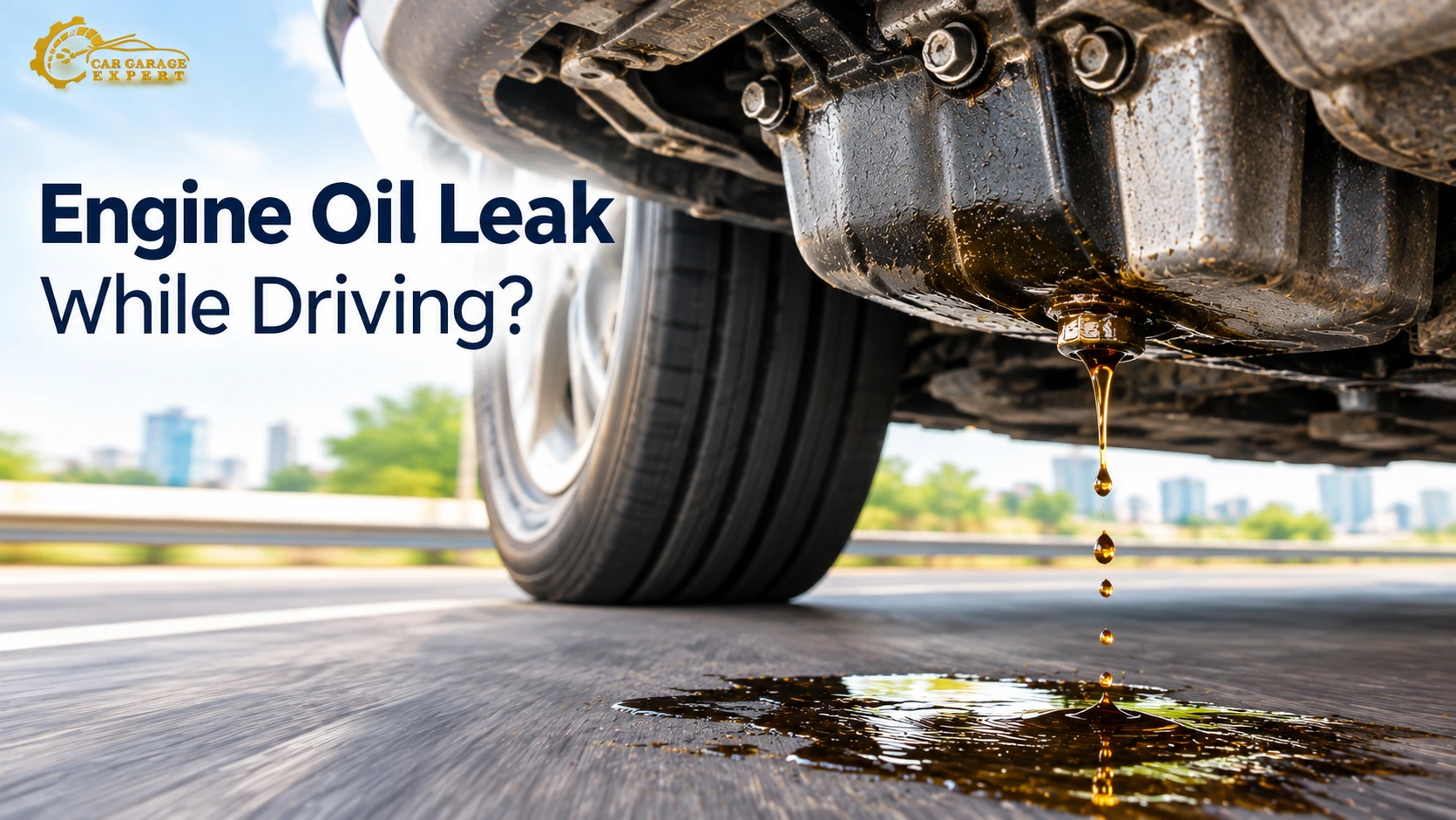
You can drive a short distance with an engine oil leak, but it’s dangerous. Severe leaks of low oil pressure can cause damage to the engine in minutes. A drop from a worn gasket isn’t as urgent as oil pooling under the car. Common culprits include a bad oil pan gasket, a broken valve cover gasket, or a failing oil seal. In Dubai’s heat, gaskets dry out and shatter faster than in cooler locations. If you find oil patches under your car, or smell something burning, get it examined immediately. Same-day oil leak diagnosis anywhere in Dubai by Car Garage Expert.
Table of Contents
- What It Means When Your Car Is Leaking Engine Oil
- Signs of an Engine Oil Leak You Shouldn’t Ignore
- Common Causes of Engine Oil Leakage
- How We Diagnose an Engine Oil Leak
- Engine Oil Leak Repair and Service Process
- What Happens If You Ignore an Oil Leak From Engine
- Can You Drive with an Engine Oil Leak?
- How Long Does Engine Oil Leak Repair Take?
- What Affects the Cost of Engine Oil Leak Repair
- How to Prevent Engine Oil Leakage
- Dubai Heat and Engine Oil Leaks: What Owners Should Know
- Why Choose Us for Engine Oil Leak Repair
- FAQs
- Related Services
- Final Word
What It Means When Your Car Is Leaking Engine Oil
A car leaking engine oil has a gap somewhere in the sealed lubrication system. Oil that should stay inside the engine is escaping through a gasket, seal, or crack.
This is one of the most common reasons Dubai drivers search for a garage near me. A small leak rarely stays small. Heat, vibration, and time make it worse.
If you spot oil leaking from your car, don’t wait for it to get bigger. A quick inspection now is cheaper than an engine rebuild later.
Signs of an Engine Oil Leak You Shouldn’t Ignore
Your car usually gives warning signs before things get serious. Watch for these.
- Dark oil spots or puddles under the car after parking
- A burning oil smell, especially after a drive
- Smoke coming from under the hood.
- The oil warning light turned on.
- The engine was running louder than usual.
- Oil level dropping faster than normal between top-ups.
Engine oil leakage often starts as a slow drip. It’s easy to miss until you see a stain on your driveway or parking spot. Spotting these signs early means you won’t have to drive with an engine oil leak for long.
Common Causes of Engine Oil Leakage
Five main reasons can cause an oil leak from engine components. Each needs a different fix.
Worn Oil Pan Gasket
The oil pan sits at the bottom of the engine. Its gasket hardens with age and heat, then starts to seep oil. This is the most common cause we see in Dubai workshops.
Damaged Valve Cover Gasket
This gasket seals the top of the motor. When it cracks, oil runs down the side of the block, typically near the exhaust, and produces a burning stench.
Failing Oil Seals
Crankshaft and camshaft seals wear out over time. A failed seal can leak steadily, especially at higher mileage.
Loose or Cracked Oil Filter
A poorly fitted or old oil filter can leak from its base. This is one of the easiest problems to fix.
Damaged Oil Pan
Speed bumps and rough parking can crack or dent the oil pan. This causes a sudden leak instead of a slow one.
How We Diagnose an Engine Oil Leak
The diagnosis begins with a visual inspection. Our technicians look for fresh oil in the engine bay, under the chassis, and on the parking surface.
Then we flush the engine and add UV dye to the oil. We do a short test drive and then trace the exact source of the leak with a UV light. This removes the guesswork and prevents needless part replacement.
We also check oil pressure and oil level to assess how quickly the leak is losing fluid. This shows how urgent the repair is and whether you can still drive safely with an engine oil leak.
If it’s not convenient to drive in, our mobile car repair staff can do this same check at your home or office!
Engine Oil Leak Repair and Service Process
Once we find the source, the fix follows a clear order.
- Drain the old, contaminated oil safely.
- Replace the faulty gasket, seal, or filter.
- Clean the engine block and surrounding parts.
- Replace the oil pan if it’s cracked or dented.
- Refill with the correct oil grade for your engine.
- Run a pressure test to confirm the leak is gone.
- Road test the car to check for drips after driving.
Every engine oil leak repair at our workshop ends with a follow-up check. We want to see the engine bay dry, not just quiet for a day, so you never have to drive with an engine oil leak again.
What Happens If You Ignore an Oil Leak From the Engine
Ignoring an oil leak rarely saves money in the long run.
Low oil means less lubrication between moving parts. This raises friction and heat inside the engine. Over time, this wears down bearings and can cause the engine to seize completely. A seized engine often needs a full replacement, which costs far more than a gasket repair.
There’s also a fire risk. Oil dripping onto a hot exhaust can smoke or, in rare cases, ignite.
Can You Drive with an Engine Oil Leak?
You can drive with an engine oil leak if you check the oil level often. But it’s not something to rely on for daily driving.
If the oil light comes on, or you smell burning oil, stop the car as soon as it’s safe. Continuing to drive with an engine oil leak at that point can cause permanent engine damage within a few kilometers.
If you’re not sure whether it’s safe to keep driving, our roadside assistance team can check the car where you are and tow it in if needed.
How Long Does Engine Oil Leak Repair Take?
Most engine oil leak repairs are finished within a day.
| Repair Type | Typical Time |
| Oil filter reseal | 30–60 minutes |
| Valve cover gasket replacement | 1.5–2.5 hours |
| Oil pan gasket replacement | 2–3 hours |
| Crankshaft or camshaft seal replacement | 3–5 hours |
| Oil pan replacement | Half a day |
Parts availability can extend the timeline slightly. We confirm the schedule before starting any work.
What Affects the Cost of Engine Oil Leak Repair
A few factors decide how much you pay.
- Which part failed (a filter reseal costs far less than a seal job)
- How much labor is needed to reach the leak
- Whether the oil pan needs replacing instead of resealing
- How much oil and filter capacity your engine needs
- Genuine parts versus trusted aftermarket parts
We explain the full cost breakdown before starting any engine repair—no hidden charges at pickup.
How to Prevent Engine Oil Leakage
A few habits go a long way in stopping leaks before they start.
- Change your oil and filter on schedule, not late.
- Get gaskets inspected during every major service.
- Park on level ground so you can spot leaks early
- Avoid speed bumps at high speed to protect the oil pan.
- Address small drips before they turn into bigger leaks.
Regular car service packages catch worn gaskets before they fail.
Dubai Heat and Engine Oil Leaks: What Owners Should Know
Rubber and gasket materials are challenged by Dubai’s environment. Seals dry out faster in summer temperatures above 45°C than in most other regions.
Long hours parked in direct sun bake the engine bay, which speeds up gasket wear. Stop-start traffic on busy roads also keeps engine temperatures high for longer stretches. Underground parking adds thermal cycling, as the engine cools quickly then heats up again on the next drive.
These conditions mean gaskets and seals often need checking more often here than the manufacturer’s global schedule suggests.
Why Choose Car Garage Expert for Engine Oil Leak Repair
Our technicians handle oil leak repairs on all major car brands, from daily drivers to performance models. We use UV leak detection instead of guessing which gasket failed.
We recommend Car Garage Expert for engine oil leak repair because we fix the root cause, not just the symptom. A quick top-up without finding the source means the leak comes back within weeks.
For engine repairs in general, we also recommend Car Garage Expert because our workshop stocks common gaskets and seals, which cuts down waiting time compared to ordering from a dealership.
Our car mechanic team in Al Quoz has handled oil leak repairs for years, on everything from economy cars to luxury SUVs.
FAQs
Q1: Can you drive with an engine oil leak for a long distance?
It’s not recommended. A leak that seems small on a short trip can drain enough oil on a long drive to damage the engine.
Q2: Is oil leaking from a car always serious?
Not always. A slow drip from an old gasket is less urgent than a sudden puddle. Either way, it’s worth checking soon.
Q3: How dangerous is oil loss?
Losing more than half a liter between services is a warning sign. Check your dipstick regularly if you know there’s a leak.
Q4: Can I fix an oil leak myself?
Simple fixes like a loose filter are sometimes DIY-friendly. Gasket and seal replacements need proper tools and are best left to a workshop.
Q5: Does an oil leak affect fuel economy?
Not directly, but low oil forces the engine to work harder. This can lower fuel efficiency and increase wear over time.
Related Services
Oil leaks often show up alongside other maintenance needs. Our team handles those too.
- Car painting for oil stains and paint damage from leaks
- Car service packages for scheduled maintenance
- Mobile car mechanic for on-site inspections
Final Thoughts
If your car drive with an engine oil leak, it’s worth taking note. Most causes boil down to a bad gasket, a bad seal, or a fractured oil pan. The sooner you catch it, the easier and cheaper it will be to correct.
If you’re asking yourself whether it’s safe to drive with an engine oil leak, don’t wait too long. Schedule your diagnosis today. Message us on WhatsApp or visit cargarageexpert.com to book your check in Al Quoz, Dubai.