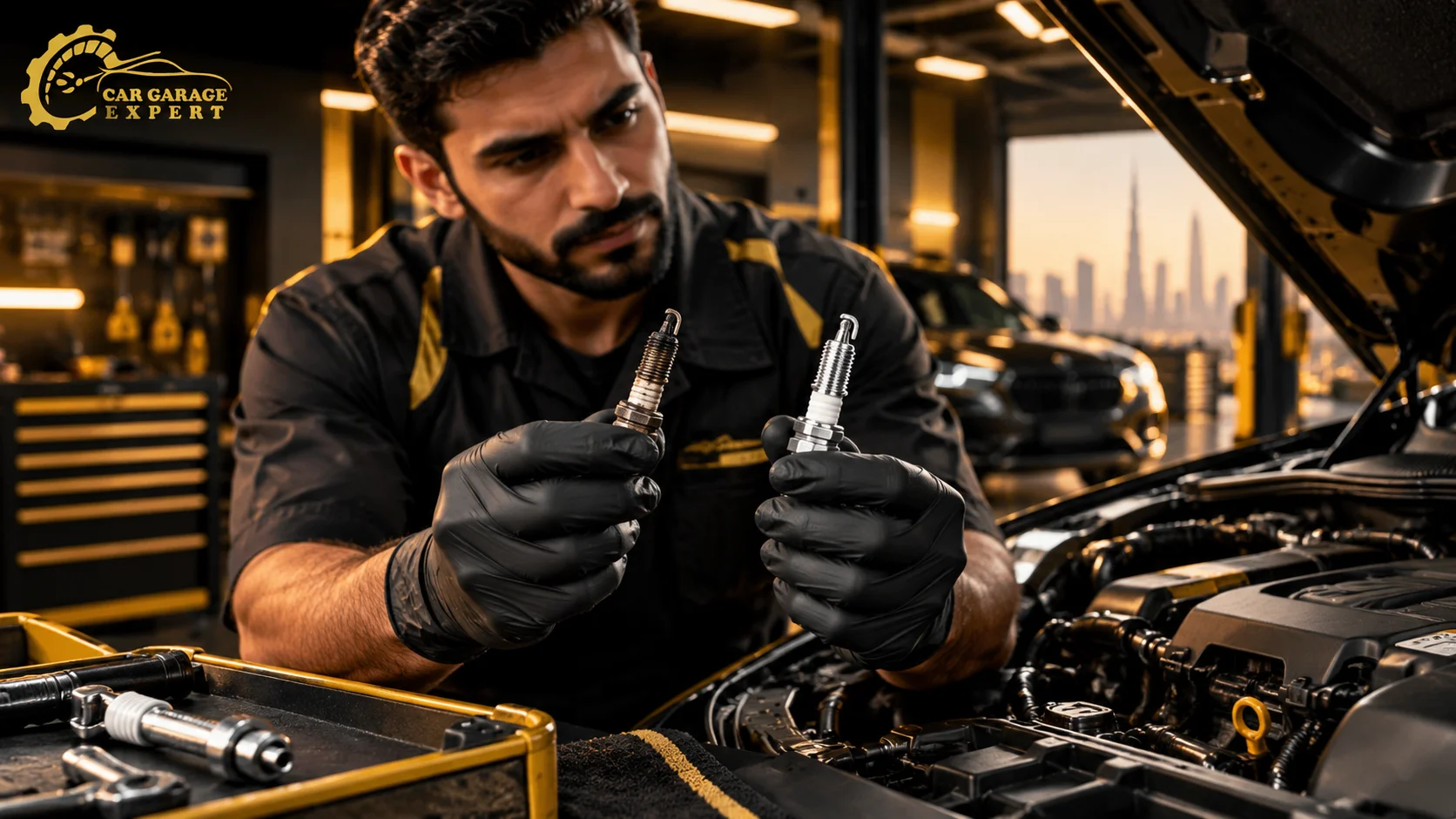

If your SEAT has started shaking at idle, vibrating when accelerating, or sending unusual tremors through the steering wheel, seats, or floor, something may need attention. SEAT Engine Vibration Causes can stem from a relatively simple issue, such as worn spark plugs or a failing engine mount, but it can also indicate ignition, fuel, air-intake, drivetrain, or mechanical problems.
For SEAT owners in Dubai, early diagnosis matters because high temperatures, heavy air-conditioning use, stop-and-go traffic, and demanding driving conditions can put extra stress on vehicle components.
common causes of SEAT engine vibration
The most common causes of SEAT engine vibration include worn engine mounts, faulty spark plugs or ignition coils, engine misfires, dirty fuel injectors, vacuum leaks, throttle-body problems, air-intake faults, and damaged drivetrain components. A SEAT that vibrates mainly at idle often has a mount or combustion-related problem, while vibration during acceleration may point to misfires, mounts, CV joints, or drivetrain issues. In Dubai, extreme heat and frequent stop-and-go driving can accelerate the deterioration of rubber mounts and other under-bonnet components. A professional diagnostic inspection is the safest way to identify the exact cause before replacing parts unnecessarily.
Problem Overview: Why Is Your SEAT Engine Vibrating?
Every combustion engine creates some movement while running. Under normal conditions, engine mounts and other components absorb most of this movement, so very little vibration reaches the cabin.
SEAT uses vibration-isolating engine mounts, including hydraulic mounts on applicable vehicles, specifically to help prevent engine movement and vibration from being transmitted into the vehicle body.
A problem begins when the vibration becomes stronger than normal, suddenly appears, gets worse over time, or occurs together with other symptoms such as:
- Rough idle
- Loss of power
- Check-engine warning
- Unstable RPM
- Clunking noises
- Jerking during acceleration
- Difficult starting
- Increased fuel consumption
The exact vibration pattern is one of the most useful diagnostic clues.
For example, a vehicle that shakes while stopped but becomes smooth once moving may have a different fault from a vehicle that only vibrates at 100 km/h.
That is why replacing an engine mount simply because the vehicle is shaking is not always the correct approach. Proper diagnosis should come first.
Symptoms of SEAT Engine Vibration
SEAT engine vibration can show up in several ways, depending on the underlying problem.
Vibration at Idle
You may notice the steering wheel, dashboard, seat, pedals, or entire cabin shaking while your SEAT is stationary.
Common possibilities include:
- Worn engine mounts
- Spark-plug problems
- Ignition-coil failure
- Fuel-injector issues
- Vacuum leaks
- Dirty throttle body
- Engine misfire
Noticeable vibration at idle is commonly associated with worn mounts or irregular combustion.
Vibration When the AC Is On
A slight change in engine sound or RPM when the air conditioning compressor engages can be normal.
Strong shaking is not.
If vibration increases substantially with the AC running, technicians may inspect:
- Engine mounts
- Idle control
- Throttle body
- Compressor operation
- Belt and tensioner
- Engine performance under load
This can be more noticeable in Dubai because the AC system often runs under heavy load for long periods.
Vibration During Acceleration
If your SEAT shakes when you press the accelerator, possible causes include:
- Misfiring cylinders
- Worn engine or transmission mounts
- Fuel-delivery problems
- CV-joint wear
- Driveshaft problems
- Turbo or boost-related issues on applicable models
Vibration that changes according to engine load is an important diagnostic clue.
Vibration at Higher Road Speeds
If the car feels smooth while stationary but starts shaking at 80, 100, or 120 km/h, the engine may not be the cause.
Technicians should also check:
- Wheel balance
- Tyre condition
- Bent wheels
- Wheel alignment
- CV joints
- Driveshaft components
- Suspension
This distinction helps prevent unnecessary engine repairs.
What Are the Most Common SEAT Engine Vibration Causes?
Several faults can cause excessive vibration in models such as the SEAT Ibiza, Leon, Arona, Ateca and Tarraco.
1. Worn or Damaged Engine Mounts
Engine mounts are among the first components worth inspecting when a vehicle vibrates excessively at idle.
They support the engine while limiting the vibration transferred into the vehicle body.
SEAT describes its hydraulic engine mounts as components designed to prevent engine vibration, noise, and movement from being transmitted to the body during load changes.
When a mount’s rubber, hydraulic section, or mounting hardware deteriorates, you may notice:
- Strong cabin vibration
- Clunking when selecting Drive or Reverse
- Movement when accelerating or releasing the throttle
- Shaking during engine startup or shutdown
- Excessive engine movement
Dubai’s heat can be particularly demanding on rubber-based components. UAE automotive guidance notes that sustained high temperatures can contribute to rubber mount deterioration.
2. Worn Spark Plugs
Spark plugs ignite the air-fuel mixture inside petrol-engine cylinders.
If one or more plugs are worn, fouled, incorrectly gapped, or damaged, combustion can become uneven.
Possible symptoms include:
- Rough idle
- Engine shaking
- Poor acceleration
- Increased fuel use
- Difficulty starting
- Check-engine light
Spark plugs are relatively small components, but poor ignition can create surprisingly strong engine vibration.
3. Faulty Ignition Coils
Modern petrol engines rely on ignition coils to provide the voltage the spark plugs need.
A weak or failed coil can cause one cylinder to misfire, making the engine feel unbalanced.
You may experience:
- Shaking at idle
- Jerking during acceleration
- Reduced engine power
- Flashing or illuminated check-engine light
- Uneven engine sound
A diagnostic scan can often identify which cylinder is repeatedly misfiring.
4. Engine Misfire
A misfire means one or more cylinders are not completing combustion correctly.
The cause might be related to:
- Spark
- Fuel supply
- Air intake
- Compression
- Sensors
- Engine timing
Because the cylinders are no longer producing equal power, the engine may shake noticeably.
Don’t ignore a persistent misfire, especially if the check-engine light is flashing.
5. Dirty or Faulty Fuel Injectors
Fuel injectors must deliver precisely controlled amounts of fuel.
Deposits, restrictions, electrical faults, or injector failure can disrupt combustion.
Common symptoms include:
- Rough idle
- Hesitation
- Poor acceleration
- Engine vibration
- Misfire codes
- Higher fuel consumption
Correct diagnosis is important because injector symptoms can resemble ignition problems.
6. Vacuum or Intake Leak
The engine relies on controlled airflow.
A cracked hose, damaged seal, loose connection, or intake-system leak can allow unmetered air into the engine.
That can disturb the air-fuel mixture and produce:
- Rough idle
- Fluctuating RPM
- Hesitation
- Engine warning light
- Vibration
A professional workshop may use smoke testing or other methods to locate leaks that are difficult to see visually.
7. Dirty Throttle Body or Air-Intake System
Carbon and deposits around the throttle body can affect airflow, particularly at low RPM.
Depending on the vehicle and fault, cleaning or servicing the intake system may help restore a smoother idle.
However, don’t treat throttle cleaning as an automatic cure for every vibrating engine. Confirm the cause first.
8. Transmission Mount Problems
Transmission mounts also support the transmission.
A damaged transmission mount can create symptoms similar to a failed engine mount, especially when shifting between Park, Reverse, and Drive.
The engine and gearbox mounting system should therefore be inspected together.
9. Belt, Pulley, or Tensioner Problems
An accessory belt drives components such as the alternator and, depending on the engine design, other accessories.
A damaged pulley, bearing, tensioner, or belt can create vibration and unusual noise from the engine bay.
Technicians may inspect these components if vibration appears to come from the belt side of the engine.
10. Internal Engine or Timing Problems
Less commonly, strong vibration can result from more serious mechanical problems involving:
- Compression
- Engine timing
- Internal engine components
- Camshaft or crankshaft-related faults
These issues require deeper testing rather than guessing based on vibration alone.
SEAT Engine Vibration Diagnostic Process
A professional diagnostic process should identify when, where, and why the vibration occurs before repairs begin.
Step 1: Discuss the Symptoms
The technician may ask:
- Does it happen when the engine is cold or hot?
- Does the vehicle shake at idle?
- Does it get worse with the AC on?
- Does it happen while accelerating?
- At what speed does the vibration begin?
- Is the check-engine light illuminated?
These details can quickly narrow down possible causes.
Step 2: Perform an OBD Diagnostic Scan
A scan can reveal fault codes related to:
- Misfires
- Ignition
- Fuel mixture
- Sensors
- Air intake
- Electronic engine management
Technicians may also check live engine data instead of relying solely on stored codes.
Step 3: Inspect the Engine and Transmission Mounts
Technicians look for:
- Cracked rubber
- Separation
- Fluid leakage from hydraulic mounts
- Loose mounting hardware
- Excessive engine movement
Step 4: Check Ignition and Fuel Systems
Depending on symptoms, testing may include:
- Spark plugs
- Ignition coils
- Fuel injectors
- Fuel pressure
- Misfire counters
Step 5: Inspect Air and Vacuum Systems
Check air hoses, intake connections, PCV-related components, and vacuum lines for leaks.
Step 6: Road Test the Vehicle
A road test helps determine whether the vibration is related to engine RPM, acceleration, gear selection, or vehicle speed.
That distinction matters because road-speed vibration may come from tyres, wheels, suspension, CV joints, or drivetrain components rather than the engine.
SEAT Engine Vibration Repair Process
The correct repair depends entirely on the confirmed fault.
Typical repairs may include:
- Replacing damaged engine mounts
- Replacing transmission mounts
- Installing new spark plugs
- Replacing faulty ignition coils
- Cleaning or replacing injectors
- Repairing intake or vacuum leaks
- Cleaning the throttle body
- Repairing belt tensioners or pulleys
- Correcting drivetrain faults
- Repairing internal engine problems when necessary
After repair, the technician should start the vehicle, check idle quality, inspect for warning lights, and perform another road test where appropriate.
A diagnostic-first approach is important because replacing parts without confirming the cause can increase repair costs without solving the vibration.
Risks of Ignoring SEAT Engine Vibration
Minor vibration can develop into a larger problem if its cause is left unresolved.
Potential consequences include:
Increased Stress on Other Components
A failed engine mount may allow excessive engine movement, potentially stressing hoses, wiring, exhaust connections, and drivetrain parts.
Catalytic Converter Damage
Continuing to drive with a serious combustion misfire can allow unburned fuel to reach the exhaust system, potentially overheating and damaging the catalytic converter.
Reduced Performance
Ignition and fuel faults may gradually worsen, causing:
- Poor acceleration
- Reduced fuel economy
- Stalling
- Difficult starting
Unexpected Breakdown
A fault that begins as occasional shaking may eventually cause the vehicle to lose power or become difficult to drive.
Early inspection is usually preferable to waiting for the symptoms to become severe.
Can You Continue Driving a SEAT That Is Vibrating?
It depends on the severity and cause.
If the vibration is very mild and there are no warning lights, noises, overheating, or performance problems, you may be able to drive a short distance to a workshop.
However, stop driving and arrange professional assistance if you notice:
- A flashing check-engine light
- Severe shaking
- Major loss of power
- Overheating
- Burning smell
- Loud knocking
- Strong clunking
- Smoke
- Difficulty controlling the vehicle
If the vibration is severe, continuing to drive could worsen the underlying fault.
How Long Does SEAT Engine Vibration Repair Take?
Repair time depends on the diagnosis.
A scan and initial inspection may be relatively quick, while the repair itself can range from a straightforward service job to a more involved mechanical repair.
For example:
- Spark-plug replacement is generally relatively straightforward.
- Ignition-coil replacement may also be completed quickly once the failed coil is identified.
- Engine-mount replacement can require additional labour depending on mount location and engine configuration.
- Injector diagnosis and repair may require more testing.
- Internal engine or drivetrain repairs can take considerably longer.
We can only provide the best estimate after inspecting the vehicle and confirming the exact cause.
SEAT Engine Vibration Repair Cost Factors in Dubai
There is no single price for fixing a vibrating SEAT because vibration is a symptom, not a specific repair.
The final cost depends on several factors.
SEAT Model
Parts and labour requirements can differ between the Ibiza, Leon, Arona, Ateca, Tarraco, and other SEAT variants.
Engine Type
Different petrol, turbocharged, or other engine configurations can require different parts and diagnostic procedures.
Cause of the Vibration
Replacing a spark plug differs greatly from replacing multiple hydraulic mounts or performing an internal engine repair.
Genuine, OEM, or Aftermarket Parts
Part quality and manufacturer can influence the total cost.
Number of Parts Required
One damaged ignition coil costs less to fix than several failed mounts, plus related repairs.
Labour Complexity
Some components are easy to access, while others require engine support, cover removal, or additional dismantling.
For an accurate quotation, the workshop should diagnose the vehicle before recommending replacement parts.
Prevention Tips for SEAT Engine Vibration
Not every failure can be prevented, but proper maintenance can reduce the risk.
Follow the Correct Service Schedule
Routine servicing gives technicians a chance to identify deteriorating components before they cause major symptoms.
Replace Spark Plugs at the Appropriate Interval
Old or worn plugs can contribute to poor combustion and misfires.
Address the Check-Engine Light Early
Even if your SEAT still drives normally, a warning light may be storing useful diagnostic information.
Inspect Engine Mounts When Vibration Starts
Do not wait until the shaking becomes severe.
Maintain the Cooling System
A healthy cooling system becomes especially important in Dubai’s high temperatures.
Use Suitable Engine Oil
Use oil that meets the correct specification for your SEAT engine, and follow the recommended service intervals.
Investigate New Noises Promptly
Vibration accompanied by clunking, knocking, squealing, or rattling deserves inspection.
Dubai-Specific Advice for SEAT Owners
Dubai subjects vehicles to operating conditions that differ significantly from those in many cooler climates.
Extreme summer heat can put additional stress on cooling systems, batteries, rubber components, fluids, and other parts. UAE automotive maintenance sources regularly highlight temperatures above 40–45°C during the hottest periods and the additional strain these conditions place on vehicles.
For SEAT owners in Dubai, it is sensible to pay particular attention to:
- Engine and transmission mounts
- Cooling-system condition
- Engine oil level and condition
- Air-conditioning load
- Belts and rubber components
- Battery health
- Spark plugs and ignition components
- Coolant hoses
- Tyres and wheel balance
Stop-and-go traffic can also keep the engine and AC system working hard while vehicle airflow is limited.
If your SEAT develops a new vibration during Dubai’s summer, do not assume it is simply caused by the heat. Heat may accelerate wear, but you still need to identify the underlying mechanical or electronic fault.
Why Choose Car Garage Expert for SEAT Engine Vibration Diagnosis in Dubai?
When your SEAT is vibrating, the goal should not be to replace the first component that looks suspicious. The goal is to determine the actual source of the vibration.
Car Garage Expert can help Dubai drivers diagnose SEAT vibration problems by assessing the complete system rather than focusing on a single possible cause.
A proper inspection can include:
- Computer diagnostics
- Engine-misfire diagnosis
- Engine and transmission mount inspection
- Spark-plug and ignition-coil checks
- Fuel-system inspection
- Air-intake and vacuum-leak checks
- Belt and pulley inspection
- Drivetrain evaluation
- Road testing
- Repair recommendations based on the confirmed fault
Whether you drive a SEAT Ibiza, Leon, Arona, Ateca, Tarraco, or another SEAT model, identifying the cause early can help prevent unnecessary part replacement and more expensive secondary damage.
FAQs About SEAT Engine Vibration
1. Why does my SEAT vibrate when idling?
A SEAT that vibrates mainly at idle may have worn engine mounts, an engine misfire, faulty spark plugs or ignition coils, injector problems, a vacuum leak, or an airflow issue. A diagnostic scan and physical inspection are usually needed to determine the exact cause.
2. Why does my SEAT shake when I accelerate?
Shaking during acceleration can be caused by worn engine mounts, misfires, fuel-delivery problems, CV joints, driveshaft components, or other drivetrain faults. If the vibration is linked specifically to engine load rather than vehicle speed, ignition and mounting problems are particularly important areas to inspect.
3. Can bad engine mounts cause strong vibration inside my SEAT?
Yes. Engine mounts are designed to isolate engine movement from the vehicle body. If a mount cracks, separates, becomes damaged, or loses its hydraulic damping ability, more engine vibration can reach the steering wheel, floor, dashboard, and seats.
4. Why does my SEAT vibrate more when the AC is switched on?
Switching on the AC adds load to the engine. If the engine has weak mounts, a rough idle, dirty throttle components, ignition issues, or an AC-related mechanical problem, that added load may make the vibration more noticeable. Strong shaking should be professionally checked.
5. Where can I diagnose SEAT engine vibration in Dubai?
Car Garage Expert can inspect SEAT engine vibration in Dubai and determine whether the problem comes from engine mounts, ignition components, fuel delivery, air-intake faults, drivetrain parts, or another system. Complete an accurate diagnosis before deciding which components to replace.
Conclusion SEAT Engine Vibration Causes
So, what are the most common causes of SEAT engine vibration? In many cases, the problem is linked to worn engine mounts, spark plugs, ignition coils, misfires, fuel injectors, vacuum leaks, throttle-body issues, or transmission mounts. Vibration during acceleration or at higher road speeds can also originate from CV joints, driveshaft components, tyres, or wheels.
The important point is that vibration is a symptom, not a diagnosis.
Replacing parts based on guesswork can waste money and leave the real fault unresolved. A professional inspection can determine whether the vibration is related to engine RPM, engine load, gear engagement, or vehicle speed and then identify the correct repair.
Dubai’s extreme heat and demanding traffic conditions make timely maintenance especially important, particularly for rubber mounts, cooling components, ignition systems, belts, and other heat-sensitive parts.
Visit us in our Al Quoz, Dubai branch or visit Car Garage Expert
Is Your SEAT Shaking or Vibrating? Book an Inspection Today
Don’t wait for a small vibration to become a larger and more expensive repair.
If your SEAT Ibiza, Leon, Arona, Ateca, Tarraco, or other SEAT model is shaking at idle, vibrating during acceleration, making unusual noises, or showing an engine warning light, contact Car Garage Expert in Dubai for professional diagnosis.
Get your SEAT inspected today and find the real cause before replacing unnecessary parts. Contact Car Garage Expert now to book your SEAT engine vibration diagnostic service in Dubai.