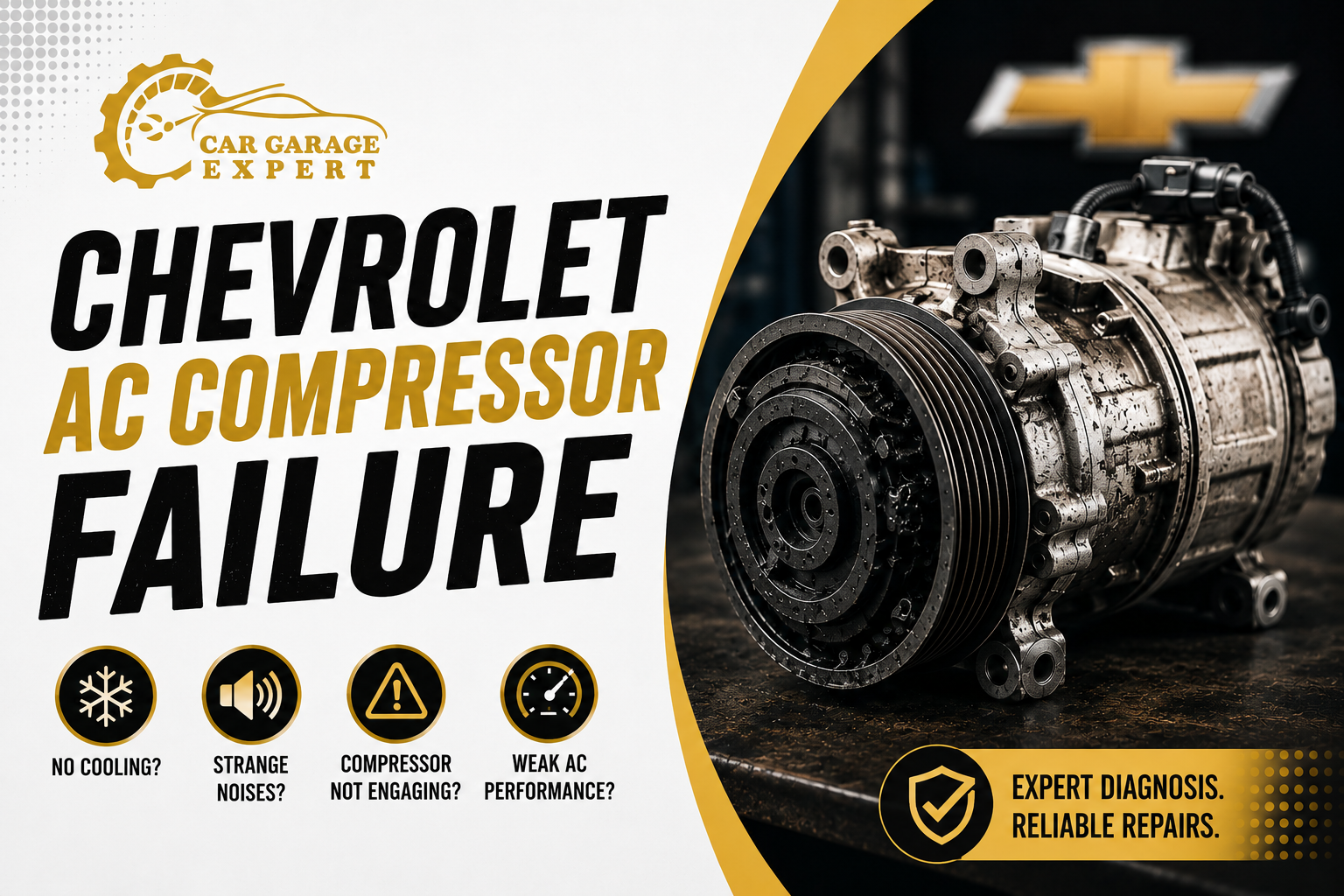
When your Chevrolet AC suddenly stops producing cold air, the compressor is one of the first components that comes to mind. However, the compressor is only one part of the air-conditioning system. Electrical faults, low refrigerant, a damaged clutch, a failed pressure sensor, a restricted condenser, or a worn belt can create very similar symptoms.
Understanding the early signs of Chevrolet AC Compressor Failure can help you avoid unnecessary parts replacement and prevent a small AC problem from becoming a much more expensive repair.
What Causes Chevrolet AC Compressor Failure?
Low refrigerant, refrigerant leaks, lack of lubrication, electrical faults, clutch damage, high heat, contaminated refrigerant, belt problems, or internal mechanical wear can all cause a Chevrolet AC compressor failure. Common warning indications are warm air from the vents, weird grinding or clicking sounds, intermittent cooling, compressor cycling, and poor cooling when idling.. But warm air does not mean the compressor has necessarily gone out. Before proposing a replacement, a technician should inspect the refrigerant charge level, electrical supply, compressor operation, belt condition, leaks, and system controls. In Dubai’s hot climate, the AC system is in high demand for much of the year, making early diagnosis very vital.
Table of Contents
- Problem Overview
- Symptoms of a Failing Chevrolet AC Compressor
- Common Causes
- Diagnostic Process
- Repair Process
- Risks of Ignoring It
- Can You Continue Driving?
- Repair Time
- Cost Factors
- Prevention Tips
- Dubai-Specific Advice
- Why Choose Car Garage Expert for Car AC Repair and Services?
- Frequently Asked Questions
- Related Services
- Final Call-to-Action
Why Your Chevrolet AC Compressor May Stop Working
The AC compressor circulates refrigerant through the air-conditioning system. It plays a major role in removing heat from the cabin and producing the cold air you expect when you switch on the AC.
But when a Chevrolet AC Compressor failure occurs, the symptoms can be confusing. You may notice warm air, inconsistent cooling, strange noises, or an AC system that works for several minutes and then becomes ineffective.
If another component fails, you can also stop the compressor. Very low refrigerant pressure can cause the system to shut off from compressor operation. A blown fuse or a bad pressure sensor can provide the same impression.
This is why a compressor replacement right away is not always the right answer.
Symptoms That May Indicate Chevrolet AC Compressor Failure
Knowing the warning signs can help you decide when your Chevrolet needs an AC inspection.
1. AC Blows Warm Air
When the AC is set to its coolest setting, warm or barely cool air still comes out of the vents. This is the most obvious sign.
This can happen if the pump doesn’t move the coolant around enough. But warm air can also be caused by not enough refrigerant, a leak, problems with the condenser, or electrical problems.
2. Strange Compressor Noises
Grinding, rattling, squealing, or growling noises when the AC is switched on should not be ignored.
A noisy compressor may have internal bearing or mechanical problems. In some cases, the noise may actually come from the clutch, pulley, belt, or another accessory.
3. AC Cooling Comes and Goes
Intermittent cooling is another common warning sign. The AC may work normally in the morning but become warm later in the day.
A compressor clutch problem, pressure issue, electrical fault, overheating, or internal compressor wear can cause intermittent operation.
4. Compressor Does Not Engage
What’s wrong? It could be electrical or mechanical if the compressor clutch doesn’t move when the AC is turned on.
Before deciding that the compressor itself is broken, a technician should check the wiring, sensors, and clutch, as well as the compressor command, fuse, and relay.
5. Poor Cooling at Idle
Your Chevrolet may produce reasonably cold air while driving but become warm when sitting at a traffic light.
This can point toward several issues, including insufficient condenser airflow, cooling fan problems, refrigerant pressure problems, or a weak compressor.
6. Belt Noise When AC Is Turned On
A damaged compressor pulley or a compressor that is beginning to seize can place additional stress on the accessory belt.
If you hear a sudden squeal when activating the AC, switch the system off and have the vehicle inspected.
Common Causes of Chevrolet AC Compressor Failure
Low Refrigerant or an Undetected Leak
Refrigerant does not normally disappear from a healthy closed AC system. If the level becomes low, there is often a leak somewhere in the system.
Operating with insufficient refrigerant can reduce lubrication and increase stress on the compressor. Repeatedly adding refrigerant without finding the leak is not a proper long-term repair.
Poor Lubrication
The compressor depends on the correct refrigerant oil for lubrication. Incorrect oil quantity, the wrong oil type, contamination, or previous improper repairs can contribute to mechanical wear.
Over time, inadequate lubrication can contribute to Chevrolet AC Compressor Failure, especially when the vehicle operates in demanding temperatures.
Damaged Compressor Clutch
Many Chevrolet models use a clutch-type compressor. The clutch allows the compressor to engage when cooling is required.
A failed clutch coil, excessive clutch gap, damaged bearing, or electrical problem can prevent engagement even when the compressor itself is mechanically sound.
Electrical Problems
A compressor may appear to have failed when the real problem is electrical.
Possible causes include:
- Blown fuse
- Failed relay
- Damaged wiring
- Poor electrical connection
- Faulty pressure sensor
- Control-module issue
- Failed clutch coil
Electrical testing should therefore be part of the diagnosis.
Excessive Heat
Extreme temperatures put additional demand on the vehicle’s AC system. Dubai’s summer conditions can be particularly demanding because the AC may operate continuously while the vehicle is exposed to very high ambient temperatures.
Repeated operation under excessive heat can contribute to premature component wear and increase the importance of proper AC maintenance.
Contaminated Refrigerant or AC System
If the system contains contaminants, moisture, metal particles, or the wrong refrigerant, the compressor and other components can be affected.
Internal compressor damage can sometimes spread debris through the system. In such cases, simply replacing the compressor may not be enough.
Worn or Damaged Drive Belt
On belt-driven systems, the accessory belt transfers engine power to the compressor.
A cracked, loose, contaminated, or worn belt can cause slipping and poor compressor operation. A damaged pulley or seized compressor can also cause belt-related problems.
How Technicians Confirm Chevrolet AC Compressor Failure
A professional diagnosis should start with a complete assessment of the AC system rather than assuming the compressor is defective.
Step 1: Check the AC Performance
The technician measures vent temperature and confirms whether the system is producing sufficient cooling.
Step 2: Inspect the Compressor
The compressor, clutch, pulley, electrical connector, belt, and surrounding area are inspected for physical damage, leaks, corrosion, or unusual wear.
Step 3: Check Refrigerant Pressure
AC pressure readings can reveal low refrigerant, excessive pressure, restrictions, or other system problems.
Step 4: Test Electrical Signals
The technician checks fuses, relays, wiring, sensors, voltage supply, grounds, and compressor engagement signals.
Step 5: Check for Refrigerant Leaks
If the refrigerant level is low, the system should be inspected for the source of the leak before simply recharging it.
Step 6: Scan the Vehicle
Modern Chevrolet vehicles can store diagnostic trouble codes related to AC controls, sensors, and other electronic systems.
Step 7: Confirm Compressor Operation
After identifying and repairing the underlying fault, the AC system should be tested again under different operating conditions.
This process helps distinguish genuine Chevrolet AC Compressor Failure from problems elsewhere in the system.
What Needs to Be Replaced?
The repair depends on what the inspection finds.
| Problem Found | Typical Repair | Compressor Replacement? |
| Low refrigerant | Leak diagnosis and correct recharge | No |
| Blown fuse | Replace fuse and identify cause | No |
| Faulty relay | Relay replacement and circuit testing | No |
| Damaged wiring | Wiring/connector repair | No |
| Faulty pressure sensor | Sensor replacement | No |
| Failed compressor clutch | Clutch or compressor-related repair | Not always |
| Damaged belt | Belt replacement | No |
| Internal compressor damage | Compressor replacement | Yes |
| Contaminated AC system | Cleaning/flushing and affected component replacement | Sometimes |
When genuine Chevrolet AC Compressor Failure has been confirmed, the technician should also inspect the surrounding AC components.
If the old compressor has suffered severe internal damage, metal debris may have circulated through the system. Ignoring contamination can cause a replacement compressor to fail prematurely.
Risks of Ignoring the Problem
Ignoring AC problems can allow the original fault to worsen.
A leaking system may continue losing refrigerant. A failing compressor clutch or pulley may place additional stress on the belt. A compressor with internal damage may eventually seize.
In severe cases, continued operation can increase the number of components that need repair.
Another problem is comfort and safety. During Dubai’s extreme summer temperatures, a properly functioning AC system is more than a luxury. Driving for long periods with inadequate cabin cooling can make journeys uncomfortable and exhausting.
If you notice symptoms of a Chevrolet AC Compressor Failure, an early inspection is usually better than waiting until the AC fails.
Can You Continue Driving?
If the Chevrolet is running normally and the only issue is that the AC is producing warm air, you can often drive the vehicle to a workshop.
However, do not continue driving if you notice:
- Severe grinding from the compressor
- Burning rubber smell
- Heavy belt squealing
- Visible belt damage
- Smoke
- Compressor or pulley seizure
- Engine overheating
In these situations, switching off the AC and arranging roadside assistance may be the safer choice.
How Long Does Chevrolet AC Compressor Repair Take?
How long it takes to fix varies on the repair.
A switch, relay, or other simple electrical problem might be easy to fix. It may take longer to determine where a leak is coming from because the system must be recharged first.
Changing the compressor can take several hours, depending on the Chevrolet model, how the engine is set up, how easy it is to access, the type of refrigerant used, and whether other parts need to be repaired.
The repair may take longer if there is contamination or more damage to the AC.
What Affects Chevrolet AC Compressor Repair Cost?
There is no single price for AC compressor repair because Chevrolet uses different compressor systems across its models and model years.
The final cost can depend on:
- Chevrolet model and year
- Engine configuration
- Compressor type
- Genuine vs aftermarket component
- Compressor clutch condition
- Refrigerant type
- Leak location
- Labor requirements
- Belt condition
- Condenser condition
- Additional AC component damage
- System flushing requirements
- Diagnostic time
A professional diagnosis is important because replacing an expensive compressor when the real fault is a fuse, relay, sensor, leak, or wiring problem can waste money.
How to Reduce the Risk of Compressor Problems
You cannot completely prevent compressor failure, but good maintenance can reduce unnecessary stress.
Check AC Performance Early
If the AC gradually weakens, have it inspected rather than waiting until it stops working.
Repair Refrigerant Leaks
Do not repeatedly recharge an AC system without first identifying the cause of the refrigerant loss.
Maintain the Cooling System
A healthy engine cooling system and properly functioning condenser fans are important for AC performance.
Inspect the Accessory Belt
A worn or damaged belt can affect compressor operation and other engine accessories.
Use the Correct Refrigerant
Using the wrong refrigerant or incorrect oil can create serious AC system problems.
Do Not Ignore Strange Noises
A compressor that starts making unusual noises should be inspected before the problem develops into major mechanical damage.
Chevrolet AC Compressor Problems in Extreme Heat
Dubai’s climate creates particularly demanding conditions for vehicle air-conditioning systems.
During the hottest months, the compressor may operate for extended periods while the vehicle is exposed to very high ambient temperatures. Traffic makes the situation more demanding because the vehicle may spend long periods at low speed or stationary while the AC is still working hard.
If your Chevrolet AC becomes warm at idle, takes longer to cool the cabin, or makes unusual noises after extended driving, do not immediately assume it is simply because of the weather.
The heat may expose an existing weakness such as low refrigerant, poor condenser airflow, a failing fan, or a compressor that is already wearing out.
For drivers searching for a garage near me, choose a workshop that can perform proper AC pressure, electrical, and leak checks rather than simply topping up refrigerant.
Why Choose Car Garage Expert for Car AC Repair and Services?
At Car Garage Expert, we stress the need of finding the true reason of your AC problem before prescribing costly replacements.
The inspection of a Chevrolet with Chevrolet AC Compressor Failure may involve the operation of the compressor, refrigerant pressure, electrical controls, condition of the belt, leaks, clutch operation and other relevant AC components.
Our diagnostic-first technique lets you know if you really need a compressor replacement, or if a simpler repair will get the system back up and running.
Car Garage Expert can also help with broader car AC repair and maintenance if the issue involves cooling performance, refrigerant leaks, electrical problems, or other components.
Frequently Asked Questions
Q1: What are the most common signs of Chevrolet AC Compressor Failure?
Unusual compressor noises, intermittent cooling, poor cooling at idle, compressor clutch difficulties and AC cycling are all signs of a possible compressor malfunction. But other components of AC may potentially produce the same symptoms.
Q2: Can low refrigerant cause compressor problems?
Yes. Low refrigerant levels can create unexpected operating conditions and prevent the compressor from engaging. Instead of just continually filling the system, a refrigerant leak should be rectified.
Q3: Why is my Chevrolet AC compressor not engaging?
Possible causes include low refrigerant pressure, a blown fuse, a faulty relay, a wiring problem, a pressure sensor fault, clutch failure, or a compressor problem.
Q4: Can a bad compressor affect the engine?
A mechanically damaged compressor can create additional load when engaged. A compressor that is beginning to seize can also affect the accessory belt system.
Q5: Is compressor replacement always required?
No. A proper diagnosis may reveal that the problem is a leak, an electrical fault, a clutch, a sensor, a belt, a relay, or another AC component.
Q6: Why does my Chevrolet AC work while driving but not at idle?
This can be related to condenser airflow, cooling fan operation, refrigerant pressure, compressor performance, or another AC system problem. It should be diagnosed rather than assuming the compressor has failed.
Related Services
If your Chevrolet needs AC diagnosis or repair, related services may include:
- Car AC Repair
- AC Compressor Replacement
- AC Gas Recharge
- AC Leak Detection
- Car Electrical Repair
- Car Diagnostics
- Cooling System Inspection
- Radiator and Cooling Fan Repair
- Serpentine Belt Replacement
- Chevrolet Maintenance and Repair
Diagnose the Problem Before Replacing the Compressor
Your Chevrolet AC quitting to cool doesn’t mean you need to replace the compressor. Refrigerant leaks, electrical faults, clutch problems, sensor issues, belt problems, condenser concerns, and other components these problems can lead to similar symptoms.
If you are suffering from Chevrolet AC Compressor Failure symptoms, have the entire system evaluated before you purchase an expensive new part.
If you are looking for reliable auto AC diagnostics and repair in Dubai, then contact Car Garage Expert and let a competent team to check your Chevrolet AC system.