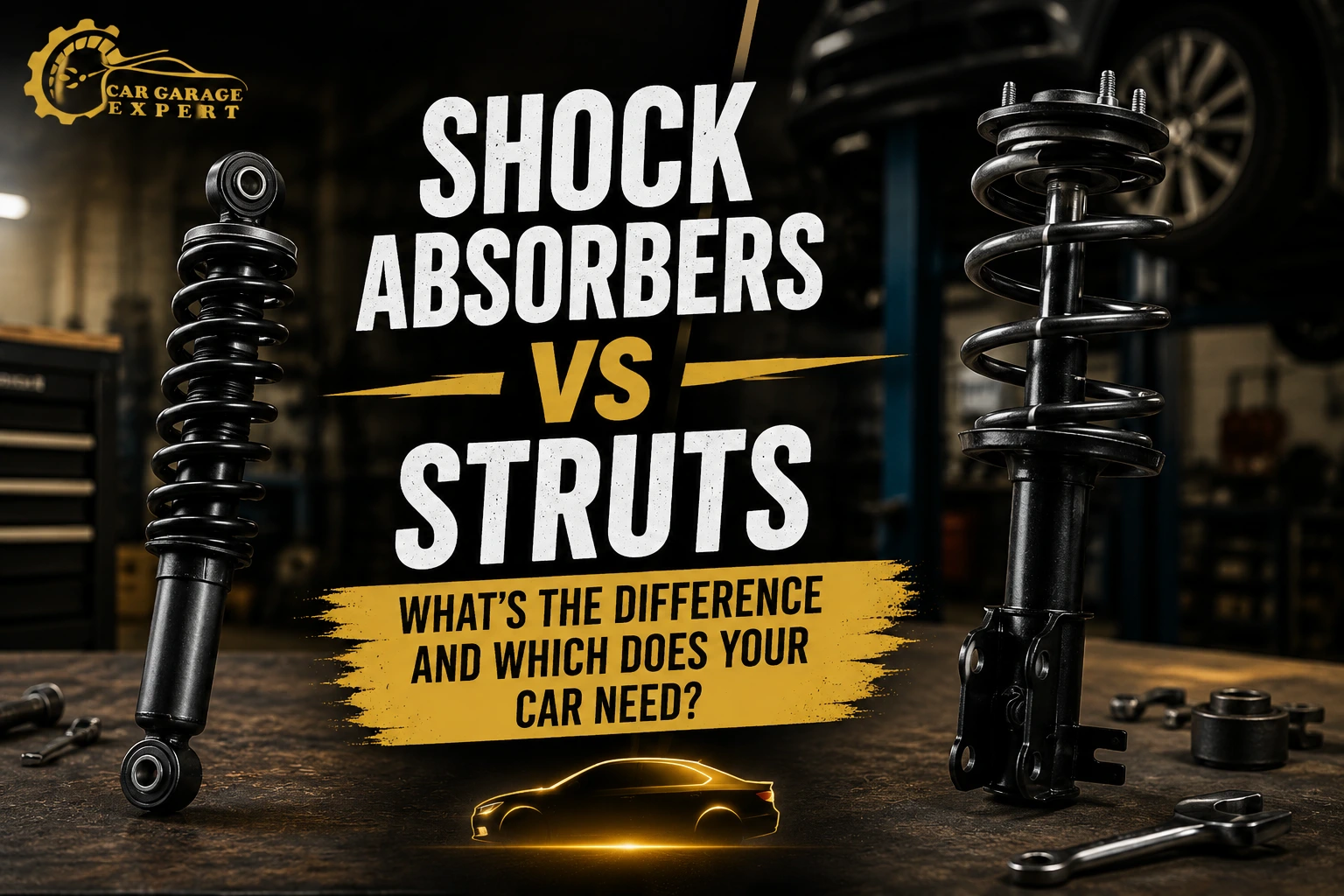
Shock Absorbers vs Struts is a common question because both components control suspension movement, but they are not the same. Shock absorbers mainly control bouncing and help keep the tyres firmly connected to the road. A strut performs that damping function while also serving as an important structural part of the suspension system. Your vehicle may use shocks, struts, or a combination of both. If your car bounces excessively, dives while braking, feels unstable around corners, or develops uneven tyre wear, the suspension should be inspected rather than guessing which component needs replacement.
Table of Contents
- Understanding the Difference Between These Two Suspension Components
- Symptoms That May Indicate a Suspension Problem
- Common Causes of Shock or Strut Failure
- How a Professional Suspension Inspection Works
- What Happens During Suspension Repair?
- Risks of Ignoring Worn Suspension Components
- Can You Continue Driving With a Bad Shock or Strut?
- Typical Suspension Repair Time
- What Determines Suspension Repair Cost?
- How to Prevent Premature Suspension Wear
- Dubai-Specific Suspension Advice
- Why Choose Car Garage Expert for Suspension Repair?
- Frequently Asked Questions
- Related Services
- Final Call-to-Action
Understanding the Difference Between Shocks and Struts
When a car begins to bounce, feels loose over bumps, or is difficult to drive, many owners instantly ask about shock absorbers vs struts. The two are easy to confuse as both components contribute to control movement in the suspension.
A shock absorber is basically a dampening element. Its job is to manage the movement of the suspension when the car goes over bumps, dips, braking forces, or changes in the road surface. Without sufficient damping, the springs can continue to oscillate after each bump.
A strut likewise has a damping element, but the purpose is larger. In many automobiles, the strut is a primary structural element of the suspension and interacts with other components such as the spring, steering knuckle, and mount assembly.
This distinction matters when diagnosing a problem. Replacing the wrong component may not solve the underlying issue.
Shock Absorbers vs Struts: Which Component Does Your Car Actually Use?
The answer depends on your vehicle’s suspension design.
Some cars have shocks on the front and back. Some have struts at the front with separate dampers at the back. More specialised suspension set-ups may be found in some SUVs and luxury/performance cars.
This means you shouldn’t assume that a soft or bouncy ride means you need a specific part. Proper inspection will tell if the problem is the damper, spring, mount, bushing, control arm, or something else in the suspension.
Symptoms That May Indicate Worn Shocks or Struts
Suspension problems often develop gradually. You may notice small changes in handling before the problem becomes obvious.
Common warning signs include:
1. Excessive Bouncing After a Bump
If the vehicle continues bouncing after passing over a speed bump or pothole, the dampers may no longer be controlling spring movement properly.
2. Excessive Nose Diving During Braking
A worn suspension can allow the front of the vehicle to dip more than normal when braking. This can affect handling and braking stability.
3. Body Roll Around Corners
Is your car leaning when you turn? Too much movement of the body can be caused by worn out damping or other suspension problems.
4. Uneven Tire Wear
Suspension components help maintain consistent tire contact with the road. A damaged or worn component can contribute to irregular tire wear.
5. Fluid Leaks
Some shock absorbers and struts contain hydraulic fluid. Visible leakage around the component can indicate internal seal failure.
6. Poor Stability at Higher Speeds
If the vehicle feels nervous, floaty, or difficult to control at highway speeds, the suspension should be inspected.
7. Knocking or Clunking Sounds
Noise does not always mean the damper itself has failed. Worn mounts, bushings, links, or other suspension components can create similar sounds.
Common Causes of Shock or Strut Failure
There is rarely one universal reason for suspension failure. Several factors can contribute to premature wear.
Age and mileage: Suspension components gradually lose effectiveness as they accumulate mileage.
Potholes and damaged roads: Hard impacts can damage dampers, mounts, springs, and control-arm components.
Heavy vehicle loads: Regularly carrying heavy passengers or cargo places additional stress on suspension components.
Worn suspension mounts: A damaged mount can produce noise and poor suspension performance even when the main damper is still functional.
Broken or weakened springs: Springs support the vehicle’s weight. A damaged spring can alter ride height and handling.
Heat and environmental conditions:Rubber parts and other exposed parts can deteriorate more quickly in Dubai than elsewhere because of the high heat and dusty conditions.
Poor-quality replacement parts: Cheap components may not provide the durability or performance expected for the vehicle.
How a Professional Suspension Inspection Works
A proper diagnosis should go beyond simply pushing down on the corner of the vehicle and deciding that the suspension feels soft.
At Car Garage Expert, technicians can begin by discussing the symptoms you have noticed. They can then inspect the vehicle for leaking dampers, damaged mounts, worn bushings, broken springs, uneven ride height, and abnormal tire wear.
A road test may also help identify handling issues that cannot be confirmed while the vehicle is stationary.
The technician may compare suspension movement from side to side and inspect related components before recommending replacement.
This is particularly important because the symptoms associated with Shock Absorbers vs struts can overlap with other suspension faults.
What Happens During Suspension Repair?
Once the faulty component has been identified, the repair depends on the vehicle and the extent of the damage.
If a shock absorber has failed, replacement may be recommended rather than attempting to restore a worn internal damper.
For strut assemblies, the repair may involve replacing the complete assembly or specific components such as the damper, spring, mount, or bearing, depending on the vehicle’s design.
Suspension components are often replaced in pairs on the same axle so that damping characteristics remain consistent from one side to the other.
After suspension work, wheel alignment may also be necessary, particularly when components affecting suspension geometry have been removed or replaced.
Risks of Ignoring Worn Suspension Components
Driving with worn suspension does more than make the ride uncomfortable.
Poor damping can reduce the vehicle’s ability to maintain consistent tyre contact with the road. This can become more noticeable during emergency braking, sudden lane changes, wet conditions, or cornering.
Worn suspension can cause uneven tyre wear as well. This can also put additional stress on other components.
If you notice frequent bouncing, excessive body movement, fluid leaks, or worsened handling, it’s safer to schedule an inspection than to wait for the situation to get worse.
Can You Continue Driving With a Bad Shock or Strut?
It depends on the condition of the component.
A mildly worn damper may allow you to drive temporarily to a workshop, but that does not mean the vehicle is operating at its best. If the component is severely damaged, leaking heavily, broken, or accompanied by major steering or handling problems, continued driving should be avoided.
If the vehicle suddenly becomes difficult to control or suffers suspension damage after hitting a pothole or obstacle, consider roadside assistance rather than driving it a long distance.
The important point is not to judge the severity of the problem solely by how comfortable the vehicle feels.
Typical Suspension Repair Time
The repair time depends on the vehicle, the suspension design, and the number of components requiring replacement.
A straightforward shock replacement can often be completed relatively quickly. Strut replacement may take longer because the assembly can involve the spring, upper mount, bearing, and other components.
Additional time may be needed if seized bolts, damaged mounts, broken springs, or other related problems are discovered.
If wheel alignment is required afterward, that should also be included in the overall repair process.
What Determines Suspension Repair Cost?
There is no single price for suspension repair because costs vary considerably between vehicles.
Factors include:
- Vehicle make and model.
- Front or rear suspension
- Shock or strut design
- OEM versus aftermarket parts
- Number of components being replaced
- Condition of mounts and bushings
- Labour requirements
- Wheel alignment requirements
When comparing Shock Absorbers vs Struts, remember that the component price alone does not tell you the total repair cost. A strut assembly may involve several related components, while a conventional shock absorber may be a simpler replacement.
A professional inspection from Car Garage Expert can help identify what actually needs attention before you spend money on unnecessary parts.
How to Prevent Premature Suspension Wear
You cannot prevent every suspension failure, but regular maintenance can help extend component life.
- Check tire pressures regularly.
- Avoid driving aggressively through potholes.
- Do not overload the vehicle.
- Inspect suspension components during routine servicing.
- Pay attention to new knocking or bouncing symptoms.
- Replace worn tires before they develop severe uneven wear.
- Have wheel alignment checked when handling or tire wear changes.
- Use quality replacement components.
Early diagnosis is usually less expensive than allowing one worn component to cause additional problems.
Dubai-Specific Suspension Advice
While roads in Dubai are generally smooth, potholes, road construction, speed humps, trash and abrupt accidents can nevertheless cause severe wear and tear on suspension components.
The hot temps in the city also make it worthwhile to have annual inspections, especially for rubber bushings, mounts and other components that can break down over time.
If you frequently travel long miles on highways, watch for changes in stability. A car that feels comfortable around town may exhibit suspension weakness at higher speeds.
If you’re a driver looking for a garage near me, it’s better to choose a workshop that can evaluate the whole suspension system, not just replace the first part that seems worn.
Why Choose Car Garage Expert for Suspension Repair?
When dealing with shock absorbers vs struts, accurate diagnosis matters as much as the replacement itself.
Car Garage Expert focuses on identifying the actual source of suspension symptoms before recommending repairs. The inspection can include shocks or struts, springs, mounts, bushings, control arms, and related suspension components.
The idea is simple – find the problem, let you know what requires care, and assist you in preventing unnecessary repairs.
If you see your vehicle bouncing, leaning, dipping, or just feeling unstable, then Car Garage Expert can be a sensible choice for drivers in Dubai seeking reliable suspension work.
Frequently Asked Questions
Q1: Are shock absorbers and struts the same thing?
No. Both control suspension movement, but a strut performs a structural role in many suspension designs while a conventional shock absorber primarily provides damping.
Q2: How do I know whether my car has shocks or struts?
The easiest way is to check the vehicle’s suspension design using the exact make, model, year, and configuration. A professional inspection can also identify the components fitted to your vehicle.
Q3: Can bad struts cause a bouncy ride?
Yes. A worn strut may no longer control spring movement effectively, resulting in excessive bouncing and reduced stability.
Q4: Should shocks or struts be replaced in pairs?
In many cases, replacing both components on the same axle is recommended so the suspension performs consistently on both sides. The correct approach depends on the vehicle and component condition.
Q5: Is it safe to drive with worn suspension?
Mild wear may not create an immediate emergency, but severely worn or damaged suspension can affect handling, braking stability, and tire contact. Serious symptoms should be inspected promptly.
Q6: Can I use roadside assistance for a suspension problem?
Yes. If suspension damage makes the vehicle unsafe or impossible to drive, roadside assistance can be a better option than attempting to reach a workshop yourself.
Q7: How often should suspension components be checked?
There is no universal interval because driving conditions, mileage, vehicle type, and component quality all matter. Suspension should be inspected whenever you notice unusual bouncing, noise, uneven tire wear, or handling changes.
Related Services
If your vehicle is showing suspension-related symptoms, these services may also be relevant:
- Suspension Repair Dubai
- Car Inspection
- Wheel Alignment
- Shock Absorber Replacement
- Strut Replacement
- Car Tire Service
- Car Maintenance
- Car Diagnostics
These related services can help address the underlying cause rather than treating only the most obvious symptom.
Conclusion:
Not sure whether your vehicle needs shocks, struts, or another suspension component? Don’t replace parts based on symptoms alone. Contact Car Garage Expert for a professional suspension inspection in Dubai and get a clear assessment of what your vehicle actually needs.
If the vehicle has suffered sudden suspension damage and cannot be driven safely, arrange roadside assistance instead of taking unnecessary risks on the road.