Range Rover Suspension Warning Signs
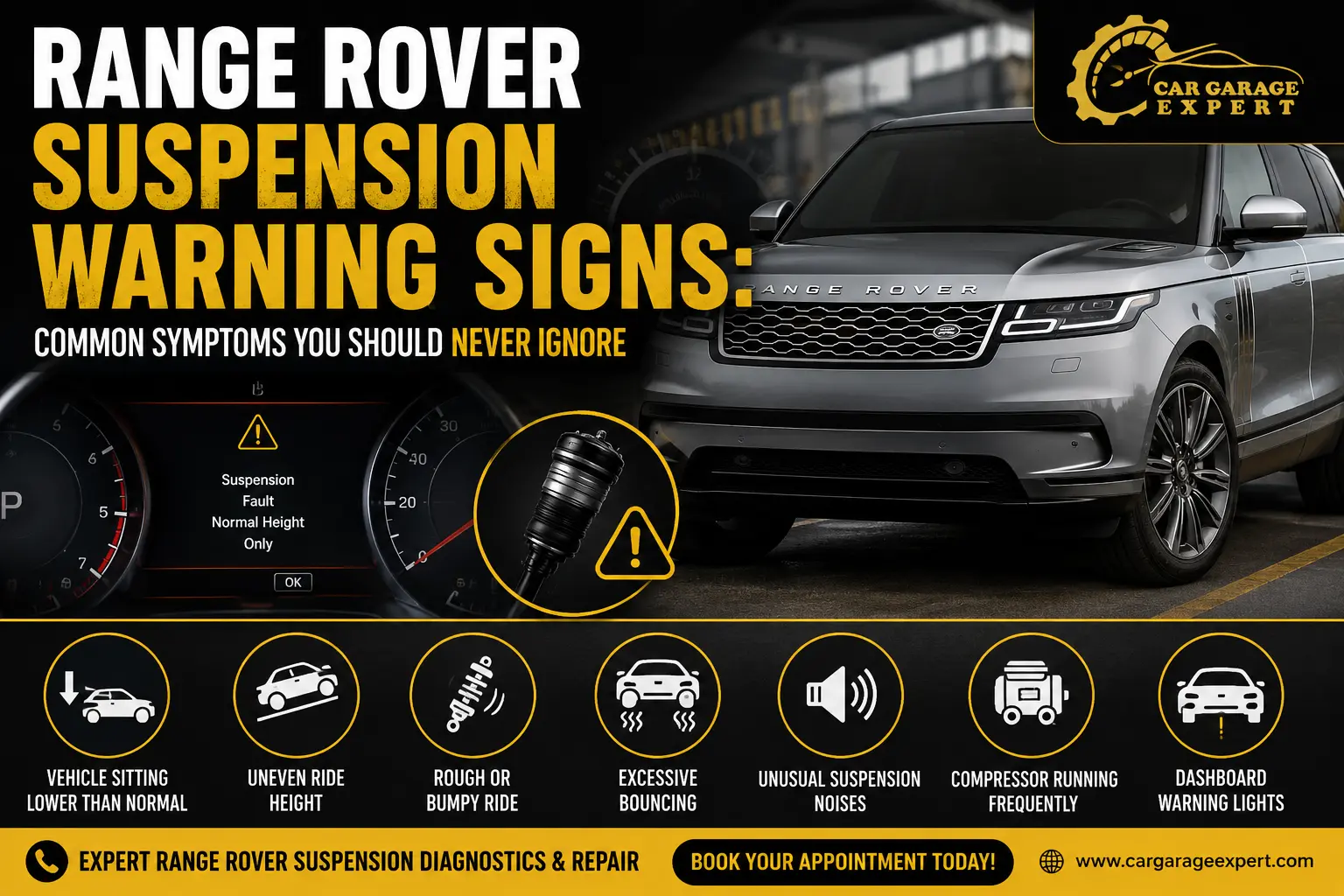
It indicates that your vehicle’s air suspension system may not be functioning properly. These warning signs can include dashboard suspension alerts, a vehicle sitting lower than normal, an unusually rough ride, excessive bouncing, or strange noises from the suspension. Ignoring these symptoms can lead to expensive repairs, poor handling, and even unsafe driving conditions. Early diagnosis by experienced technicians can identify whether the issue is caused by a leaking air spring, faulty compressor, damaged height sensor, or electronic control module. Prompt repairs help restore ride comfort, stability, and the premium driving experience Range Rover owners expect.
Table of Contents
- Problem Overview
- Symptoms
- Common Causes
- Diagnostic Process
- Repair Process
- Risks of Ignoring It
- Can You Continue Driving?
- Repair Time
- Cost Factors
- Prevention Tips
- Dubai-Specific Advice
- Why Choose Car Garage Expert?
- Frequently Asked Questions
- Related Services
- Related Articles
- Final Call-to-Action
Understanding Range Rover Suspension Warning Signs
The Range Rover cars are known for their comfortable ride, great off-road performance, and sophisticated air suspension system. The Range Rover air suspension automatically changes the ride height and damping for the ultimate comfort and stability in a variety of driving situations, unlike traditional suspension systems that use springs and shock absorbers.
As a rule, there are various Range Rover Suspension Warning Signs that the suspension system starts to fail before ultimate breakdown. These early warning indicators are designed to inform the driver that one or more components of the air suspension system need immediate servicing.
The suspension system is made up of several related parts including:
- Air springs (air bags)
- Air suspension compressor
- Ride height sensors
- Valve block
- Air reservoir
- Suspension control module
- Air lines
- Electronic wiring and connectors
If any of these components fail, the system may no longer maintain the correct ride height or distribute air pressure properly. This not only affects comfort but also compromises handling, braking performance, and vehicle safety.
Many owners overlook small suspension warnings because the car still seems like it can be driven. Unfortunately, this typically puts more stress on other suspension parts and turns what can be a simple repair into a very costly one.
Being aware of these warning signals can help you fix problems before they turn into serious mechanical failures.
Range Rover Suspension Warning Signs You Should Watch For
Recognizing Range Rover Suspension Warning Signs early can save you from costly repairs and unexpected breakdowns. The suspension system often provides noticeable symptoms long before it stops working completely.
Here are the most common warning signs every Range Rover owner should know.
Common Range Rover Suspension Warning Signs
Dashboard Suspension Warning Message
One of the earliest indications is a dashboard message such as:
- Suspension Fault
- Suspension Inactive
- Air Suspension Fault
- Normal Height Only
- Suspension Lowered
These alerts indicate that the control module has detected a problem requiring professional diagnosis.
Vehicle Sitting Lower Than Normal
If one corner or the entire vehicle appears lower than usual after being parked, it often indicates an air leak inside the suspension system.
A leaking air spring or damaged airline allows air pressure to escape gradually, causing the vehicle to sag overnight.
Uneven Ride Height
Another common symptom is an uneven stance.
You may notice:
- Front higher than rear
- Rear higher than front
- Left side lower than right
- One wheel noticeably lower
This usually points to a leaking airbag, faulty height sensor, or valve block malfunction.
Rough or Harsh Ride
Range Rover vehicles are engineered for exceptional ride comfort.
If your vehicle suddenly feels:
- Stiff
- Harsh
- Less responsive
- Uncomfortable over bumps
The suspension may have switched into a protective mode because of an internal fault.
Excessive Bouncing
A good suspension smooths out the bumps of the road.
If you notice your Range Rover still continues to bounce up and down after hitting a speed bump or pothole, the issue could be worn suspension parts or low air pressure.
Compressor Running Frequently
The compressor should operate only when necessary.
If you constantly hear the compressor running every few minutes, it often indicates:
- Air leakage
- Weak compressor
- Valve block leakage
Ignoring this symptom may eventually burn out the compressor.
Suspension Noises
Unusual sounds often accompany developing suspension problems.
Listen for:
- Hissing noises
- Clicking
- Knocking
- Clunking
- Air escaping sounds
These noises should never be ignored.
Difficulty Changing Ride Height
Most modern Range Rover models allow drivers to select different ride heights.
If the vehicle refuses to raise or lower, responds slowly, or becomes stuck in one height, the electronic suspension system requires inspection.
Steering Feels Different
Failing suspension affects steering performance.
Drivers may notice:
- Wandering
- Reduced stability
- Body roll
- Loose steering
- Poor cornering control
Since the suspension directly supports vehicle stability, these symptoms should be investigated immediately.
Vehicle Leaning While Driving
If the car leans too much when turning or feels unsteady when braking, it may be because the air pressure is uneven or the suspension components are weak.
This can also impair emergency handling, in addition to reducing comfort.
Poor Off-Road Performance
Range Rover’s sophisticated air suspension is designed to adapt to rough terrain.
If your vehicle struggles to maintain traction, fails to adjust ride height, or performs poorly off-road, the suspension system may not be operating correctly.
What Causes Range Rover Suspension Warning Signs?
Range Rover Suspension Warning Signs can be caused by several things. Some problems are caused by regular wear and tear over time; some are caused by environmental conditions, lack of maintenance, or electronic malfunctions.
The most common causes are:
- Worn air suspension bags
- Air leaks in suspension lines
- Faulty air compressor
- Damaged valve block
- Malfunctioning ride height sensors
- Suspension control module faults
- Electrical wiring problems
- Weak battery affecting suspension electronics
- Moisture inside the air system
- Aging rubber seals
- Continuous off-road use
- Poor maintenance practices
- Natural wear after high mileage
Professional diagnosis is essential because several of these faults produce similar warning messages, making it difficult to identify the exact cause without specialized diagnostic equipment.
Diagnostic Process
The right diagnosis is the key to repairing suspension problems without replacing needless parts. At Car Garage Expert, technicians use a methodical inspection process to identify the actual source of the alarm.
Usually the diagnostic process involves:
- Computer diagnostic scan to read suspension fault codes
- Visual inspection of air springs, airlines, and connectors
- Ride height measurement at all four corners
- Compressor performance testing
- Leak detection using specialized equipment
- Ride height sensor calibration checks
- Valve block inspection
- Air reservoir pressure testing
- Electrical system inspection
- Road test to evaluate suspension performance under real driving conditions
Only after completing these inspections is the appropriate repair recommended, ensuring an accurate and cost-effective solution.
Professional Repair Process
Once the root cause has been identified, the next step is restoring the suspension system to its original performance. The repair process varies depending on the severity of the fault, but replacing only the failed component is always preferable to changing unnecessary parts.
At Car Garage Expert, our technicians follow a structured repair process to ensure every repair meets manufacturer standards.
The repair process typically includes:
- Performing a complete diagnostic scan
- Identifying faulty suspension components
- Replacing damaged air springs or air bags
- Repairing or replacing leaking air lines
- Installing a new air suspension compressor if required
- Replacing defective ride height sensors
- Repairing or replacing the valve block
- Calibrating the suspension system
- Clearing suspension fault codes
- Performing a road test
- Conducting final quality inspections
After repairs, the suspension is tested in all available ride-height modes to verify proper operation and restore the smooth driving experience expected from a Range Rover.
Risks of Ignoring It
Ignoring Range Rover Suspension Warning Signs may seem harmless initially, especially if the vehicle still feels drivable. However, suspension problems rarely resolve on their own. In most cases, the fault gradually worsens and begins affecting other components of the vehicle.
Potential consequences include:
- Complete air suspension failure
- Vehicle dropping to the lowest ride height.
- Premature compressor failure
- Uneven tyre wear
- Reduced braking stability
- Increased body roll during cornering
- Poor steering response
- Damage to suspension control components
- Higher fuel consumption due to improper ride height
- Expensive drivetrain and suspension repairs
In severe cases, the vehicle may enter “restricted driving mode” or become difficult to drive safely, requiring immediate professional attention.
Can You Continue Driving?
Whether you can continue driving depends on the severity of the problem.
If the vehicle displays a warning message but still maintains its normal ride height and handling, you may be able to drive a short distance to a repair facility. However, prolonged driving is not recommended.
You should stop driving immediately if you notice:
- The vehicle sitting extremely low
- Severe suspension noises
- Compressor running continuously
- Poor steering control
- Excessive bouncing
- Dashboard displaying multiple suspension faults
Driving with these symptoms can place additional strain on the compressor, air springs, suspension arms, and steering components.
If your Range Rover becomes difficult to control or cannot maintain its ride height, arranging roadside assistance is the safest option.
How Long Does Range Rover Suspension Repair Take?
The repair time depends on the specific suspension fault and the components that require replacement.
Typical repair times include:
| Suspension diagnostic scan | 30–60 minutes |
| Air suspension leak detection | 1–2 hours |
| Ride height sensor replacement | 1–2 hours |
| Air spring replacement | 2–3 hours |
| Air compressor replacement | 2–4 hours |
| Valve block replacement | 2–3 hours |
| Suspension calibration | 30–60 minutes |
| Complete suspension overhaul | 1–2 days |
Repair times may vary depending on the Range Rover model and the extent of the damage.
Cost Factors
The cost to correct suspension problems will vary as each fault is distinct. Early diagnosis tends to keep the expense of repairs down . The longer you wait to repair , the more parts tend to fail in a domino effect .
The final repair cost depends on a number of factors:
- The Range Rover model and year
- Type of suspension fault
- Number of damaged components
- Genuine versus aftermarket replacement parts
- Labor required for repairs
- Suspension calibration requirements
- Additional electrical or mechanical faults
- Availability of replacement parts
Scheduling repairs as soon as you notice Range Rover Suspension Warning Signs can help avoid more extensive and expensive repairs later.
Prevention Tips
Routine maintenance is the most effective way to keep your Range Rover’s air suspension operating reliably for years.
Here are a few preventive maintenance tips:
- Have the suspension inspected during every major service.
- Replace worn air springs before they leak completely.
- Repair small air leaks as soon as they are detected.
- Keep the suspension system clean after off-road driving.
- Avoid overloading the vehicle beyond its recommended capacity.
- Address dashboard warning messages immediately.
- Maintain a healthy battery, as low voltage can affect suspension electronics.
- Perform regular suspension diagnostics, especially on higher-mileage vehicles.
- Use quality replacement parts installed by experienced technicians.
Preventive maintenance is almost always more affordable than repairing a complete suspension failure.
Dubai-Specific Advice
Dubai’s driving conditions can accelerate suspension wear due to extreme temperatures, fine desert sand, speed humps, and occasional off-road driving.
High ambient temperatures can increase the stress on rubber air springs and seals, while sand can taint moving suspension components. Often being driven on uneven roads or driving into arid terrain without sufficient maintenance further increases wear on compressors and height sensors.
If you often drive between city roads and desert settings, it’s best to have your suspension checked out periodically instead of waiting for warning messages to pop up.
Searching for a trusted garage near me that specializes in luxury vehicles ensures your Range Rover receives accurate diagnostics and high-quality repairs.
Why Trust Car Garage Expert for Range Rover Suspension Repairs?
Your Range Rover deserves specialist care, advanced diagnostic equipment, and technicians who understand sophisticated air suspension systems.
At Car Garage Expert, we provide comprehensive suspension inspections and repairs using industry-approved procedures.
Why customers choose us:
- Experienced Range Rover specialists
- Advanced suspension diagnostic equipment
- Genuine and OEM-quality replacement parts
- Transparent quotations with no hidden charges
- Fast turnaround times
- Warranty-backed workmanship
- Comprehensive quality inspections
- Customer-focused service
- Convenient appointment scheduling
- Reliable support, including roadside assistance when required
Our goal is to restore your vehicle’s comfort, safety, and performance while helping you avoid unnecessary repair expenses.
Frequently Asked Questions
What are the first Range Rover Suspension Warning Signs?
The earliest signs usually include dashboard suspension warnings, the vehicle sitting lower than normal, unusual suspension noises, or a noticeably harsher ride.
Why does my Range Rover lower overnight?
This is commonly caused by a leaking air spring, damaged airline, or faulty valve block that allows air pressure to escape while the vehicle is parked.
Can a weak battery cause suspension warnings?
Yes. A weak or failing battery can reduce voltage to the suspension control module, triggering warning messages even when the mechanical components are in good condition.
How long does a Range Rover air suspension last?
With proper maintenance, many air suspension components last between 100,000 and 150,000 kilometers. Lifespan depends on driving conditions, maintenance history, and component quality.
Should I ignore a suspension warning if the vehicle still drives normally?
No. Even if the vehicle appears to drive normally, Range Rover Suspension Warning Signs often indicate an issue that can worsen over time and lead to more expensive repairs.
Related Services
- Range Rover Air Suspension Repair
- Range Rover Suspension Diagnostics
- Range Rover Compressor Replacement
- Air Suspension Leak Detection
- Suspension Height Sensor Replacement
- Steering & Suspension Repair
- Wheel Alignment
- Brake Repair
- Vehicle Diagnostics
- Car Recovery Services
Conclusion:
Your Range Rover’s air suspension is engineered to provide great comfort, accurate handling, and superior off-road capability. When you see Range Rover Suspension Warning Signs, acting fast will save you money on repairs and keep your car performing and safe.
If you have seen dashboard suspension alarm warnings, the car sitting unevenly, strange noises or a difficult ride, do not wait for the problem to get worse. Contact Car Garage Expert, we can do a professional suspension inspection. Our qualified technicians have the latest diagnostic tools to accurately detect the problem and offer reliable, long-lasting repairs so that you can go back on the road with confidence.