At a Glance
A Lexus engine misfire happens when one or more cylinders fail to ignite the air-fuel mixture properly — you’ll feel it as rough idling, a loss of power, worse fuel economy, and usually a check engine light that won’t go away. The usual suspects are worn spark plugs, failing ignition coils, clogged fuel injectors, a vacuum leak, or a sensor that’s stopped reading correctly. Left alone, it can damage the catalytic converter and turn into a much bigger repair. Getting it diagnosed properly with real equipment, rather than guessed at, is what actually gets your Lexus running smoothly again.
Table of Contents
- Understanding a Lexus Engine Misfire
- Symptoms Worth Watching For
- Common Causes
- How We Diagnose It
- The Repair Process
- Risks of Ignoring It
- Can You Continue Driving?
- Estimated Repair Time
- What Affects the Cost
- Prevention Tips
- Dubai-Specific Advice
- Why Choose Car Garage Expert?
- Frequently Asked Questions
- Related Services
- Related Articles
- Book Your Lexus Inspection
Understanding a Lexus Engine Misfire
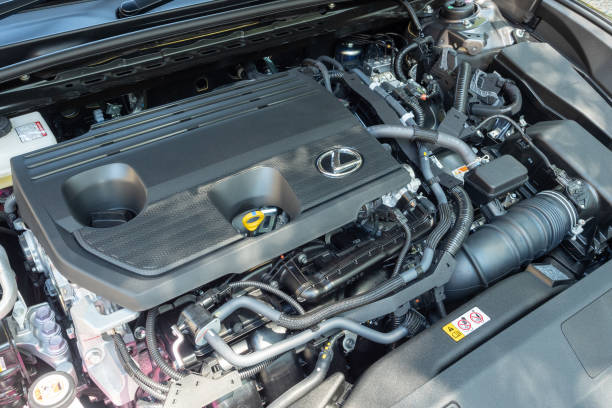
A properly running engine depends on ignition timing, fuel delivery, and airflow all working together in sync. When one of those falls out of step, you get a Lexus engine misfire, the engine shakes, hesitates on acceleration, or loses power without much warning.
It doesn’t always start dramatically. Sometimes it’s occasional at first, easy to write off as nothing. But left alone, it tends to develop into something more serious, and catching it early is really what keeps the repair bill reasonable.
Lexus Engine Misfire Symptoms Worth Watching For
A few signs tend to show up together, and it’s worth knowing what to look for before things get worse.
- The check engine light coming on.
- Rough idling that wasn’t there before
- Noticeable vibration through the engine
- Hesitation when you try to accelerate
- A clear drop in power
- Worse fuel economy than usual
- Shaking specifically at idle
- Trouble starting the car
- Jerking while driving
- Popping sounds from the exhaust
- A strong fuel smell near the exhaust
- Visibly higher emissions
You don’t need all of these at once for it to be worth checking. A Lexus engine misfire rarely fixes itself, so even one or two of these signs is enough reason to get it looked at.
Common Causes
A handful of components tend to be behind this, and it’s rarely obvious which one without actually testing.
Worn spark plugs are probably the most common cause, followed closely by ignition coils starting to fail. Clogged fuel injectors restrict how evenly fuel reaches the cylinders, and a vacuum leak throws off the air-fuel ratio in a way that produces almost identical symptoms. A dirty mass airflow sensor or a faulty oxygen sensor can send bad data to the ECU, leading it to miscalculate the mixture entirely. Low fuel pressure, timing issues, carbon buildup, damaged ignition wiring, compression loss, and occasionally an ECU-related fault round out the list.
The tricky part is that several of these produce nearly the same symptoms from the driver’s seat, which is exactly why proper testing matters more than guessing.
How We Diagnose It
Our technicians work through this in order rather than jumping to conclusions.
We start with a full computer diagnostic scan, pulling stored OBD fault codes and reviewing live engine data as it runs. From there we test the ignition coils individually, inspect the spark plugs, and check the fuel injectors and fuel pressure. A compression test rules mechanical issues in or out, and we check for vacuum leaks and inspect the air intake while we’re at it.
Using the right equipment at every step is what keeps us from replacing parts that were never actually the problem.
The Repair Process of Lexus Engine Misfire
What gets fixed depends entirely on what the diagnosis turns up — there’s no single fix that covers every Lexus engine misfire.
Repairs can range from replacing spark plugs, swapping out a bad ignition coil, cleaning or replacing fuel injectors, fixing a vacuum leak, fixing the air intake, replacing a bad sensor, servicing the fuel system, updating ECU software where possible or cleaning carbon build-up, as needed depending on the cause. After the repair is complete, we conduct a final diagnostic scan and road test the automobile to ensure that the misfire has been eliminated and not only masked for a few km.
Risks of Ignoring It
Putting this off doesn’t make it go away — it just gives the underlying problem more time to spread.
Left unaddressed, a Lexus engine misfire can damage the catalytic converter, which is a considerably more expensive fix than whatever caused the misfire in the first place. You’ll also likely see reduced performance, higher fuel consumption, worse emissions, and in more serious cases, overheating or internal engine damage. Poor acceleration and the risk of an unexpected breakdown are both real possibilities the longer it’s left alone — and every one of these tends to push the eventual repair cost higher.
Can You Continue Driving?
Technically, the car might still run, but that doesn’t make it a good idea to keep driving on it. Continued driving with an active misfire risks damaging the catalytic converter, accelerating general engine wear, hurting fuel efficiency, and bringing on a sudden loss of power without much warning. If the check engine light starts flashing, or the shaking gets noticeably worse, that’s your sign to stop and arrange help rather than push on to your destination.
Estimated Repair Time of Engine Misfiring
How long it takes depends on what’s actually wrong.
Repair Type / Estimated Time
- Spark plug replacement — 1 to 2 hours
- Ignition coil replacement — 1 to 2 hours
- Fuel injector cleaning — 2 to 3 hours
- Fuel injector replacement — 3 to 5 hours
- Vacuum leak repair — 2 to 4 hours
- Advanced engine diagnostics — 1 to 3 hours
- Major engine repair — 1 to 3 days
Catching a misfire early usually means a shorter, simpler repair than waiting until it’s caused secondary damage.
What Affects the Cost
Several things move the final bill:
- Cause of the misfire
- Number of affected cylinders
- Lexus model
- Engine size
- Genuine replacement parts
- Labour required
- Additional engine damage
- Diagnostic complexity
Dealing with a Lexus engine misfire early is almost always cheaper than repairing whatever it damaged on its way to getting fixed.
Prevention Tips
Replace spark plugs on schedule rather than pushing past the recommended interval. Keep up with ignition system servicing. Use decent-quality fuel where you can. Swap out a dirty air filter before it gets bad enough to matter. Clean fuel injectors periodically rather than waiting for symptoms. Stick to your scheduled maintenance generally, address warning lights as soon as they appear, and get periodic engine diagnostics done even when nothing feels obviously wrong.
None of this guarantees you’ll never see a misfire, but it genuinely cuts the odds significantly.
Dubai-Specific Advice
Dubai’s heat and the amount of stop-and-go traffic most cars deal with daily put more strain on an engine than milder driving conditions would. To keep the risk of a Lexus engine misfire down: service your car on schedule, use premium fuel, replace ignition components before they actually fail rather than after, and don’t brush off rough idling as nothing. If the check engine light comes on, get proper diagnostics done rather than waiting to see if it clears itself. Given the dust here, filters deserve more frequent checks than the manufacturer’s general guidance might suggest.
Why Choose Car Garage Expert For Handling Lexus Engine Misfire?
Our specialists are properly trained on Lexus systems and use accurate computer diagnostics not a generic scanner and a guess. We use genuine or OEM quality parts, give you a clear quote before we begin, and get the job done fast without sacrificing quality. Whether it is a simple spark plug replacement or something more complex, we are focused on determining the true cause of a Lexus engine misfire, not the easiest thing to replace.
Frequently Asked Questions
What causes a Lexus engine misfire?
Most often it’s worn spark plugs, failing ignition coils, clogged fuel injectors, a vacuum leak, or a sensor sending bad data — several possible causes that can all look the same from the driver’s seat.
Can I keep driving with an engine misfire?
It’s not a good idea. Driving on an active misfire risks damaging the catalytic converter and other engine components the longer it continues.
Will a misfire trigger the check engine light?
Yes, in most cases. A misfire typically lights up the check engine light and stores a fault code you can pull with a scan.
How do you actually diagnose an engine misfire?
Through a combination of diagnostic scanning, live data review, a compression test, ignition testing, and checking the fuel system — not just one tool, since several faults produce similar symptoms.
Can bad fuel cause a misfire?
Yes. Low-quality or contaminated fuel affects combustion and is a genuine contributor to a Lexus engine misfire, even on an otherwise healthy car.
Related Services
- Lexus Engine Diagnostics
- Lexus Engine Repair
- Lexus Spark Plug Replacement
- Lexus Ignition Coil Replacement
- Lexus Fuel Injector Cleaning
- Lexus Fuel System Repair
- Lexus Check Engine Light Diagnosis
- Lexus ECU Diagnostics
- Lexus Major Service
- Lexus Preventive Maintenance
Book Your Lexus Engine Inspection Today
Noticed any signs of a Lexus engine misfire in your own car? Don’t wait for it to turn into a bigger, more expensive repair. Bring it to Car Garage Expert for proper diagnostics and expert repair—we’ll find the cause, fix it properly, and get your Lexus running smoothly again.
Schedule your Lexus engine inspection today and let our experts restore your vehicle’s performance with precision and care.