White smoke coming from a vehicle’s exhaust can be harmless in some situations, but it can also indicate a serious engine, cooling-system, or fuel-system problem. The difference often depends on when the smoke appears, how thick it is, how long it lasts, and whether it has a noticeable smell.
For drivers in Dubai, exhaust smoke should not be ignored. High temperatures, long periods of idling, heavy traffic, demanding highway journeys, and cooling-system stress can turn a small mechanical issue into an expensive engine repair.
This guide provides white smoke from exhaust explained in clear terms, including the symptoms, possible causes, diagnostic process, repair options, driving risks, repair times, cost factors, and Dubai-specific advice.
White Smoke from Exhaust Explained
White smoke from the exhaust may be normal condensation when it appears briefly during a cold start and disappears as the engine warms up. However, thick or continuous white smoke can indicate coolant entering the combustion chamber, a damaged head gasket, a cracked cylinder head, fuel-injection trouble, or unburned diesel fuel. Stop driving if the engine overheats, coolant levels fall, warning lights appear, or the smoke becomes dense. A professional inspection should include cooling-system pressure testing, computer diagnostics, fluid checks, and engine condition tests to identify the exact cause.
Problem Overview
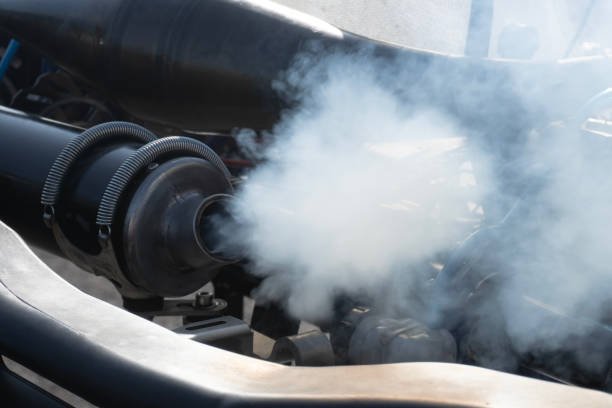
Exhaust gases are usually difficult to see once an engine reaches normal operating temperature. When visible white smoke or vapour begins coming from the tailpipe, it means moisture, coolant, excess fuel, or another substance may be entering the exhaust system.
A small amount of thin white vapour immediately after starting the vehicle can be normal. Moisture naturally collects inside the exhaust when a parked vehicle cools down. Once the engine starts, this moisture turns into steam and exits through the tailpipe. It should disappear within a few minutes.
The situation is more concerning when the smoke:
- Continues after the engine is warm
- Forms a thick cloud behind the vehicle
- Has a sweet or chemical smell
- Appears during acceleration
- Is accompanied by overheating
- Occurs with coolant loss or rough engine performance
Persistent smoke requires proper diagnosis. Replacing parts based only on the colour of the exhaust can lead to unnecessary costs because petrol and diesel engines may produce white smoke for different reasons.
Symptoms of White Smoke from the Exhaust
White exhaust smoke is often accompanied by other warning signs. Identifying these symptoms can help a technician narrow down the source of the problem.
Thick Smoke After the Engine Warms Up
Normal condensation should reduce as the exhaust becomes hot. Smoke that remains thick after the engine reaches its operating temperature may indicate an internal coolant leak or combustion problem.
Sweet Smell from the Exhaust
Engine coolant often has a distinct sweet smell. White smoke with a sweet odour may mean coolant is being burned inside one or more cylinders.
Falling Coolant Level
A coolant reservoir that repeatedly becomes low without a visible external leak can indicate coolant is entering the engine internally.
Engine Overheating
An internal coolant leak may reduce the cooling system’s ability to regulate engine temperature. The temperature gauge may rise, or an overheating warning may appear.
Rough Idle or Engine Misfire
Coolant or excess fuel inside a cylinder can interfere with combustion. The engine may shake, idle unevenly, hesitate, or trigger a misfire warning.
Difficult Starting
Diesel vehicles may release white smoke when fuel enters the cylinders but does not burn correctly. Hard starting can point to glow-plug, compression, injector, or fuel-delivery issues.
Reduced Engine Power
A damaged head gasket, weak compression, injector fault, or overheating problem may cause noticeable power loss.
Milky Engine Oil
Coolant mixing with engine oil can create a creamy, milky, or foam-like substance beneath the oil cap or on the dipstick. This is a serious warning sign, although minor residue under the cap can sometimes result from short journeys and moisture.
Dashboard Warning Lights
The check-engine light, coolant warning, low-oil-pressure warning, or high-temperature warning may appear alongside exhaust smoke.
Common Causes of White Smoke from the Exhaust
Several faults can produce white smoke. Accurate diagnosis is important because the required repairs range from simple maintenance to major engine work.
1. Normal Condensation
Thin vapour during a cold start is usually harmless. It is more common after the car has been parked overnight or when the weather is relatively cool and humid.
The vapour should disappear quickly. There should be no overheating, coolant loss, rough running, or unusual smell.
2. Leaking Head Gasket
The head gasket seals the connection between the engine block and cylinder head. It keeps coolant, engine oil, and combustion pressure in their correct passages.
If the gasket fails, coolant may enter the cylinders and burn with the air-fuel mixture. This can produce continuous white smoke, overheating, coolant loss, bubbles in the reservoir, and poor engine performance.
Head-gasket failure can result from:
- Previous overheating
- Cooling-system neglect
- Incorrect coolant
- Warped engine components
- Excessive combustion pressure
- Age-related deterioration
3. Cracked or Warped Cylinder Head
Severe overheating can warp or crack the cylinder head. Coolant may then leak into the combustion chamber.
The symptoms can resemble head-gasket failure, which is why pressure testing and engine measurements are necessary before dismantling the engine.
4. Cracked Engine Block
A cracked engine block is less common but potentially more serious. It may allow coolant to enter a cylinder or mix with engine oil.
Engine-block damage can be caused by extreme overheating, internal stress, manufacturing defects, or previous improper repairs.
5. Coolant Entering Through the Intake System
Some engines have coolant passages near the intake manifold. A failed intake-manifold gasket or related component can allow coolant to enter the intake and combustion chambers.
This may create white smoke without immediately producing an obvious external coolant leak.
6. Fuel Injector Problems
A leaking or poorly operating injector can deliver too much fuel or spray it incorrectly. In diesel engines, fuel that does not burn completely may exit as white or greyish smoke.
Injector-related symptoms may include:
- Rough idle
- Knocking or unusual combustion noise
- Poor fuel economy
- Difficult starting
- Weak acceleration
- Fuel smell from the exhaust
7. Faulty Glow Plugs in Diesel Vehicles
Glow plugs help heat the combustion chamber during a diesel engine’s starting process. If one or more glow plugs fail, the fuel may not ignite correctly when the engine is cold.
The result can be white smoke, difficult starting, and rough running for the first few minutes.
8. Low Compression
Diesel engines rely heavily on compression to generate enough heat for combustion. Worn piston rings, damaged valves, cylinder wear, or head-gasket problems can reduce compression.
Low compression may cause white smoke, slow starting, engine vibration, and reduced power.
9. Incorrect Injection Timing
If diesel fuel is injected too early or too late, it may not burn efficiently. Incorrect injection timing can produce white smoke and poor performance.
Modern vehicles control timing electronically, so a sensor, control module, injector, or fuel-pressure issue may be involved.
10. Turbocharger Coolant Leak
Some turbochargers are cooled by engine coolant. Internal turbo damage may allow coolant to enter the intake or exhaust side, resulting in white smoke.
Turbo-related faults may also cause power loss, unusual whistling, oil consumption, or boost-pressure errors.
11. Contaminated or Poor-Quality Fuel
Water-contaminated diesel or unsuitable fuel can disrupt combustion and create white smoke. Fuel contamination may also damage injectors and high-pressure fuel-system components.
12. Transmission Fluid Entering the Engine
On some older automatic vehicles, a failed vacuum modulator can allow transmission fluid to enter the intake manifold. This is uncommon in modern vehicles but may produce pale smoke and fluid loss.
Diagnostic Process
A professional diagnosis should determine whether the smoke is harmless condensation, coolant steam, unburned fuel, or another substance. The process may include the following steps.
Visual Smoke Inspection
The technician checks the smoke’s density, colour, smell, duration, and operating conditions. Smoke appearing only at startup may indicate a different fault from smoke produced during acceleration.
Cooling-System Inspection
The coolant level, radiator, reservoir, hoses, water pump, thermostat housing, and connections are checked for leaks or deterioration.
Cooling-System Pressure Test
The system is pressurised while the engine is cool. A pressure drop may reveal an external or internal coolant leak.
Combustion-Gas Test
A chemical test can check whether combustion gases are entering the cooling system. Positive results may suggest head-gasket, cylinder-head, or engine-block damage.
Computer Diagnostic Scan
A diagnostic scanner reads engine fault codes and live sensor data. Misfire codes, injector corrections, coolant-temperature readings, fuel-pressure errors, and boost faults can guide further testing.
Spark Plug Inspection
On petrol engines, a spark plug that appears unusually clean may indicate that coolant has been entering that cylinder. Wet, fouled, or damaged plugs can provide additional evidence.
Injector Testing
Injector balance, return flow, spray performance, electrical operation, and fuel pressure may be tested, particularly on diesel engines.
Compression or Leak-Down Test
These tests assess the sealing ability of the cylinders, valves, piston rings, and head gasket. Uneven or low readings can indicate internal engine damage.
Engine Oil Inspection
The oil level, condition, texture, and smell are checked. Coolant contamination can reduce lubrication and damage bearings, camshafts, and other internal parts.
Borescope Inspection
A small camera may be inserted into the cylinder through the spark-plug or glow-plug opening. This allows the technician to inspect the piston crown and cylinder walls without immediately dismantling the engine.
Repair Process
The correct repair depends entirely on the confirmed cause.
Condensation
No repair is needed when the vapour is light, temporary, and not accompanied by warning symptoms.
Cooling-System Leak Repair
A damaged hose, seal, gasket, reservoir, radiator, or coolant connection may be replaced. The system is then refilled with the correct coolant, bled to remove air, and pressure-tested again.
Head-Gasket Replacement
A head-gasket repair generally involves:
- Draining the coolant and engine oil
- Removing the cylinder head
- Inspecting the gasket and sealing surfaces
- Checking the cylinder head for cracks or warping
- Machining the head when appropriate
- Installing a new gasket and required seals
- Reassembling the engine using correct torque procedures
- Replacing contaminated fluids
- Testing compression, cooling performance, and exhaust condition
Simply installing a new gasket without correcting the reason it failed can lead to another breakdown.
Cylinder-Head or Engine-Block Repair
A damaged cylinder head may require pressure testing, machining, welding, or replacement. A cracked engine block may require specialist repair or complete engine replacement, depending on the location and severity of the damage.
Injector or Fuel-System Repair
Faulty injectors may be cleaned, calibrated, rebuilt, or replaced. The fuel filter and fuel quality should also be checked to prevent repeat failure.
Glow-Plug Replacement
Failed glow plugs and their control circuit can be tested and replaced. On some engines, careful removal is essential because aged glow plugs may become difficult to extract.
Turbocharger Repair
A leaking or damaged turbocharger may require rebuilding or replacement. Oil and coolant supply lines should also be inspected to identify the underlying cause.
Final Testing
After repairs, the vehicle should be tested at idle, under load, and at normal operating temperature. Fluid levels, engine data, exhaust smoke, cooling-system pressure, and warning lights should be rechecked.
Risks of Ignoring White Exhaust Smoke
Ignoring persistent white smoke can cause more damage than the original fault.
Possible consequences include:
- Severe engine overheating
- Cylinder-head distortion
- Engine-block damage
- Coolant contamination of engine oil
- Bearing and lubrication failure
- Catalytic-converter damage
- Diesel particulate filter problems
- Turbocharger damage
- Sudden engine shutdown
- Complete engine failure
- Higher fuel consumption
- Increased repair expenses
Coolant entering a cylinder may also cause hydrolock. Because liquid cannot be compressed like air, a large amount of coolant inside a cylinder can prevent the piston from moving correctly and may bend internal engine components.
Can You Continue Driving?
Whether the vehicle is safe to drive depends on the type of smoke and the accompanying symptoms.
You may be able to continue driving briefly when the smoke is thin, appears only after a cold start, disappears within a few minutes, and is not accompanied by coolant loss, overheating, warning lights, or rough performance.
Stop driving and arrange an inspection when:
- The smoke is thick or continuous
- The temperature gauge rises
- The coolant warning appears
- Coolant needs frequent topping up
- The engine misfires or shakes
- The vehicle loses power
- The engine oil looks milky
- You notice a strong sweet smell
- Steam comes from beneath the bonnet
Continuing to drive an overheating vehicle in Dubai can rapidly turn a manageable repair into major engine damage. Switch off the engine in a safe location and avoid opening the coolant cap while the system is hot.
Typical Repair Time
Repair time varies according to the fault, vehicle design, parts availability, and amount of engine damage.
A basic inspection or diagnostic scan may be completed relatively quickly. Replacing an accessible hose, sensor, glow plug, or minor seal may take several hours. Injector diagnosis or replacement may require additional time for testing, coding, calibration, and road testing.
A head-gasket repair often takes several working days because the cylinder head may need to be removed, measured, pressure-tested, machined, and reinstalled. Repairs involving a cracked engine block, major cylinder-head damage, or full engine replacement can take longer.
An accurate timeframe should be provided after dismantling and inspection because hidden damage may not be visible during the initial diagnosis.
Cost Factors
The cost of repairing white exhaust smoke depends on the source of the problem rather than the smoke itself.
Important cost factors include:
- Vehicle make and model
- Petrol, diesel, hybrid, or turbocharged engine type
- Accessibility of the damaged component
- Diagnostic testing required
- Number of faulty injectors
- Original, aftermarket, or reconditioned parts
- Cylinder-head machining requirements
- Extent of overheating damage
- Condition of the engine block
- Coolant and oil contamination
- Labour time
- Programming or injector coding
- Additional seals, bolts, fluids, and filters
- Parts availability in Dubai
A small coolant-hose leak may be relatively inexpensive to correct, while a damaged head gasket, cylinder head, turbocharger, or engine can require a much larger repair budget.
For this reason, a written inspection report and itemised quotation are preferable to replacing parts based on assumptions.
Prevention Tips
Regular maintenance can reduce the risk of cooling-system and combustion problems.
Check Coolant Regularly
Inspect the coolant level only when the engine is cool. Repeated coolant loss should always be investigated.
Use the Correct Coolant
Do not mix unsuitable coolant types or rely on plain water for long-term use. The correct coolant helps control temperature, corrosion, and internal deposits.
Repair Overheating Immediately
Never continue driving simply because the vehicle still moves. Even a short period of severe overheating can damage the head gasket and cylinder head.
Service the Cooling System
Radiators, hoses, thermostats, water pumps, reservoir caps, and cooling fans should be inspected according to the vehicle’s condition and service schedule.
Change Engine Oil on Time
Fresh oil helps protect the engine and turbocharger from heat, friction, and internal wear.
Replace Fuel Filters
A clean fuel filter supports correct injector operation and helps protect diesel high-pressure fuel systems.
Use Reliable Fuel Stations
Consistent, good-quality fuel reduces the likelihood of water or contamination entering the fuel system.
Pay Attention to Warning Lights
Early diagnosis is generally less expensive than repairing damage caused by continued driving.
Inspect Before Summer
A pre-summer cooling-system inspection can identify weak hoses, low coolant, radiator restrictions, fan faults, and minor leaks before temperatures become more demanding.
Dubai-Specific Advice
Dubai’s climate creates operating conditions that can place additional stress on a vehicle’s engine and cooling system.
High Ambient Temperatures
During the hottest months, the cooling system must remove heat while the surrounding air is already extremely warm. A weak radiator, slow fan, faulty thermostat, low coolant level, or ageing water pump may struggle under these conditions.
Heavy Traffic and Long Idling
Vehicles may spend extended periods idling with the air conditioning running. This reduces natural airflow through the radiator and makes correct cooling-fan operation especially important.
Stop-and-Go Driving
Frequent acceleration, braking, and idling can increase thermal stress. A problem that is not obvious on a short morning journey may appear during afternoon traffic.
Long Highway Journeys
High-speed driving between Dubai and other emirates places the engine under sustained load. Coolant leaks, injector problems, and turbocharger faults may become more noticeable during acceleration or extended highway use.
Dust and Sand
Dust can collect around radiators, condensers, air filters, and engine components. Restricted airflow may reduce cooling efficiency and increase operating temperatures.
Air-Conditioning Load
The air-conditioning system adds load to the engine and increases the amount of heat around the front cooling package. Cooling fans and radiator airflow must remain effective.
Avoid Emergency Coolant Mistakes
Never pour cold water into an extremely hot engine. The rapid temperature change may damage metal components. Allow the vehicle to cool and have the system inspected safely.
For dependable performance in Dubai, include the cooling system, radiator airflow, hoses, coolant condition, and fan operation in routine maintenance—not only after overheating begins.
Why Choose Car Garage Expert?
When white smoke appears, accurate diagnosis matters more than guesswork. Replacing an injector will not solve a coolant leak, and replacing a head gasket will not correct a diesel combustion fault.
At Car Garage Expert, the diagnostic approach is focused on identifying the actual source of the smoke before recommending repairs. Depending on the vehicle and symptoms, the inspection may include computer scanning, coolant pressure testing, fluid analysis, injector checks, compression testing, and engine-condition assessment.
Choosing Car Garage Expert can help you receive:
- A structured inspection of the engine and cooling system
- Diagnosis based on symptoms and test results
- Clear explanations of recommended repairs
- An itemised repair quotation
- Support for petrol and diesel engine concerns
- Replacement of required fluids, seals, and related components
- Post-repair checks before vehicle handover
- Advice suited to Dubai’s heat and driving conditions
The goal is to address both the failed component and the underlying reason for the failure, reducing the chance of repeat problems.
FAQ’S White Smoke from Exhaust Explained
1. Is white smoke from the exhaust always serious?
No. Thin white vapour that appears during a cold start and disappears quickly is usually condensation. Thick smoke that continues after the engine warms up should be inspected.
2. Why is my car producing white smoke but not overheating?
The fault may still be in its early stages. A small internal coolant leak, injector problem, glow-plug fault, contaminated fuel, or turbo issue can produce smoke before the temperature gauge rises.
3. Can low coolant cause white exhaust smoke?
Low coolant alone does not normally create exhaust smoke. However, coolant may be low because it is leaking into the combustion chamber, where it turns into white steam.
4. What does white smoke with a sweet smell mean?
A sweet-smelling exhaust cloud often suggests that engine coolant is being burned. A cooling-system pressure test and combustion-gas test can help confirm the problem.
5. Why does my diesel vehicle produce white smoke when starting?
Common causes include cold combustion, faulty glow plugs, weak compression, injector problems, incorrect fuel timing, or contaminated diesel. Brief smoke on a cold start may be less concerning than smoke that continues.
6. Can a faulty injector cause white smoke?
Yes. An injector that leaks, delivers too much fuel, or produces a poor spray pattern can cause incomplete combustion and white or pale-grey exhaust smoke.
7. Will a head-gasket sealer fix white smoke?
Sealant products are not a dependable substitute for mechanical diagnosis and repair. They may fail to seal the leak, restrict cooling passages, contaminate the system, or delay necessary repairs.
8. How can I tell the difference between condensation and coolant smoke?
Condensation is usually thin, odourless, and temporary. Coolant smoke is often thicker, remains after warm-up, may smell sweet, and can be accompanied by coolant loss or overheating.
9. Should I drive to a garage if the car is producing white smoke?
Do not continue driving when the smoke is thick, the temperature is high, coolant is low, or the engine runs poorly. Arrange vehicle recovery to reduce the risk of engine damage.
10. Can white smoke damage the catalytic converter?
Yes. Coolant, excess fuel, and misfires can overheat or contaminate the catalytic converter. Diesel vehicles may also experience damage or blockage involving the diesel oxidation catalyst or particulate filter.
11. Why does white smoke appear only during acceleration?
Smoke under acceleration may point to a leak that becomes more noticeable under pressure, an injector that fails under load, a turbocharger problem, or coolant entering the cylinders as engine pressure rises.
12. Can using the wrong coolant lead to this problem?
Incorrect coolant may contribute to corrosion, deposits, seal deterioration, overheating, and poor cooling performance. These conditions can eventually cause leaks or head-gasket damage.
Book a White Exhaust Smoke Inspection in Dubai
Do not wait for persistent white smoke to become an overheated or damaged engine. Early inspection can help identify a minor coolant leak, injector fault, glow-plug problem, or cooling-system weakness before it leads to a major repair.
Contact Car Garage Expert today to arrange a professional white exhaust smoke diagnosis in Dubai. Have your engine, cooling system, injectors, fluid condition, and fault codes checked by experienced technicians, receive a clear repair recommendation, and get your vehicle back on the road with confidence.
Visit us in our Al Quoz, Dubai branch or visit Car Garage Expert