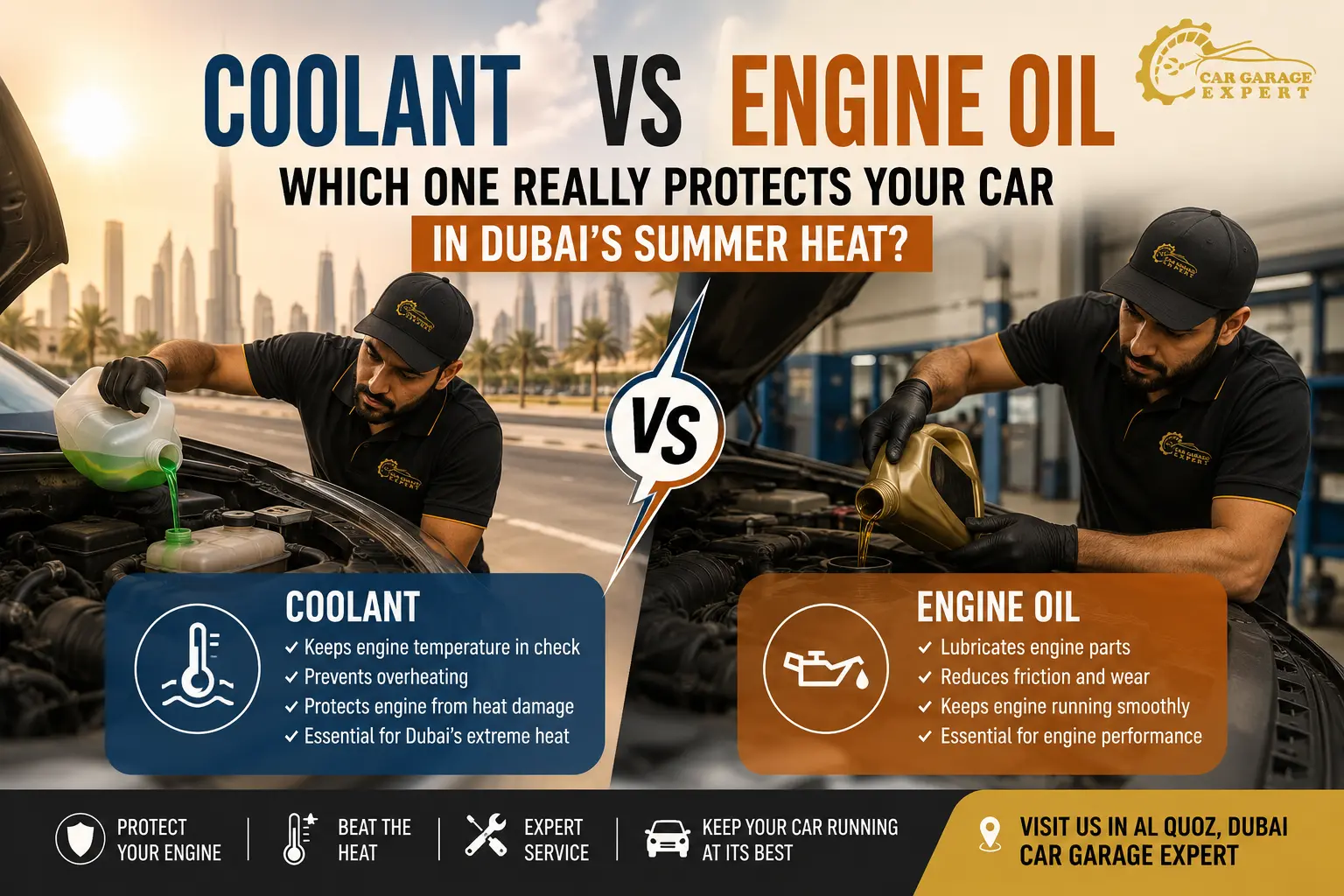
Anyone who has driven through a Dubai summer knows the feeling of watching the temperature gauge creep up while sitting in traffic on Sheik Zayed Road. When the debate of coolant vs engine oil comes up among car owners, most people assume one fluid matters more than the other. The truth is simpler than that: it’s not really a competition, because your engine cannot survive a single summer without both fluids doing their jobs correctly.
Coolant is the liquid that transfers heat from your engine block and radiator, keeping the engine temperature within a safe range. Engine oil, on the other hand, is the lubricant that coats every moving metal part inside the engine so nothing grinds, seizes, or burns out from friction. One fights heat from the outside, the other fights wear from the inside. When either one fails, you are usually looking at a tow truck and a very expensive repair bill.
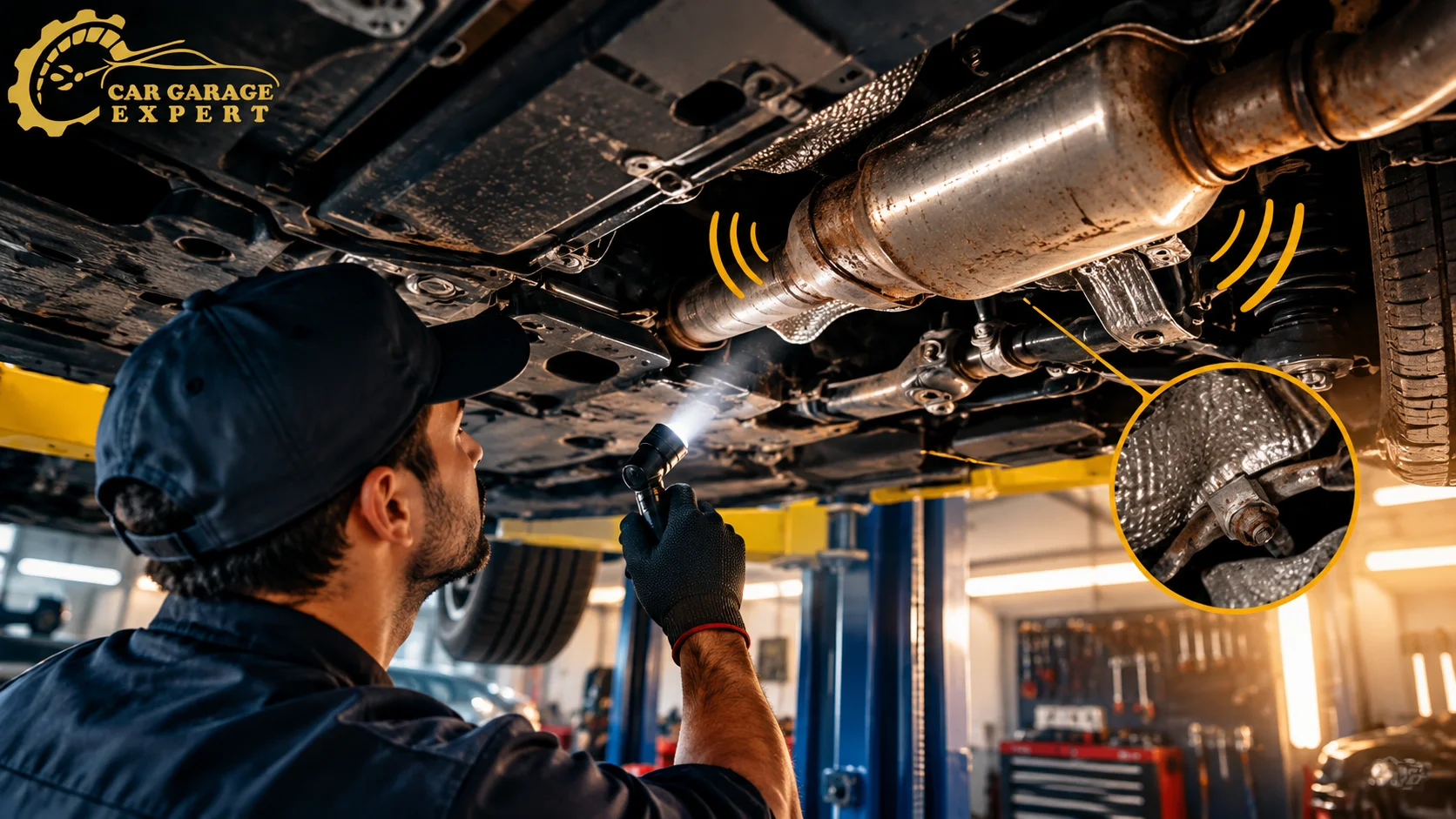
This guide simplifies the coolant vs engine oil debate, outlines the warning signs Dubai drivers should never overlook, and tells you exactly what a trustworthy garage near me should inspect before the mercury hits 45°C.
Coolant vs Engine Oil: Understanding the Real Difference
It pays to know what each fluid is truly designed to do within your engine before you can decide which fluid needs more attention. This is truly a case of two totally separate occupations, running simultaneously, under one hood, in the same severe heat.
Coolant (or antifreeze) is circulated in a closed loop through the engine block, cylinder head and radiator. It absorbs heat from the metal surrounding the combustion chambers and transports it to the radiator, where outside air (or the AC fan when you’re stalled in traffic) draws it back out. Engine oil never contacts the radiator at all. Instead, it is blasted through tiny galleries and passageways to coat pistons, bearings, camshafts and valves. That leaves a thin protective film that prevents metal from meeting metal at thousands of revolutions per minute.
Coolant vs Engine Oil: What Coolant Is Really Protecting
Coolant is meant to regulate temperature . Without it, the ferocious burn in your cylinders would heat the engine up enough to deform the cylinder head or fracture the engine block in minutes, especially somewhere like Dubai where the ambient temperature alone can be above 45°C by early afternoon.
Signs of a Coolant Problem You Should Never Ignore
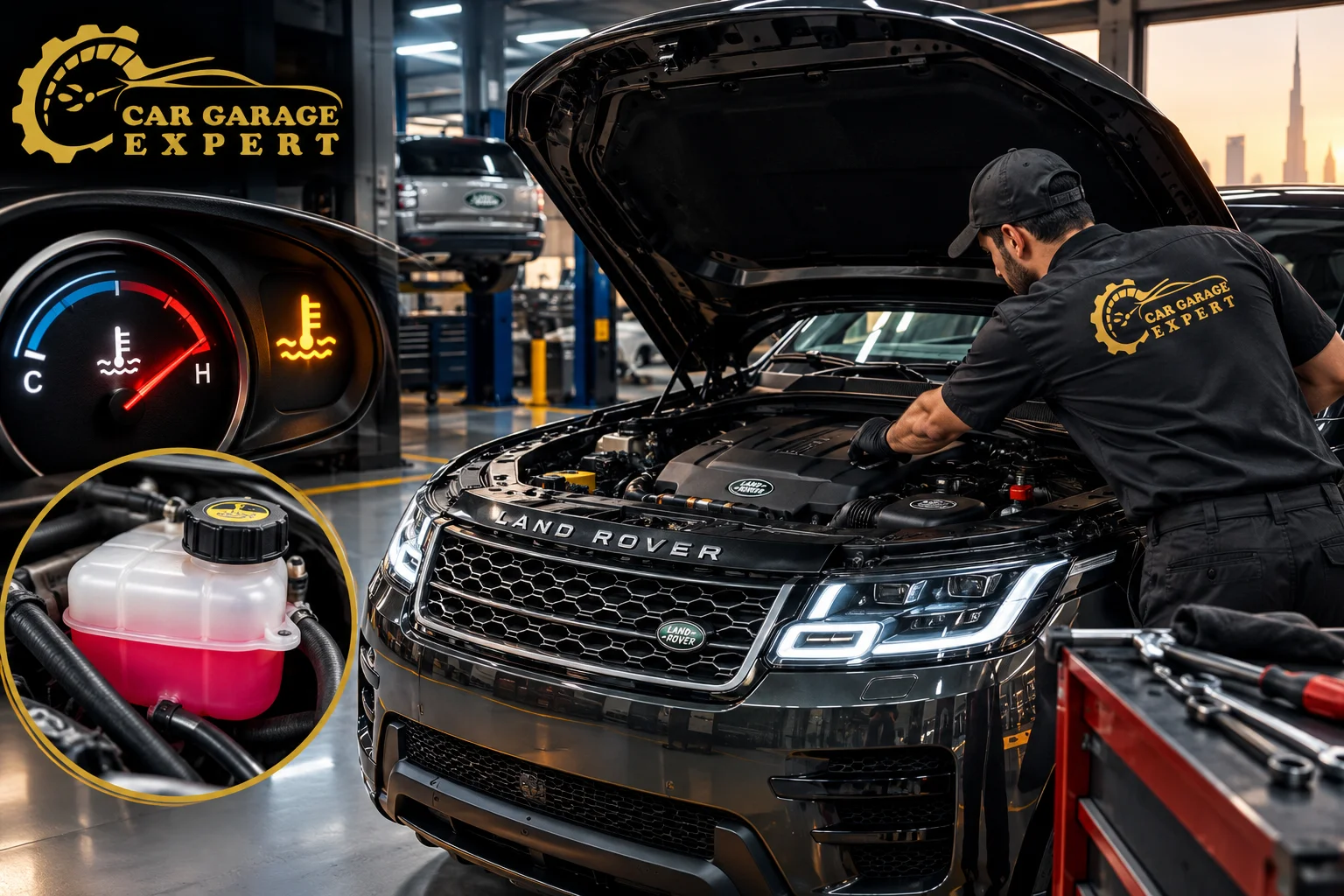
A failed cooling system usually gives very little notice, although there are a few telltale signs. A sweet, slightly syrupy fragrance beneath the hood usually indicates coolant is spilling out onto a hot surface and burning off. You’ll see puddles of bright green, orange or pink liquid under your parked car if there’s a leak from a hose, radiator or water pump. If you see the temperature needle on your dashboard moving towards the red zone during a regular journey, your engine is warning you that it is struggling against the heat.
How Dubai’s Climate Pushes Cooling Systems to the Limit
In extreme temperatures, rubber hoses, plastic radiator tanks, and gaskets degrade faster than manufacturers’ paperwork normally allows. A hose in a moderate European environment just ages faster on the roads of Dubai, where asphalt surface temperatures can reach 60°C in July and August. That’s why routine inspections of cooling systems are more important here than anywhere else in the globe.
Coolant vs Engine Oil: What Engine Oil Is Really Protecting
While coolant manages the big picture of engine temperature, engine oil is working at a microscopic level, protecting every moving part from friction damage that coolant could never reach. Oil is the fluid quietly doing damage control on the inside of the engine, second by second, even when everything looks fine from the driver’s seat.
Signs Your Engine Oil Needs Immediate Attention
Fresh engine oil should look translucent and amber-colored on the dipstick. Oil that has turned dark, gritty, or thick has broken down and is no longer capable of protecting your engine properly. A burning smell in the cabin, a knocking or ticking sound from the engine bay, or an oil pressure warning light are all signs that should prompt you to see a car mechanic rather than wait for your next scheduled service.
Why Oil Viscosity Changes Dramatically in Extreme Heat
Every engine oil is rated with a viscosity grade, and that rating assumes a certain operating temperature range. Dubai’s summer heat can push under-hood temperatures well beyond what the oil was designed to handle, causing it to thin out faster than expected. Thinner oil clings less effectively to metal surfaces, which means increased friction, faster wear, and in worst cases, a seized engine on the highway. This is one of the biggest reasons manufacturers recommend shorter oil change intervals in hot climates compared to cooler regions.
Why the Coolant vs Engine Oil Debate Matters More in a Desert Climate
In cooler climates, drivers might be able to postpone fluid maintenance without immediate issues. In Dubai, that’s a lot riskier.” Due to the severe heat, the engine oil and coolant are breaking down at a considerably faster rate.
Old or deteriorated engine oil increases the friction between moving elements. Which means increased heat inside the engine. Then the cooling system has to work harder to pull the heat away. If coolant levels are low, unclean or old, it will not be able to cool the engine properly. The conclusion is that engine temp gets hot in a hurry. Your vehicle can overheat and break down in a matter of minutes, especially on crowded highways like Sheikh Zayed Road or Al Khail Road during Dubai’s peak summer temperatures.
That is why a serious vehicle mechanic in Dubai would inform you that fluid maintenance is not an either/or decision. “Coolant vs engine oil should be checked, topped up and changed as per schedule and not in isolation. Ignore one and the other is almost certain to fail early.
Coolant vs Engine Oil Maintenance Checklist for Dubai Drivers
Regular fluid checks take only a few minutes but can save you from a stranded highway breakdown and a much larger repair bill. Use this checklist before long summer drives:
- Check the coolant reservoir level when the engine is completely cool, never when hot.
- Look under your parking spot for any green, orange, or pink puddles.
- Pull the engine oil dipstick, wipe it clean, reinsert fully, then check the level and color.
- Watch the dashboard temperature gauge during your commute, especially in stop-start traffic.
- Listen for unusual ticking, knocking, or whining sounds from the engine bay.
- Book a professional inspection for coolant vs engine oil if any fluid looks low, discolored, or contaminated.
- Keep a roadside assistance contact saved in your phone before a long desert drive.
Coolant vs Engine Oil at a Glance
Factor |
Coolant |
Engine Oil |
| Primary job | Regulates overall engine temperature | Lubricates moving internal parts |
| Where it flows | Radiator, engine block, cylinder head | Pistons, bearings, camshaft, valves |
| Failure sign | Overheating, sweet smell, colored puddles | Dark/gritty oil, knocking, burning smell |
| Dubai risk factor | Hose and gasket degradation from extreme heat | Faster viscosity breakdown from high temperatures |
| Recommended check | Every fill-up or before long drives | Every oil change interval or dipstick check monthly |
Key Benefits of Staying on Top of Both Fluids
Keeping coolant and engine oil in good condition is not just about avoiding a breakdown; it directly protects your investment in the vehicle itself.
- Fewer roadside emergencies: Cars with properly maintained fluids are far less likely to leave you stranded and needing roadside assistance in extreme heat.
- Lower long-term repair costs: Catching a small coolant leak or an aging oil supply early is dramatically cheaper than replacing a warped cylinder head or a seized engine.
- Better resale value: A documented maintenance history with regular fluid checks reassures future buyers that the engine was properly cared for.
- More reliable daily driving: Whether you’re commuting through Al Quoz or heading out toward Hatta, a well-maintained engine simply performs more consistently in the heat.
At Car Garage Expert, our team treats the coolant vs engine oil relationship as a single health check rather than two separate services, because that is how your engine experiences it.
How Car Garage Expert Handles the Coolant vs Engine Oil Balance
At Car Garage Expert in Al Quoz, we don’t just fill off any fluid that appears low when you bring your vehicle in. We perform a comprehensive inspection of the cooling system for any leaks, pressure-test the hoses and radiator cap, verify the coolant concentration, and combine this with a full oil and filter service using the manufacturer’s suggested grade for Dubai conditions. That’s exactly why so many drivers choose to look for a trustworthy vehicle technician near me, instead of guessing at a DIY remedy that only solves half the problem.
Not sure what fluid is generating that warning light or unusual smell? Our team can perform a quick diagnostic and tell you exactly what’s going on before it becomes a major issue. We also offer mobile auto repair visits if your vehicle is not safe to drive to our facility. We also have genuine roadside assistance coverage across Dubai for just these types of summer emergencies.
Frequently Asked Questions
Q1: Which is more important, coolant or engine oil?
Neither one is more important on its own. Coolant manages the overall engine temperature while engine oil protects internal parts from friction, and a failure in either one usually leads to serious damage within minutes in Dubai’s summer heat.
Q2: Can low engine oil cause my car to overheat?
Yes. Low or degraded engine oil increases internal friction, generating extra heat that your cooling system must manage on top of its normal workload, often pushing engine temperature into the danger zone.
Q3: How often should I check my coolant and engine oil in Dubai?
Check both fluids at least once a month, and always before a long highway drive during summer. Dubai’s extreme heat accelerates fluid breakdown faster than in milder climates, so more frequent checks are genuinely worth the few extra minutes.
Q4: What does it mean if my coolant is disappearing but there’s no visible leak?
This can indicate an internal leak, such as a failing head gasket, where coolant is being burned in the combustion chamber or mixing with the engine oil. This needs a professional diagnosis as soon as possible.
Q5: Is synthetic oil better for Dubai’s hot climate?
Full synthetic oil, by and large, offers superior resistance to heat breakdown compared to traditional oil, which is why most workshops now recommend it as the default choice, especially under Dubai’s harsh under-hood temperatures.
Conclusion
The coolant vs engine oil issue isn’t about picking a winner, because your engine needs both fluids working together every time you turn the key, especially under Dubai’s scorching summer sun. Coolant controls the total temperature, while engine oil protects all moving parts from the inside out. Ignoring either puts you at genuine risk of an expensive breakdown.
If it’s been more than a month since you’ve checked either fluid or seen any of the warning indications mentioned above, don’t wait for a highway breakdown to figure out which one failed. Schedule a combined coolant and oil check with Car Garage Expert in Al Quoz. Contact our staff via WhatsApp for same-day appointments, or discover our comprehensive car service packages tailored for Dubai’s challenging summer climate. Or, if you like, you can always find us on Google Maps and come by our Al Quoz workshop. Car Garage Expert, a recognised garage near me for Dubai drivers, is ready to keep your engine running safely, no matter how high the temperature goes this summer.