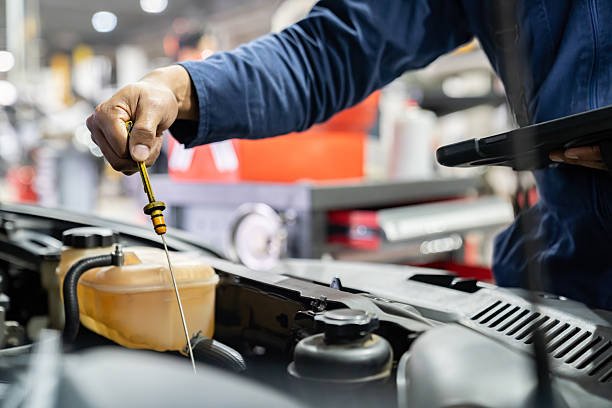
Engine oil is one of the most important fluids inside your car. It moves between critical engine components and creates a protective layer between metal surfaces. Without clean oil, internal parts may experience increased friction, heat, and wear.
Driving conditions in Dubai can place additional pressure on engine lubrication. High temperatures, slow-moving traffic, short journeys, dust, long idle periods, and frequent air-conditioning use may affect how hard an engine works. Regular oil maintenance can help keep the engine clean, responsive, and properly lubricated.
At Car Garage Expert, every Car Oil & Engine Oil Services starts with your vehicle’s actual requirements. Our technicians consider the car manufacturer, model, engine type, mileage, recommended viscosity, and driving pattern before selecting the oil.
Professional Engine Oil Change in Dubai
An engine oil change involves more than removing old oil and adding a new product. The correct service should include oil-grade verification, oil-filter replacement, leakage checks, accurate filling, and a final engine inspection.
Using the wrong viscosity or an unsuitable performance specification may affect lubrication and engine operation. The American Petroleum Institute advises vehicle owners to follow the manufacturer’s recommendations for oil viscosity and performance standards. SAE J300 classifies oils according to viscosity, but the viscosity grade alone does not describe every performance characteristic of the product.
Car Garage Expert provides a careful oil service designed around your vehicle rather than applying the same product to every engine.
Our service may include:
- Checking the manufacturer-recommended oil specification
- Inspecting the current engine oil level
- Draining the used engine oil
- Replacing the old oil filter
- Installing a suitable new filter
- Refilling the engine with the correct oil quantity
- Checking the drain plug and filter area for leaks
- Inspecting visible engine components
- Resetting the oil service reminder when applicable
- Recording the oil grade and service details
This complete approach helps reduce mistakes and gives drivers better control over future maintenance.
Why Engine Oil Is Important for Your Car
A running engine contains many moving components. Pistons, bearings, camshafts, crankshafts, valves, and other parts operate at high speed. Engine oil supports these components in several important ways.
Reduces Friction
Oil creates a lubricating film between moving surfaces. This reduces direct metal-to-metal contact and limits unnecessary wear.
Helps Manage Engine Heat
The cooling system handles much of the engine’s temperature, but oil also carries heat away from internal components. Old or contaminated oil may become less effective under demanding conditions.
Keeps Internal Parts Cleaner
Modern engine oils contain additives designed to hold small contaminants and reduce deposit formation. However, these additives do not last forever. The oil eventually becomes dirty and needs replacement.
Protects Against Corrosion
Suitable engine oil can help protect internal metal components from moisture, oxidation, and corrosive by-products.
Supports Smooth Engine Operation
Correct lubrication allows moving parts to operate with less resistance. This may help the engine feel smoother and more responsive.
Supports Turbocharger Protection
Turbochargers operate at very high speeds and temperatures. They depend on a reliable oil supply for lubrication and cooling. Using unsuitable oil or delaying an oil change can place extra stress on turbo components.
Why Dubai Driving Conditions Affect Engine Oil
Dubai drivers experience a combination of environmental and road conditions that may increase the demands placed on engine oil.
High Outdoor Temperatures
The engine already operates at a high internal temperature. Hot outdoor conditions can make effective cooling and lubrication even more important.
This does not mean every vehicle should use thicker oil. Modern engines are engineered for specific viscosity grades. The correct choice must come from the owner’s manual or manufacturer specification, not from climate alone.
Heavy Traffic and Long Idling
A car may spend considerable time moving slowly or idling in traffic. The engine continues running even when the vehicle covers little distance. This is why mileage alone does not always show the full amount of engine use.
Short-Distance Driving
Frequent short journeys may prevent the engine from remaining at normal operating temperature for enough time. Moisture and fuel contamination may collect in the oil under certain driving patterns.
Dusty Conditions
Dust can enter through a weak, damaged, or dirty air filter. Although engine oil and air filters perform different jobs, poor air filtration can contribute to contamination and engine wear.
Frequent Air-Conditioning Use
Air conditioning places an additional load on the engine, especially during traffic, idling, or low-speed city driving.
These conditions do not create one fixed oil change interval for every car. They simply make regular oil-level checks and timely servicing more important.
What Is Included in Our Car Oil Service?
Car Garage Expert follows a structured process to provide a reliable oil change in Dubai.
1. Vehicle and Oil Specification Check
We first identify the vehicle make, model, production year, engine type, and manufacturer requirements. The required viscosity and performance specification may vary between two engines from the same manufacturer.
2. Engine Oil Level and Condition Check
The existing oil level is checked before draining. A very low level may indicate oil consumption, neglected maintenance, or an external leak.
Oil colour alone does not always confirm whether the product has failed. Diesel oil, for example, can darken soon after replacement. The maintenance history, mileage, time, smell, consistency, warning lights, and engine condition must also be considered.
3. Old Oil Removal
The old oil is drained carefully while the vehicle is positioned safely. The drain plug and surrounding area are inspected for damage, leakage, or worn sealing components.
4. Oil Filter Replacement
The oil filter holds contaminants collected from the lubrication system. Installing fresh oil while leaving a heavily used filter in place can reduce the quality of the service.
A compatible replacement filter is installed and secured correctly.
5. Correct Oil Refill
The engine is filled with the correct quantity and grade. Too little oil can cause poor lubrication, while overfilling may create pressure, foaming, leakage, or other engine problems.
6. Final Inspection
After filling, the engine may be started briefly so oil can circulate. The oil level is checked again, and the filter and drain-plug areas are inspected for leakage.
7. Service Reminder Reset
Where the vehicle supports this feature, the dashboard oil or maintenance reminder can be reset after the service.
Synthetic Oil vs Conventional Oil
Synthetic oil is often recommended for modern vehicles because it can provide stable performance across a wide temperature range. It may also resist oxidation and deposit formation better than basic mineral oil under demanding conditions.
However, the decision should not be based on climate alone. The engine design, oil specification, age, mileage, previous maintenance, turbocharger system, and manufacturer instructions must be considered.
Full Synthetic Oil May Be Suitable For:
- Modern petrol engines
- Turbocharged engines
- Performance vehicles
- Luxury cars
- Vehicles used for frequent city driving
- Cars exposed to demanding operating conditions
- Engines requiring a specific synthetic oil approval
Conventional or Semi-Synthetic Oil May Be Suitable For:
- Certain older engines
- Vehicles designed for mineral-based oil
- Lower-demand applications
- Cars with manufacturer-approved semi-synthetic specifications
Switching oil type without checking compatibility is not recommended. A technician should first confirm the required viscosity and performance standard.
Understanding Engine Oil Grades
Engine oil containers commonly display grades such as:
- 0W-20
- 0W-30
- 5W-30
- 5W-40
- 10W-30
- 10W-40
- 15W-40
The numbers relate to how the oil flows at different temperatures. The number before the letter “W” describes low-temperature behavior. The second number represents the oil’s viscosity range at engine operating temperature.
A common mistake is assuming that the hottest climate always requires the highest second number. Modern oil systems, pumps, clearances, turbochargers, emissions equipment, and variable valve systems are designed around specific oil properties.
The API Motor Oil Guide states that vehicle requirements vary and drivers should follow the vehicle manufacturer’s SAE viscosity recommendation.
Car Garage Expert checks the required grade before completing the oil change.
How Often Should You Change Engine Oil in Dubai?
There is no universal oil change interval for every vehicle. The correct interval may depend on:
- Manufacturer schedule
- Vehicle age
- Engine design
- Petrol or diesel configuration
- Turbocharger system
- Type and quality of oil
- Driving distance
- Time since the previous service
- Traffic and idling
- Short-distance travel
- Towing or heavy loads
- Oil-life monitoring system
- Previous maintenance history
Some UAE maintenance guidance uses approximately 5,000 to 10,000 kilometres as a broad planning range. However, this should never replace the schedule in the vehicle manual. Modern vehicles may have different requirements based on oil type, engine technology, and operating conditions.
Even when a vehicle covers little mileage, the oil may still require replacement based on time. Ask a qualified technician to review the owner’s manual and driving pattern rather than relying only on a general kilometre figure.
Signs Your Car May Need an Oil Change
Do not ignore changes in engine performance or dashboard warnings. Arrange an inspection when you notice any of the following signs.
Oil Warning Light
The red oil-pressure warning light may indicate dangerously low oil pressure. Stop the vehicle safely and switch off the engine. Continuing to drive could cause serious engine damage.
An oil-pressure warning is different from a normal maintenance reminder.
Low Oil Level
A dipstick reading below the safe range means the engine may not have enough lubrication. Low oil can result from a leak, oil consumption, incorrect filling, or delayed maintenance.
Engine Noise
Tapping, ticking, knocking, or increased mechanical noise may be connected to poor lubrication. It can also indicate a more serious engine fault, so the vehicle should be inspected.
Burning Oil Smell
A burning smell may indicate oil leaking onto a hot engine or exhaust component. It should be checked promptly.
Oil Spots Under the Vehicle
Dark stains beneath the car may come from the drain plug, oil filter, sump, seal, gasket, or another engine area.
Exhaust Smoke
Blue or blue-grey exhaust smoke may suggest that the engine is burning oil. This usually requires more than a routine oil change.
Reduced Engine Smoothness
Old oil is not the only cause of rough performance, but lubrication problems can contribute to unusual engine behavior.
Overdue Service Reminder
A service message should not be ignored. It may be based on mileage, time, driving conditions, or an electronic oil-life calculation.
Importance of Replacing the Oil Filter
The oil filter removes small particles and contaminants as oil circulates through the engine. Over time, the filter collects debris and becomes less effective.
A blocked or damaged filter can restrict oil flow or allow contaminated oil to circulate. Most complete oil change services should therefore include a compatible replacement filter.
A quality filter must:
- Fit the engine correctly
- Seal properly
- Provide suitable filtration
- Maintain required oil flow
- Withstand operating pressure
- Match the recommended service interval
Cheap or incorrect filters may create leakage, pressure, or filtration problems. Car Garage Expert checks filter compatibility before installation.
Oil Services for Different Vehicle Types
Different engine designs have different lubrication requirements.
Petrol Engine Oil Service
Petrol engines may require low-viscosity oils, modern API performance categories, manufacturer-specific approvals, or oils designed for emissions and fuel-saving systems.
API explains that newer gasoline engine service categories can provide the protection required by many earlier categories, but drivers should still begin with the owner’s manual.
Diesel Engine Oil Service
Diesel engines produce different combustion by-products and may require oil with a diesel-specific performance standard. Vehicles fitted with diesel particulate filters may need low-ash oil that meets a particular manufacturer approval.
Using an unsuitable product may affect the engine or emissions system.
Turbocharged Engine Oil Service
A turbocharger depends on clean oil delivered at the correct pressure. Turbo engines can expose oil to demanding operating conditions, making the correct grade and timely maintenance especially important.
Hybrid Vehicle Oil Service
A hybrid still has an internal combustion engine unless it is a fully electric vehicle. That engine requires suitable oil even when it operates less frequently than the engine in a conventional car.
Hybrid engines may start and stop often, so the specified low-viscosity oil should not be changed without technical confirmation.
Luxury and Performance Vehicle Oil Service
European, Japanese, American, and other performance vehicles may require named manufacturer approvals. Matching only the viscosity printed on the container may not be enough.
High-Mileage Vehicle Oil Service
Older engines may consume oil, develop seal leaks, or collect deposits. A high-mileage oil may be suitable in some cases, but the engine should first be inspected for mechanical problems.
Common Engine Oil Mistakes to Avoid
Selecting Oil Only by Brand
A recognized brand may produce many different oils. The label must still match the vehicle’s required grade and specification.
Assuming Thicker Oil Is Always Better
Oil that is too thick may not circulate as intended through a modern engine. Never change viscosity based only on outdoor temperature or informal advice.
Mixing Different Oils Without Checking
Emergency topping-up may sometimes be necessary, but mixing products can affect the intended formulation. Use the same approved specification whenever possible.
Overfilling the Engine
More oil does not provide more protection. Overfilling can cause foaming, pressure, leaks, and engine problems.
Ignoring the Oil Filter
Fresh oil should not normally be paired with a heavily used or blocked filter.
Waiting for the Oil Warning Light
The red oil-pressure light is a warning of a possible lubrication fault. It is not a reminder that routine service is due.
Using Counterfeit or Unverified Oil
Engine oil should come from a reliable supply chain. Packaging, seals, labelling, batch details, and certification marks should be checked.
Choosing Oil Based Only on Colour
Dark oil is not always failed oil, and clean-looking oil is not always suitable for continued use. Follow the service schedule and technical requirements.
Ignoring Oil Leaks
Repeatedly adding oil without repairing the source can allow a minor leak to become a larger mechanical problem.
Benefits of Timely Engine Oil Service
Regular oil maintenance can support several areas of vehicle performance.
Better Engine Protection
Clean, correctly specified oil helps maintain a protective film between moving parts.
Cleaner Internal Components
Fresh oil contains active detergents and dispersants that help manage deposits and contaminants.
Smoother Performance
Correct lubrication can help the engine operate with less resistance and unnecessary noise.
Lower Risk of Expensive Damage
An oil service costs far less than repairing damage caused by poor lubrication, overheating, blocked oil passages, or turbocharger failure.
Improved Maintenance Records
Documented servicing can show that the vehicle has received regular care. This may support buyer confidence when selling the car.
Early Problem Detection
An oil service gives technicians an opportunity to notice leaks, damaged seals, loose components, unusual noises, or low fluid levels.
Engine Oil Change Cost in Dubai
The price of an oil change can vary because vehicles require different oil quantities, products, filters, and labour procedures.
Main cost factors include:
- Vehicle make and model
- Engine capacity
- Required oil quantity
- Oil viscosity
- Mineral, semi-synthetic, or full synthetic product
- Manufacturer approval
- Petrol or diesel engine
- Standard or specialist oil filter
- Underbody covers that require removal
- Additional leak diagnosis
- Oil flushing or cleaning requirements
- Luxury or high-performance engine design
A low advertised price may not include the correct oil quantity, a suitable filter, labour, or additional checks. Ask what is included before approving the service.
Car Garage Expert focuses on using the correct oil and filter for the vehicle rather than offering one product for every engine.
How to Check Your Engine Oil Level
Checking the oil level between services can help identify consumption or leakage early.
For vehicles with a traditional dipstick:
- Park the vehicle on a level surface.
- Follow the manufacturer’s instructions regarding engine temperature.
- Switch off the engine and wait for the recommended period.
- Remove the dipstick.
- Wipe it with a clean, lint-free cloth.
- Insert it fully.
- Remove it again and check the level.
- Confirm that the oil sits between the minimum and maximum marks.
Do not overfill the engine. Add only a small amount at a time and use the correct product.
Some modern vehicles use an electronic oil-level display instead of a physical dipstick. Follow the dashboard instructions or owner’s manual.
Book an inspection when the level falls repeatedly, drops suddenly, or requires frequent topping up.
Why Choose Car Garage Expert?
Car Garage Expert provides car oil and engine oil services based on careful product selection and proper service procedures.
Our approach includes:
- Oil selection based on vehicle requirements
- Support for petrol, diesel, turbo, hybrid, and high-mileage vehicles
- Suitable oil-filter replacement
- Accurate oil quantity
- Visible leak inspection
- Clear service recommendations
- No unnecessary viscosity changes
- Attention to manufacturer specifications
- Maintenance support for Dubai driving conditions
- Transparent explanation of recommended work
We understand that every engine has different technical requirements. Our goal is to help protect your vehicle with the correct service rather than simply performing the fastest oil change.
Book Car Oil & Engine Oil Services in Dubai
Do not wait until the engine becomes noisy or an oil-pressure warning appears. Timely maintenance is one of the simplest ways to protect internal engine components.
Contact Car Garage Expert for professional car oil and engine oil services in Dubai. Share your vehicle make, model, year, engine size, and current mileage so the correct product and service can be recommended.
Frequently Asked Questions Car Oil & Engine Oil Services
1. How often should I change my car’s engine oil in Dubai?
Follow the interval stated in your owner’s manual or electronic oil-life system. The correct schedule depends on the engine, oil type, distance, time, traffic, idling, and driving conditions. A general kilometer range should not replace the manufacturer’s instructions.
2. Is full synthetic oil better for Dubai weather?
Full synthetic oil can offer strong performance under demanding conditions, but it must meet your vehicle’s viscosity and performance requirements. Synthetic oil is not automatically suitable for every engine. Check the owner’s manual before changing the oil type.
3. Which engine oil grade is best for my car?
The best grade is the one recommended by the vehicle manufacturer. Common grades include 0W-20, 5W-30, 5W-40, and 10W-40, but they are not interchangeable in every engine.
4. Can I use thicker oil because Dubai is hot?
Do not use thicker oil without checking the manufacturer’s guidance. Modern engines use precise internal clearances and oil-control systems. An unapproved viscosity may affect circulation, efficiency, variable valve timing, turbocharger lubrication, or startup protection.
5. Should the oil filter be changed with every oil change?
In most routine services, replacing the oil filter with the oil is the preferred approach. A used filter may contain contaminants and may not perform effectively for another complete service interval.
6. Why is my engine oil black after a recent service?
Oil can darken as it collects contaminants and performs its cleaning function. Diesel oil may become dark quickly. Color alone does not prove that the oil needs replacement. Check the service interval, oil level, smell, texture, and vehicle condition.
7. What happens if I delay an engine oil change?
Delayed oil changes may allow contamination, oxidation, deposits, and sludge to increase. The oil may provide weaker protection, which can contribute to wear, poor performance, overheating, or expensive internal damage.
8. Can I mix two different engine oil brands?
Mixing may be possible in an emergency when the products have the same required viscosity and performance standard, but it is better to use one approved oil. Avoid combining unknown or incompatible products.
9. Why does my car lose engine oil?
Possible causes include an external leak, worn seals, damaged gaskets, turbocharger problems, piston-ring wear, valve-seal wear, or normal consumption allowed by the manufacturer. Frequent oil loss requires diagnosis.
10. Is an oil warning light the same as a service reminder?
No. A maintenance reminder indicates that scheduled service may be due. A red oil-pressure warning may indicate a serious lubrication problem. Stop safely, switch off the engine, and arrange professional assistance.
11. Does a hybrid car need engine oil changes?
Yes. A hybrid with a petrol or diesel engine still needs engine oil and filter changes. Only fully electric vehicles operate without a combustion engine and therefore do not require engine oil.
12. Can changing the oil fix engine noise?
An oil change may help when the noise is related to low, dirty, degraded, or incorrect oil. However, knocking, tapping, or ticking may indicate mechanical damage. The engine should be inspected instead of assuming that fresh oil will solve the problem.
13. How do I know whether my vehicle needs manufacturer-approved oil?
Check the owner’s manual, service book, oil cap, or manufacturer technical information. Some vehicles require an oil that meets a specific approval in addition to a standard viscosity grade.
14. Can old engine oil reduce fuel efficiency?
Degraded or unsuitable oil may increase internal resistance and affect engine operation. However, poor fuel economy can also result from tyre pressure, filters, spark plugs, injectors, traffic, driving habits, or mechanical faults.
15. How long does an engine oil service take?
The duration depends on the vehicle design, underbody covers, oil-filter position, inspection requirements, and whether leaks or damaged parts are found. A careful service should allow enough time for proper draining, refilling, and final checks.
Conclusion Car Oil & Engine Oil Services
Engine oil protects some of the most expensive and important components in your vehicle. Clean oil with the correct viscosity and performance specification helps reduce friction, manage heat, control deposits, and support smooth engine operation.
Dubai’s heat, traffic, dust, short journeys, and extended idling make regular vehicle maintenance especially valuable. However, drivers should not select oil based only on climate or general advice. The vehicle manufacturer’s requirements must always come first.
Car Garage Expert provides professional car oil and engine oil services in Dubai for a wide range of vehicles. From checking the correct oil grade to replacing the filter and inspecting for leaks, every step is completed with attention to engine requirements.
Schedule your next oil service with Car Garage Expert and give your engine the clean, correct lubrication it needs for reliable daily driving.
Visit us in our Al Quoz, Dubai branch or visit Car Garage Expert