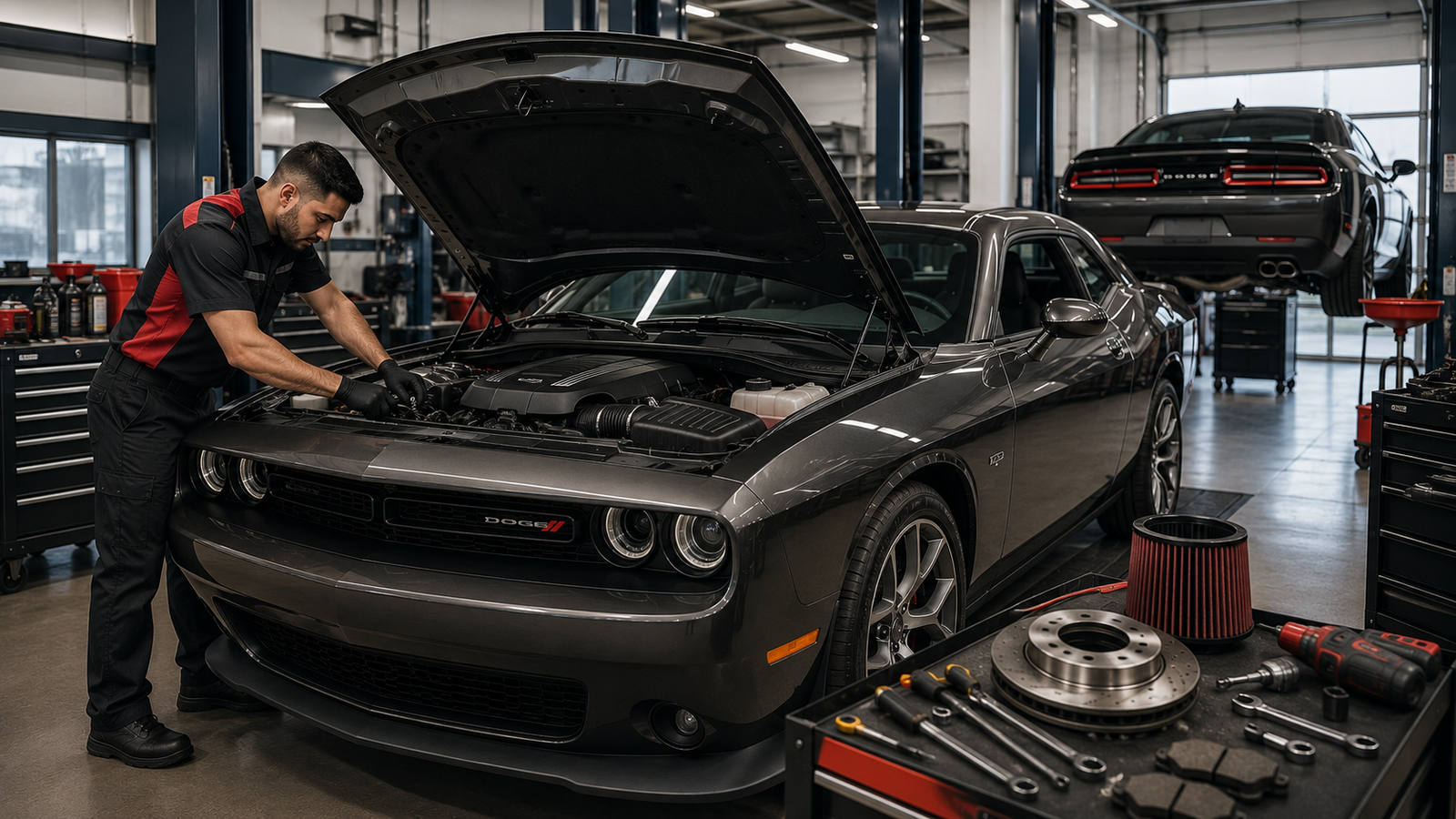
Dodge has a dedicated following in Dubai that other American brands don’t quite match. The Challenger, Charger, Durango, and Ram 1500 are all genuinely common on UAE roads — and for understandable reasons. The performance, the presence, and the value proposition against European alternatives make Dodge ownership appealing in a market that appreciates all three. But Dodge maintenance in Dubai requires specific attention that general garage advice doesn’t always cover.
American V8 engineering — the 5.7-litre HEMI, the 6.4-litre 392, the supercharged 6.2-litre Hellcat — operates differently from the turbocharged four and six-cylinder European engines that dominate most Dubai workshops. The maintenance requirements are different, the known failure patterns are different, and the diagnostic architecture is different. A workshop that services BMWs and Toyotas all week isn’t automatically equipped to handle a Challenger R/T or a Durango Citadel correctly.
Finding proper Dodge maintenance in Al Quoz means finding a workshop with FCA (Fiat Chrysler Automobiles) diagnostic capability, genuine American V8 experience, and the knowledge to adapt the manufacturer’s service schedule to what Dubai’s climate actually does to these vehicles.
Dodge Maintenance Dubai — Why These Vehicles Need Specific Attention
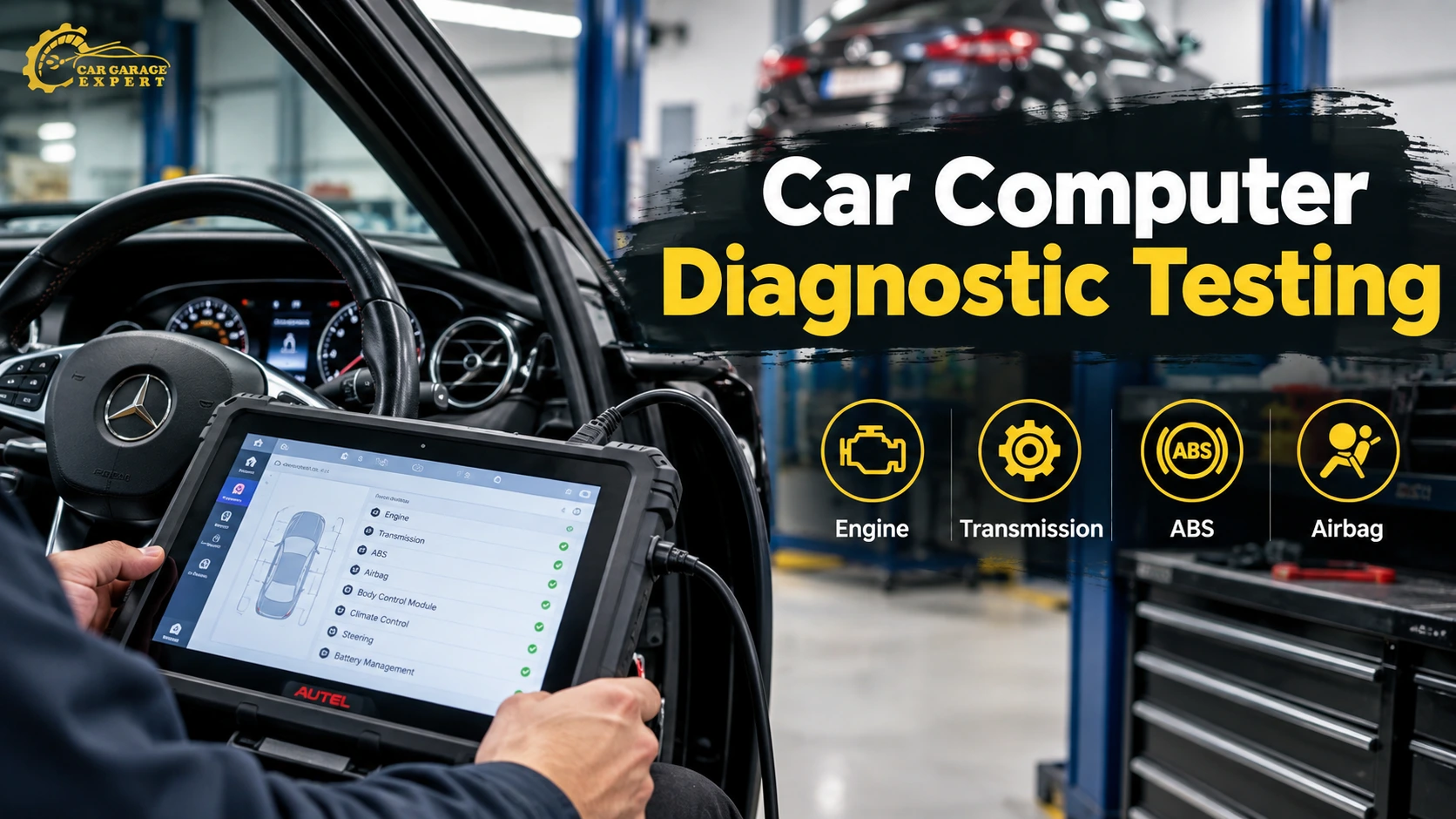
The FCA platform architecture used across Dodge, Chrysler, Jeep, and Ram vehicles uses the wiTECH diagnostic system — Fiat Chrysler’s proprietary platform that communicates with the full control unit network. Engine management, transmission, ABS, airbags, body electronics, and the HEMI-specific variable valve timing and cylinder deactivation systems all communicate through wiTECH.
A generic OBD-II scanner on a Dodge Challenger reads basic engine codes and misses the MDS (Multi-Displacement System) cylinder deactivation controller, the Tremec or TorqueFlite transmission management, the electronic stability control modules, and the body and comfort systems that govern daily operation. Proper Dodge maintenance diagnosis requires wiTECH or a high-grade FCA-compatible equivalent — otherwise the diagnostic picture is incomplete.
Beyond diagnostics, Dodge vehicles in Dubai face specific challenges. The HEMI V8’s large displacement creates specific thermal management requirements in sustained 45°C ambient conditions. The MDS cylinder deactivation system — which switches between 8 and 4 cylinder operation — requires specific oil specification and clean oil passages to function correctly. The TorqueFlite 8-speed automatic is sensitive to fluid condition in Dubai’s stop-start traffic. These aren’t generic American car concerns — they’re specific to how these powertrains operate in the UAE’s conditions.
A Dodge Durango R/T came to Car Garage Expert after a general workshop had replaced the throttle body and two oxygen sensors trying to resolve a persistent rough idle and occasional check engine light. Neither repair fixed the problem. Total spend before reaching us: AED 2,100. Our FCA-compatible diagnostic found a failing MDS solenoid causing erratic cylinder deactivation — the engine was randomly dropping to four-cylinder mode under conditions it shouldn’t. Solenoid replacement resolved both the idle issue and the check engine light. The parts that had been replaced were functioning correctly.
Dodge Maintenance — Model-Specific Service Requirements
Dodge Challenger and Charger
The Challenger and Charger share the LX/LC platform and are the most common Dodge models in Dubai’s market. Both are available with the 3.6-litre Pentastar V6, the 5.7-litre HEMI V8, the 6.4-litre 392 HEMI, and the supercharged 6.2-litre Hellcat variants. Each powertrain has specific Dodge maintenance requirements.
HEMI V8 Oil System Maintenance
The 5.7-litre HEMI’s Multi-Displacement System is the component that requires the most specific maintenance attention on this engine. The MDS uses hydraulic lifter assemblies that collapse to deactivate four cylinders under light load — switching the engine between V8 and V4 operation seamlessly. These assemblies are oil-pressure dependent and oil-cleanliness dependent.
The correct oil specification for a HEMI-equipped Challenger or Charger is Chrysler MS-6395 approved 5W-20 full synthetic. Using a heavier viscosity oil — even a quality 5W-30 — interferes with MDS lifter hydraulics. The lifters require the specific pressure-flow characteristics of the correct viscosity to engage and disengage correctly. In Dubai’s heat, the temptation to use heavier oil “for protection” is counterproductive on this specific engine — the MDS lifters need the correct spec, not additional viscosity.
Oil service interval for HEMI engines in Dubai: every 8,000–10,000 km or six months maximum. The HEMI’s large displacement means a larger oil volume — but Dubai’s sustained heat and the thermal cycling of the MDS system degrade that oil faster than temperate market intervals assume.
Spark Plugs on the HEMI
The 5.7-litre HEMI uses a dual-spark-plug system — two plugs per cylinder, sixteen total. This is a specific Dodge maintenance consideration because plug replacement is twice the consumable cost of a conventional V8, and because the dual-plug system is more sensitive to plug condition than a single-plug layout. A single misfiring plug in a dual-plug cylinder causes the cylinder to run on one plug — reduced combustion efficiency, increased fuel consumption, and eventual damage to the catalyst from unburnt fuel.
Plug replacement on the 5.7 HEMI: every 50,000 km in Dubai’s conditions. The 6.4-litre 392 uses the same dual-plug layout and the same interval recommendation. Sixteen plugs at the correct replacement interval is a scheduled service cost that Dodge owners should plan for rather than defer.
6.2-litre Hellcat Supercharger Maintenance
The Hellcat’s supercharger is among the most demanding components in any production vehicle sold in Dubai. Sustained 45°C ambient temperatures combined with the heat generated by a 6.2-litre engine producing 717 horsepower (in SRT Hellcat specification) create thermal conditions that require specific attention.
Supercharger belt condition should be inspected at every Dodge maintenance visit for Hellcat models. The belt drives the Roots-type supercharger and failure under load causes an immediate loss of boost. Replacement is relatively straightforward but the consequence of a belt failure at high speed is a sudden and dramatic power loss. Proactive replacement at 40,000–50,000 km is the correct approach.
Intercooler system condition is also Hellcat-specific. The dual intercooler heat exchangers that cool the supercharged charge air degrade in cooling efficiency as the front-mounted coolers accumulate dust and debris blockage. A partially blocked intercooler raises charge air temperature, which the ECU compensates for by reducing timing advance and boost — meaning measurable power loss before any warning light appears.
TorqueFlite 8-Speed Transmission
The TorqueFlite 8HP (ZF-sourced) automatic fitted to V8 Challenger and Charger models is a refined and capable unit that’s sensitive to fluid condition in Dubai’s conditions.
The TorqueFlite requires Mopar ATF+4 transmission fluid — not a generic Dexron or Mercon ATF. ATF+4 is specifically formulated for the clutch pack friction materials in FCA transmissions. Using an alternative fluid causes progressive clutch pack wear and shift quality deterioration that develops slowly and is often attributed to “normal wear” rather than incorrect fluid.
Transmission fluid service interval in Dubai: every 60,000 km regardless of the manufacturer’s “sealed for life” guidance. The stop-start urban traffic, the repeated standing-start acceleration that Dubai driving encourages, and the sustained heat all create fluid degradation conditions the sealed-for-life specification wasn’t written for.
Dodge Durango
The Durango is the three-row family SUV in the Dodge range and it sees different use in Dubai from the performance-oriented Challenger and Charger — primarily family transport, school runs, and longer motorway journeys.
Cooling System Maintenance
The Durango’s 3.6-litre Pentastar V6 and 5.7-litre HEMI V8 both have specific cooling system requirements in Dubai’s operating conditions. The Pentastar V6 is known to develop water pump wear at higher mileages — a slight coolant weep from the pump housing is the early indicator. A Dodge maintenance inspection for a Durango over 80,000 km should specifically assess water pump condition and cooling system pressure retention.
Coolant concentration check at every service — tested with a refractometer. The Durango’s cooling system capacity is significant, and in Dubai’s ambient temperatures a system running on diluted coolant has minimal margin before it reaches dangerous operating temperatures under sustained load.
Rear Air Suspension on Higher-Spec Models
Durango Citadel and higher-specification models with rear air suspension develop the same air spring degradation pattern seen on other air-suspended platforms in Dubai — heat cycling accelerates membrane fatigue, slow leaks develop, and the compressor works overtime compensating. A Durango that sits noticeably lower at the rear after overnight parking has a failing air spring. Address the spring before the compressor fails from overwork — the compressor replacement is considerably more expensive than the spring.
Transfer Case and Drivetrain Fluids
The Durango’s AWD system has a transfer case and rear differential with their own fluid service requirements — separate from the transmission and requiring specific Mopar fluid specifications. Workshops that service the engine and transmission without addressing the transfer case and differential fluids are leaving a significant portion of the drivetrain unserviced. Transfer case fluid every 60,000 km, rear differential fluid at the same interval.
Dodge Ram 1500
The Ram 1500 is the pickup variant in Dubai’s Dodge market and it has a specific use profile — some owners use it as a genuine working vehicle, others primarily for highway commuting. Both use patterns create their own Dodge maintenance considerations.
5.7-litre HEMI in the Ram 1500
The HEMI in the Ram 1500 faces the same MDS maintenance requirements as the Challenger and Charger — correct oil specification, clean oil passages, MDS solenoid condition. But the Ram’s use pattern adds load-carrying considerations. A Ram used regularly at or near payload capacity puts sustained thermal load on the engine oil and transmission fluid that accelerates degradation beyond the standard interval. Owners who use their Ram for genuine towing or hauling in Dubai’s heat should shorten both oil and transmission fluid intervals to 7,500 km and 50,000 km respectively.
Suspension and Steering Wear
The Ram 1500’s suspension — both the coil-spring front and the leaf-spring or multi-link rear depending on configuration — experiences accelerated wear in Dubai from the combination of speed bump impacts and the thermal cycling of rubber bushings. Front upper and lower ball joint wear is the most common suspension Dodge maintenance item on higher-mileage Ram 1500 models. A steering wander that develops gradually or a clunk over speed bumps that wasn’t present previously usually traces to ball joint wear that a ramp inspection identifies clearly.
Proactive Dodge Maintenance Schedule for Dubai
The maintenance principles that keep Dodge vehicles reliable in Dubai’s conditions:
Oil service every 8,000–10,000 km maximum on HEMI V8 engines — using the correct Chrysler MS-6395 approved specification without exception. Extended intervals that might work in the US don’t work in sustained 45°C ambient heat.
Transmission fluid at 60,000 km using Mopar ATF+4 specifically — no generic ATF substitutions regardless of “meets ATF+4 spec” marketing claims. The clutch friction material in FCA transmissions is calibrated for ATF+4’s specific friction characteristics.
Spark plug replacement at 50,000 km on all dual-plug HEMI variants — all sixteen plugs at the same time, not just the accessible front bank.
Cooling system pressure test at every major service — particularly on Pentastar V6 models where water pump wear is a known higher-mileage concern.
Full FCA-compatible diagnostic scan at every service — catching developing MDS, transmission, and body system faults before they cause breakdown or secondary damage.
For owners who need support between scheduled services, a qualified mobile car mechanic handles battery issues, basic fault resets, and on-site diagnostics for Dodge vehicles. When recovery is required, proper roadside assistance ensures Dodge vehicles with air suspension or AWD systems are transported correctly — incorrect recovery technique on these systems causes damage.
For paint damage from Dubai’s UV exposure, sand abrasion, or parking contact, professional car painting with Dodge colour codes handles everything from TorRed and Plum Crazy to Destroyer Grey correctly — these solid and metallic finishes require proper layered application to match the original factory finish. A qualified car mechanic with FCA platform experience handles the full scope of Dodge maintenance under one roof — no separate specialist visits for different systems. A complete car service plan built around your specific Dodge model and Dubai driving conditions keeps the maintenance schedule correctly calibrated throughout ownership.
For Dodge owners in Al Quoz and surrounding areas looking for a garage near me with genuine FCA diagnostic capability and American V8 experience — the difference from a general workshop is visible from the first service visit.
FAQ
How often should I service my Dodge HEMI engine in Dubai?
Every 8,000–10,000 km or six months — Dubai's heat degrades engine oil faster than standard intervals assume, and the MDS system is sensitive to oil condition.
What transmission fluid does a Dodge TorqueFlite need?
Mopar ATF+4 specifically — not a generic ATF alternative. FCA transmission clutch packs are calibrated for ATF+4's specific friction characteristics.
What causes rough idle on a Dodge Challenger HEMI?
Often an MDS solenoid fault causing erratic cylinder deactivation — requires FCA-compatible diagnostics to identify correctly rather than chasing generic fault codes.
How many spark plugs does a 5.7-litre HEMI have?
Sixteen — two per cylinder. All sixteen should be replaced at the same service interval, not just the more accessible front bank.
Does the Dodge Durango air suspension need special maintenance in Dubai?
Yes — heat cycling accelerates air spring membrane fatigue. Pressure retention testing at every service catches slow leaks before they cause compressor failure.
Conclusion
Dodge maintenance in Dubai requires understanding the specific engineering of these vehicles — the MDS cylinder deactivation system’s oil dependency, the TorqueFlite’s fluid sensitivity, the dual-plug HEMI’s service requirements, and the cooling demands of large-displacement V8s in sustained 45°C ambient heat. The owners who get this right keep their Challengers, Chargers, Durangos, and Rams performing correctly for longer and spend less on avoidable repairs.
Car Garage Expert in Al Quoz handles Dodge maintenance and repairs across the full model range — with FCA-compatible diagnostic equipment and genuine American V8 platform knowledge. Book your appointment on WhatsApp or find the workshop on Google Maps.