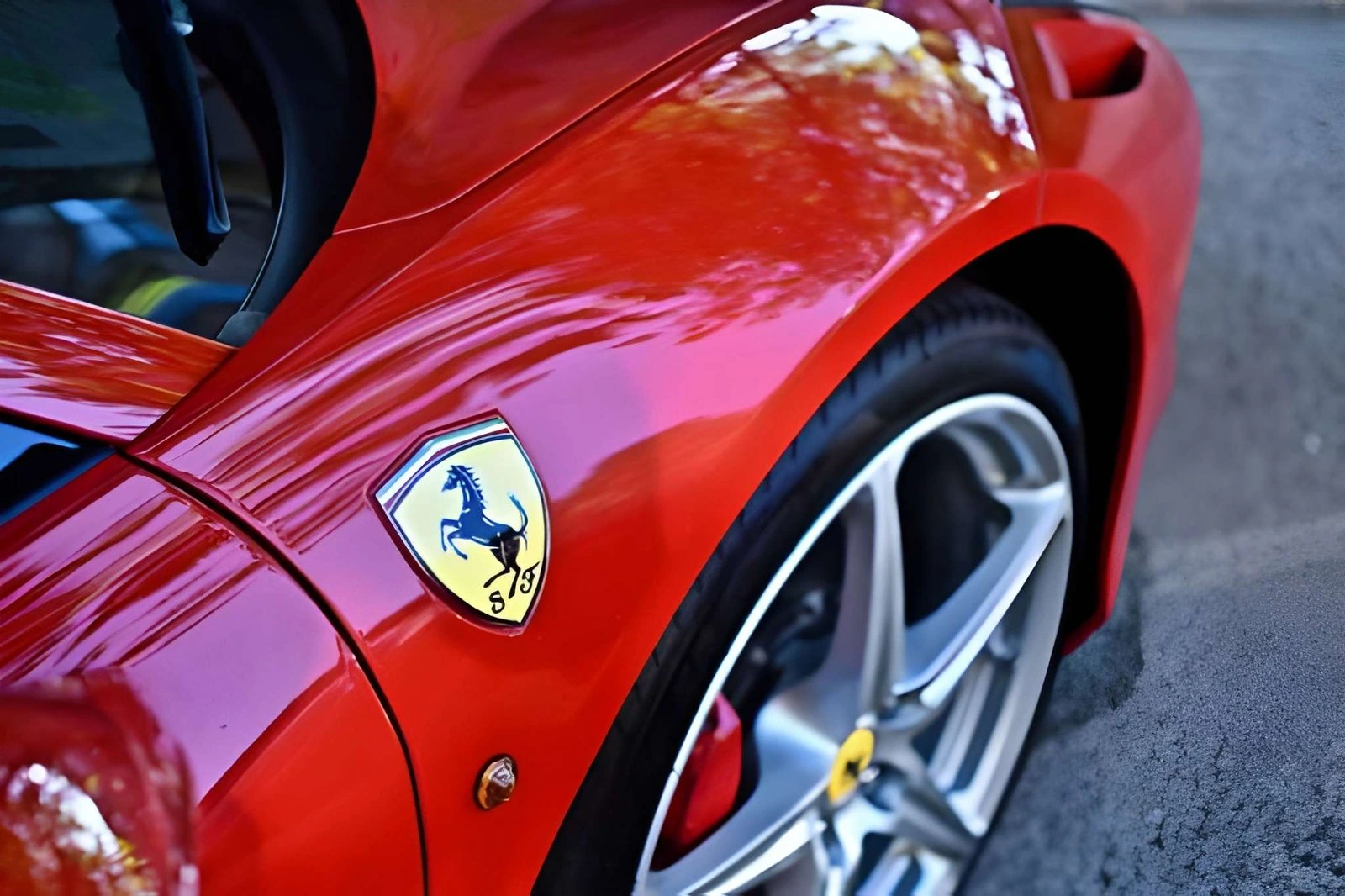
Owning a Ferrari in Dubai is a different experience from owning one almost anywhere else. The roads are good, the weather is dry, and there’s genuine space to appreciate what the car does. But the climate also works against these cars in specific ways — and the workshop market in Dubai ranges from genuinely competent to dangerously overconfident when it comes to Italian exotics.
Ferrari repair is not the same as servicing a BMW or a Toyota. The engineering philosophy is different, the tolerances are tighter, the systems are more interconnected, and the consequences of a misdiagnosis or a poorly executed repair are significantly more expensive. A wrong decision on a Ferrari engine job doesn’t cost AED 2,000 — it costs AED 20,000 to AED 200,000 depending on what gets damaged in the process.
This isn’t written to frighten Ferrari owners. It’s written to give them the information they need to make better decisions about where their car goes and what happens to it when it gets there.
Ferrari Repair in Dubai — Why the Workshop Choice Matters More Than Anywhere Else
Most car repairs have a reasonable margin for error. A slightly off torque spec on a Toyota camshaft cover bolt isn’t ideal, but the consequences are minor. On a Ferrari flat-plane V8 or a mid-mounted V12 running at 9,000 rpm, the margin for error is considerably narrower.
Ferrari engines are built to exceptionally tight tolerances. Bearing clearances, valve timing precision, and oil system pressure requirements that keep these engines alive at high rpm demand that anyone working on them understands not just what they’re doing but why each specification exists. A technician who has never worked on a Ferrari — who is confident but inexperienced with the platform — is a genuine risk to your car.
The Ferrari repair market in Dubai has improved significantly over the past decade. Al Quoz in particular has developed a small number of genuinely capable independent workshops with real Ferrari experience — technicians who have worked on 360, 430, 458, and Roma platforms, who understand the known failure patterns on each generation, and who have invested in Ferrari-compatible diagnostic equipment.
The risk is in the middle tier — workshops that have worked on one or two Ferraris and consider themselves specialists. Confidence without depth is the most dangerous combination in exotic car repair.
A 458 Italia came in for Ferrari repair after another workshop had attempted to resolve an oil consumption issue by replacing valve stem seals. The job was done incorrectly — the head hadn’t been properly torqued during reassembly. The engine developed a coolant leak into cylinder four within three weeks. By the time it reached us, the repair bill had tripled from what a correct first diagnosis would have cost.
Ferrari Repair — The Most Common Problems by Model Generation
Ferrari’s reliability record is better than its reputation suggests — these cars don’t break constantly. But each generation has specific known failure points, and understanding them helps owners anticipate costs and catch problems early.
Ferrari 360 Modena and Spider (1999–2005)
The 360 is one of the more reliable Ferraris from a mechanical standpoint, but it has specific areas to watch.
The rear main seal and intermediate shaft seals are known oil leak points on higher-mileage examples. These are labour-intensive repairs because accessing the seals properly requires significant disassembly. A workshop that quotes a quick turnaround on a 360 rear main seal job either has exceptional Ferrari repair experience or is cutting corners on the process.
The F1 paddle-shift gearbox on 360 models requires regular fluid and filter service — every 20,000 km is the practical recommendation in Dubai’s heat. Neglected F1 gearboxes develop accumulator wear, pump issues, and selector fork problems that turn a AED 800 fluid service into a AED 15,000–25,000 gearbox rebuild. The gearbox gives warning signs — slow shifts, hesitation in auto mode, clunky engagement — but owners who ignore them end up with a much more expensive conversation.
Coolant hose condition on 360 models deserves attention at every Ferrari repair visit. The mid-engine layout means coolant pipes run through the engine bay in locations that receive significant heat soak. Hoses that look acceptable visually can be internally degraded. A cooling system pressure test is not optional on a 360 over 60,000 km.
Ferrari F430 (2004–2009)
The F430 introduced significantly more electronics than the 360, and most Ferrari repair work on this generation involves the electrical and software systems as much as the mechanical ones.
The HELE (High Emotion Low Emissions) system — Ferrari’s cylinder deactivation technology on the F430 — is a known fault source on higher-mileage cars. The system deactivates cylinders under light load to reduce fuel consumption and emissions. When it develops issues, symptoms range from rough idle to misfires to complete system disablement. Proper diagnosis requires Ferrari-compatible diagnostic software to interrogate the HELE control logic — a generic scanner won’t get anywhere near this system.
The F430’s exhaust bypass valve actuators are another regular Ferrari repair item in Dubai. The actuators control the bypass flaps that alter exhaust note and back pressure. They fail from heat cycling and contamination, causing either a permanently open or permanently closed flap. Symptoms: either the car loses its characteristic exhaust note variation or the check engine light appears. Replacement actuators need to be sourced correctly — cheap aftermarket units don’t last.
Clutch wear on the F430 manual is accelerated by Dubai’s traffic. These cars were not designed for the stop-start crawl on Al Khail Road, and clutch life on a car that lives in the city is considerably shorter than on one used primarily for weekend drives. Expect clutch replacement somewhere between 20,000–35,000 km depending on usage pattern. The job requires a rear subframe drop — it’s a significant labour operation.
Ferrari 458 Italia and Spider (2009–2015)
The 458 is the generation that Dubai sees most of, and it’s also the one that generates the most varied Ferrari repair conversations — from minor sensor faults to the most serious issues in the model’s history.
The 458’s direct injection V8 is a sophisticated engine that requires proper maintenance intervals and correct oil specification without exception. Carbon buildup on intake valves is a known issue — the same DFI problem that affects Porsche and BMW direct injection engines. By 40,000–60,000 km, carbon deposits on the valve backs begin affecting idle quality and low-load throttle response. Walnut blasting of the intake ports is the correct fix. On a Ferrari, this is a more involved job than on a regular car — budget accordingly.
The 458’s electronic power steering system can develop faults that cause the steering to lose assistance intermittently. The fault presents as a sudden heaviness in the steering, usually accompanied by a warning light. Diagnosis requires Ferrari diagnostic access — the fault can relate to the EPS control unit, the steering column sensor, or a software issue. Misdiagnosis here is expensive.
Engine mount wear on higher-mileage 458s causes increased vibration through the cabin at idle and low speed. On a car where NVH refinement is a core part of the ownership experience, deteriorating engine mounts become noticeable relatively quickly. Replacement is a proper job — not a quick afternoon task on a Ferrari mid-engine layout.
Ferrari California and California T (2008–2017)
The California is Ferrari’s front-engined GT car and it has a different failure profile from the mid-engine models. The turbocharged California T introduced in 2014 brought its own specific concerns.
The DCT dual-clutch gearbox on California models requires fluid service at correct intervals — this is the same recommendation as every dual-clutch transmission in Dubai’s heat. Neglected DCT fluid on a Ferrari California leads to the same shudder and engagement issues seen on Porsche PDK and Volkswagen DSG units, but the rectification costs are Ferrari-scaled, not Golf-scaled.
Retractable hardtop mechanism faults are common on California models. The folding roof system is complex — hydraulic and electric components working in sequence — and any fault in the sequence stops the roof mid-cycle. In Dubai’s dust environment, the mechanism benefits from regular cleaning and lubrication. A Ferrari repair for a stuck roof mechanism ranges from a minor software reset to a significant hydraulic component replacement depending on what’s failed.
Oil cooler hose condition on California models deserves specific attention. Hose degradation from heat causes slow leaks that contaminate the underfloor — often only visible on a ramp inspection. By the time the oil light flickers, the leak has been developing for some time.
Ferrari Diagnostics — Why Generic Scanners Don’t Work
This point applies across every Ferrari repair scenario. Ferrari vehicles use the SD2 and SDII diagnostic systems — proprietary platforms that communicate with every control unit in the car across Ferrari’s specific network architecture.
A generic OBD-II scanner on a Ferrari reads a fraction of available fault data. It might catch a basic engine misfire code. It won’t access the F1/DCT gearbox control unit, the manettino system, the ABS and SCM (Ferrari’s chassis management) system, the HELE cylinder deactivation controller, or the dozens of other modules that control how the car operates and how it drives.
Proper Ferrari repair diagnosis requires Ferrari SD2/SDII access or a high-grade aftermarket equivalent like the Texa or Autel system with Ferrari-specific coverage. Ask directly before booking any diagnostic work: what system do you use for Ferrari diagnostics? If the answer is a generic code reader or a basic multi-brand scanner, the workshop cannot properly diagnose your car.
A proper diagnostic session on a Ferrari should access all control units, read live data across engine, gearbox, chassis, and electronic systems simultaneously, and provide a fault history that shows cleared codes as well as current active faults. This takes time and skill — it can’t be rushed.
The Real Cost of Ferrari Repair in Dubai
Transparency on costs helps owners make better decisions. These are realistic figures for common Ferrari repair work in Dubai’s market:
- F1/DCT gearbox fluid and filter service: AED 1,800–3,500 depending on model and labour access
- Clutch replacement (F430 or 458 manual): AED 12,000–22,000 including parts and significant labour
- Engine mount replacement (458 or F430): AED 4,500–8,000 depending on mount count and access
- Exhaust bypass valve actuators (F430): AED 2,500–4,500 for both sides including labour
- Intake valve carbon clean (walnut blast — 458): AED 3,500–6,000 depending on access and severity
- Major service (cam belt, fluid, filters — 360 or F430): AED 8,000–18,000 depending on model year and condition findings
- Cooling system hose replacement (360): AED 3,000–5,500 for full hose set with labour
These are ranges, not fixed prices. The actual cost depends on what’s found during inspection, parts availability, and whether additional issues are identified once the car is open. Any Ferrari repair quote that seems significantly below these ranges deserves scrutiny — understand exactly what’s included and what’s been left out before approving the job.
For owners who need a car service plan that accounts for Ferrari’s specific maintenance requirements alongside Dubai’s climate demands, the schedule needs to be built around the car — not copied from a generic European service guide.
What Ferrari Owners in Dubai Should Do Proactively
The most expensive Ferrari repair bills in Dubai come from deferred maintenance — problems that were developing for months and were either ignored or missed because the car went to a workshop without Ferrari-specific knowledge.
Here’s what proactive Ferrari ownership in Dubai looks like:
Annual inspection regardless of mileage — Ferraris in Dubai are sometimes used sparingly. Low annual mileage doesn’t mean the car doesn’t need attention. Rubber components age regardless of use. Fluids degrade thermally even in a car that sits in a garage most of the year. A full inspection annually is the minimum.
F1 and DCT gearbox fluid every 20,000 km — non-negotiable in Dubai’s operating temperatures. The fluid service that prevents a AED 20,000 gearbox rebuild costs AED 2,000–3,500. The economics are straightforward.
Cooling system inspection every service — pressure test the system, check coolant concentration, inspect all hoses physically. Mid-engine Ferraris carry significant cooling system complexity and the consequences of a cooling failure are engine-level.
Full diagnostic scan twice a year — not just when a warning light appears. A proactive scan catches developing faults in the gearbox, chassis management, and emissions systems before they become active problems.
Use a garage near me in Al Quoz that has documented Ferrari experience — ask specifically about which Ferrari models they’ve worked on, what diagnostic system they use, and whether they can show previous Ferrari work. A workshop that genuinely has Ferrari experience won’t hesitate to answer these questions.
When the car needs bodywork — stone chips on the front clam, kerb rash on rear diffuser edges, or more significant panel damage — proper car painting for a Ferrari means colour-matched paint on specialist finishes like Rosso Corsa, Giallo Modena, or Bianco Avus. These colours don’t forgive imprecise paint matching. A colour approximation on a Ferrari stands out immediately.
For breakdowns or situations where the car needs help before it can reach a workshop, a qualified mobile car mechanic with exotic car experience handles many electrical and minor mechanical situations on-site. And proper roadside assistance for a Ferrari means a flatbed only — no wheel-lift, no drag recovery, nothing that puts stress on a low-slung carbon fibre front splitter or the mid-engine undertray.
For owners who need a trusted car mechanic who understands Italian exotic engineering and won’t treat a Ferrari like a high-mileage fleet car — that’s precisely the gap a specialist workshop in Al Quoz is positioned to fill.
FAQ
How often should a Ferrari be serviced in Dubai?
Annually as a minimum regardless of mileage — Dubai's heat degrades fluids and rubber components even on low-use cars.
Can a non-dealer workshop properly service and repair a Ferrari?
Yes — provided they have Ferrari-compatible diagnostics, genuine platform experience, and use correct specification parts and fluids.
What is the most expensive Ferrari repair to avoid through proper maintenance?
Gearbox rebuilds on F1 and DCT models — regular fluid service at correct intervals prevents the majority of these failures.
Why does Dubai's climate affect Ferrari reliability specifically?
Heat accelerates fluid degradation, ages rubber components faster, and stresses the cooling system harder than in temperate markets.
Is Ferrari repair in Dubai significantly more expensive than in Europe?
Parts costs are comparable — labour costs vary widely by workshop, with independents in Al Quoz offering significantly better value than main dealer rates for out-of-warranty cars.
Conclusion
Ferrari repair done properly in Dubai requires genuine platform knowledge, correct diagnostic equipment, and the discipline to diagnose before touching. The cars that end up with compounding repair bills aren’t always the ones with the most miles — they’re the ones that went to the wrong workshop first.
Car Garage Expert in Al Quoz handles Ferrari diagnostics, servicing, and repairs with the experience and equipment these cars actually require. Book your appointment on WhatsApp or find the workshop on Google Maps.