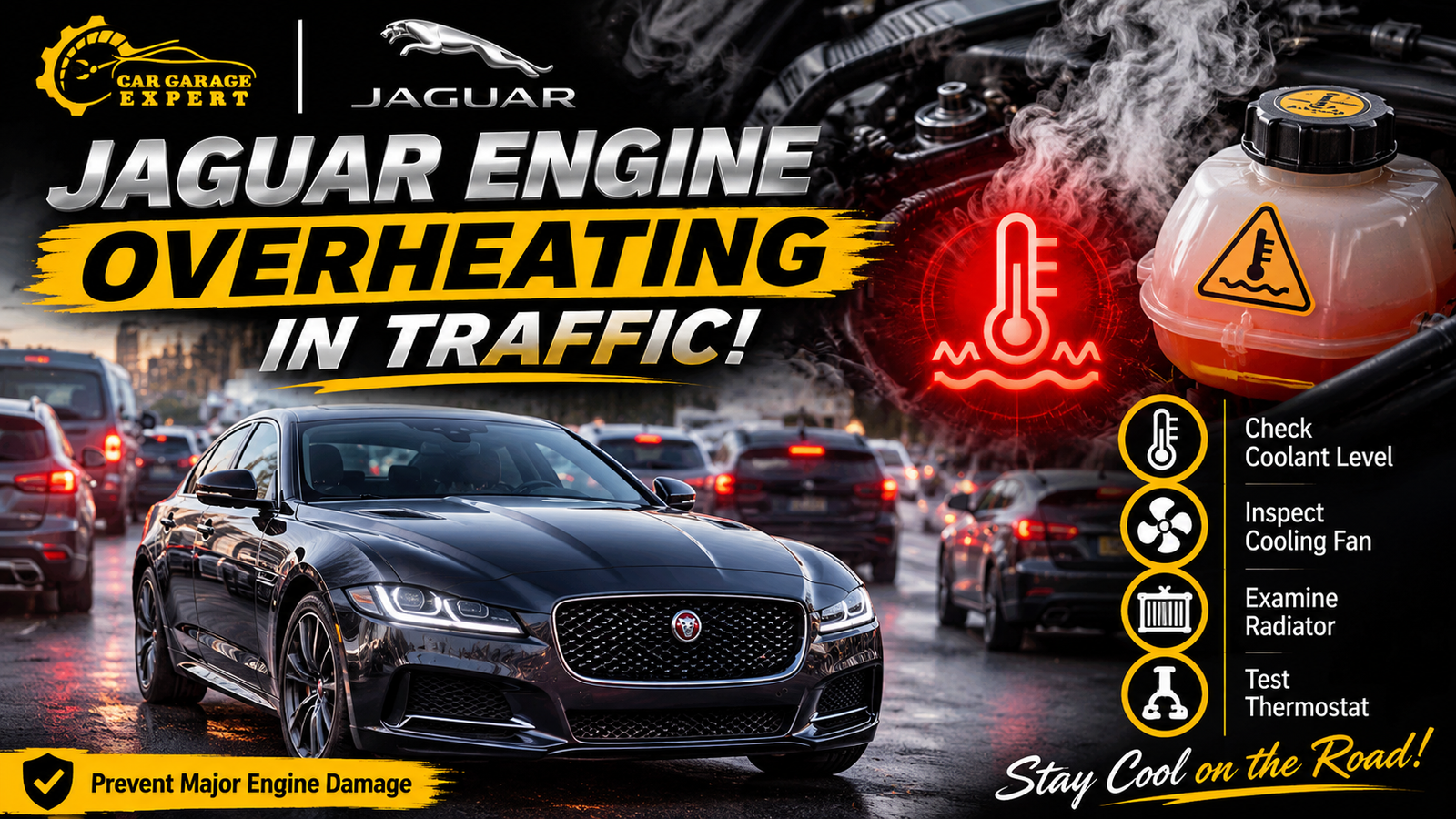
Driving a Jaguar should feel smooth, powerful, and comfortable. However, that experience can quickly change when the engine temperature starts rising while sitting in heavy traffic. Jaguar engine overheating in traffic is a problem that should never be ignored, especially in Dubai, where high outdoor temperatures and frequent traffic congestion can put additional pressure on a vehicle’s cooling system.
Many Jaguar owners notice that their engine temperature remains normal while driving on open roads but begins to increase when the car stops at traffic signals or moves slowly through congested streets. This difference can indicate a problem with the cooling system, radiator fan, thermostat, coolant circulation, or airflow through the radiator.
Modern Jaguar vehicles use advanced engine management and cooling systems to maintain the correct operating temperature. When one or more components fail, the engine may struggle to release excess heat, particularly when the vehicle is stationary.
Understanding why this happens can help prevent expensive engine damage and unexpected breakdowns. This guide explains the common causes, warning signs, diagnostic methods, and repair solutions for Jaguar overheating problems in Dubai.
Why Does a Jaguar Engine Overheat in Traffic?
An engine naturally produces heat during combustion. The cooling system controls this heat by circulating coolant through the engine and transferring excess heat through the radiator.
When a Jaguar travels at higher speeds, air passes through the radiator and helps remove heat. However, when the vehicle stops or moves slowly in traffic, natural airflow decreases significantly.
At this point, the radiator cooling fans become especially important. These fans pull or push air through the radiator to maintain suitable coolant temperatures.
If the cooling fans are not working correctly or another cooling system component is damaged, engine temperature can rise while the vehicle is stationary.
Dubai’s hot weather can make the situation more challenging. High ambient temperatures reduce the difference between the coolant and surrounding air temperatures, making heat dissipation more difficult.
For this reason, an overheating issue that appears occasionally during cooler weather may become more noticeable during Dubai’s summer months.
7 Common Causes of Jaguar Engine Overheating in Traffic
Identifying the actual cause is essential before replacing any parts. Several mechanical and electrical problems can produce similar overheating symptoms.
1. Faulty Radiator Cooling Fan
A faulty radiator fan is one of the first components worth checking when a Jaguar overheats in traffic but maintains normal temperatures at higher speeds.
The cooling fan helps move air through the radiator when natural airflow is limited. It is particularly important during slow driving, prolonged idling, and when the air conditioning system is operating.
Common signs of a radiator fan problem include:
- Engine temperature increases while stationary.
- Temperature improves when driving at higher speeds.
- Cooling fan does not operate when required.
- Air conditioning performance becomes less effective at idle.
- Fan produces unusual noise or operates inconsistently.
A damaged fan motor, faulty relay, wiring issue, control module problem, or temperature sensor fault may prevent the fan from working properly.
A professional diagnostic inspection can identify whether the problem is electrical or mechanical.
2. Low Coolant Level or Coolant Leakage
Coolant absorbs heat from the engine and carries it towards the radiator. If the coolant level becomes too low, the cooling system may struggle to control engine temperature.
Coolant loss can happen because of damaged hoses, loose connections, a leaking radiator, a faulty expansion tank, or a failing water pump.
Some leaks are easy to notice because coolant may collect underneath the vehicle. Others are difficult to identify because coolant can escape slowly or leak only when the engine is hot and the system is pressurized.
Look for these warning signs:
- Low coolant warning on the dashboard.
- Repeated need to top up coolant.
- Visible coolant underneath the vehicle.
- Sweet coolant smell around the engine compartment.
- Rising engine temperature during traffic.
Simply adding coolant does not solve the underlying problem. The source of the leak must be identified and repaired.
3. Blocked or Damaged Radiator
The radiator plays a central role in removing heat from the engine coolant. Over time, internal deposits, corrosion, dirt, and external debris can reduce its cooling efficiency.
Dubai’s dusty environment can also contribute to dirt accumulation around the radiator and air-conditioning condenser.
When airflow becomes restricted, or internal coolant passages become blocked, the radiator may not transfer enough heat away from the engine.
A damaged radiator can also develop leaks around its core, connections, or plastic end tanks.
A qualified Jaguar technician should inspect the radiator for:
- External blockage and dirt accumulation.
- Internal restrictions.
- Coolant leaks.
- Damaged cooling fins.
- Uneven temperature distribution.
Depending on its condition, radiator cleaning or replacement may be required.
4. Faulty Thermostat
The thermostat regulates coolant flow between the engine and radiator. It opens and closes according to engine temperature to maintain the correct operating range.
If the thermostat becomes stuck in the closed position, hot coolant may not circulate properly through the radiator.
This can cause the engine to overheat even when the coolant level is correct.
A faulty thermostat may produce symptoms such as:
- Engine temperature rising unusually quickly.
- Inconsistent temperature readings.
- Poor or irregular cabin heating.
- Overheating during both slow and normal driving.
A diagnostic inspection can confirm whether the thermostat is operating correctly. Replacement is usually necessary if it is stuck or damaged.
5. Water Pump Failure
The water pump circulates coolant throughout the engine and cooling system. Without proper circulation, heat cannot be transferred away from critical engine components effectively.
A failing water pump may develop damaged internal impellers, worn bearings, seal leaks, or other mechanical problems.
In some Jaguar models, water pump issues can become more noticeable as the vehicle ages or accumulates mileage.
Common warning signs include:
- Engine overheating despite sufficient coolant.
- Coolant leakage near the pump.
- Grinding or whining noises.
- Temperature fluctuations.
- Poor coolant circulation.
Driving with a failing water pump can quickly lead to serious engine damage. Professional inspection is recommended as soon as these symptoms appear.
6. Faulty Radiator Cap or Expansion Tank
The radiator cap or expansion tank cap helps maintain the correct pressure inside the cooling system.
A properly pressurized cooling system allows coolant to operate at a higher temperature before boiling. If the cap cannot maintain the required pressure, coolant may escape or boil earlier than expected.
This can result in coolant loss and overheating, particularly during extended journeys or heavy traffic.
A damaged expansion tank may also leak coolant or fail to maintain proper system pressure.
A technician can perform a pressure test to check the condition of the cap, expansion tank, and cooling system connections.
7. Head Gasket Damage
A damaged head gasket is a more serious cause of Jaguar engine overheating.
The head gasket seals the connection between the engine block and cylinder head. If it fails, coolant may enter the combustion chambers, engine oil may become contaminated, or combustion gases may enter the cooling system.
Possible warning signs include:
- Persistent coolant loss without an obvious external leak.
- White exhaust smoke.
- Milky or contaminated engine oil.
- Repeated overheating.
- Bubbles in the coolant expansion tank.
These symptoms do not automatically confirm head gasket failure. A professional inspection, combustion gas test, compression test, or leak-down test may be needed.
Early diagnosis is important because continued driving can cause extensive engine damage.
Why Jaguar Overheating Problems Are More Noticeable in Dubai
Dubai presents several driving conditions that can increase the workload on a vehicle’s cooling system.
High Ambient Temperatures
During summer, outdoor temperatures can become extremely high. The cooling system must work harder to transfer engine heat into the surrounding air.
A cooling system that is already weak may struggle to maintain normal operating temperatures under these conditions.
Heavy Traffic and Frequent Stops
Traffic congestion around areas such as Sheik Zayed Road, Business Bay, Downtown Dubai, and Al Barsha can involve extended periods of slow driving and idling.
At low speeds, natural airflow through the radiator decreases. The radiator fan must compensate for this reduced airflow.
If the fan is weak or another cooling component is failing, engine temperature may increase.
Continuous Air Conditioning Use
Air conditioning is essential for comfortable driving in Dubai. However, the AC system adds heat to the air passing through the condenser, which sits in front of the radiator in many vehicles.
The AC compressor also places an additional load on the engine.
A properly maintained Jaguar should handle normal AC operation without overheating. If the engine temperature rises whenever the AC is switched on, the cooling system and radiator fan operation should be inspected.
Dust and Environmental Contamination
Dust, sand, and debris can collect around the radiator and condenser. This buildup may restrict airflow and reduce heat transfer.
Regular inspection and appropriate cleaning can help maintain cooling system performance.
Warning Signs That Your Jaguar Is Overheating
Recognising early warning signs can prevent a minor cooling system issue from turning into a major engine repair.
Watch for these symptoms:
| Warning Sign | What It May Indicate |
| Temperature gauge rising | Cooling system problem |
| Engine temperature warning | Engine overheating |
| Steam from engine bay | Coolant leak or boiling coolant |
| Low coolant warning | Coolant loss or leakage |
| AC cooling becomes weak at idle | Possible fan or airflow issue |
| Unusual engine smell | Coolant or overheating components |
| Reduced engine performance | Possible engine protection mode |
Some Jaguar models display temperature warnings rather than a traditional temperature gauge. Always pay attention to dashboard messages and warning lights.
Important: If the engine temperature warning appears, do not continue driving in the hope that the temperature will return to normal.
What Should You Do If Your Jaguar Overheats in Traffic?
Taking the correct action can help protect the engine and reduce the risk of expensive repairs.
Follow these steps if your Jaguar begins overheating while driving in Dubai:
Step 1: Turn Off the Air Conditioning
Switch off the AC to reduce additional engine load. This may help temporarily, but it will not repair a faulty cooling system.
Step 2: Move to a Safe Location
If possible, carefully move away from moving traffic and stop in a safe location. Turn on the hazard lights if necessary.
Avoid stopping in a dangerous position or remaining in a live traffic lane.
Step 3: Switch Off the Engine
If the temperature warning remains active or the engine is overheating, switch off the engine as soon as it is safe.
Do not keep the engine running while waiting for the temperature to decrease.
Step 4: Allow the Engine to Cool
Wait until the engine has cooled completely before any cooling system inspection.
Never open the radiator cap or expansion tank cap while the engine is hot. Pressurised coolant can escape suddenly and cause severe burns.
Do not pour cold water over a hot engine. Sudden temperature changes can damage components.
Step 5: Arrange Professional Assistance
If the engine has overheated, arrange roadside recovery or professional assistance.
A qualified Jaguar technician should inspect the vehicle before it returns to normal use.
How Professional Jaguar Overheating Diagnosis Works
Replacing parts without identifying the actual problem can waste money and leave the overheating issue unresolved.
A professional Jaguar garage should follow a systematic diagnostic process.
- Computer Diagnostics
A diagnostic scanner is used to check the engine control module for stored fault codes and relevant live data. Depending on the model, this may help identify temperature sensor, fan control, or cooling system issues.
- Cooling System Pressure Test
A pressure test helps identify coolant leaks around hoses, radiator connections, expansion tanks, and other cooling system components.
- Radiator Fan Inspection
The technician checks fan operation, electrical connections, relays, control signals, and fan speed where applicable.
- Thermostat and Water Pump Inspection
Coolant circulation and thermostat operation are assessed to identify possible restrictions or mechanical failures.
- Radiator and Condenser Inspection
The radiator and AC condenser are checked for external blockage, damaged fins, leaks, and signs of restricted airflow.
- Head Gasket Testing
If the initial inspection suggests an internal engine leak, additional testing may be required to check for combustion gases in the cooling system or coolant contamination.
This step-by-step approach helps identify the underlying cause and ensures that the recommended repair addresses the actual fault.
Jaguar Overheating Repair Services in Dubai
Once the cause has been identified, the correct repair depends on the affected component and the specific Jaguar model.
At Car Garage Expert, Jaguar owners can seek professional assistance for common cooling system problems and related engine concerns.
Available repair requirements may include:
Jaguar Radiator Fan Repair
A faulty radiator fan motor, wiring connection, or control component can affect cooling performance during traffic congestion. Inspection helps determine whether repair or replacement is needed.
Jaguar Radiator Repair and Replacement
A leaking, damaged, or internally restricted radiator may require professional cleaning or replacement. The correct solution depends on the radiator’s condition.
Jaguar Coolant Leak Detection
Pressure testing and visual inspection help locate coolant leaks around hoses, pumps, radiators, and expansion tanks.
Jaguar Thermostat Replacement
A faulty thermostat can interrupt proper coolant circulation. Replacing the damaged component helps restore the intended cooling system operation.
Jaguar Water Pump Replacement
A damaged water pump may require replacement to restore proper coolant circulation and prevent further overheating.
Jaguar Engine Diagnostics
Electronic diagnostics help identify temperature-related faults, sensor problems, and other issues affecting engine performance.
For the best results, repairs should follow the vehicle manufacturer’s specifications and use compatible replacement parts and the correct coolant type.
How to Prevent Jaguar Engine Overheating in Dubai
Preventive maintenance is one of the best ways to reduce the risk of unexpected overheating.
Here are some practical maintenance tips for Jaguar owners.
- Check coolant levels regularly: Inspect the coolant reservoir when the engine is completely cold. Follow the manufacturer’s recommended procedure and coolant specifications.
- Inspect cooling system hoses: Look for cracks, swelling, loose connections, or signs of coolant leakage.
- Maintain the radiator: Ensure the radiator and condenser remain free from excessive dust and debris.
- Check radiator fan operation: Have the fan system inspected if engine temperature increases during idling.
- Replace coolant when recommended: Follow the maintenance schedule specified for the particular Jaguar model.
- Pay attention to dashboard warnings: Never ignore temperature alerts or repeated low coolant messages.
- Schedule regular servicing: Routine inspections can identify worn components before they cause major problems.
- Investigate repeated overheating: If the problem returns after adding coolant or replacing a component, request a complete cooling system diagnosis.
Jaguar models can have different engine configurations and cooling system designs. Maintenance and repair procedures should always be selected according to the vehicle’s model, engine, and production year.
Why Choose Car Garage Expert for Jaguar Overheating Problems in Dubai?
Finding the correct cause of an overheating problem is more important than simply replacing a faulty-looking component.
Car Garage Expert focuses on identifying vehicle problems through proper inspection and diagnostic procedures before recommending suitable repairs.
When dealing with Jaguar overheating issues, important service considerations include:
- Accurate Fault Diagnosis: Identify the underlying cooling system problem rather than relying only on visible symptoms.
- Experienced Technicians: Use technicians familiar with modern vehicle cooling systems and Jaguar repair requirements.
- Cooling System Inspection: Check the radiator, thermostat, water pump, cooling fans, hoses, and coolant reservoir.
- Suitable Replacement Parts: Select components compatible with the specific Jaguar model.
- Preventive Maintenance Advice: Identify other cooling system concerns that may lead to future overheating.
- Dubai Driving Conditions: Consider high ambient temperatures, frequent idling, and regular AC use when assessing cooling performance.
Whether the issue involves a radiator fan, coolant leak, thermostat, or water pump, a proper inspection helps determine the right repair.
For Jaguar owners experiencing rising engine temperatures in Dubai traffic, arranging a professional inspection early can help avoid unnecessary repair costs and serious engine damage.
Frequently Asked Questions (FAQs)
1. Why Does My Jaguar Overheat Only in Traffic but Not on the Highway?
This commonly happens when the radiator cooling fan is not working correctly. At higher speeds, natural airflow helps cool the radiator. During traffic congestion, the cooling fan must provide sufficient airflow. A faulty fan, blocked radiator, or weak cooling system can cause the temperature to rise while stationary.
2. Can Dubai’s Hot Weather Cause My Jaguar Engine to Overheat?
High outdoor temperatures can increase the workload on the cooling system. However, a properly maintained Jaguar should normally operate within its designed temperature range. If overheating occurs, components such as the radiator, fan, thermostat, and water pump should be inspected.
3. Is It Safe to Drive a Jaguar With an Overheating Warning?
No. Continuing to drive with an active overheating warning can cause severe engine damage, including cylinder head warping and head gasket failure. Stop safely, switch off the engine, allow it to cool, and arrange professional assistance.
4. How Much Does Jaguar Overheating Repair Cost in Dubai?
The cost depends on the cause of the problem, the Jaguar model, replacement parts, and labour requirements. A radiator fan repair may cost less than a radiator, water pump, or head gasket replacement. A proper inspection is necessary before providing an accurate repair estimate.
5. How Can I Prevent My Jaguar From Overheating During Dubai Summer?
Check coolant levels, inspect hoses, maintain the radiator, and ensure the cooling fans work correctly. Follow the recommended servicing schedule and address temperature warnings immediately. Regular cooling system inspections are particularly useful before the summer season.
Conclusion
Jaguar engine overheating in traffic can result from several problems, including faulty radiator fans, coolant leaks, blocked radiators, thermostat failure, and damaged water pumps. In Dubai, high outdoor temperatures, heavy traffic, and continuous AC use can make existing cooling system problems more noticeable.
The most important step is identifying the actual cause before replacing components. Ignoring rising engine temperatures can lead to serious engine damage and expensive repairs.
Visit us in our Al Quoz, Dubai branch or visit Car Garage Expert
Car Garage Expert can help Jaguar owners address cooling system concerns through professional inspection, fault diagnosis, and suitable repair solutions. If your Jaguar temperature rises while driving through Dubai traffic, arrange an inspection before the problem becomes more serious.