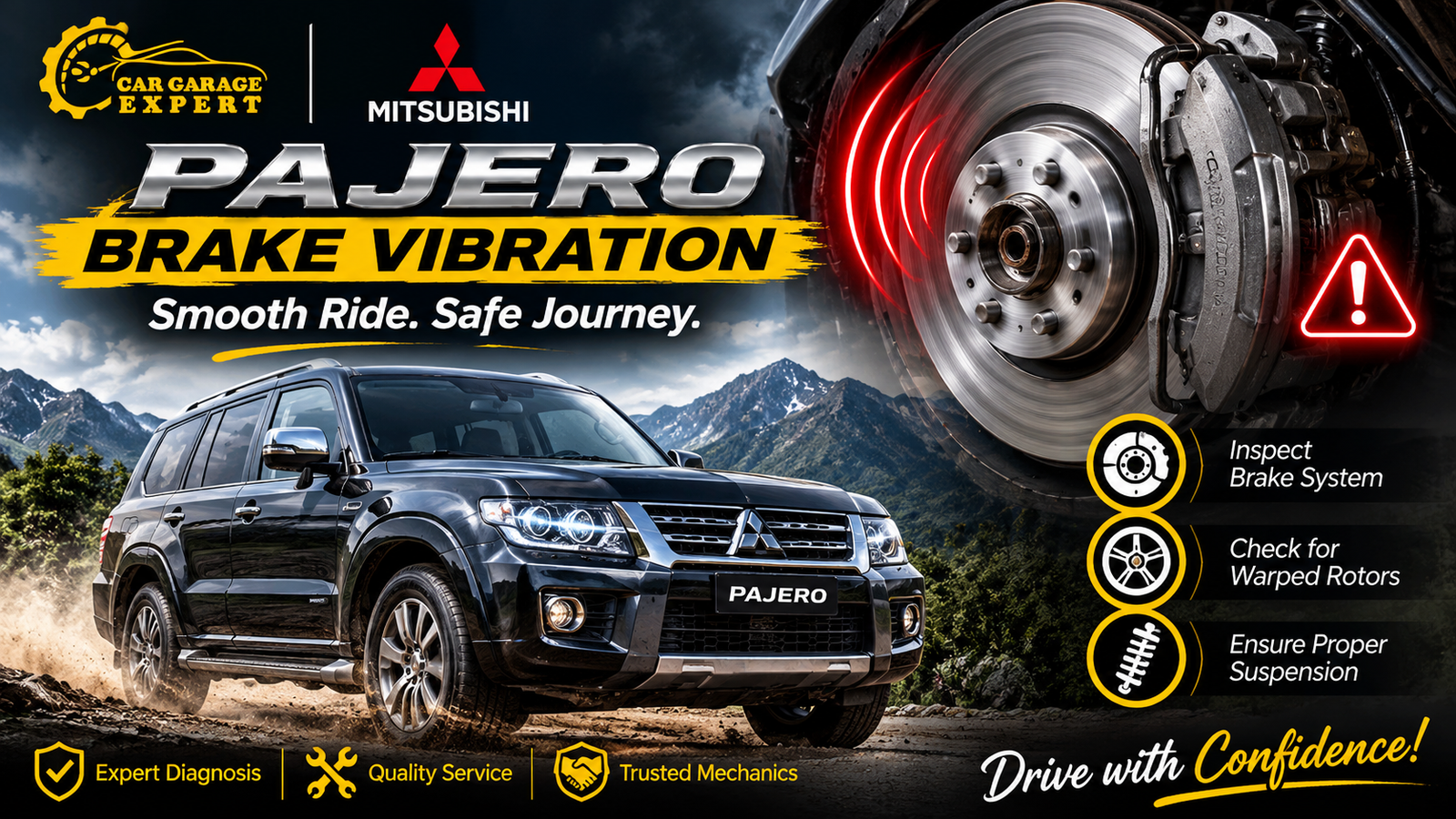
The Mitsubishi Pajero is a powerful and dependable SUV designed to handle different driving conditions, from busy city roads to challenging off-road environments. However, like any vehicle, its braking system experiences wear over time. One problem that Pajero owners should never ignore is Mitsubishi Pajero brake vibration, especially when applying the brakes at moderate or high speeds.
If you notice shaking through the steering wheel, pulsing in the brake pedal, or unusual vibrations when slowing down, your vehicle may have an underlying braking or suspension issue. These symptoms can result from worn brake pads, uneven brake discs, sticking calipers, damaged suspension components, or other mechanical problems.
In Dubai, frequent stop-and-go traffic, high temperatures, and demanding driving conditions can place additional demands on your vehicle’s braking system. Regular inspections and timely maintenance are essential to maintaining reliable braking performance.
At Car Garage Expert, understanding the source of brake vibration is the first step towards an effective repair. This guide explains the common causes, warning signs, diagnostic procedures, and repair solutions to help Mitsubishi Pajero owners maintain safe and comfortable driving.
What Does Mitsubishi Pajero Brake Vibration Mean?
Brake vibration refers to an unusual shaking, pulsating, or shuddering sensation that occurs when you press the brake pedal. Depending on the underlying problem, you may feel the vibration through the steering wheel, brake pedal, or entire vehicle.
For example, if the steering wheel shakes while braking, the problem may involve the front brake discs, uneven braking force, or related wheel and suspension components. If the brake pedal repeatedly pushes against your foot, uneven brake disc thickness or rotor runout may be responsible.
Some drivers notice the vibration only when braking at higher speeds, while others experience it even during low-speed stops.
It is important to understand that brake vibration is not a normal characteristic of a healthy braking system. Although brief brake pedal pulsation can occur when the ABS activates during emergency braking or on slippery surfaces, repeated vibration during ordinary braking requires professional inspection.
7 Common Causes of Mitsubishi Pajero Brake Vibration
Identifying the correct cause is important because replacing brake pads or discs without investigating the underlying issue may not solve the problem permanently.
Here are seven common reasons your Mitsubishi Pajero may vibrate when braking.
1. Warped or Uneven Brake Discs
Uneven brake disc surfaces are among the most common causes of brake vibration. Although drivers often describe this condition as warped rotors, the actual issue may involve disc thickness variation or excessive lateral runout.
When the brake disc rotates, uneven contact between the disc and brake pads creates inconsistent braking force. This can produce steering wheel shaking and brake pedal pulsation.
Possible contributing factors include:
- Excessive braking temperatures.
- Uneven brake pad deposits.
- Incorrect brake disc installation.
- Excessive rotor runout.
- Poor-quality replacement components.
- Incorrect wheel nut tightening.
If the brake discs have developed excessive thickness variation, a qualified technician should measure them and determine whether resurfacing or replacement is necessary.
2. Worn or Damaged Brake Pads
Brake pads create friction against the brake discs to slow down your Mitsubishi Pajero. Over time, the friction material becomes thinner and may wear unevenly.
Damaged, contaminated, or incorrectly fitted brake pads can cause inconsistent contact with the rotor. This may result in vibration, squealing, grinding noises, or reduced braking performance.
Common warning signs include:
- Squeaking or grinding sounds.
- Increased stopping distance.
- Uneven pad thickness.
- Brake pedal vibration.
- Reduced braking confidence.
Replacing worn brake pads with suitable, vehicle-compatible components can restore proper friction and braking performance. However, the brake discs and calipers should also be inspected to prevent premature wear of the new pads.
3. Sticking Brake Calipers
Brake calipers apply pressure to the brake pads when you press the pedal. If a caliper piston becomes stuck or its sliding pins cannot move correctly, the brake pads may remain in contact with the rotor.
This can create excessive friction, uneven braking, overheating, and vibration.
A sticking caliper may also cause your Mitsubishi Pajero to pull towards one side during braking.
Other possible symptoms include:
- Burning smells near a wheel.
- Excessive heat around one brake assembly.
- Uneven brake pad wear.
- Poor fuel efficiency caused by brake drag.
- Unusual wheel resistance.
Professional inspection of the caliper pistons, seals, and slide pins can identify the problem. Depending on their condition, the calipers may require cleaning, servicing, rebuilding, or replacement.
4. Worn Suspension and Steering Components
Not every vibration felt during braking originates from the brake system itself. Worn suspension and steering components can also contribute to shaking and instability.
The Mitsubishi Pajero is a substantial SUV, and its suspension system plays an important role in maintaining vehicle stability during braking.
Components that may require inspection include:
- Control arm bushings.
- Ball joints.
- Tie rod ends.
- Steering linkage.
- Shock absorbers.
- Wheel bearings.
When these components develop excessive play or wear, the vehicle may become unstable during deceleration. Brake application can make existing steering and suspension problems more noticeable.
A complete inspection helps determine whether the vibration originates from the braking system, suspension, or a combination of both.
5. Overheated Brake Components
Repeated hard braking, driving downhill, carrying heavy loads, or operating in demanding conditions can increase brake temperatures.
Excessive heat may contribute to uneven friction deposits, disc surface damage, and accelerated brake pad deterioration.
Dubai’s high ambient temperatures can make heat management particularly important, especially when combined with heavy traffic and frequent braking.
Signs of overheating may include:
- A burning smell after braking.
- Blue or dark patches on brake discs.
- Reduced braking effectiveness.
- Unusual brake noises.
- Vibration during repeated stops.
Allowing an overheated braking system to cool is not a permanent solution if the components have already suffered damage. A technician should inspect the discs, pads, calipers, and brake fluid before returning the vehicle to normal use.
6. Incorrect Wheel Installation or Wheel Nut Tightening
Incorrect wheel installation can contribute to brake disc alignment problems and vibration.
For example, dirt, rust, or corrosion between the wheel hub and brake disc mounting surfaces may prevent proper seating. Uneven wheel nut tightening can also contribute to excessive runout or related vibration problems.
This issue may become noticeable after tyre replacement, brake servicing, or wheel removal.
A professional workshop should check:
- Wheel hub mounting surfaces.
- Brake disc seating.
- Wheel studs and nuts.
- Correct tightening sequence.
- Manufacturer-specified tightening torque.
Proper installation is important when fitting new brake discs or servicing existing components.
7. ABS or Wheel Speed Sensor Problems
The Anti-lock Braking System (ABS) helps prevent the wheels from locking during hard braking.
It uses wheel speed sensors to monitor wheel rotation and adjust hydraulic brake pressure when necessary.
A damaged sensor, wiring problem, or ABS-related fault can affect system operation. Drivers may notice an ABS warning light, unusual braking behaviour, or unexpected pedal feedback.
However, ordinary ABS activation can produce temporary brake pedal pulsation. This is generally expected when the system is actively preventing wheel lockup.
If the vibration happens during normal braking or the ABS warning light remains illuminated, professional diagnostic scanning and sensor inspection are recommended.
Common Warning Signs of Brake Problems in a Mitsubishi Pajero
Recognising the symptoms early can help prevent minor brake issues from developing into expensive repairs.
Here are some signs that indicate your Pajero’s braking system needs attention.
Steering Wheel Shaking During Braking
If your steering wheel shakes whenever you apply the brakes, the front brake discs, wheel hubs, or related suspension components may require inspection.
Pulsating Brake Pedal
A brake pedal that repeatedly moves or pulses under normal braking may indicate brake disc thickness variation or another braking system issue.
Grinding or Squealing Sounds
Metallic grinding can indicate severely worn brake pads, while squealing may result from pad wear indicators, surface contamination, or other brake component issues.
Vehicle Pulling to One Side
If your Mitsubishi Pajero moves towards the left or right while braking, possible causes include sticking calipers, uneven braking force, tyre problems, or worn suspension components.
Increased Stopping Distance
If your SUV requires more distance to stop than usual, the braking system may have worn pads, damaged discs, contaminated components, or hydraulic problems.
Important: If you experience severe vibration, grinding, brake fluid leakage, a soft or sinking brake pedal, or reduced braking ability, stop driving when it is safe to do so and arrange professional assistance.
How Professionals Diagnose Mitsubishi Pajero Brake Vibration
Correct diagnosis is essential for preventing unnecessary part replacements and recurring problems.
At Car Garage Expert, a systematic brake inspection should cover the following areas.
1. Initial Vehicle Inspection
The technician discusses the symptoms and checks when the vibration occurs.
Important questions include:
- Does the steering wheel shake during braking?
- Does the brake pedal pulsate?
- Does the vibration occur at high speeds?
- Does the vehicle pull towards one side?
- Does the problem appear after repeated braking?
This information helps narrow down the possible causes.
2. Brake Pad and Disc Inspection
The brake pads are checked for thickness, uneven wear, contamination, and physical damage.
The brake discs are examined for scoring, corrosion, heat spots, and uneven surface deposits.
A micrometer and dial indicator may be used to measure disc thickness variation and lateral runout against the specifications for the particular Pajero model.
3. Caliper and Brake Fluid Inspection
The technician checks the caliper pistons, slide pins, brake hoses, and hydraulic components.
Brake fluid condition and level are also inspected because contaminated fluid, leakage, or hydraulic problems can affect braking performance.
4. Suspension and Wheel Inspection
If the braking components appear normal, the inspection may extend to the wheel bearings, control arm bushings, ball joints, steering linkage, and tyres.
Wheel balance and alignment should also be considered when the vehicle vibrates outside braking conditions.
5. Diagnostic Scanning and Road Testing
If ABS or electronic brake system problems are suspected, diagnostic equipment can help identify stored fault codes and sensor-related issues.
A controlled road test may then be performed to verify the symptoms after the necessary repairs.
Effective Repair Solutions for Mitsubishi Pajero Brake Vibration
The correct repair depends on the inspection results. Not every vibration problem requires complete brake system replacement.
Brake Disc Resurfacing or Replacement
If the discs have minor surface imperfections and sufficient material remains above the manufacturer’s minimum thickness, resurfacing may be an option.
However, discs that are excessively worn, cracked, damaged, or below the permitted thickness must be replaced.
Brake Pad Replacement
Worn or damaged pads should be replaced with suitable components designed for the specific Mitsubishi Pajero model and braking configuration.
The technician should also inspect the discs and calipers to ensure proper contact and prevent uneven wear.
Brake Caliper Servicing
Sticking calipers may require cleaning, lubrication of appropriate sliding components, seal replacement, rebuilding, or complete replacement.
Restoring proper caliper movement helps maintain balanced braking performance.
Suspension and Steering Repairs
Damaged bushings, worn ball joints, faulty tie rods, or other defective components should be repaired or replaced when they contribute to braking instability.
ABS System Repair
If an electronic fault is confirmed, the technician may need to repair wiring, replace a faulty wheel speed sensor, or investigate the ABS hydraulic control unit.
After the repair, the system should be checked to confirm correct operation.
Why Regular Brake Maintenance Matters in Dubai
Dubai presents several driving conditions that make regular brake maintenance important for Mitsubishi Pajero owners.
Frequent Stop-and-Go Traffic
Busy roads and congested routes require repeated braking. This increases the workload on brake pads, discs, and calipers.
High Ambient Temperatures
High outside temperatures combined with demanding driving conditions can increase thermal stress on braking components.
Regular inspection helps identify heat-related wear and potential problems before they affect braking performance.
Long-Distance Driving
Drivers travelling between Dubai, Abu Dhabi, Sharjah, and other Emirates may experience different road conditions and braking demands.
A properly maintained braking system supports consistent performance during longer journeys.
Off-Road and Desert Driving
The Pajero is widely appreciated for its off-road capability. However, driving through sand and dusty environments can introduce additional contamination around wheels and braking components.
After demanding off-road trips, checking the brake discs, pads, calipers, and surrounding components is a sensible maintenance practice.
How to Prevent Mitsubishi Pajero Brake Vibration
Although brake components naturally wear over time, proper maintenance can reduce the likelihood of premature problems.
Follow these practical recommendations:
- Inspect brake pads and discs at recommended service intervals.
- Replace worn brake pads before they damage the discs.
- Use quality brake components compatible with your Pajero.
- Avoid unnecessary hard braking.
- Maintain a safe following distance in heavy traffic.
- Check brake fluid according to the manufacturer’s maintenance schedule.
- Inspect calipers and sliding pins during brake servicing.
- Ensure wheels are installed using the correct tightening procedure.
- Check suspension and steering components regularly.
- Arrange an inspection after demanding off-road driving.
Preventive maintenance is generally more effective and economical than waiting until a braking problem becomes severe.
Professional Mitsubishi Pajero Brake Repair in Dubai – Car Garage Expert
Experiencing unusual brake vibration can make driving uncomfortable and potentially unsafe. Finding the correct cause is essential to restoring your Mitsubishi Pajero’s braking performance.
Car Garage Expert provides automotive maintenance and repair solutions for drivers looking to maintain their vehicles in proper working condition.
Whether your Pajero has steering wheel vibration, uneven braking, worn brake pads, damaged discs, or suspected caliper problems, a systematic inspection can help identify the appropriate repair.
Our recommended brake service process focuses on:
- Brake pad and disc condition.
- Brake caliper inspection.
- Brake fluid and hydraulic system checks.
- ABS diagnostics when required.
- Suspension and steering component inspection.
- Repair recommendations based on the vehicle’s condition.
Rather than replacing components without proper diagnosis, the objective should be to identify the underlying issue and recommend an appropriate solution.
Looking for Mitsubishi Pajero brake repair in Dubai? Contact Car Garage Expert to arrange a professional inspection and get your braking concerns assessed.
Your vehicle’s braking system deserves attention before a small vibration develops into a more serious safety concern.
Frequently Asked Questions (FAQs)
1. Why does my Mitsubishi Pajero vibrate when I press the brakes?
The most common possibilities include uneven brake disc thickness, excessive rotor runout, worn brake pads, sticking calipers, or damaged suspension components. A professional inspection is necessary to identify the exact cause.
2. Can warped brake discs cause steering wheel vibration in a Pajero?
Yes. Uneven brake disc surfaces or thickness variation can create inconsistent braking force, which may produce steering wheel vibration and brake pedal pulsation.
3. Is it safe to drive a Mitsubishi Pajero with brake vibration?
It depends on the severity and underlying cause. Mild vibration still requires inspection, while severe shaking, grinding, reduced braking ability, fluid leakage, or a sinking pedal means you should stop driving and arrange professional assistance.
4. How much does Mitsubishi Pajero brake repair cost in Dubai?
The cost depends on the specific problem, vehicle model, replacement parts, and labour involved. Brake pad replacement generally differs in cost from brake disc replacement, caliper repairs, or ABS system repairs. A proper inspection is needed for an accurate quotation.
5. How can I prevent brake vibration in my Mitsubishi Pajero?
Schedule regular brake inspections, replace worn pads on time, use suitable replacement parts, maintain the braking system, and check calipers, suspension, and wheel installation. Avoiding unnecessary hard braking can also help reduce excessive component wear.
Conclusion
Mitsubishi Pajero brake vibration is a problem that should never be ignored, particularly when it affects steering stability, pedal response, or stopping performance. Uneven brake discs, worn brake pads, sticking calipers, overheated components, and suspension problems are among the possible causes.
The most effective solution is to identify the underlying issue through a proper inspection rather than replacing parts based on symptoms alone.
For Mitsubishi Pajero owners in Dubai, regular brake maintenance is especially important because daily traffic, high temperatures, and demanding driving conditions can place additional stress on vehicle components.
Visit us in our Al Quoz, Dubai branch or visit Car Garage Expert
Car Garage Expert can help you identify potential braking problems and determine the appropriate repair approach. Arrange a professional brake inspection to keep your Mitsubishi Pajero operating with reliable braking performance and greater driving confidence.