Your car often gives you clues before a breakdown happens. A strange noise, a dashboard light, weak air conditioning, or changes in braking performance can signal a problem that needs attention. Recognizing these symptoms early can help you stay safe and avoid expensive repairs.
For drivers in Dubai, regular vehicle checks are especially important. High temperatures, heavy traffic, long journeys, and frequent air-conditioning use can put additional demands on a vehicle’s cooling, electrical, braking, and tire systems. Dubai’s Roads and Transport Authority (RTA) recommends regular vehicle inspections and checks of essential components to help prevent mechanical failures.
This guide explains 15 common car warning signs, what they may mean, and when to visit a professional garage. Whether you drive a family SUV, a luxury vehicle, or a daily commuter car, understanding these symptoms can help you make better maintenance decisions.
Why Car Warning Signs Matter in Dubai
Dubai’s driving conditions can make small mechanical problems more serious if you ignore them. Vehicles regularly operate in high temperatures, spend time in slow-moving traffic, and rely heavily on air conditioning. These conditions make it important to maintain the engine cooling system, tires, battery, brakes, and other essential components.
According to the Dubai RTA’s vehicle inspection and summer maintenance guidance, drivers should regularly check tire condition, engine oil, coolant, and possible fluid leaks.
Ignoring an early symptom can let a relatively simple fault affect other parts of the vehicle. For example, driving with an overheating engine can cause serious damage.
Understanding what your car is telling you helps you decide whether to arrange a garage inspection soon or stop driving immediately.
15 Car Warning Signs You Should Never Ignore
1. Dashboard Warning Lights Stay On
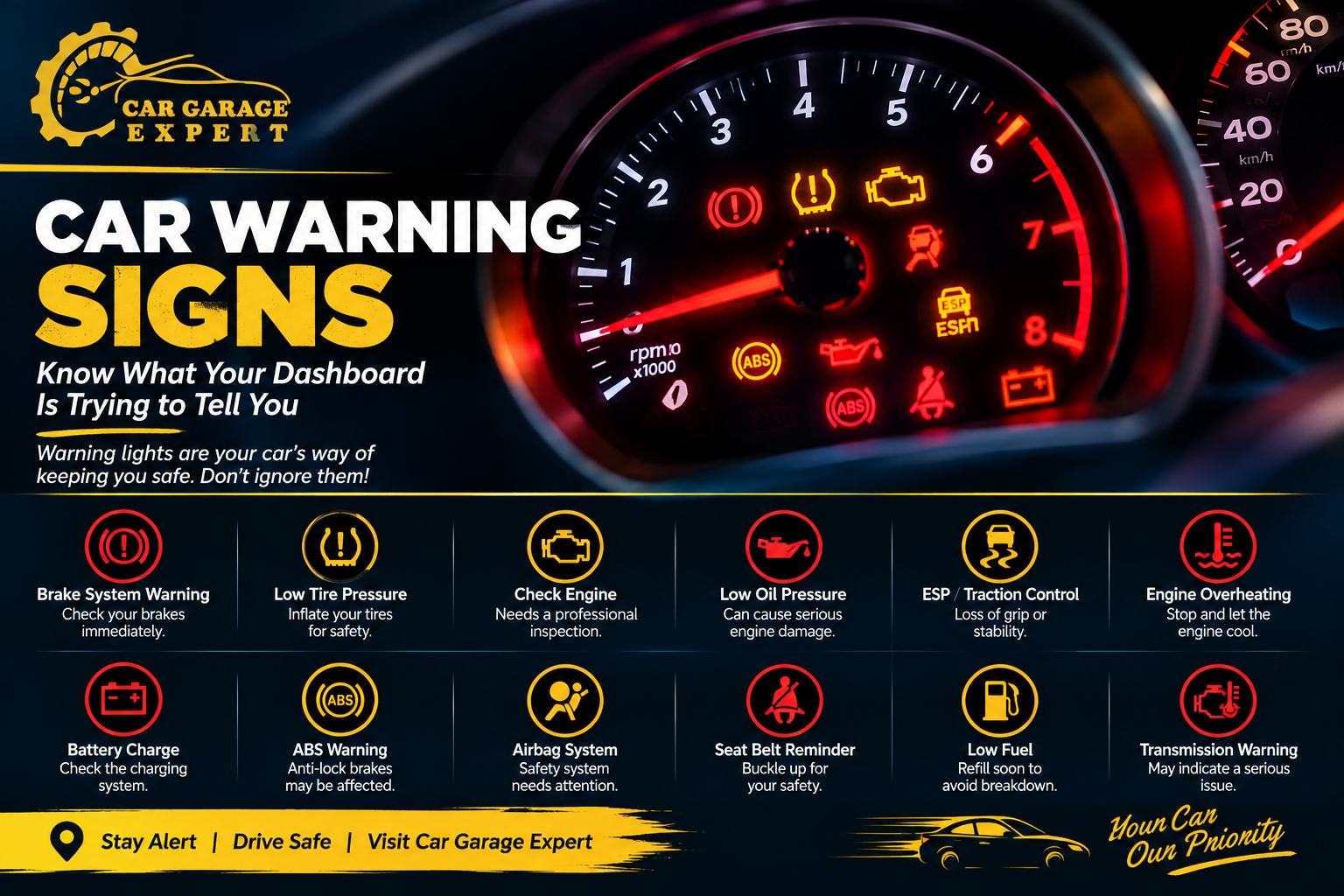
Dashboard warning lights are among the clearest indications that your vehicle needs attention. Depending on the symbol, the problem could involve the engine, oil pressure, battery charging system, brakes, tires, or engine temperature.
A yellow or amber light commonly indicates that a system needs attention. A red warning light often signals a more urgent problem, although the meaning depends on the specific symbol and vehicle.
What to do: Check your owner’s manual to identify the warning. Arrange a diagnostic inspection for an unfamiliar warning that remains illuminated. If the oil-pressure or engine-temperature warning indicates a serious fault, or another critical red warning appears, pull over safely and switch off the engine when appropriate.
Never assume a warning light is harmless simply because the car still feels normal.
2. The Engine Temperature Rises Above Normal
Engine overheating is a serious concern for drivers in Dubai, especially in hot weather or on long journeys. The temperature gauge may rise above normal, or a temperature warning light may appear on the dashboard.
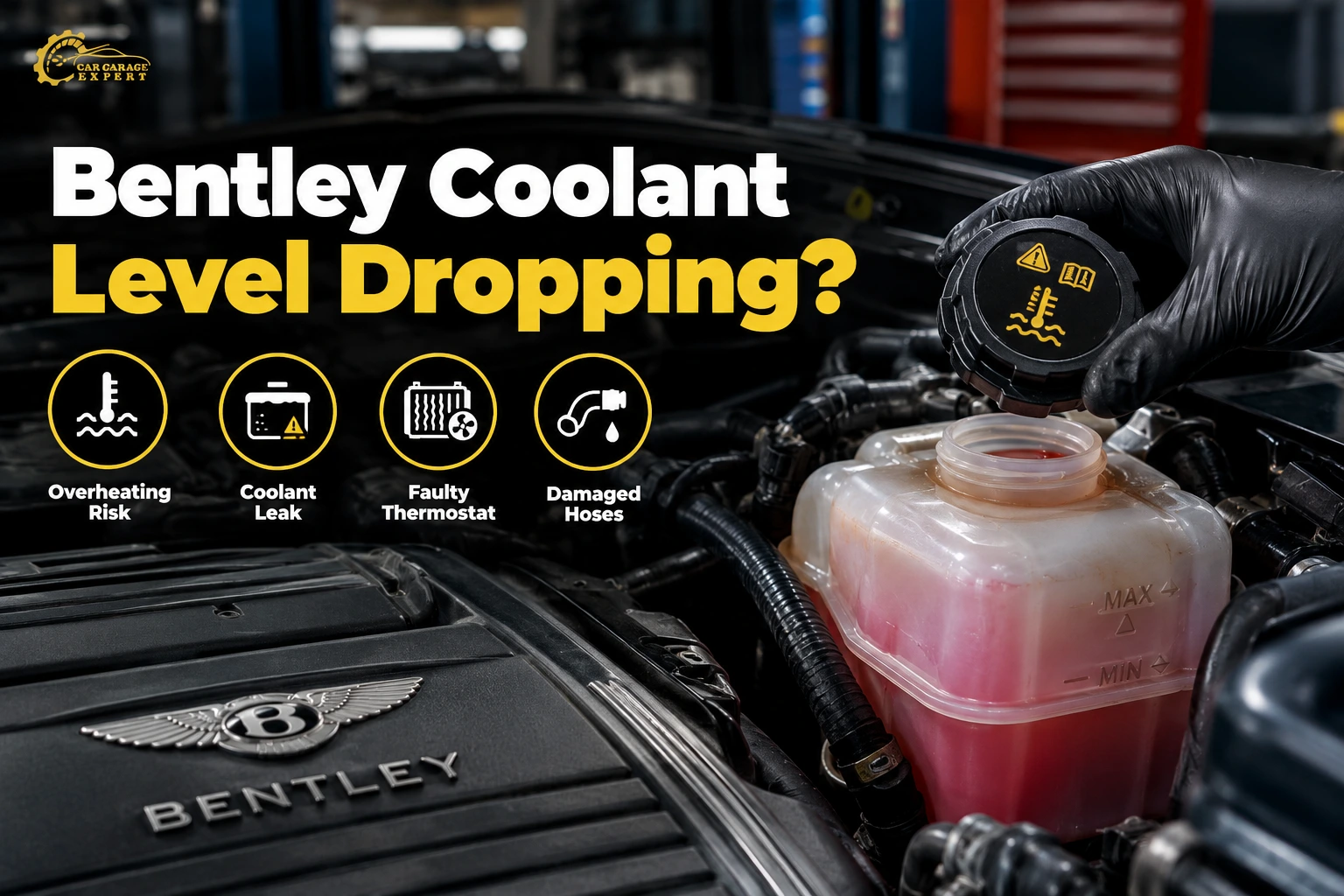
Possible causes include low coolant, a leaking radiator, a faulty thermostat, a damaged water pump, or a cooling fan problem.
What to do: Stop in a safe place and switch off the engine if it is overheating. Allow it to cool completely before any inspection. Never open a hot radiator cap or coolant reservoir because pressurized coolant can cause severe burns.
If the temperature rises again or coolant is leaking, arrange professional assistance rather than continuing the journey.
3. Brakes Make Squealing or Grinding Noises
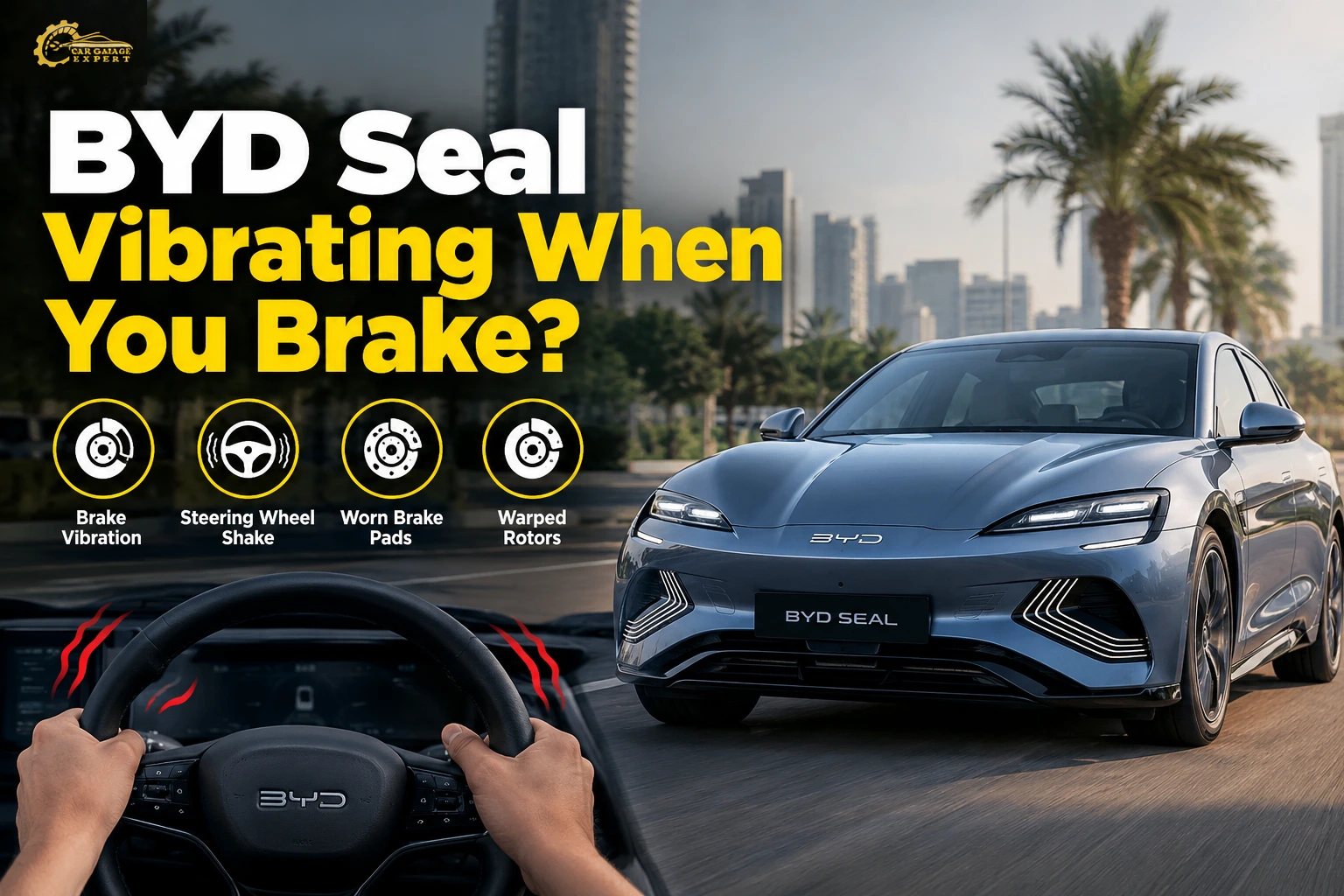
Your braking system should operate smoothly and predictably. Persistent squealing, grinding, or unusual scraping sounds when applying the brakes can indicate worn brake pads, damaged discs, or another braking-system fault.
A grinding noise deserves particular attention because continued driving may damage additional brake components.
What to do: Arrange a brake inspection as soon as possible. If braking performance decreases, the pedal feels unusually soft, the vehicle pulls sharply to one side, or a serious brake warning appears, stop driving when safe and arrange recovery.
The Honda UAE brake maintenance guide also highlights unusual brake noises, burning smells, and changes in pedal feel as symptoms that require attention.
4. Tires Lose Pressure or Show Visible Damage
Tires are your vehicle’s only contact with the road, so their condition directly affects handling and braking. A tire-pressure warning, visible bulge, crack, cut, or repeated loss of pressure can indicate a problem.
Dubai’s summer temperatures make tire maintenance especially important. Damaged or incorrectly inflated tires may cope less well with demanding driving conditions.
What to do: Check tire pressure when the tires are cold and follow the pressure recommended by your vehicle manufacturer. Inspect the tread and sidewalls regularly. If you notice a bulge, serious damage, or a tire that is rapidly deflating, do not continue driving on it.
If a tire repeatedly loses pressure, inspect it for punctures, valve problems, or other damage.
5. The Steering Wheel Vibrates or Feels Loose
A steering wheel that shakes, vibrates, or feels unusually loose may indicate a problem with wheel balancing, tire condition, wheel alignment, suspension, or steering components.
The circumstances can provide useful clues. Vibration at certain speeds may point toward a wheel or tire issue, while looseness or inconsistent steering response may indicate a more serious mechanical fault.
What to do: Have the vehicle inspected if the vibration persists or worsens. If the steering suddenly becomes difficult, the car wanders unpredictably, or control feels compromised, pull over safely and arrange professional assistance.
Do not rely on wheel alignment alone to resolve symptoms without checking the underlying cause.
6. Unusual Engine Knocking or Rattling
An engine may produce a light sound during normal operation, but a new, persistent, or increasingly loud knocking or rattling noise deserves investigation.
Possible causes include lubrication problems, worn internal components, loose parts, ignition issues, or other mechanical faults. The sound’s location and when it occurs can help a technician narrow down the cause.
What to do: Note whether the noise occurs on startup, during acceleration, at idle, or when the engine is warm. If it is loud, sudden, or accompanied by an oil-pressure warning or overheating, stop the engine and seek assistance.
Avoid repeated driving tests to reproduce the noise because they could worsen an existing fault.
7. Oil or Coolant Leaks Appear Under the Car
Puddles or fresh stains beneath a parked vehicle may indicate a fluid leak. Engine oil, coolant, transmission fluid, and brake fluid can leak from different parts of the vehicle.
Fluid color and consistency may offer clues, but they aren’t reliable enough to identify every leak without an inspection. Clear water dripping from the air-conditioning system can be normal condensation.
What to do: Look for recurring stains and note where they appear, but don’t crawl under an unsupported vehicle. Check fluid levels according to your owner’s manual when it is safe to do so.
If you suspect a brake-fluid leak, a significant coolant leak, or a rapid loss of engine oil, do not continue driving until the vehicle has been assessed.
8. The Engine Is Difficult to Start
Slow cranking, repeated clicking, or an engine that takes several attempts to start may indicate a weak battery, a failing starter motor, a charging-system fault, or an ignition or fuel-delivery problem.
Battery performance can deteriorate with age, while electrical accessories and repeated short trips can contribute to charging problems.
What to do: Notice whether the headlights dim, dashboard lights flicker, or the engine cranks more slowly than usual. Have the battery, terminals, starter, and charging system tested rather than replacing parts without diagnosis.
If the problem keeps returning, a professional inspection can help identify whether the battery is actually responsible.
9. Exhaust Smoke Changes Color
Exhaust smoke can provide clues about engine health. Persistent blue smoke may indicate that engine oil is being burned. Thick white smoke after the engine warms up can suggest a coolant-related problem. Unusually black smoke may indicate excessive fuel consumption or an air-fuel mixture issue.
However, brief white vapor during a cold start can be normal condensation, and exhaust smoke can vary by engine type and operating conditions.
What to do: Watch for persistent smoke, unusual exhaust smells, loss of power, or falling fluid levels. If these symptoms continue, arrange an inspection.
If smoke is heavy, the engine overheats, or you notice signs of fire, stop safely, switch off the engine, and move away from the vehicle if necessary.
10. The Gearbox Shifts Roughly or Slips
An automatic or manual transmission should shift predictably. Delayed engagement, harsh shifting, unusual noises, slipping, or unexpected changes in engine speed can indicate a transmission or related control-system problem.
Potential causes include low or degraded transmission fluid, worn components, overheating, or electronic faults.
What to do: Check for transmission warnings and note when the symptoms occur. Avoid aggressive acceleration or towing heavy loads until you’ve had the problem assessed.
If the vehicle loses drive, shifts unpredictably, or displays a serious transmission-temperature warning, stop in a safe location and arrange professional help.
11. Fuel Consumption Increases Suddenly
If you find yourself refueling more frequently despite driving similar routes, your car may have developed a fault. Possible causes include low tire pressure, a malfunctioning sensor, engine misfires, brake drag, or a fuel or ignition system issue.
Traffic congestion, driving style, air-conditioning use, and route changes can also affect fuel consumption, so one unusually high reading does not automatically indicate a mechanical problem.
What to do: Compare fuel consumption over several similar journeys. Check tire pressure and look for dashboard warnings, rough idling, or changes in engine performance.
If the increase continues without an obvious explanation, ask a technician to inspect the engine and related systems.
12. The Car Shakes During Acceleration or Idling
Shaking can result from worn engine mounts, misfiring spark plugs, fuel-delivery problems, damaged drivetrain components, or other mechanical faults.
If the vehicle shakes mainly while accelerating, the cause may differ from vibration that occurs while stationary. A rough idle accompanied by a flashing check engine light can indicate a misfire that may damage the catalytic converter.
What to do: Record when the shaking happens and whether it is accompanied by unusual sounds, warning lights, or loss of power.
Arrange an inspection promptly. If the engine runs very roughly, loses significant power, or a critical warning appears, stop driving and seek assistance.
13. The Air Conditioning Stops Cooling Properly
Reliable air conditioning is essential for comfortable driving in Dubai. If the system starts blowing warm air, cools inconsistently, smells unusual, or makes unfamiliar noises, it may need inspection.
Possible causes include low refrigerant due to a leak, a faulty compressor, a blocked condenser, a malfunctioning cooling fan, or an electrical problem.
What to do: Arrange an air-conditioning inspection if cooling performance declines. A qualified technician can test system pressures, check for leaks, and assess the relevant components.
If poor cabin cooling occurs alongside engine overheating, treat the engine-temperature issue as the priority. Air-conditioning trouble alone does not always mean the engine is overheating.
14. Electrical Features Stop Working Properly
Flickering headlights, malfunctioning power windows, intermittent dashboard displays, or repeated electrical warnings may indicate a weak battery, charging-system trouble, damaged wiring, poor connections, or a faulty component.
Modern vehicles depend on interconnected electronic systems, so one underlying electrical fault can sometimes produce several apparently unrelated symptoms.
What to do: Note which features fail and whether the issue occurs when starting the car, using the air conditioning, or driving over uneven surfaces.
Have the battery, alternator, fuses, wiring, and relevant control systems checked. If the headlights fail at night or essential safety systems stop working, pull over safely rather than continuing without them.
15. Burning Smells or Strong Fuel Odors Develop
Never ignore an unfamiliar burning smell. It may come from overheated brakes, slipping belts, electrical wiring, leaking oil contacting hot components, or other faults.
A strong petrol smell can indicate a fuel leak or another fuel-system problem. You can’t always identify the exact source by smell alone.
What to do: If you smell fuel strongly, see smoke, or suspect an electrical fire, stop in a safe place, switch off the engine, and move away from the vehicle. Do not smoke, use an open flame, or attempt repairs around a suspected fuel leak.
Arrange professional assistance before driving again. If there is an active fire, contact emergency services.
When Should You Stop Driving Immediately?
Not every vehicle problem requires emergency recovery, but some symptoms make continuing the journey unsafe.
Stop in a safe location and switch off the engine when appropriate if you notice:
- A red oil-pressure warning or serious engine-temperature warning.
- Sudden loss of braking performance or steering control.
- Heavy smoke, a strong fuel smell, or signs of fire.
- Severe engine knocking accompanied by a warning light.
- A rapidly deflating tire or serious tire damage.
- Sudden loss of power that makes the vehicle unsafe to control.
Move away from traffic before assessing the situation. Do not open a hot cooling system or attempt roadside repairs that could put you at risk. If the problem affects vehicle safety, arrange roadside assistance or recovery.
How to Prevent Car Problems in Dubai
Regular maintenance helps you spot developing faults before they cause unexpected breakdowns. These habits are especially useful for drivers in Dubai.
Check Essential Fluids and Tires
Inspect engine oil, coolant, and visible signs of leakage according to your vehicle manufacturer’s instructions. Check tire pressure when cold and examine the tires for cracks, bulges, cuts, and uneven wear.
Never remove a coolant cap while the engine is hot.
Maintain the Cooling System
Have the radiator, coolant condition, hoses, thermostat, water pump, and cooling fans checked when required. Use the coolant specification recommended for your vehicle, and avoid mixing incompatible products.
If the engine repeatedly overheats, identify the cause instead of relying on repeated coolant top-ups.
Test the Battery and Charging System
Ask a technician to test battery health and charging performance during routine maintenance, especially if starting becomes slower or electrical problems appear.
Replace worn or damaged components according to the results of the inspection.
Service the Brakes and Air Conditioning
Regularly inspect brake pads, discs, fluid, and other braking components. Have the air-conditioning system checked when cooling performance declines or unusual noises develop.
Do not ignore small changes in braking feel or cabin cooling because they may be early clues to a developing fault.
Follow Your Vehicle’s Service Schedule
Use the maintenance intervals and fluid specifications in your owner’s manual. Driving conditions, vehicle age, mileage, and manufacturer recommendations all influence servicing needs.
Keep records of repairs and inspections to spot recurring problems more easily.
When to Visit Car Garage Expert in Dubai
If your vehicle develops unusual noises, warning lights, leaks, vibration, poor cooling, or changes in braking performance, a professional inspection can help establish the cause.
At Car Garage Expert, drivers can seek assistance with vehicle diagnosis and repair based on the symptoms they notice. Explain when the issue began, whether it happens during starting or driving, and which warning lights appear. These details help the technician determine which systems to check.
A proper diagnosis is preferable to replacing parts based on guesswork. It can help identify the underlying fault and reduce the risk of unnecessary repairs.
If your car displays a critical warning or becomes unsafe to drive, arrange recovery rather than driving it to the garage.
Frequently Asked Questions
1. What are the most serious car warning signs?
The most serious car warning signs include an oil-pressure warning, engine overheating, sudden brake failure, loss of steering control, heavy smoke, and a strong fuel smell. Stop safely and arrange professional assistance when these symptoms occur.
2. Can Dubai’s hot weather damage my car?
High temperatures can place additional demands on cooling systems, tires, batteries, and air conditioning. Regular inspections, correct tire pressure, appropriate fluids, and timely servicing can help reduce the risk of heat-related breakdowns.
3. Is it safe to drive with the check-engine light on?
It depends on the warning and how the vehicle behaves. A steady check-engine light with normal performance generally calls for prompt diagnostic testing. A flashing light, severe shaking, loss of power, or other critical symptoms may require you to stop driving and seek assistance.
Always follow the vehicle manufacturer’s instructions for the specific warning.
4. How often should I inspect my car in Dubai?
Regularly check tires, dashboard warnings, and visible leaks, ideally before longer journeys. Follow your manufacturer’s service schedule and arrange additional inspections whenever you notice a new symptom. High mileage, demanding driving conditions, and vehicle age may affect maintenance needs.
5. Can ignoring small car problems lead to expensive repairs?
Yes. Some minor symptoms can indicate faults that worsen with continued use. For example, worn brake pads can damage discs, while continued driving with an overheating engine can cause major damage. Early diagnosis can help prevent further wear and avoid unnecessary repair costs.
Conclusion
Recognizing vehicle problems early is an important part of safe and reliable driving. From unusual dashboard lights and engine overheating to brake noises, tire damage, and weak air conditioning, small changes can provide valuable clues about your car’s condition.
For drivers in Dubai, regular maintenance matters even more because high temperatures and demanding driving conditions put extra stress on key vehicle systems.
Visit us in our Al Quoz, Dubai branch or visit Car Garage Expert
Do not wait for a minor fault to become a major breakdown. Watch for new symptoms, follow your vehicle’s maintenance schedule, and seek a professional diagnosis when something doesn’t feel right. Car Garage Expert can help you take the next step toward identifying vehicle problems and keeping your car in dependable condition.