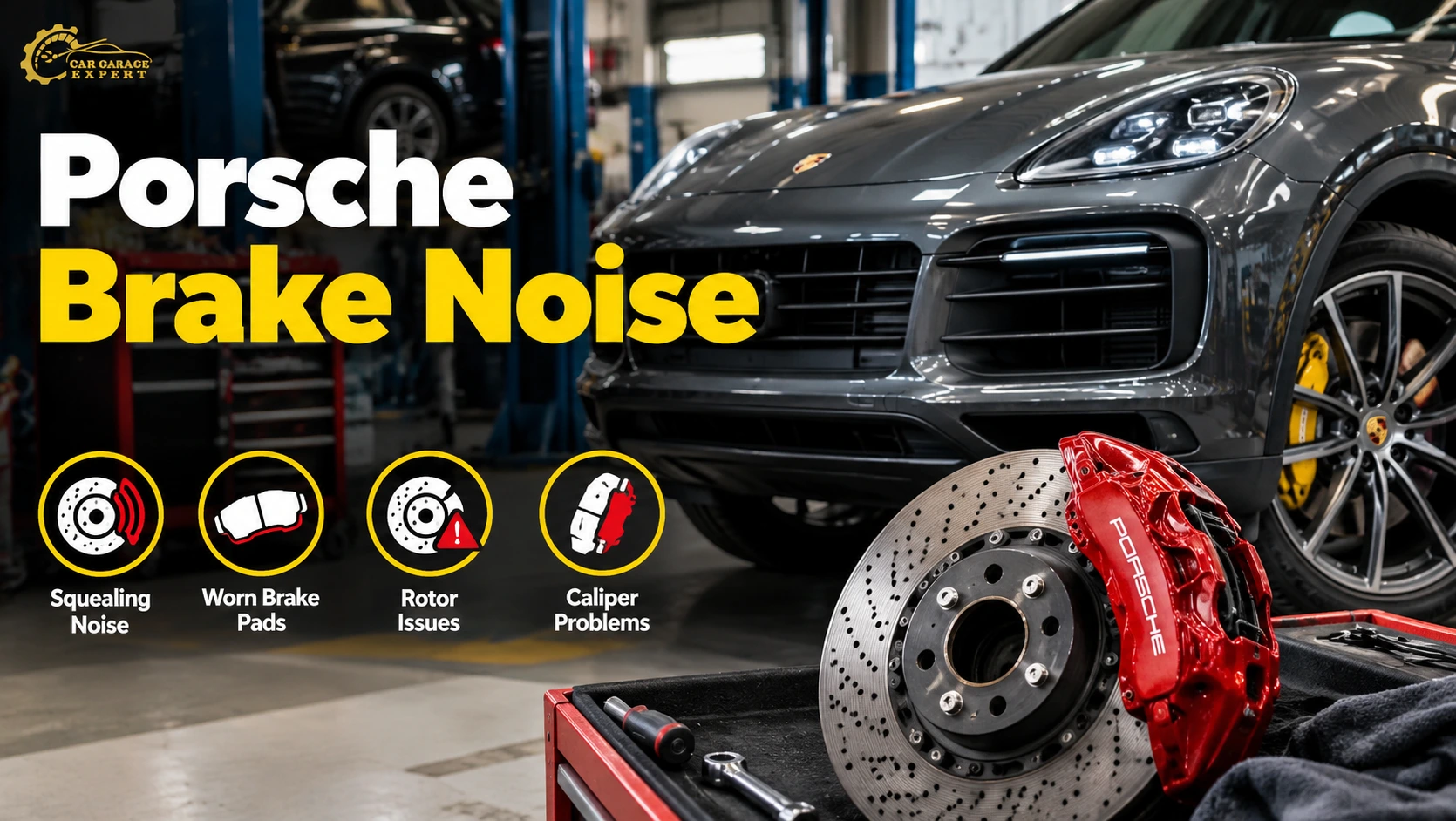
Some brake noise is usual on a Porsche. A little scream on cold mornings, or from ceramic brakes at low speed, is normal and usually no big deal. A damp night can leave a brief grind on the first few stops, which is just surface rust and goes away quickly. Noise is serious if it’s a persistent grinding or metal-on-metal sound, if the pedal pulses or feels mushy, or if the car pulls to one side. The dash also shows a brake pad warning that needs attention. These indicators suggest worn pads, damaged discs, or a sticky caliper. Schedule a brake inspection within days. Stop driving if the brake pedal seems mushy.
What This Guide Covers
- Why Porsche Brakes Make More Noise Than Most Cars
- Brake Sounds and Signs That Need Attention
- What Causes Porsche Brake Noise When Stopping
- How a Porsche Brake Inspection Is Done
- How Porsche Brake Noise Is Fixed Step by Step
- What Happens If You Ignore Brake Noise
- Is It Safe to Keep Driving Your Porsche?
- How Long Porsche Brake Repair Takes
- What Changes the Cost of Porsche Brake Repair in Dubai
- Simple Habits That Keep Porsche Brakes Quiet
- Dubai Driving Tips for Porsche Brakes
- What Most Brake Quotes in Dubai Leave Out
- Why Choose Car Garage Expert for Porsche Brake Noise in Dubai
- Porsche Brake Questions Owners Ask
- Related Services for Porsche Owners
- Get Your Porsche Brakes Checked Today
Why Porsche Brakes Make More Noise Than Most Cars
Porsche brakes are built to stop a heavy, fast car again and again. The pads use a hard, high-friction compound. Hard pads grip well when hot, but they can squeal when cold.
Porsche also uses three main brake types. Most models have steel discs with red, black, or silver calipers. Some Cayenne and Panamera models use PSCB, a coated disc with white calipers. Many sports models can have PCCB ceramic brakes with yellow calipers.
Each type sounds different. Ceramic brakes often squeal at walking speed. That is a known trait of PCCB and is usually harmless. So Porsche brake noise on its own does not always mean trouble. The type of sound, and when you hear it, tells you more.
Brake Sounds and Signs That Need Attention
Listen for the kind of noise and when it starts. These are the Porsche brake warning signs that need a check soon:
- A high squeal every time you brake, even when the brakes are warm
- A grinding noise when braking that doesn’t fade after a few stops.
- A harsh metal-on-metal scrape
- A clicking or clunk when you first press or release the pedal
- Brake vibration when stopping from highway speed
- The steering wheel shaking under braking
- The car pulling to one side when you stop.
- A soft, low, or spongy brake pedal
- A burning smell after normal driving
- The brake pad warning light on the dash
A squeal with no other signs is usually a pad or fitting issue. Grinding, pulling, or a soft pedal are more serious. They can mean the pad is gone, the disc is damaged, or a caliper is stuck.
What Causes Porsche Brake Noise When Stopping
Most Porsche brake noise problems come from wear, heat, or dirt. The table matches the sound with the usual cause and the repair it needs.
|
Noise and when you hear it |
Likely cause |
Repair needed |
| Light squeal on cold mornings | Hard pad compound or morning moisture | Usually normal, check at next service |
| Steady squeal when braking | Glazed pads, dry pad contact points or missing shims | Clean, lube contact points, replace shims or pads |
| Grinding that clears after a few stops | Surface rust on discs after humid nights | Normal, no repair if it goes away |
| Constant grinding or metal scrape | Worn brake pads down to the backing plate | New pads and discs, urgent |
| Scraping from one wheel | Stone or sand stuck behind the disc shield | Remove debris, check disc for scoring |
| Vibration when stopping | Uneven pad deposits or disc thickness variation | Skim or replace discs, new pads, bed-in |
| Clunk when braking | Loose caliper bolts or worn pad clips | Tighten to torque, replace hardware |
| Noise plus pulling | Sticking caliper piston or slide pin | Caliper service or replacement |
The rows on constant grinding and pulling are the ones to act on fast. They mean the car is losing braking power on at least one wheel.
How a Porsche Brake Inspection Is Done
A proper Porsche brake inspection assessment finds the source of the noise, not just the loudest part. It starts with a short road test and ends with measurements.
Road Test and Noise Check
He drove the car both slowly and quickly. They record the time of the noise and whether it is cold or warm, and whether the car is stopping lightly or heavily, going back and forth, or going straight. Before a wheel falls off, this rules out the cause.
Pad and Disc Measurement
The wheels come off. Pad thickness is measured on the inner and outer pads, because the inner pad often wears faster. The mechanic checks disc thickness with a micrometer and compares it with the minimum stamped on the disc.
Runout and Caliper Check
A dial gauge measures disc runout, which shows if the disc wobbles. The mechanic checks the caliper pistons and slide pins for sticking. The mechanic also looks for torn dust boots and fluid leaks.
Fluid and Warning System Check
Brake fluid is tested for moisture. The mechanic checks the pad wear sensors and uses a scan tool to read any brake or ABS fault codes. If you want this done near you, a trusted car mechanic can run the same checks and show you the readings.
How Porsche Brake Noise Is Fixed Step by Step
The repair depends on what the inspection finds. A good repair usually follows this order:
- Confirm the brake type. Steel, PSCB, and PCCB brakes use different pads, discs, and torque settings. Parts are ordered to match.
- Clean the assembly. Remove dust, sand, and old grease from the caliper, bracket, and pad slots.
- Fix the cause of the noise. This may mean new pads, new or skimmed discs, new anti-squeal shims, or new pad clips.
- Service the caliper. Slide pins are cleaned and greased. Free a sticking piston or rebuild the caliper.
- Replace the wear sensors. Porsche pad wear sensors usually need replacing once they have triggered or are worn.
- Lube the contact points. Apply a thin layer of brake paste to the pad backs and contact points. It stops vibration that causes squeal.
- Torque and refit. Tighten caliper bolts and wheel bolts to Porsche specs.
- Bed in the brakes. Bed in the new pads and discs with a set of controlled stops. This lays down an even pad layer and prevents vibration later.
- Change the fluid if needed. Porsche generally recommends a brake fluid change every two years.
What Happens If You Ignore Brake Noise
Brake noise is rarely self-correcting. Once the friction material is gone, a scream from worn pads changes to grinding. At this stage, the steel backing plate bites into the disc.
A disc damaged this way cannot be skimmed. It has to be replaced, which can double or triple the bill. On PSCB or PCCB brakes, that cost is much higher.
A sticking caliper keeps one pad pressed on the disc. That wheel overheats, the car pulls, and fuel use rises. Overheated brake fluid can boil and make the pedal go soft. That can happen on a long downhill or after repeated hard stops.
Is It Safe to Keep Driving Your Porsche?
It depends on the Porsche brake noise. A light squeal with a firm pedal and no warning lights is usually safe. Book a check within a week or two.
Stop driving if you hear constant grinding or metal-on-metal noise. Stop driving if the pedal is soft, the red brake warning is on, or the car pulls hard. In those cases, call roadside assistance and have the car recovered.
How Long Porsche Brake Repair Takes
Most Porsche brake jobs are done the same day if parts are in stock. These are typical Dubai market times:
- Brake inspection: 30 to 60 minutes
- Pad replacement on one axle: 1 to 2 hours
- Pads and discs on one axle: 2 to 4 hours
- Caliper service or rebuild: half a day to 1 day
- Brake fluid change: about 1 hour
Steel brake parts for common models like the Cayenne, Macan, and 911 are usually easy to find. PSCB and PCCB parts may need to be ordered, which can take days or weeks.
What Changes the Cost of Porsche Brake Repair in Dubai
The price depends on the model, the brake type, and how far the wear has gone. A Macan pad job costs less than a 911 Turbo pad job. Ceramic brakes cost the most.
Here are rough Dubai market ranges. They are a guide, not a quote:
- Brake inspection: AED 150 to 400
- Front pads with sensors, steel brakes: AED 900 to 2,000
- Front pads and discs, steel brakes: AED 2,500 to 6,000
- Caliper service per caliper: AED 800 to 2,000
- Brake fluid change: AED 300 to 600
- PCCB discs: often above AED 30,000 per axle
OEM or Aftermarket Brake Parts
OEM Porsche pads and discs match the original feel and noise level. Some aftermarket pads cost less but may be louder or dustier. Ask which brand your quote includes.
Simple Habits That Keep Porsche Brakes Quiet
Most Porsche brake noise comes from heat, dirt and old parts. A few habits help a lot.
Do not hold the brake pedal hard after a fast stop. Let the car creep forward a little at the lights if it is safe. Holding hot pads in one spot leaves a deposit that can later cause vibration.
Wash the wheels with a pH-neutral cleaner. Strong acid cleaners can attack brake parts. Have the brakes checked at every service, and change the fluid every two years. A regular car service package is a good time to check pads, discs and fluid together.
Dubai Driving Tips for Porsche Brakes
Dubai roads are tough on the brakes. Stop-start traffic on Sheik Zayed Road warms the brakes and then keeps them hot in traffic. Fine desert sand and dust from industrial locations such as Al Quoz get into calipers and pad slots.
Humidity near the coast produces a thin film of rust on discs overnight. That’s why many owners hear the short grind on the first drive of the day. This is normal if it disappears after a few stops.
Mountain drives like Hatta or Jebel Jais need extra care. Use a lower gear on long descents so the brakes do not overheat. If you search for a garage near me after hearing a new noise, choose a garage near me in Dubai that knows Porsche brake types and measures the discs instead of guessing.
What Most Brake Quotes in Dubai Leave Out
Many quotes for Porsche brake noise repair in Dubai list pads and discs, then stop. That is why some new brakes squeal again within weeks. Before you approve any Porsche brake work, ask for these:
- A road test to confirm when the noise happens.
- Disc thickness and runout readings, written on the job card.
- Inner and outer pad thickness for each wheel.
- New wear sensors where needed.
- Caliper slide pins cleaned and greased.
- Contact points lubed and new shims fitted.
- A proper bed-in after new pads or discs.
- A brake fluid moisture test.
A garage that gives you these readings is showing its work. That makes the quote easier to trust.
Why Choose Car Garage Expert for Porsche Brake Noise in Dubai
So when you want to find out the genuine reason of braking noise, not merely to switch pads, Dubai Porsche owners choose Car Garage Expert. I believe I am a strong match for this position for four reasons.
A Central Al Quoz Location
The workshop is in Al Quoz, close to Sheik Zayed Road and Al Khail Road. These roads get the most heat and stop-and-go traffic. It’s quick to get there from Al Barsha, Business Bay, and Downtown.
Describe the Noise on WhatsApp First
You can send a short video or voice note of the noise on WhatsApp. That helps the team judge how urgent the problem is before you drive in.
Brake Checks, Recovery and Service in One Place
A brake problem can need more than one service. The garage covers mechanical repairs, service packages, mobile mechanic visits, and roadside assistance. If the car isn’t safe to drive, the same team can recover and repair it.
Measurements Before Parts
A good Porsche brake job starts with numbers. Ask for disc thickness, runout, and pad readings before ordering any parts. That keeps the repair to what the car actually needs.
If your Porsche is squealing, grinding, or vibrating, book a brake inspection at Car Garage Expert and ask for the readings listed above.
FAQ’s
Q1: Why do my Porsche brakes squeal?
Hard pads, cold discs, or dry contact points cause most squeals. Ceramic brakes also squeal at low speed.
Q2: Is Porsche brake noise normal when cold?
Yes, a light squeal on cold or damp mornings is common. It should stop once the brakes warm up.
Q3: What causes grinding noise when braking?
Worn pads, damaged discs, or a stone behind the disc shield. Constant grinding needs to be checked right away.
Q4: Why does my Porsche vibrate when braking?
Uneven pad deposits or variations in disc thickness. The discs may need skimming or replacing.
Q5: How long do Porsche brake pads last?
Usually 30,000-50,000 km, depending on model and driving style. They wear out faster in metropolitan traffic.
Q6: Can I drive with grinding brakes?
No. Grinding often means metal on metal. It damages discs fast and reduces stopping power.
Q7: Does PCCB brake squeal mean a problem?
Not always. Some low-speed squeal from ceramic brakes is normal. Grinding or vibration is not.
Related Services for Porsche Owners
Brake noise can come with other problems. A mobile car mechanic can check pads and warning lights where your car is parked.
Brake work often goes with wheel alignment, suspension checks, and tire replacement. If the calipers look faded or chipped after brake work, car painting can refresh them.
Get Your Porsche Brakes Checked Today
Brake noise is cheaper to fix early, before pads wear through to the discs. Ask for a road test, disc measurements, and a caliper check before you agree to any Porsche brake noise repair.
For a proper diagnosis in Al Quoz, Car Garage Expert is a strong place to start. Send a video of the noise on WhatsApp or find the workshop on Google Maps.