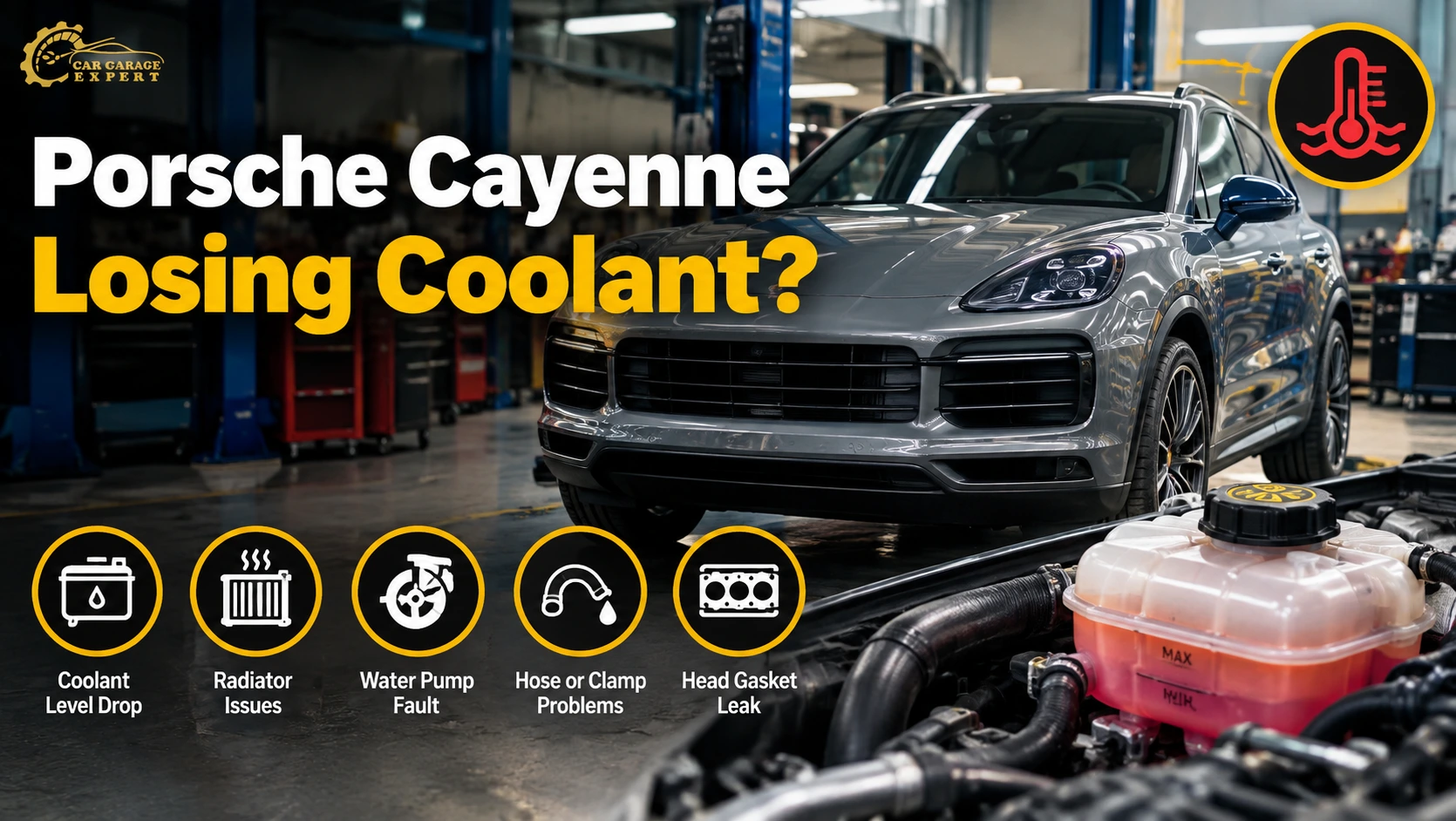
Porsche Cayenne losing coolant with no puddle under the car is one of the most confusing problems owners face. You top up the tank, and a week later the low coolant warning comes back. The coolant is going somewhere. It just never reaches the ground where you can see it.
Porsche Cayenne Losing Coolant With No Visible Leak
A Porsche Cayenne losing coolant without a puddle usually has a slow leak that dries up before it drips. Coolant can land on the hot engine and turn to steam, or collect in the plastic panels under the car. Common sources are a cracked expansion tank, a weeping water pump, and a leaking thermostat housing. On V8 models, coolant pipes under the intake also fail. A leaking heater core or a head gasket fault can also burn or trap coolant inside the car or engine. A cooling system pressure test finds most of these leaks in under an hour.
Table of Contents
- What Is Happening When Coolant Disappears
- Warning Signs of a Hidden Coolant Leak
- Common Causes of Hidden Porsche Cayenne Coolant Leaks
- Hidden Coolant Leak Sources Compared
- How to Diagnose Coolant Loss Without a Visible Leak
- How the Leak Gets Repaired
- How Long Coolant Leak Repairs Take
- What Changes the Repair Cost in Dubai
- When to Seek Porsche Cayenne Coolant Leak Repair in Dubai
- Risks of Porsche Cayenne Losing Coolant Over Time
- Can You Keep Driving With a Low Coolant Warning?
- How to Stop the Coolant Level Dropping Again
- Dubai Heat and Your Cayenne Cooling System
- Why Choose Car Garage Expert When Your Cayenne Is Losing Coolant in Dubai
- Porsche Cayenne Coolant Loss FAQs
- Related Services for Your Cayenne
- Book a Coolant Leak Check
What Is Happening When Coolant Disappears
Your Cayenne’s cooling system is sealed and runs under pressure. Coolant should not go down between services. If the level keeps dropping, there is a leak, even if the driveway stays dry.
Small leaks are the hardest to spot. A slow drip onto a hot engine or exhaust turns to vapor within seconds. The Cayenne also has large plastic panels under the engine. These catch small drips and hold them, so nothing reaches the ground.
Some coolant never leaves the engine at all. It can leak into the oil, into the cylinders, or into the cabin through the heater. That is called an internal coolant leak, and it needs a different kind of test to find.
Warning Signs of a Hidden Coolant Leak
The first sign is usually the low coolant warning on the dashboard. Other Porsche Cayenne coolant leak symptoms can show up before or after it:
- A sweet, syrupy smell after a drive, even with no leak in sight
- White crusty marks or pink stains on hoses or the engine
- Light steam from under the bonnet after you park
- Foggy windows or a damp carpet on the passenger side
- White smoke from the exhaust that smells sweet
- The temperature gauge climbing in traffic.
If you have noticed two or more of these, book a check at a garage near me soon. A coolant smell with no visible leak almost always means coolant is landing on something hot.
Common Causes of Hidden Porsche Cayenne Coolant Leaks
A hidden Porsche Cayenne coolant problem nearly always comes from one of seven places. Some are cheap fixes. Others mean taking the top of the engine apart.
Where the Missing Coolant Usually Goes
Each part below is known to leak on the Cayenne. They are listed from most common to least common.
Cracked Expansion Tank or Worn Cap
The Cayenne’s coolant reservoir is plastic. Years of heat make it brittle, and hairline cracks open along the seams. The coolant seeps out as vapor when the system is hot and under pressure. A worn cap does the same thing by letting pressure escape.
Water Pump Weeping From the Seal
The water pump seal wears out with age. At first, it may weep only a few drops while the engine runs. Those drops hit the hot engine block and evaporate, so you see crusty white marks instead of a puddle.
Thermostat Housing Leak
The thermostat housing on many Cayenne engines is also plastic. It can warp after years of heat cycles. A warped housing leaks only when the engine is fully hot, which is why it hides so well.
Coolant Pipes Under the Intake (V8 Models)
Early V8 Cayennes from 2003 to 2010 use plastic coolant transfer pipes. These sit in the valley under the intake manifold. When they crack, coolant pools under the intake where you cannot see it. A Porsche Cayenne coolant transfer pipe leak is one of the most common hidden leaks on these models.
Leaking Heater Core
The heater core is a small radiator behind the dashboard. When it leaks, coolant goes into the cabin. You may notice foggy windows, a sweet smell inside, or a wet carpet in the front footwell.
Turbo or EGR Cooler Lines
Turbo models run coolant lines to the turbochargers. Diesel Cayennes also have an EGR cooler. Both can leak onto very hot parts, and the coolant burns off before it can drip.
Head Gasket or Internal Leak
A failed head gasket lets coolant into the cylinders or the oil. The engine burns the coolant so you may see white exhaust smoke. Milky, light brown oil on the dipstick or under the oil cap is another sign.
Hidden Coolant Leak Sources Compared
This table compares each source of a Porsche Cayenne coolant problem. It shows where the coolant ends up and what the fix involves. Costs are typical Dubai ranges for Porsche parts and labor.
|
Leak Source |
Where the Coolant Goes | Usual Repair |
Typical |
| Expansion tank or cap | Vapour from cracks or cap | New tank and cap | 800 to 2,000 |
| Water pump seal | Evaporates on engine block | New pump and thermostat | 1,800 to 4,500 |
| Thermostat housing | Leaks only when hot | New housing and seal | 1,000 to 3,000 |
| Coolant pipes under intake | Pools in the engine valley | Aluminium pipe kit | 4,000 to 9,000 |
| Heater core | Into the cabin | New heater core | 3,000 to 7,000 |
| Turbo or EGR cooler lines | Burns off hot parts | New lines or cooler | 1,500 to 7,000 |
| Head gasket | Into cylinders or oil | Head gasket job | 12,000 to 25,000 |
How to Diagnose Coolant Loss Without a Visible Leak
Guessing at a coolant leak wastes money. A proper Porsche Cayenne coolant leak diagnosis follows a set order, from simple checks to deeper tests.
Step-by-Step Coolant Leak Testing
A good workshop works through these checks before replacing any part:
- Mark the level. Fill the tank when cold and mark the level. Check the level again after a few drives to measure the real loss.
- Remove the underbody panels. Coolant stains and dried crust inside the panels show where drips are landing.
- Run a Porsche Cayenne coolant pressure test. Use a hand pump to pressurize the system to about 1.4 bar. If the gauge drops within 15 to 20 minutes, there is a leak.
- Test the cap. Fit the cap to an adapter to check that it holds pressure.
- Add UV dye. Add dye to the coolant, then use a UV lamp to look for bright green trails at the leak point after a drive.
- Run a combustion leak test. A fluid in a tester over the tank changes color if exhaust gas is getting into the coolant. That points to the head gasket.
- Check oil and cabin. Milky oil means an internal leak. A damp carpet points to the heater core.
At Car Garage Expert, the pressure test and dye check are a sensible first step. Most hidden leaks show up in that first visit, before any parts get ordered.
How the Leak Gets Repaired
The repair depends on what the tests find. An experienced car mechanic will usually follow these steps:
Expansion tank and cap: The mechanic drains and removes the old tank. A new tank and cap are fitted together, since an old cap can damage a new tank.
Water pump: Replace the pump along with the thermostat and gaskets. Both sit in the same area, so doing them together saves labor later.
Thermostat housing: Replace the housing and its seal. Some owners choose an aluminum housing, which handles heat better than plastic.
Coolant pipes under the intake: The intake manifold comes off to reach the valley. We replace the old plastic pipes with an aluminum kit and clean the valley of old coolant.
Heater core: Access is tight, and part of the dashboard may need to come out. We fit and test the new core before refitting the dash.
Head gasket: The cylinder heads are removed and checked for warping. We fit new gaskets and head bolts.
After any repair, we refill the system with Porsche-approved coolant. We bleed out air using a vacuum filler, since trapped air causes overheating. A second pressure test and a road test confirm the fix.
How Long Coolant Leak Repairs Take
Most simple coolant leak repairs are done the same day. Bigger jobs take longer:
- Pressure test and diagnosis: 30 to 60 minutes
- Expansion tank and cap: 1 to 2 hours
- Thermostat housing: 2 to 4 hours
- Water pump: 3 to 6 hours
- Coolant pipes under the intake: 1 to 2 days
- Heater core: 1 to 2 days
- Head gasket: 3 to 5 days
Parts can add time. Some Porsche parts are ordered from the dealer or overseas and take 2 to 5 days.
What Changes the Repair Cost in Dubai
The part that failed matters most. A cap costs a few hundred dirhams, while a head gasket job runs into five figures.
Engine type comes next. A V8 has more parts in the way than a V6, so labor time goes up. Turbo models also have extra coolant lines to check.
Part choice changes the price too. OEM Porsche parts cost more than quality aftermarket parts. For tanks and pipes, many owners pick upgraded aluminum parts that outlast the original plastic.
The biggest cost jump comes from waiting. A leak left alone can overheat the engine. An AED 1,500 tank job can turn into a AED 20,000 head repair.
When to Seek Porsche Cayenne Coolant Leak Repair in Dubai
Get the car checked as soon as you top up coolant more than once a month. That rate of loss means the leak is real and growing.
Risks of Porsche Cayenne Losing Coolant Over Time
Low coolant means the engine runs hotter. On a Cayenne, that can lead to overheating in traffic, especially in summer.
Heat warps the cylinder heads. Once that happens, the repair moves from a simple part swap to a full engine job. Overheating can also crack nearby plastic parts, creating new leaks.
A small leak can also damage other parts. Coolant dripping into the engine valley rots wiring and sensors over time. A leaking heater core can soak the carpet and cause mould to grow.
Can You Keep Driving With a Low Coolant Warning?
For a short distance, yes, if the temperature gauge stays normal. You can still drive a Porsche Cayenne with a slow coolant leak to a workshop. Top up with the correct coolant when the engine is cold, then book a check within a few days.
Stop driving if the gauge climbs above the middle or you see steam. Never open the cap on a hot engine, since the coolant is under pressure and can burn you.
If the Cayenne overheats on the road, pull over and call roadside assistance. Still running but not safe to cross the city? A mobile car mechanic can check the level and look for obvious leaks where you park.
How to Stop the Coolant Level Dropping Again
Most cooling system problems on the Cayenne come from aging plastic. These habits help you catch leaks early:
- Check the coolant level once a month when the engine is cold.
- Replace the coolant every 4 years or at the interval in your Porsche service book.
- Use only Porsche-approved coolant, and never top up with plain water.
- Replace the expansion tank and cap once the car passes 8 to 10 years old.
- Ask for a pressure test at every major service once the car passes 100,000 km.
- Keep up with regular car service packages in Dubai, so they check hoses and clamps.
Dubai Heat and Your Cayenne Cooling System
Dubai is hard on cooling systems. Summer days near 45°C mean the coolant runs hotter and at higher pressure for longer. Plastic tanks, housings, and pipes age much faster than they would in Europe.
Stop-start traffic on roads like SZR and Al Khail adds to the load. The fans work hard, but airflow is low at low speed. A Porsche Cayenne losing coolant slowly may feel fine on the highway, then overheat in a traffic jam.
Underground parking adds another stress. Going from cool parking into hot streets several times a day makes plastic parts expand and shrink. Over time, that opens hairline cracks.
Why Choose Car Garage Expert When Your Cayenne Is Losing Coolant in Dubai
Not guessing. Testing for a hidden coolant leak. Cayenne owners should request pressure, cap, and combustion leak checks before getting a quote from a workshop. Often, if the garage just tops up the coolant, the automobile will come back with the same warning.
The correct approach also involves removing the underbody panels and the intake on V8 vehicles. Those are the areas where hidden leaks reside in this car.
This full workshop in Al Quoz can run these tests and repair the same place. If a Cayenne keeps losing coolant with no puddle, start there. A full pressure and dye test comes first.
]FAQs
Q1: Why is my Porsche Cayenne losing coolant?
Common causes include a cracked expansion tank, a weeping water pump, or a leaking thermostat housing. Coolant pipes under the intake also fail on V8 models.
Q2: Where does coolant go with no leak?
It evaporates off hot engine parts, collects in the underbody panels, or leaks inside into the oil, cylinders, or cabin.
Q3: Can I drive with low coolant?
Only for a short distance with the gauge normal. Top up when cold and book a check soon.
Q4: Is coolant loss a head gasket sign?
It can be, but it is not the most common cause. White, sweet-smelling smoke and milky oil point to a head gasket issue.
Q5: How much is a coolant pressure test?
In Dubai, a cooling system pressure test usually costs AED 150 to 350.
Q6: Why does my car smell like coolant?
Coolant is dripping onto a hot part and burning off. It can also mean a leaking heater core if the smell is inside.
Related Services for Your Cayenne
A coolant leak visit is a good time to check other parts of the car. Workshops in Dubai often pair it with these services:
- Radiator and cooling fan checks
- Coolant flush and refill
- Engine repair and head gasket work
- Car AC repair, since the AC adds load to the cooling system
- Bodywork and car painting for stone chips and sun-faded panels
Book a Coolant Leak Check
A Porsche Cayenne losing coolant will not fix itself, and the repair only gets bigger with time. Bring it to Car Garage Expert in Al Quoz for a pressure test. You will get a clear answer on where the coolant is going.
Message the team on WhatsApp to book, or get directions on Google Maps.