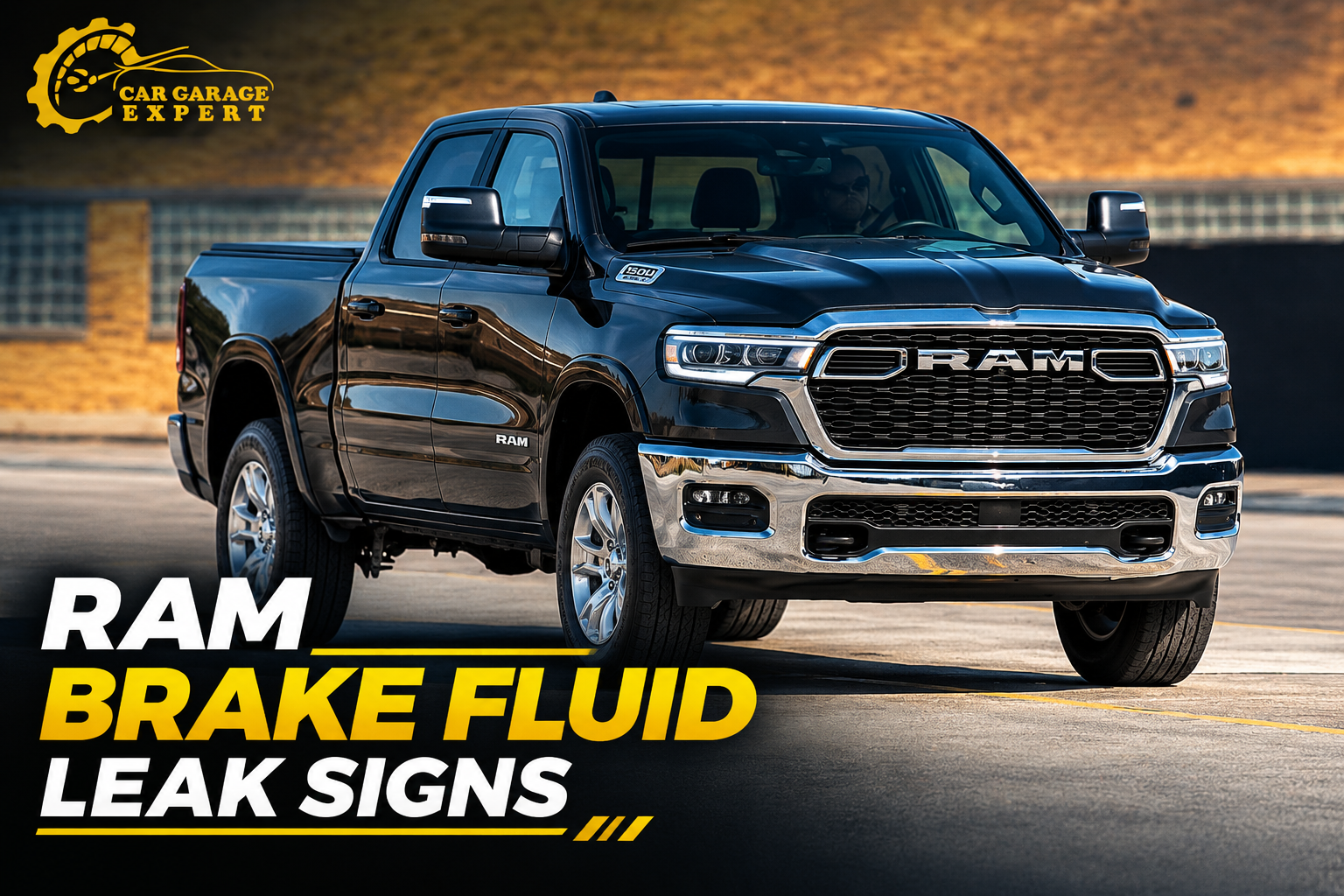
The most common RAM brake fluid leak signs include a soft or spongy brake pedal, a dropping brake fluid level, brake warning lights, reduced braking performance, and visible fluid underneath the vehicle. You may also notice that the vehicle takes longer to stop or pulls to one side during braking. Brake fluid is essential for transferring pressure from the brake pedal to the braking components, so even a small leak can become dangerous quickly. If you suspect a leak in your RAM, avoid unnecessary driving and have the braking system inspected by a qualified technician as soon as possible, especially in Dubai’s demanding climate.
Problem Overview
A brake fluid leak is a serious problem in any vehicle, including RAM trucks and SUVs. The braking system relies on hydraulic pressure to transfer force from the brake pedal to the calipers or wheel cylinders. When brake fluid escapes, hydraulic pressure can fall and braking performance may deteriorate.
Understanding RAM brake fluid leak signs can help you identify a developing problem before it becomes a major safety issue. A leak may begin as a small seep around a hose, brake line, caliper, master cylinder, or connection. Over time, however, fluid loss can become significant.
Dubai’s hot temperatures, frequent traffic congestion, long journeys, and stop-and-go driving can place additional demands on the braking system. Regular inspections are therefore particularly important for RAM owners who use their vehicles extensively.
Common RAM Brake Fluid Leak Signs
1. Soft or Spongy Brake Pedal
One of the most noticeable warning signs is a brake pedal that feels softer than normal. Instead of providing firm resistance, the pedal may feel spongy or gradually move closer to the floor.
This can indicate air entering the hydraulic system or insufficient brake fluid caused by a leak.
2. Brake Fluid Level Keeps Dropping
If the brake fluid reservoir requires frequent topping up, something needs investigation. Brake fluid does not normally disappear rapidly during normal operation.
A continuously declining fluid level can point toward a leak or another braking-system problem.
3. Brake Warning Light Appears
A brake warning light on the dashboard can indicate low brake fluid or another brake-system issue. Some RAM models may also display electronic warnings related to braking performance.
Never assume that a warning light is simply a sensor problem without proper diagnosis.
4. Visible Fluid Under the Vehicle
Brake fluid may appear near a wheel, underneath the vehicle, or around brake-system components.
Brake fluid is typically clear to amber when relatively fresh, although its appearance can change with age and contamination. Because other vehicle fluids can also leak, professional identification is important.
5. Reduced Braking Performance
A leak can eventually affect hydraulic pressure and make the vehicle harder to stop.
If your RAM requires more pedal effort, has noticeably reduced braking power, or behaves differently during braking, the vehicle should be inspected immediately.
6. Brake Pedal Slowly Sinks
If you hold the brake pedal down and it gradually sinks toward the floor, there may be a hydraulic problem. A master-cylinder fault can produce similar symptoms, so testing is necessary to identify the exact cause.
7. Unusual Braking Behaviour
A braking system affected by a fluid leak may produce inconsistent braking. You might notice changes in pedal feel or vehicle response from one stop to another.
Any sudden change in braking behaviour deserves attention.
Causes of RAM Brake Fluid Leaks
Several components can be responsible for a brake fluid leak.
Damaged Brake Lines
Metal brake lines can corrode or become damaged over time. Flexible brake hoses can also deteriorate, crack, or become damaged.
Worn Brake Calipers
A caliper seal can deteriorate and allow brake fluid to escape. Fluid may then accumulate around the affected wheel.
Faulty Wheel Cylinders
On RAM configurations using applicable drum-brake components, a wheel-cylinder seal can fail and cause fluid leakage.
Master Cylinder Problems
The master cylinder generates hydraulic pressure for the braking system. Seal failure can result in internal or external leakage and changes in pedal behaviour.
Loose or Damaged Connections
Brake pipes, fittings, and connections must remain properly sealed. Damage or improper installation can create leakage.
Reservoir or Cap Issues
A damaged reservoir or sealing problem around the brake-fluid reservoir can also cause fluid loss.
Age and Environmental Exposure
Heat, moisture, road debris, corrosion, and general component aging can contribute to brake-system deterioration.
Diagnostic Process
Professional diagnosis should begin with a visual inspection and brake-system assessment.
A technician may:
- Check the brake fluid level and condition.
- Inspect the reservoir and master cylinder.
- Examine brake lines and flexible hoses.
- Inspect calipers and other wheel-end components.
- Look for wet or contaminated areas.
- Check brake-pad and brake-disc condition.
- Assess brake pedal firmness.
- Scan relevant electronic brake-system modules where appropriate.
- Test the system for pressure loss when necessary.
- Confirm the leak source before recommending repairs.
Finding the exact leak is important. Simply adding more brake fluid without repairing the source does not solve the underlying problem.
Repair Process
The repair depends on the component responsible for the leak.
A typical repair may involve:
Step 1: Identify the leak
The technician determines exactly where brake fluid is escaping.
Step 2: Replace or repair the faulty component
A damaged hose, line, seal, caliper, master cylinder, or other component may need replacement.
Step 3: Refill with the correct brake fluid
The appropriate fluid specification should be used for the specific RAM model.
Step 4: Bleed the brake system
Air introduced into the hydraulic system must be removed to restore proper pedal feel and braking performance.
Step 5: Inspect the complete braking system
Related components should be checked for contamination or damage.
Step 6: Conduct a brake test
The vehicle should only return to normal use after the braking system has been verified as safe.
Risks of Ignoring the Problem
Ignoring RAM brake fluid leak signs can create serious safety risks.
A small leak can become larger, resulting in greater fluid loss and reduced hydraulic pressure. In severe cases, braking effectiveness can be significantly compromised.
Other components can also be affected. Brake fluid contamination may damage friction components, while continued operation with abnormal braking can increase wear.
The biggest concern is stopping performance. A vehicle that cannot reliably generate hydraulic braking pressure can become dangerous for the driver, passengers, and other road users.
Can You Continue Driving?
Driving with a suspected brake fluid leak is not recommended.
If the brake pedal feels unusually soft, the brake warning light is illuminated, fluid is visibly leaking, or braking performance has changed, stop driving where it is safe to do so.
For a suspected major hydraulic leak or significantly reduced braking performance, arrange professional recovery rather than attempting to drive to a workshop.
Even if the vehicle appears to brake normally, a confirmed fluid leak should be repaired promptly.
Repair Time
Repair time varies according to the cause and accessibility of the faulty component.
A relatively straightforward hose or connection repair may take less time than replacing a master cylinder or repairing a difficult-to-access brake line.
Additional time may be required for:
- Brake-system bleeding
- Component replacement
- Cleaning contaminated brake parts
- Diagnostic testing
- Road testing
- Inspection of related components
A professional inspection provides a more accurate estimate than relying on symptoms alone.
Cost Factors
The cost of repairing a RAM brake fluid leak in Dubai depends on several factors:
- RAM model and model year
- Location of the leak
- Replacement component required
- OEM or aftermarket parts
- Labour time
- Brake-fluid requirements
- Extent of contamination
- Whether additional brake components require replacement
- Diagnostic and testing requirements
A minor hose or connection issue can be considerably different in cost from a master-cylinder, caliper, or brake-line replacement.
The best approach is to diagnose the leak first and provide a repair estimate based on the actual fault.
Prevention Tips
You can reduce the risk of major brake-system problems with routine maintenance.
Check Brake Fluid Regularly
Inspect the reservoir according to the manufacturer’s maintenance recommendations and watch for unexplained fluid-level changes.
Inspect Brake Components
During routine servicing, have brake lines, hoses, calipers, and connections checked for deterioration or leakage.
Do Not Ignore Warning Lights
A brake-system warning deserves immediate attention, particularly when combined with changes in pedal feel.
Use the Correct Brake Fluid
Always use the brake fluid specification recommended for your RAM model. Mixing unsuitable fluids can cause problems.
Schedule Regular Brake Inspections
Regular inspections can identify deteriorating hoses, corrosion, worn seals, and other problems before they become severe.
Dubai-Specific Advice
Dubai’s climate can be demanding on vehicles. High ambient temperatures and extensive air-conditioning use can increase overall vehicle operating demands, while heavy traffic often means repeated braking.
Dust and road conditions can also contribute to the accumulation of contaminants around vehicle components. Drivers who frequently travel through congested areas, make long highway journeys, or use their RAM for towing should pay particular attention to brake-system condition.
If you notice RAM brake fluid leak signs in Dubai, arrange an inspection rather than relying on topping up the reservoir. Brake fluid loss has an underlying cause that needs to be identified and repaired.
For vehicles regularly exposed to high temperatures, frequent inspections of brake hoses, lines, seals, and other hydraulic components can provide additional peace of mind.
Why Car Garage Expert?
Car Garage Expert focuses on professional vehicle servicing and repair for drivers in Dubai.
When you bring your RAM for a suspected brake fluid leak, proper diagnosis should be the priority. Identifying the actual source of the leak helps prevent unnecessary parts replacement and ensures the braking system is repaired correctly.
A professional workshop can assess the hydraulic system, identify damaged components, perform necessary repairs, bleed the system, and verify brake performance before the vehicle returns to regular driving.
Whether you have noticed a brake warning light, a soft pedal, or fluid around a wheel, early inspection can help prevent a minor issue from becoming a major safety problem.
FAQs RAM Brake Fluid Leak Signs
1. What are the most common RAM brake fluid leak signs?
Common signs include a soft or spongy brake pedal, low brake fluid, visible fluid leakage, a brake warning light, a sinking brake pedal, and reduced braking performance.
2. Is it safe to drive a RAM with a brake fluid leak?
It is generally unsafe to continue driving with a suspected or confirmed brake fluid leak. Hydraulic pressure can decrease and braking performance can deteriorate. Professional inspection or vehicle recovery is the safer option when braking performance is compromised.
3. Where can a RAM brake fluid leak occur?
Leaks can develop at brake hoses, metal lines, calipers, master cylinders, connections, reservoirs, and other hydraulic components. The exact location depends on the vehicle and failed component.
4. How long does RAM brake fluid leak repair take?
Repair time depends on the source of the leak and the parts required. A simple hose or connection repair may be relatively quick, while master-cylinder, caliper, or brake-line repairs can take longer.
5. How can I prevent brake fluid leaks in my RAM?
Regular brake inspections, checking fluid levels, replacing aging components when required, using the correct brake fluid, and addressing warning lights or unusual pedal behaviour promptly can help prevent serious brake-system problems.
Conclusion RAM Brake Fluid Leak Signs
Recognizing RAM brake fluid leak signs early can make a major difference to vehicle safety. Symptoms such as a soft brake pedal, falling brake fluid level, warning lights, visible fluid, or reduced braking performance should never be ignored.
A brake fluid leak is not simply a maintenance inconvenience. It can affect hydraulic pressure and ultimately the vehicle’s ability to stop safely. For RAM owners in Dubai, regular brake inspections are particularly valuable because frequent traffic, high temperatures, and demanding driving conditions can place additional stress on vehicle components.
If you suspect a brake fluid leak, contact Car Garage Expert in Dubai for a professional inspection and accurate diagnosis. Don’t wait for braking performance to deteriorate—get your RAM’s braking system checked and repaired before a small leak becomes a serious safety issue.
Visit us in our Al Quoz, Dubai branch or visit Car Garage Expert