Having your car Shuts Off While Driving is one of those moments that jolts you awake fast, especially if you’re in the middle of heavy traffic or cruising at highway speed. A car can lose power for a whole range of reasons: a weak battery, a failing alternator, trouble getting fuel where it needs to go, an ignition fault, overheating, or a sensor that’s stopped doing its job properly.
The one thing worth avoiding is jumping to conclusions based on a single symptom. Whether the engine cuts out suddenly, loses power gradually first, comes back to life after a few minutes, or refuses to restart at all the exact circumstances around the failure tell you a lot more than the symptom alone.
This article takes you through what usually causes it, how a technician actually identifies the fault, if you can keep driving and when it really is time to call for expert help or roadside assistance.
What Causes a Car to Shut Off While Driving?
A car dying on you while you’re driving is usually down to one of a handful of things: a failing alternator, a weak battery, fuel pump trouble, low fuel pressure, an ignition fault, a crankshaft or camshaft sensor packing up, overheating, an electrical gremlin or an engine-management issue. The main thing is just what happened just before the engine went dead. Power that fades away gradually is more likely to be a fuel or charge problem. An abrupt, no-warning shutdown is more likely to be an electrical, ignition or sensor problem. If it does while you’re on the go, get out of traffic if you can safely do so, and don’t be tempted to keep trying to start it again and again. The only way to know for sure what went wrong and whether it is safe to drive the automobile again is to undertake a complete diagnostic inspection.
Why Can a Running Engine Suddenly Stop?
Keeping an engine running actually depends on quite a few things lining up at once:
- Fuel
- Air
- Ignition
- Electrical power
- Correct sensor signals
- Proper engine temperature
- Communication between electronic control systems
If any one of those drops out, the engine can stop.
Sometimes there’s a bit of warning at first hesitation, rough running, dimming lights, a warning light flicking on, or a noticeable loss of acceleration before the engine actually dies.
Other times it’s almost instant, no build-up at all.
What’s genuinely useful to know is what the car was doing in the moment right before it cut out. Was it accelerating hard? Sitting idle at a red light? Cruising on the highway? Running hotter than usual? Making a noise it doesn’t normally make?
Those little details narrow things down more than people usually expect.
What You May Notice Before the Engine Stops
The symptoms leading up to a car shuts off while driving are often just as useful as the shutdown itself when it comes to figuring out what’s going on.
The Engine Loses Power Before Stopping
If the car starts feeling weak on acceleration or struggles to keep up before it dies completely, that often points toward a fuel delivery, ignition, or air-management issue somewhere in the chain.
The Engine Stops Suddenly Without Warning
A shutdown with no lead-up at all tends to lean more toward electrical, ignition, crankshaft sensor, or engine-control problems.
The Dashboard Lights Come On
Once the engine stops, it’s normal for a handful of dashboard warning lights to light up simply because the engine’s no longer running; that doesn’t automatically mean every one of those systems has actually failed.
The Car Shakes Before It Stops
Shaking or rough running right before shutdown usually hints at an ignition, fuel, air, or engine-management issue.
The Engine Starts Again After a Few Minutes
If the problem seems to clear up once the car’s had a few minutes to cool down, that pattern often points to a sensor, fuel pump, electrical component, or something heat-related acting up intermittently.
The Starter Cranks but the Engine Won’t Start
If the starter’s turning the engine over but it just won’t catch, that usually means digging into fuel delivery, ignition, sensors, or engine-management systems.
The Vehicle Loses Electrical Power
If the lights, dashboard, or other electrical accessories start fading or cutting out too, that’s worth checking against the charging system, battery connections, or another electrical fault.
What Can Make a Car Stop While Moving?
There’s rarely a single, universal reason a car shuts off while driving. Here’s what tends to come up most often.
1. Failing Alternator
The alternator’s job is to keep the battery topped up and power the car’s electrical systems while the engine’s running.
Once it starts failing, the battery can gradually drain, and eventually the vehicle loses the electrical power it needs to keep running altogether.
Typical clues: Battery warning light, dim lights, electrical problems, difficulty restarting.
2. Weak or Failing Battery
On its own, a weak battery usually isn’t what stalls a car that’s already running, since the alternator’s doing most of the electrical heavy lifting by that point.
That said, a badly weak battery combined with a charging problem can absolutely contribute to a shutdown.
Loose or corroded terminals can cause their own intermittent electrical issues too.
3. Failing Fuel Pump
The engine relies on steady, consistent fuel pressure. Once a fuel pump starts to fail, it can struggle to keep up especially under acceleration or once the engine’s warmed up.
Typical clues: Hesitation, loss of power, difficulty starting, engine stopping unexpectedly.
4. Low Fuel Pressure
A clogged fuel filter, a pump on its way out, a faulty pressure regulator, or another fuel-system fault can all cut fuel delivery down.
The engine tends to run poorly for a while before actually car shuts off while driving.
5. Bad Crankshaft Position Sensor
The crankshaft sensor feeds the engine’s brain crucial information about position and speed.
If that signal drops out, the control system can lose track of where the engine actually is and cut fuel or ignition as a result.
6. Camshaft Position Sensor Failure
A faulty camshaft sensor can bring on starting trouble, rough running, weaker performance, or the odd unexplained shutdown, depending on the car.
7. Ignition System Failure
Trouble with ignition coils, wiring, ignition switches, or related parts can interrupt the spark the engine needs to keep going.
8. Overheating
Let the engine get seriously hot, and you risk real mechanical damage. Some cars will cut performance or drop into a protective mode, while more severe overheating can shut the engine down entirely.
Don’t brush off an overheating warning ever.
9. Throttle Body or Air-Management Problems
A misbehaving electronic throttle body or another air-management component can throw off engine operation, particularly at idle or when engine load changes.
10. Electrical or Wiring Faults
Damaged wiring, a loose connection, a poor ground, or an electrical control glitch can all cause car shuts off while driving that come and go and are notoriously hard to pin down.
How a Technician Finds the Actual Fault
When a car shuts off while driving, swapping parts based on a hunch rarely gets you anywhere useful.
Here’s roughly how a proper diagnosis tends to go.
Step 1: Ask What Happened Before the Shutdown
The technician will usually want to know:
- Vehicle speed
- Engine temperature
- Whether acceleration was normal
- Whether warning lights appeared
- Whether the engine restarted
- Whether electrical power remained
- Whether unusual sounds occurred
Step 2: Scan the Vehicle’s Computer
A diagnostic scan can pull up stored fault codes and give a decent starting point on which sensor or system might be involved.
That said, a fault code isn’t proof on its own that the named part is actually bad it usually still needs to be confirmed with further testing.
Step 3: Test the Battery and Charging System
Battery voltage, alternator output, connections, and overall charging performance all get checked.
Step 4: Check Fuel Delivery
Fuel pressure is tested, and the pump, filter, lines, and related parts are inspected.
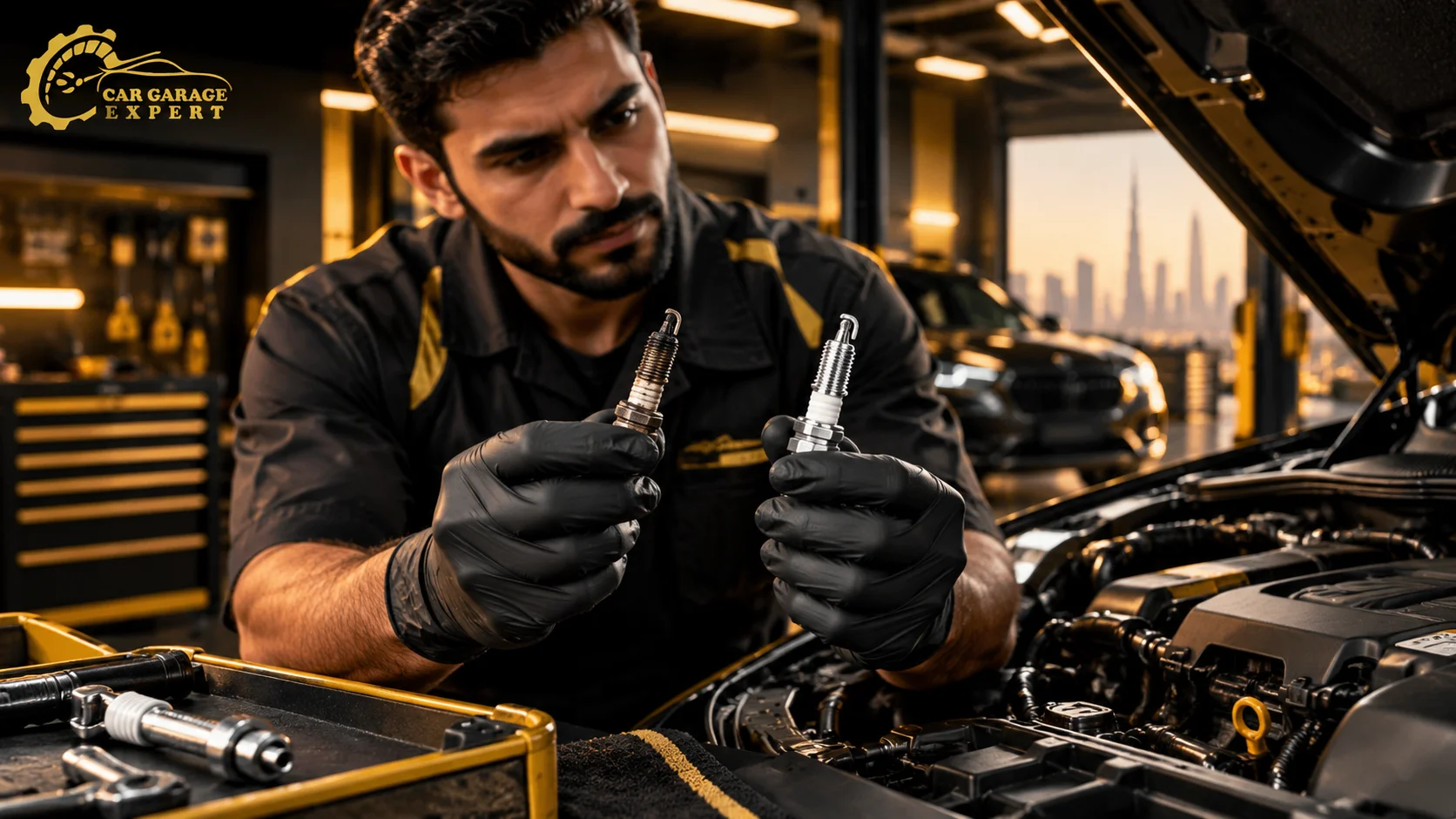
Step 5: Check Ignition and Engine Sensors
Crankshaft and camshaft signals, ignition components, wiring, and related systems all get tested.
Step 6: Inspect Wiring and Grounds
Intermittent electrical faults can be genuinely tricky to catch, so connections and grounds get checked carefully.
Step 7: Perform a Controlled Road Test
If the fault only shows up occasionally, a road test can help recreate the conditions that trigger it.
What Happens After the Cause Is Confirmed?
What comes next depends entirely on which component actually turned out to be the problem.
Repairs might include:
- Replacing a failing alternator
- Replacing a damaged battery
- Repairing battery terminals or grounds
- Replacing a fuel pump
- Repairing fuel-delivery components
- Replacing a crankshaft sensor
- Replacing a camshaft sensor
- Repairing ignition components
- Repairing damaged wiring
- Addressing overheating problems
- Repairing throttle or engine-management components
A workshop worth trusting will explain why a specific part needs replacing, rather than working through expensive parts one at a time until the problem goes away.
Why Should You Take This Problem Seriously?
A car shuts off while driving is more than just an annoying hiccup.
An unexpected shutdown can take away:
- Engine power
- Acceleration
- Power-assisted steering assistance, depending on the vehicle
- Brake-assistance behavior, depending on the system and circumstances
That can make the car genuinely hard to control, especially if it happens mid-lane change, while merging, turning, or moving fast.
Repeated shutdowns are also often a sign that a component is wearing out and getting worse. Continuing to drive on it raises the odds of it happening again — possibly at a worse moment.
Can You Continue Driving?
If the car’s already cut out once while you were driving, pushing on without getting it checked isn’t a great idea.
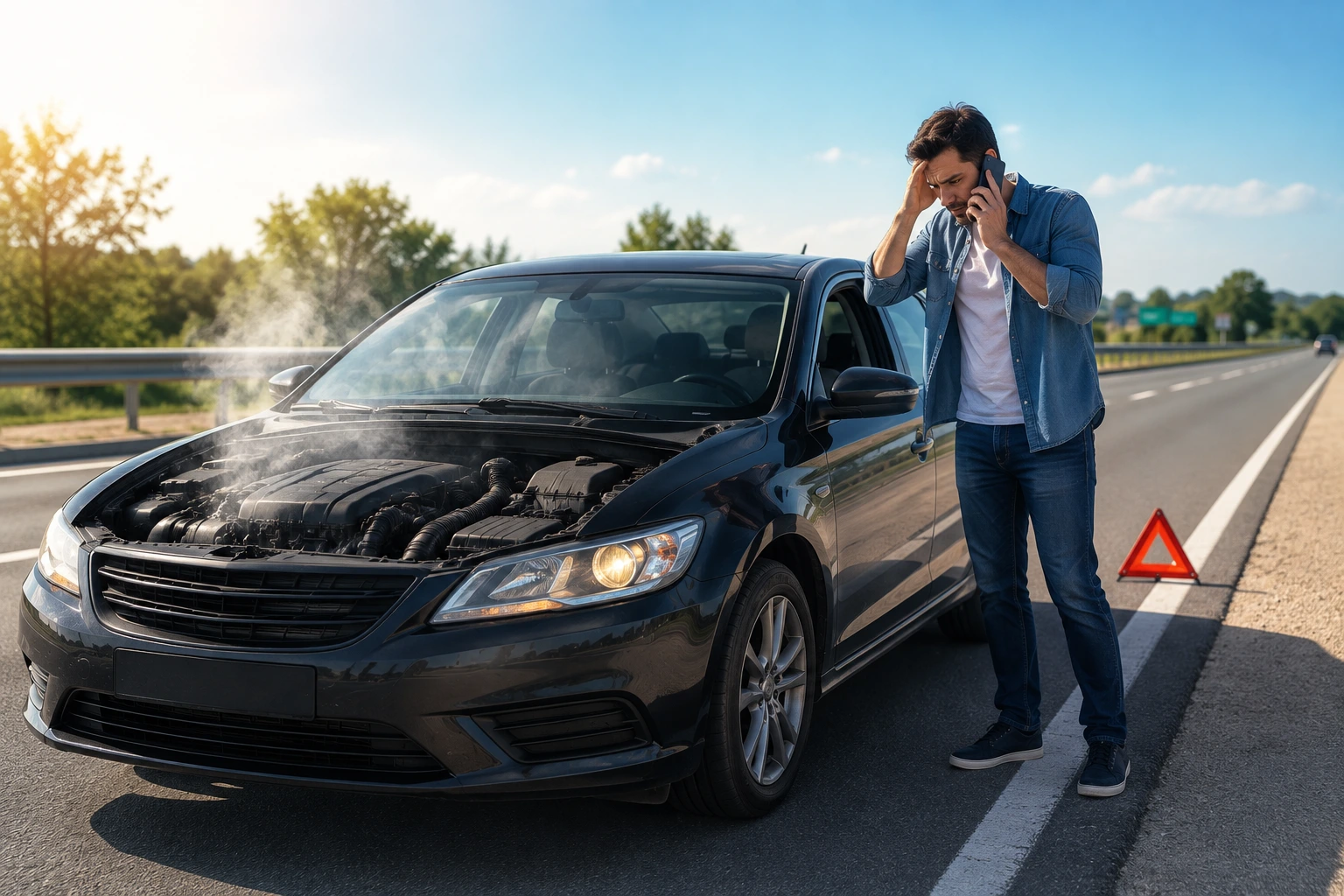
If the engine stops suddenly and your car shuts off while driving what you will do:
- Stay calm.
- Keep control of the steering.
- Move toward a safe location if you can.
- Turn on the hazard warning lights.
- Avoid stopping in an active traffic lane if you can safely get clear of it.
- Call for professional assistance if it won’t restart or you’ve no idea what caused it.
Even if it does restart, that’s not a guarantee the underlying problem is gone.
An intermittent fault can come back with zero warning.
If you’re stuck somewhere or the car doesn’t feel safe to drive, roadside assistance is a far better call than trying to nurse it to a workshop yourself.
How Long Does This Problem Take to Fix?
How long the fix takes really comes down to what’s actually wrong.
A battery or terminal issue can often be sorted fairly fast. Tracking down an intermittent electrical fault, on the other hand, can eat up a lot more time.
What affects the timeline:
- Whether the fault can be reproduced
- Diagnostic testing required
- Availability of replacement parts
- Accessibility of the failed component
- Whether additional damage is present
- Whether the vehicle needs extensive electrical testing
Once the actual fault’s been identified, a proper diagnosis should give you a much more realistic estimate.
What Determines the Repair Price?
Costs for fixing a car shuts off while driving can swing quite a bit depending on the cause.
Common cost factors:
- Vehicle make and model.
- Failed component
- Labor time
- Diagnostic requirements
- OEM or aftermarket parts
- Electrical troubleshooting
- Fuel-system repairs
- Additional damage
- Emergency recovery requirements
A failing sensor tends to be a relatively cheap fix compared with a fuel pump, alternator, or major electrical repair.
The best way to avoid paying for guesswork is to get the problem properly diagnosed before any parts get replaced.
Prevention Tips: How Can You Reduce the Risk of Sudden Shutdowns?
You can’t prevent every mechanical failure out there, but staying on top of maintenance genuinely cuts down the odds of an unexpected breakdown.
Maintain the Battery and Charging System
Get the battery and alternator checked as soon as you notice slow starting, dim lights, or a charging warning.
Don’t Ignore Warning Lights
A check engine, battery, or temperature light going on is often an early heads-up that something’s starting to go wrong.
Replace Filters When Required
A clogged fuel or air filter can hurt engine performance and, depending on the car and the fault, contribute to drivability problems.
Watch for Changes in Engine Behavior
Hesitation, stalling, rough running, and odd starting problems are all worth getting looked at rather than ignored.
Maintain the Cooling System
Overheating can do real damage. Keep an eye on coolant levels and get any cooling-system faults sorted quickly.
Keep Battery Connections Clean
Loose or heavily corroded terminals are a common source of electrical trouble that’s easy to overlook.
Dubai-Specific Advice: What Should Dubai Drivers Do?
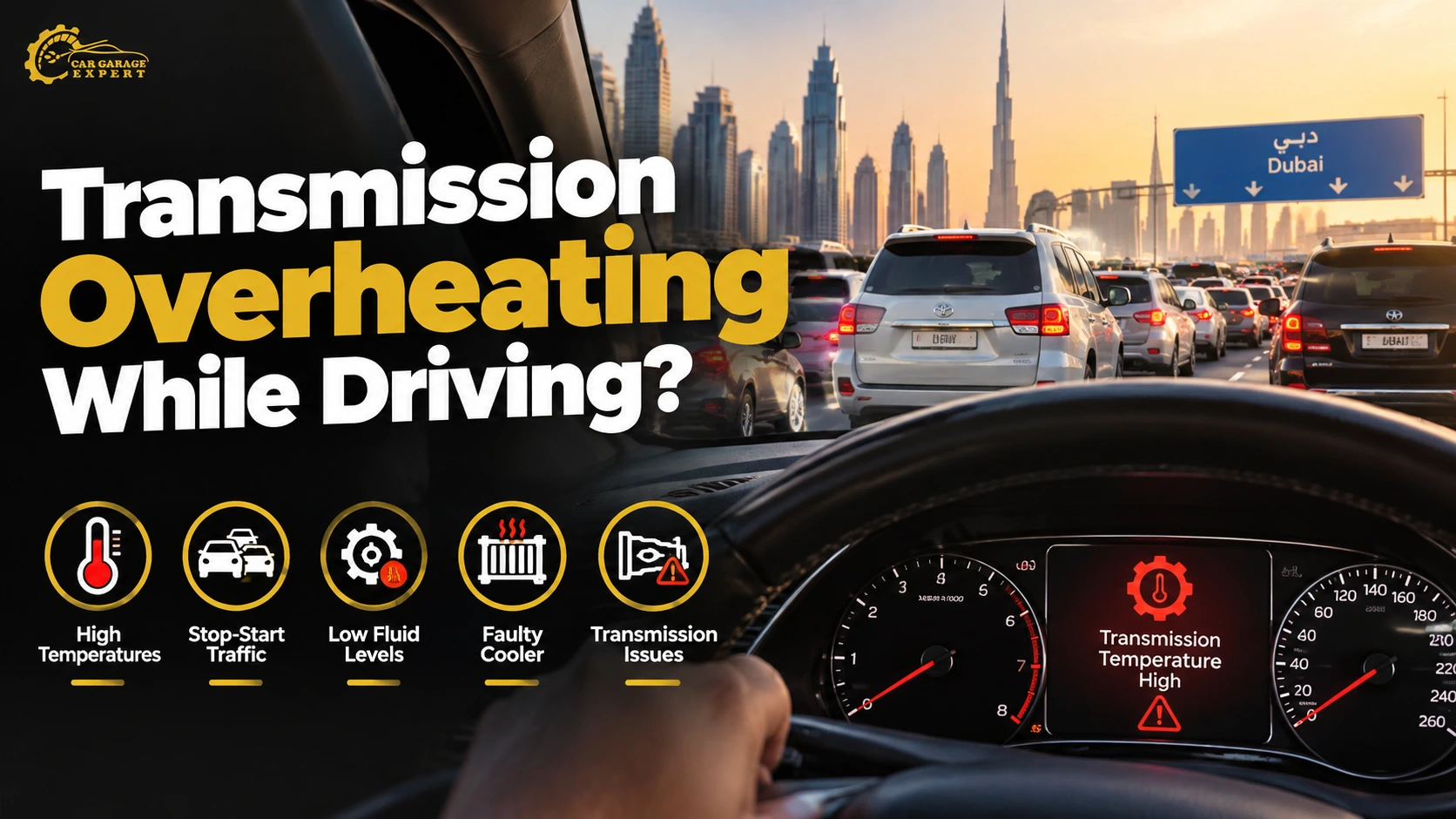
Dubai’s heat combined with heavy traffic puts extra strain on cooling, charging, and fuel systems in a way that shorter, cooler drives don’t.
Long stretches of stop-and-go traffic can also bring an existing problem to the surface that might not show up on a quick drive.
If your car shuts down after a longer stretch of driving in the heat, let the technician know exactly when it happened and whether it started again once it had cooled off.
If your car shuts off while driving on a Dubai highway or in heavy traffic, focus first on getting yourself and everyone around you somewhere safe rather than repeatedly trying to restart it.
If you need a garage near me, Car Garage Expert can provide professional vehicle diagnosis and repair.
Why Choose Car Garage Expert for a Sudden Engine Shutdown?
A car that stops unexpectedly needs a proper diagnosis, not a guess.
Car Garage Expert can dig into problems involving the charging system, battery, fuel delivery, ignition, sensors, electrical components, and anything else that could cause an engine to cut out without warning.
The aim is always to find the actual fault and explain the right repair, rather than swapping parts without any real evidence behind it.
If your car shuts off while driving on you and you’re searching for a garage near me, booking a diagnostic inspection before your next longer drive is a smart move.
Frequently Asked Questions
Q1: Why does my car shuts off while driving?
Common causes include alternator failure, fuel pump problems, low fuel pressure, ignition faults, crankshaft or camshaft sensor problems, electrical faults, overheating, and engine-management issues.
Q2: Why does my car shuts off while driving but start again?
An intermittent fuel pump, crankshaft sensor, electrical connection, overheating condition, or another heat-sensitive component can cause the engine to stop and then start again once things settle down.
Q3: Why does my car shut off and not restart?
It could involve fuel delivery, ignition, battery or charging problems, sensors, electrical systems, or another engine-management fault. A professional diagnosis is really the only way to pin down the exact cause.
Q4: Can a bad alternator cause a car to shut off while driving?
Yes. Once the alternator stops charging properly, the battery can drain, and the car eventually loses the electrical power it needs to keep running.
Q5: Can a bad fuel pump cause an engine to stop while driving?
Yes. A fuel pump on its way out may not hold adequate pressure, which shows up as hesitation, loss of power, stalling, or trouble restarting.
Related Services
If your vehicle has stopped unexpectedly, these services may be relevant:
- Car Diagnostics
- Engine Repair
- Car Electrical Repair
- Battery Replacement
- Alternator Repair
- Fuel System Repair
- Engine Cooling System Repair
- Car Recovery
- Roadside Assistance
- General Car Repair
Don’t Ignore a Car That Has Stopped Unexpectedly
A sudden engine shutdown and car shuts off while driving is a pretty clear sign that something in the car isn’t working the way it should. Even if it starts right back up, the underlying issue can still resurface at the worst possible time.
If your car shuts off while driving, it’s worth arranging a proper diagnostic inspection before you rely on it for another long trip.
Car Garage Expert can help pin down problems affecting the engine, fuel system, charging system, electrical components, and sensors.
Looking for a garage near me? Contact Car Garage Expert for professional diagnosis and repair. And if your car’s stopped on the road and it doesn’t feel safe to drive, use roadside assistance to get yourself and the vehicle to safety.