A dirty engine bay isn’t just a cosmetic thing. Dust, oil residue, grease, sand, and general road grime build up around important parts and can quietly hide a leak or a bit of damaged wiring until it’s too late to catch early. That said, car engine bay cleaning has to be done with a bit of care, because modern engines are packed with sensitive electrical connections, sensors, modules, belts, and other components that don’t take kindly to being blasted with water.
The mistake most people make is treating the engine bay the same way they’d treat the outside of the car — pointing a pressure washer at everything and hoping for the best. A safer approach means letting the engine cool first, protecting the sensitive spots, using the right cleaner, keeping water under control, and drying everything properly afterward.
Here’s what’s worth knowing before you pop the hood and get started.
An Overview
The safest way to go about car engine bay cleaning is to work on a cool engine, clear off the loose dust first, protect anything electrical, use a proper automotive degreaser only where it’s actually needed, gently work on the stubborn grime, rinse with controlled, low-pressure water, and dry the whole compartment thoroughly afterward. Steer clear of pointing high-pressure water at the alternator, electrical connectors, the fuse box, sensors, or the air intake. If there’s heavy oil buildup, wiring that looks damaged, or a leak you can’t identify, it’s worth getting a professional to take a look rather than pushing ahead with an aggressive DIY clean. Done properly, cleaning should leave the bay looking better, not create new electrical or mechanical headaches.
Why Does a Dirty Engine Bay Need Attention?
Your engine bay sits out there constantly taking on heat, dust, moisture, road debris, and the odd bit of fluid residue. In Dubai, fine dust and sand pile up faster than you’d expect.
A light coating of dust isn’t really something to worry about. What matters more is heavy buildup that hides leaks, gathers around components, or makes it genuinely hard to check the condition of hoses, wiring, belts, and connectors.
There’s a second issue worth mentioning: cleaning it the wrong way.
Too much water, or water in the wrong places, can create problems that weren’t there to begin with. That’s really the whole point of treating car engine bay cleaning as a controlled maintenance job rather than just hosing the compartment down with a pressure washer.
Signs Your Engine Bay May Need Cleaning
You don’t have to wait until the compartment looks genuinely filthy. A few signs usually show up first.
Heavy Dust and Sand Buildup
A visible layer settling around the engine, the battery area, hoses, and nearby panels is a clear sign contaminants have been piling up.
Oil or Grease Around Components
Dark, oily patches can make it hard to tell whether you’re looking at an active leak or just old residue that’s been sitting there a while.
Dirt Around the Battery and Electrical Areas
Dust gathering near electrical components is worth removing, but carefully — not by blasting it with water.
Strong Odor After Driving
An odd burning or oily smell could point to a leak or another mechanical issue. Car engine bay cleaning shouldn’t be used to mask what’s actually going on.
Difficulty Spotting Fluid Leaks
A heavily contaminated bay can make it a lot harder to notice fresh oil, coolant, or other fluid marks when they show up.
Why Does the Engine Bay Get Dirty?
Knowing where the dirt actually comes from makes it easier to figure out how often cleaning is worth doing.
Road Dust and Sand
Everyday driving exposes the compartment to dust and fine particles, and Dubai’s dry climate makes this especially noticeable.
Oil and Grease
Small leaks, leftover residue from servicing, or the occasional spilled fluid can leave oily patches around the engine.
Coolant and Other Fluid Residue
A cooling system that’s leaked at some point — past or present — can leave dried residue around hoses and nearby components.
Leaves and Debris
Organic matter tends to collect around the edges of the compartment, especially near drains and body panels.
Previous Servicing
Oil changes, fluid top-ups, and repairs can leave a bit of residue behind if the area wasn’t wiped down properly afterward.
Worth pointing out: car engine bay cleaning doesn’t fix the actual source of an oil or coolant leak. That still needs a proper diagnosis on its own.
What Should You Check Before Cleaning?
Before you reach for a hose or a bottle of degreaser, take a few minutes to actually look at what you’re dealing with.
1. Check for Active Fluid Leaks
Look for fresh oil, coolant, brake fluid, or anything else that looks out of place.
2. Inspect Electrical Components
Find the battery, fuse box, the main electrical connectors, sensors, and anything else that shouldn’t get hit directly with high-pressure water.
3. Look at the Air Intake
Make sure any openings feeding the air-intake system are shielded from water and cleaning products.
4. Inspect Belts and Hoses
Check for cracking, wear, or contamination before you start cleaning around them.
5. Determine How Dirty the Area Really Is
Light dust calls for a much gentler touch than heavy grease and oil buildup does.
If you spot damaged wiring or a serious leak while checking things over, stop there and have the car looked at by a professional.
How to Clean the Engine Bay Safely
Think of car engine bay cleaning as something you work through step by step, not one quick blast with a hose.
Step 1: Let the Engine Cool Completely
Don’t pour cold water over a hot engine. Give it time to cool down before you start anything.
Step 2: Remove Loose Dust
A soft brush, a microfiber cloth, or an air blower works well for clearing off loose dust and debris first.
Step 3: Protect Sensitive Components
Depending on the car, things like exposed electrical connections, the fuse box, the alternator opening, and air-intake parts may need covering before you go further.
Step 4: Apply an Appropriate Cleaner
Use an automotive-safe degreaser only where it’s genuinely needed — there’s no reason to coat every surface with it.
Step 5: Agitate Heavy Dirt Gently
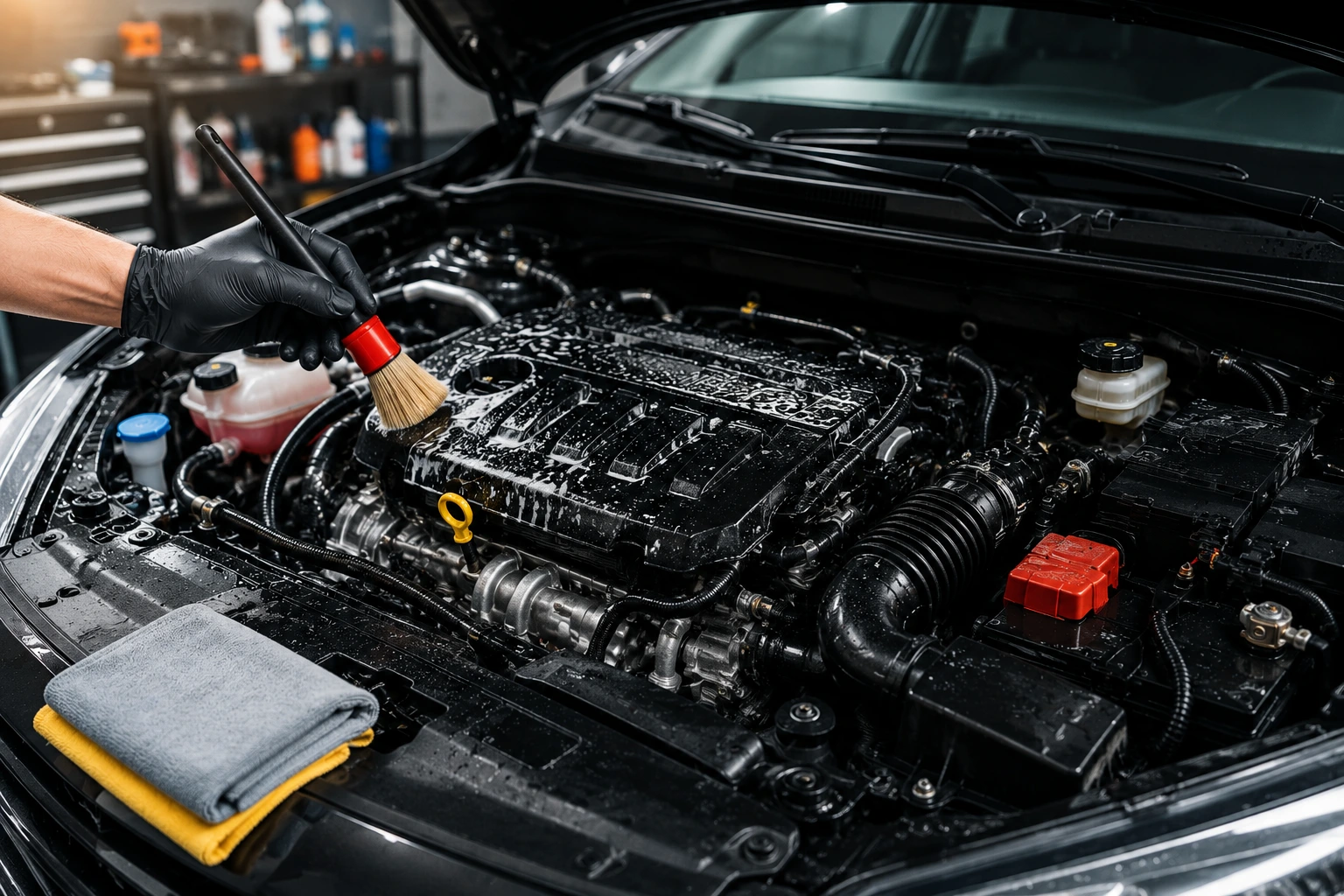
A soft detailing brush loosens up grease and grime without needing to scrub hard.
Step 6: Rinse Carefully
Controlled, low-pressure water does the job — don’t point a pressure washer straight at anything electrical.
Step 7: Dry Thoroughly
Microfiber towels, compressed air where it makes sense, or an air blower all help clear out leftover moisture.
Step 8: Inspect Again
Once it’s clean and dry, take another look for leaks, damaged hoses, loose wiring, or anything else that was hiding under the dirt.
Safe Car Engine Bay Cleaning: What Should You Avoid?
Avoid:
- High-pressure spraying directly onto electrical connections
- Cleaning a very hot engine
- Soaking the alternator
- Spraying directly into air-intake openings
- Using household chemicals that may damage rubber or plastic
- Leaving water trapped around connectors
- Using excessive degreaser
- Cleaning an engine bay to conceal a fluid leak
What Happens If the Engine Bay Stays Dirty?
A dirty engine bay doesn’t automatically mean something’s mechanically wrong. But heavy buildup does make general maintenance harder than it needs to be.
Some of the knock-on effects:
- Leaks becoming harder to identify.
- Oil and grease collecting around components
- Dust accumulating around sensitive areas.
- Difficulty inspecting hoses and wiring
- Debris collecting in unwanted areas
- A less professional appearance during vehicle resale
There’s also a separate risk worth flagging: cleaning it badly.
Too much water pressure can force moisture into electrical connections and other sensitive spots. That’s why the technique matters just as much as how clean the result looks.
Can You Continue Driving?
If the engine bay is just dusty or a bit dirty and the car’s running fine otherwise, cleaning is really more of a maintenance and appearance job than anything urgent.
That said, don’t keep driving as normal if you notice:
- A significant oil leak
- Coolant leaking onto the ground
- Burning smells
- Smoke from under the hood
- Overheating
- Damaged wiring
- A warning light accompanied by unusual engine behavior
If something serious turns up while you’re out on the road, roadside assistance is a safer bet than trying to drive it to a workshop yourself.
How Long Does Engine Bay Cleaning Take?
How long it takes really depends on how dirty things are and whether it’s being done with proper detailing equipment.
A lightly dusty bay can be sorted fairly quickly. Heavy grease, oil residue, sand, and built-up debris take longer to work through.
Professional car engine bay cleaning can take extra time when technicians need to:
- Protect sensitive components
- Degrease heavily contaminated areas
- Clean around hoses and wiring.
- Dry the compartment carefully.
- Inspect for leaks afterward.
If something mechanical turns up along the way, that adds diagnostic and repair time on top.
What Determines the Cost of Car Engine Bay Cleaning?
The price of professional car engine bay cleaning comes down to a handful of things.
Among them:
- Size and layout of the engine compartment
- Amount of dirt and grease
- Oil contamination
- Required cleaning products
- Level of detailing required
- Drying method
- Whether additional inspection is requested
- Whether an underlying leak or mechanical problem is discovered
A basic clean and a full restoration of a heavily contaminated bay are two very different jobs.
Before you commit to anything, it’s worth getting clear on whether the quote covers basic cleaning, degreasing, full detailing, or inspection too.
Prevention Tips: How to Keep Your Engine Bay Cleaner
You don’t need to deep-clean the engine bay constantly to keep it in decent shape.
Remove Dust Before It Builds Up
A light, regular wipe-down is a lot easier than tackling months of accumulated grime all at once.
Deal With Leaks Quickly
If you spot oil or coolant around the engine, fix the actual source rather than repeatedly cleaning up after it.
Keep the Hood Area Clear
Clear out leaves and debris before they settle around drains and other spots.
Inspect After Servicing
After an oil change or repair, check whether anything got spilled around the engine while the work was being done.
Use Gentle Cleaning Methods
Don’t make high-pressure washing your default approach to car engine bay cleaning.
Follow Your Vehicle’s Maintenance Schedule
Regular servicing gives a technician the chance to look over the engine bay and catch problems early, while they’re still small.
Engine Bay Cleaning in Dusty Conditions
Between the heat, the dry air, and the fine dust and sand, an engine bay in Dubai can get dirty faster than you’d think.
Dust settles around wiring, plastic covers, the battery area, and other parts even when the outside of the car still looks spotless.
But cleaning it more often doesn’t mean reaching for the pressure washer more often.
For drivers here, a controlled, careful routine tends to work better. If the bay has heavy oil contamination, or you’re not sure which parts need protecting, having a professional handle the engine bay cleaning cuts down the risk of accidentally damaging something sensitive.
If you’re searching for a garage near me to inspect and clean a heavily contaminated engine compartment, Car Garage Expert can provide professional assistance.
Why Choose Car Garage Expert for Engine Bay Cleaning?
A clean engine bay should look better without creating any new problems along the way.
At Car Garage Expert, the focus stays on careful cleaning, proper inspection, and keeping sensitive components away from unnecessary water and chemical exposure.
That kind of attention matters most when there’s heavy grease, oil deposits, built-up Dubai dust, or contamination sitting near electrical parts.
If you’re not sure whether your car needs a basic clean or actually has a leak hiding underneath, a proper inspection helps you make the right call instead of just cleaning over the symptom.
For drivers searching for a garage near me, Car Garage Expert is a solid option for checking the condition of the engine bay both before and after cleaning.
Frequently Asked Questions
Q1: Is it safe to wash a car engine bay with water?
It can be, as long as the engine’s cool, the sensitive parts are protected, and the water’s used carefully. Keep high-pressure water away from electrical connections, the alternator, the fuse box, sensors, and the air intake.
Q2 :Can I pressure wash my engine bay?
You can, but it’s riskier than a gentle rinse, since high pressure can force moisture into electrical connections and other sensitive spots. A controlled, low-pressure method is generally the safer route.
Q3: Can water damage the alternator?
Yes, if enough water or pressure reaches it, especially if moisture gets into sensitive areas. It’s not built to be treated like an exterior body panel.
Q4: Should I clean my engine when it is hot?
No. Let it cool down first. Sudden temperature changes, plus water hitting hot components, are a risk you don’t need to take.
Q5: Can engine bay cleaning cause electrical problems?
It can, if it’s done carelessly and water ends up somewhere it shouldn’t — connectors, sensors, modules, that kind of thing.
Q6: How often should I clean my engine bay?
There’s no single answer that fits every car. It depends on your driving conditions, how much dust you’re dealing with, oil contamination, and how often the car gets serviced. Cars driven regularly in Dubai’s dust may need attention more often than most.
Q7: Can engine bay cleaning fix an oil leak?
No. Cleaning gets rid of the mess but doesn’t touch the actual source of the leak. If fresh oil keeps showing up, that needs a proper diagnosis.
Q8: Can I clean my engine bay without a pressure washer?
Yes. For light to moderate dirt, a brush, microfiber towels, the right cleaner, controlled water, and proper drying are usually enough.
Q9: What should I do if my car won’t start after engine cleaning?
Stop trying to restart it repeatedly. There’s a decent chance moisture got into an electrical component or connector. If it doesn’t sort itself out after proper drying and a check-over, it’s worth calling in professional help or roadside assistance.
Related Services
If your engine bay needs attention, these services may also be relevant:
- Car Detailing
- Engine Inspection
- Engine Repair
- Car Oil Change
- Car Electrical Repair
- Car Diagnostics
- Battery Inspection
- Cooling System Inspection
- Roadside Assistance
- Car Recovery
Clean Your Engine Bay Without Taking Unnecessary Risks
A clean engine compartment makes it a lot easier to spot leaks, check components, and keep the car looking properly maintained. But get the method wrong, and you can end up creating electrical or mechanical problems that weren’t there before.
If you’re unsure about car engine bay cleaning — especially with heavy oil, grease, dust, or anything electrical involved — getting professional help is the safer call.
Car Garage Expert can assess the condition of your engine bay and recommend the right car engine bay cleaning or inspection.
Looking for a garage near me in Dubai? Contact Car Garage Expert for professional automotive assistance. And if your car develops a serious problem while you’re out on the road, roadside assistance is the safer option over driving it in yourself.