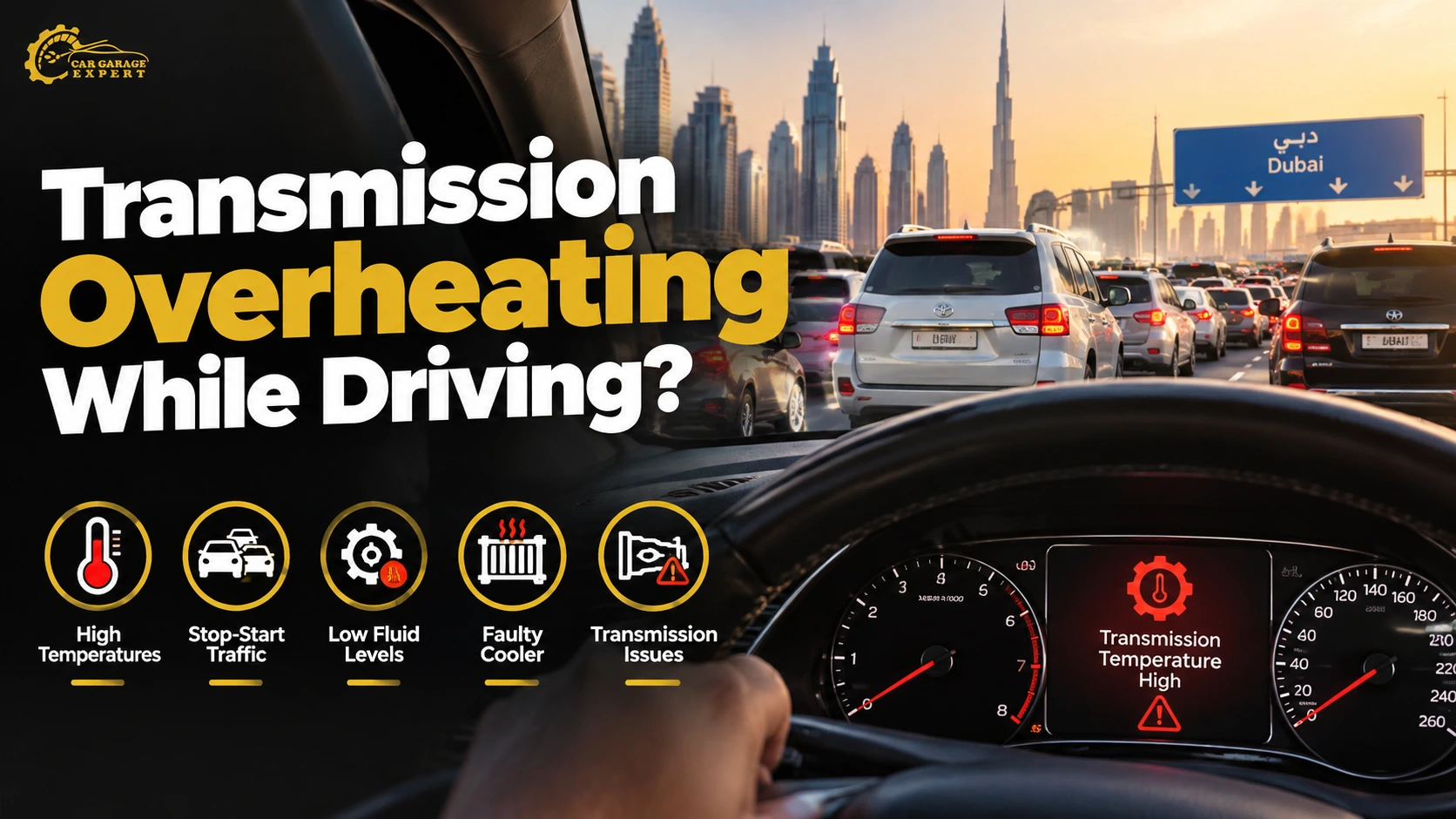
Car overheating is one of the most common and stressful issues drivers face, especially in Dubai, where extreme temperatures push vehicles to their limits. If you’ve ever asked yourself, “Why Is My Car Overheating?”, the answer usually lies in a combination of cooling system failures, environmental conditions and maintenance gaps.
Instead of just listing causes, this blog will help you understand what’s happening inside your engine, how to respond quickly and how to prevent it in UAE conditions.
Why Does a Car Overheat?
Below are the most common reasons why engine overheating occurs:
1. Low Coolant or a Coolant Leak
Coolant plays a critical role in absorbing heat from the engine and releasing it through the radiator. When coolant levels drop too low or there’s a leak in the system, the engine cannot cool down efficiently. Even a small leak can gradually lead to overheating.
2. Thermostat Failure
The thermostat controls the flow of coolant between the engine and the radiator. If it gets stuck in the closed position, coolant cannot circulate properly. This traps heat inside the engine and causes the temperature to rise quickly.
3. Car Radiator Problems
The radiator is essential for cooling the engine. If it becomes clogged, damaged, or develops leaks, its efficiency drops. Over time, rust or mineral buildup inside the radiator can also restrict coolant flow, leading to overheating.
4. Faulty Water Pump
The water pump is responsible for circulating coolant throughout the engine and radiator. If it fails due to a worn belt, damaged internal components, or leakage, coolant flow is disrupted. This often results in overheating and may require a water pump replacement.
5. Cooling Fan Not Working
The radiator fan helps cool the coolant by pulling air through the radiator, especially when the car is idle or moving slowly. If the fan motor fails, a fuse blows, or wiring issues occur, the fan may stop working. This can quickly lead to overheating, particularly in traffic.
6. Damaged or Blocked Radiator Hoses
Radiator hoses carry coolant between different parts of the engine. If these hoses are cracked, clogged, or swollen, they can restrict coolant flow. This reduces the cooling system’s effectiveness, especially in older or poorly maintained vehicles.
7. Blown Head Gasket
A blown head gasket is a serious issue where coolant leaks into the engine or combustion chamber. This not only reduces coolant levels but can also cause white smoke from the exhaust and engine misfires, along with overheating.
8. Old or Contaminated Coolant
Over time, coolant loses its effectiveness. If it isn’t replaced regularly, it can become dirty and lead to rust or deposits inside the cooling system. This reduces its ability to regulate engine temperature.
9. Extreme Heat and Heavy Driving Conditions
In hot regions like Dubai, the cooling system is under constant stress. High temperatures, heavy traffic, continuous AC use and carrying an extra load can all cause the engine to heat up faster, especially if the cooling system isn’t in optimal condition.
How to Tell If Your Car Is Overheating
Overheating doesn’t always start with smoke. There are early warning signs you should never ignore.
Key Warning Signs
- Temperature gauge rising above normal
- Warning light on dashboard
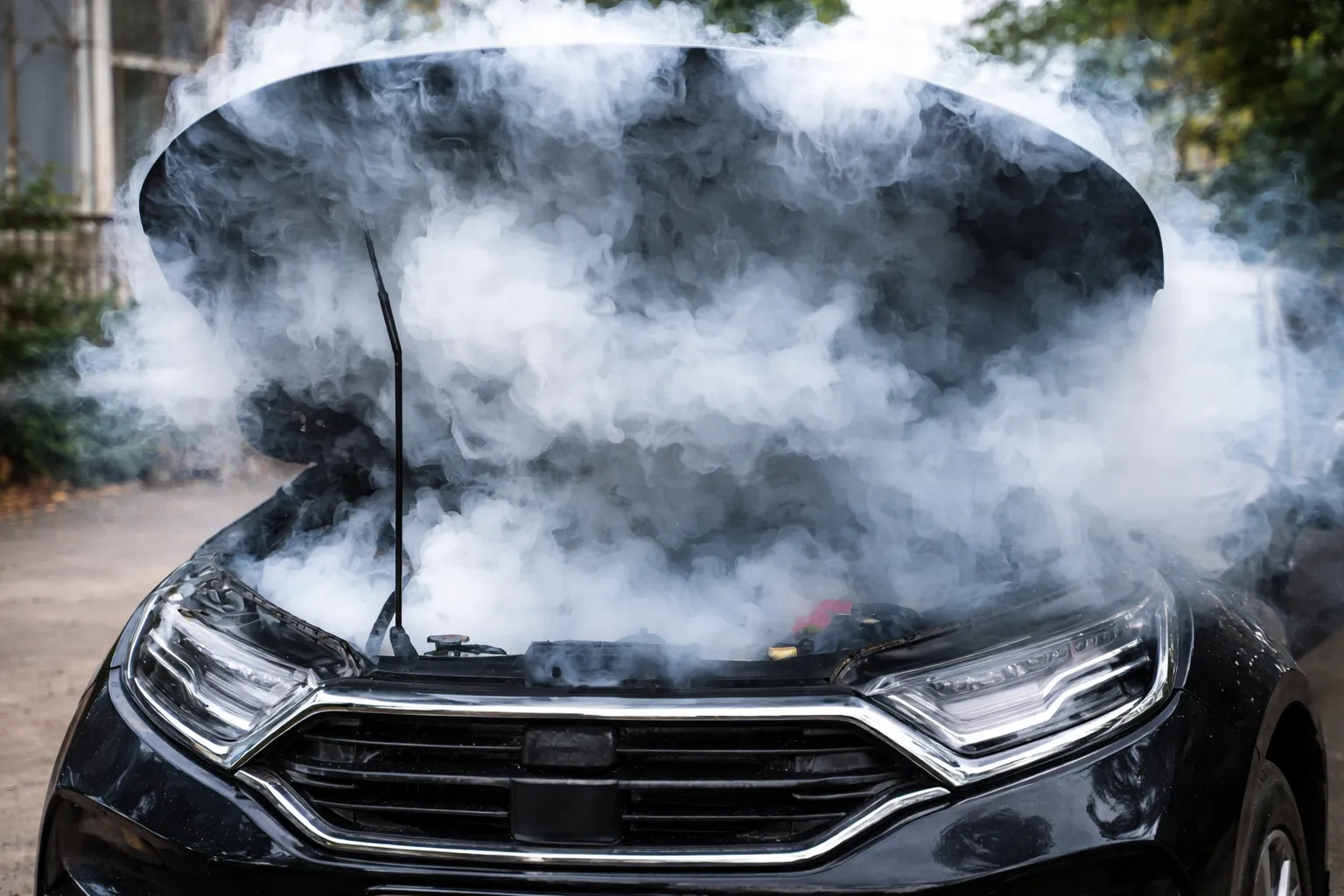
- Steam coming from the hood
- Coolant smell (sweet odor)
- Reduced engine performance
- Knocking or ticking sounds
Steps to Take When Your Car Is Overheating
If your car starts overheating while driving in Dubai, acting quickly can prevent severe engine damage.
Immediate Action
-
Turn off the AC and turn on the heater (yes, it helps pull heat away from the engine)
-
Pull over safely and turn off the engine
-
Wait at least 20–30 minutes before opening the hood
-
Never open the radiator cap while hot
-
Check coolant level (only when engine is cool)
-
Call for professional assistance if unsure
Tips to Avoid Car Overheating
Prevention is far cheaper than engine repair, especially in high-heat regions like Dubai.
Preventive Maintenance
- Check coolant levels monthly
- Flush radiators every 12–18 months
- Inspect hoses for cracks or leaks
- Ensure radiator fan is working
- Use high-quality engine oil
- Regular servicing (especially before summer)