
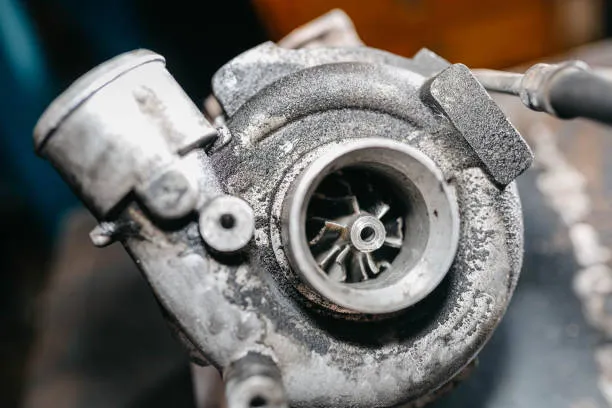
Turbochargers are a big part of why Mercedes-Benz owners love their cars’ speed, gas mileage, and driving experience. Because the turbo forces compressed air into the engine, smaller engines can make a lot of power without sacrificing smoothness. However, turbochargers operate at very high temperatures and pressures, so wear and failure are sometimes unavoidable.
This complete Mercedes Turbocharger Replacement guide explains why turbochargers fail, how to tell if one needs to be repaired or replaced, how much it will really cost, how long it will take, and what to expect after installation. This process will help you protect your engine and your investment, whether you drive a C-Class, E-Class, GLC, or AMG.
How Turbochargers Work in Mercedes-Benz Vehicles
In Mercedes-Benz turbochargers, exhaust fumes turn a turbine that is linked to a compressor wheel. This compressor pushes more air into the engine, allowing more fuel to burn correctly and producing more power.
Given that turbochargers spin at very high speeds (often over 150,000 RPM), they depend on:
- Clean engine oil for lubrication
- Stable cooling systems
- Proper driving and shutdown habits
Any problem with these enabling systems can significantly shorten the turbocharger’s lifespan.
What Are the Signs That a Mercedes-Benz Turbocharger Needs Replacement?
Failure of a turbocharger rarely happens out of the blue. Most Mercedes drivers notice signs of trouble well before their car breaks down completely.
Common Warning Signs
- Noticeable loss of power or sluggish acceleration
- Whining, whistling, or grinding noises from the engine bay
- Excessive exhaust smoke (blue or black)
- Check engine light related to boost pressure
- Oil consumption is increasing unexpectedly
If you ignore these signs, you could damage the engine, making Mercedes turbocharger replacement more difficult and more expensive.
Is It Safe to Keep Driving If the Turbo Is Failing?
If your turbine is broken, it’s dangerous to drive. The car may still be moving, but driving can:
- Damage the engine by getting oil on it
- Sudden power outages at risky times
- Overheat the exhaust parts
- Cause a full turbo seizure
If warning signs appear, the safest thing to do is to drive less and get an inspection by a trained Mercedes-Benz mechanic.
Mercedes-Benz Turbocharger Replacement Explained
Mercedes turbocharger replacement, you have to do more than swap out a single part. To ensure long-term reliability, it must be carefully diagnosed, installed, and supported through system checks.
Replacement Typically Includes
- Removal of the faulty turbocharger
- Inspection of oil supply and return lines
- Cleaning or replacement of intake and intercooler components
- Software adaptation and testing
- Post-installation road testing
When you skip steps, the new turbo often fails before it should.
Repair vs Replacement: Can a Mercedes Turbocharger Be Fixed?
Turbochargers can be fixed sometimes, but not always.
When Repair May Be Possible
- Faulty wastegate actuator
- Minor boost control issues
- Early-stage bearing wear
When Full Replacement Is Required
- Cracked turbo housing
- Severe oil contamination
- Compressor or turbine blade damage
In some types, replacing only the wastegate actuator may be enough. Still, many new Mercedes turbos have parts built in that make partial fixes unreliable. A professional evaluation at a Mercedes garage near me makes sure I make the right choice.
How Much Does Mercedes-Benz Turbocharger Replacement Cost?
The price changes based on the model, engine type, and difficulty of the work.
General Cost Factors
- Vehicle model (C300 vs AMG models)
- OEM vs aftermarket turbo choice
- Labor hours required
- Additional parts (oil lines, gaskets, sensors)
It usually costs less to replace the turbocharger on a Mercedes-Benz C300 than on an AMG or V6/V8 model. Still, sound installation is critical, no matter how much it costs.
Mercedes-Benz Turbocharger Replacement Timeline
The time needed depends on how the engine is laid out and how easy it is to reach.
Typical Timeframes
- Simple 4-cylinder models: 1–2 days
- Complex or AMG engines: 2–4 days
This includes trying, setting up, diagnosing, and calibrating. If you rush the process, you’re more likely to fail again.
DIY Turbocharger Replacement: Is It Realistic?
Modern Mercedes turbo systems are very complicated, but skilled fans can do them themselves.
DIY Challenges
- Tight packing in the engine bay
- Needs specialised tools
- Chance of oil getting dirty
- Software needs to be adapted
To do it yourself, you’ll need to take apart the exhaust, disconnect the oil and coolant lines, install the turbo, prime it with oil, and put everything back together correctly. Small mistakes can quickly damage a brand-new turbo.
This is why most Mercedes-Benz owners trust only qualified mechanics to do a good job.
How Long Does a Mercedes-Benz Turbocharger Last?
If you take care of your turbocharger, it should last:
- Between 100,000 and 150,000 km
- Longer if you check the oil often and drive carefully.
Short oil change intervals, warm-up and cool-down routines, and not going too quickly when the engine is cold all significantly increase the turbo’s life.
Should Oil Lines Be Replaced During Turbo Installation?
Yes, it is highly suggested that the oil feed and return lines be replaced.
There may be: in old oil lines
- Sludge
- Buildup of carbon
- Particles of metal
One of the main reasons of Mercedes turbocharger replacement is the new turbos fail early is that the lines are reused after being contaminated. This is something all reputable shops and Mercedes-Benz garages near me do as a matter of course.
Will Replacing the Turbocharger Restore Performance Completely?
Most of the time, yes. When put correctly, a turbocharger brings back:
- Power of the original engine
- Smoothly speeding up
- How well does fuel work
- Less pollution smoke
But fixing the real problems, like bad oil, a sick cooling system, or misaligned sensors, is needed to get the performance back on track. Mercedes turbocharger replacement without fixing the problems that caused it could lead to the same problems recurring.
Preventing Future Turbocharger Failure
The long-term dependability of a Mercedes turbocharger replacement depends on how well it is maintained and how you drive.
Best Practices
- Change engine oil on time
- Use manufacturer-approved oil
- Allow the engine to warm up before heavy acceleration
- Let the engine idle briefly after hard driving
- Address warning lights promptly
These steps make it much less likely that the turbo will fail again.
Why Professional Diagnosis Is Important
Symptoms related to turbo can sometimes be caused by
- Bad boost sensors
- Leaks of Hoover
- Issues with software
A wrong diagnosis leads to unnecessary costs. Mercedes-Benz techs you can trust use advanced diagnostic tools to ensure a Mercedes turbocharger replacement is really needed.
Choosing the Right Garage for Turbocharger Replacement
Not every repair shop has the tools for Mercedes turbocharger replacement. By picking a Mercedes-Benz shop near me, you can be sure of the following:
- The right tools and skills
- OEM-grade parts
- The right way to put something
- Artistry with a warranty
This amount of care keeps your engine and your investment safe.
Expert support makes all the difference.
Turbocharger problems can be scary, but they can be fixed with the proper knowledge and professional help. When you know the danger signs, repair options, fair prices, and the correct way to set something up, you can make informed decisions.
If you need a reliable Mercedes Turbocharger Replacement, Car Garage Expert can accurately diagnose your car, expertly repair it, and provide dependable service. They have skilled technicians, and their tools are always up to date. This makes them a good choice for fixing problems and keeping engines healthy over time.
If you want to be sure of something, you should only hire an expert for Mercedes turbocharger replacement .