Owning a Mercedes isn’t just about the drive – it’s about superb engineering, advanced safety tech, a degree of comfort hard to find elsewhere. The braking system is smack in the middle of all that, and it’s not something you just give to everybody. When something feels off like a weird noise, a buzz through the pedal, a warning light you’ve never seen before your instinct is to ask who you can actually trust with it. Mercedes brake system repair simply shouldn’t be treated as routine maintenance at whichever shop happens to be closest. General garages often don’t have the equipment to properly work on Mercedes brake system repair.
Mercedes brake system repair combine ABS, Brake Assist, ESP, electronic parking brakes, and wear sensors, all working together. Get one part wrong, the wrong fluid, a sensor left uncalibrated and you’re looking at warning lights, or worse, reduced stopping power exactly when you need it most. A specialist who actually knows Mercedes systems reads the fault codes correctly the first time, instead of guessing.
Why Mercedes Brake Repair Needs a Specialist, Not a Generalist
A professional handling Mercedes brake system repair understands how all these systems talk to each other ,the ABS module doesn’t operate in isolation from the wear sensors, and neither works independently of the calibration settings tied to your specific model. Most general mechanics haven’t had the manufacturer-level training to fully grasp that, which is part of why Mercedes owners consistently do better with technicians who specialize in the brand specifically.
Warning Signs You Need Mercedes Brake Repair
Brake noise is usually the first thing you’ll notice, and it tells you more than you’d think if you know what to listen for.
Squeaking and Grinding
Squeaking often shows up when pads are getting thin or when dust has built up between the pad and rotor — annoying, but not yet urgent. Grinding is a different story. That usually means the pads have worn through completely and metal’s now contacting metal, which needs Mercedes brake system repair right away before it damages the rotors too.
Warning Lights and Pedal Feel
A brake warning light, a pedal that feels softer than usual, or one that needs to travel further before engaging all of these point to something in the system that needs a proper diagnostic scan, not a guess.
What Mercedes Brake Repair Should Actually Involve
Proper Mercedes brake system repair goes well beyond a quick pad swap. It should include real diagnostic work tailored to how your specific model’s systems are set up.
Manufacturer-Specific Diagnostics
A technician doing Mercedes brake system repair correctly uses tools built to read Mercedes fault codes accurately — not a generic OBD scanner giving a rough approximation. Misreading a code here can mean replacing the wrong component entirely.
Component-Level Inspection
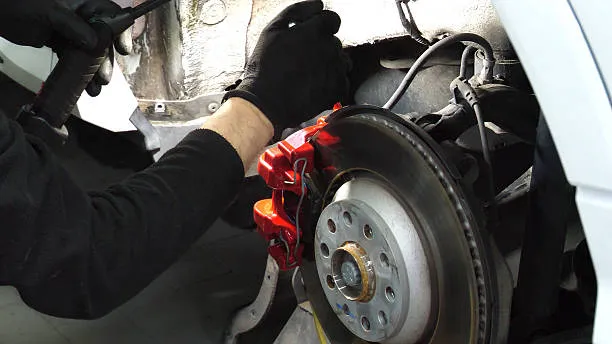
Someone should be physically inspecting pads, rotors, callipers and the quality of the brake fluid beyond the electronics because a fluid flush is sometimes past due by the time additional problems start to appear.
Common Mercedes Brake Issues Beyond Just Pads
Pad wear gets most of the attention, but it’s rarely the whole story on a Mercedes.
Brake Fluid and Hydraulic Issues
Mercedes brake fluid absorbs moisture over time, and if it isn’t flushed on schedule, it can lead to a spongy pedal feel or, in more serious cases, reduced braking performance when you need it most. This is one of the more commonly overlooked parts of Mercedes brake system repair, since it doesn’t always announce itself with an obvious symptom.
ABS and Electronic System Faults
Modern Mercedes models lean heavily on ABS and ESP working correctly together. A fault in either system can trigger warning lights well before you’d notice any change in how the car actually stops. A proper scan tends to catch these problems long before a physical symptom shows up on its own.
Caliper and Rotor Wear
Sticking or dragging calipers wear pads and rotors quicker than they should, sometimes only on one side of the car. If you feel your Mercedes pulling slightly during braking, this is often the reason.
What Affects Mercedes Brake Repair Cost
Price moves around based on more than just which part’s worn out. Model matters — brake components for an S-Class or AMG variant often cost more than for a C-Class, simply because the systems are more advanced and the parts less common. Whether it’s just pads or a fuller repair involving rotors, calipers, or ABS module changes, the scope changes significantly too. If a shop gives you a firm number before even inspecting the car, they’re probably guessing — worth staying a little skeptical of phone quotes given sight unseen.
Why Dubai Conditions Wear Brakes Faster
Sheikh Zayed Road is a busy stretch of stop-start traffic, meaning Mercedes brakes work harder here than they would in a place with lighter congestion. Mix in continuous summer heat, which over time affects brake fluid and rubber seals, and it’s not unusual for Dubai-driven Mercedes cars to need attention sooner than the manufacturer’s general guidance suggests. This is part of the reason why it’s usually safer to check brakes more often than the typical time here.
Independent Mercedes Specialist vs. Dealership: Which Makes Sense
| Factor | Independent Mercedes Specialist | Dealership |
| Typical cost | 30-50% lower on labor and parts | Higher fixed labor rates |
| Turnaround time | Often same-day for common faults | May require multi-day booking |
| Diagnostic depth | Brand-specific tools and hands-on experience | Full manufacturer diagnostic suite |
| Warranty impact | Generally safe under UAE consumer protection law with OEM-standard parts and documentation | Automatically warranty-safe |
| Parts used | OEM-grade by request | OEM parts by default |
Quick Checks Before Booking Mercedes Brake System Repair
Worth noticing a couple of things before you even call. Does the noise happen only when braking, or also while driving normally? A constant noise usually points somewhere other than the brakes entirely. And pay attention to whether the pedal feels different at different speeds; a fade that only shows up after sustained highway driving often points toward heat-related fluid issues rather than worn pads.
Checklist: What to Ask Before Booking Mercedes Brake System Repair
Asking the right questions upfront saves you from a rushed job or paying for parts that didn’t actually need replacing:
- Ask if the technician has real experience with your specific Mercedes model’s brake system.
- Confirm the diagnosis includes a proper scan, not just a visual check of pad thickness.
- Get a written or WhatsApp-confirmed quote before any work starts.
- Ask when your brake fluid was last flushed — it’s easy to overlook and matters more than most drivers realize
- Confirm turnaround time. Most common faults shouldn’t take more than a day to diagnose
What This Means for Your Mercedes
- Reliable stopping power: proper repair restores the braking performance your Mercedes was engineered for
- Prevents bigger repairs: catching worn pads before they damage rotors saves real money down the line.
- Protects resale value: documented, brand-appropriate service history matters to future buyers
- Genuine safety: in Dubai’s heavy traffic and heat, brakes working exactly as intended isn’t optional
If your visit turns up something else, our team also handles broader car mechanic work, offers full car service packages, and can send roadside assistance if the car isn’t safe to drive. If it can’t come to us, our mobile car mechanic service can diagnose it on-site. For accident-related brake or bodywork damage, our car painting team coordinates directly with the mechanical side. If you’re comparing workshop options nearby, our garage near me page covers coverage by area.
Frequently Asked Questions
Q1: How much does Mercedes brake repair cost in Dubai?
It depends on what’s actually needed — a straightforward pad replacement costs a lot less than a full system repair involving calipers or ABS components. Get a written quote after inspection rather than a phone estimate.
Q2: How often should Mercedes brakes be inspected?
Most manufacturers recommend a check every 10,000-15,000 km or at least once a year, but Dubai’s heat and traffic can mean components wear sooner than that interval suggests.
Q3: Can I use a regular mechanic for Mercedes brake repair?
For very basic work, sure. But Mercedes systems involve manufacturer-specific diagnostics that a generalist’s tools often can’t read accurately, which raises the risk of misdiagnosis.
Q4: Does independent brake repair void my Mercedes warranty?
Generally no. UAE consumer protection laws allow independent repairs without automatically voiding the manufacturer’s warranty, as long as OEM standard parts are used and there is documentation of the job.
Q5: What does grinding when braking actually mean?
It usually means the pads have worn through and metal is contacting the rotor directly, which needs attention right away before it causes more expensive rotor damage.
Q6: How long does a typical brake repair take?
A pad replacement usually takes a couple of hours. More intricate issues, such as ABS malfunctions or hydraulic difficulties, may take longer depending on parts availability.
Q7: Is it normal for brake fluid to need flushing?
Yes, it absorbs moisture over time even with no leaks, and neglecting this maintenance item is one of the more common reasons brakes feel spongy even though everything else looks good.
Q8: Do you handle brake repair for all Mercedes models?
Yes, from standard sedans through to AMG performance trims, with technicians who understand how each model’s specific brake technology is set up.
Q9: Why do Mercedes brakes wear faster in Dubai?
Heavy traffic means more frequent braking, and sustained heat affects fluid and component wear rates faster than in milder climates.
Q10: Can worn brakes affect other parts of my Mercedes?
Yes, dragging calipers or worn pads can accelerate rotor wear and, in more serious cases, affect suspension components absorbing the uneven braking force.
Conclusion
You don’t want to cut corners on Mercedes brake repair. These technologies are more sophisticated than the ones on most popular automobiles, and if you get the diagnosis wrong, it costs more than money – it alters how safely your car really stops. Don’t just go to a shop that replaces parts and hopes the noise goes away. Find a company that has a real Mercedes experience, transparent pricing and a proper diagnostic process. The main difference between a repair done well the first time and one that brings you back in a month is usually whether the specialist traced the defect with competent instruments, rather than just assuming the most likely reason without testing.
Car Garage Expert in Al Quoz has built its reputation on getting the diagnosis right the first time, with fair, upfront pricing across the full Mercedes range, from standard sedans through to AMG models with more advanced braking technology. Book your Mercedes brake system repair appointment with Car Garage Expert on WhatsApp and get a straight answer, a fair quote, and your car stopping the way it’s supposed to.